





 Portuguese
  English
  Spanish
  4 min of reading
  19 comments


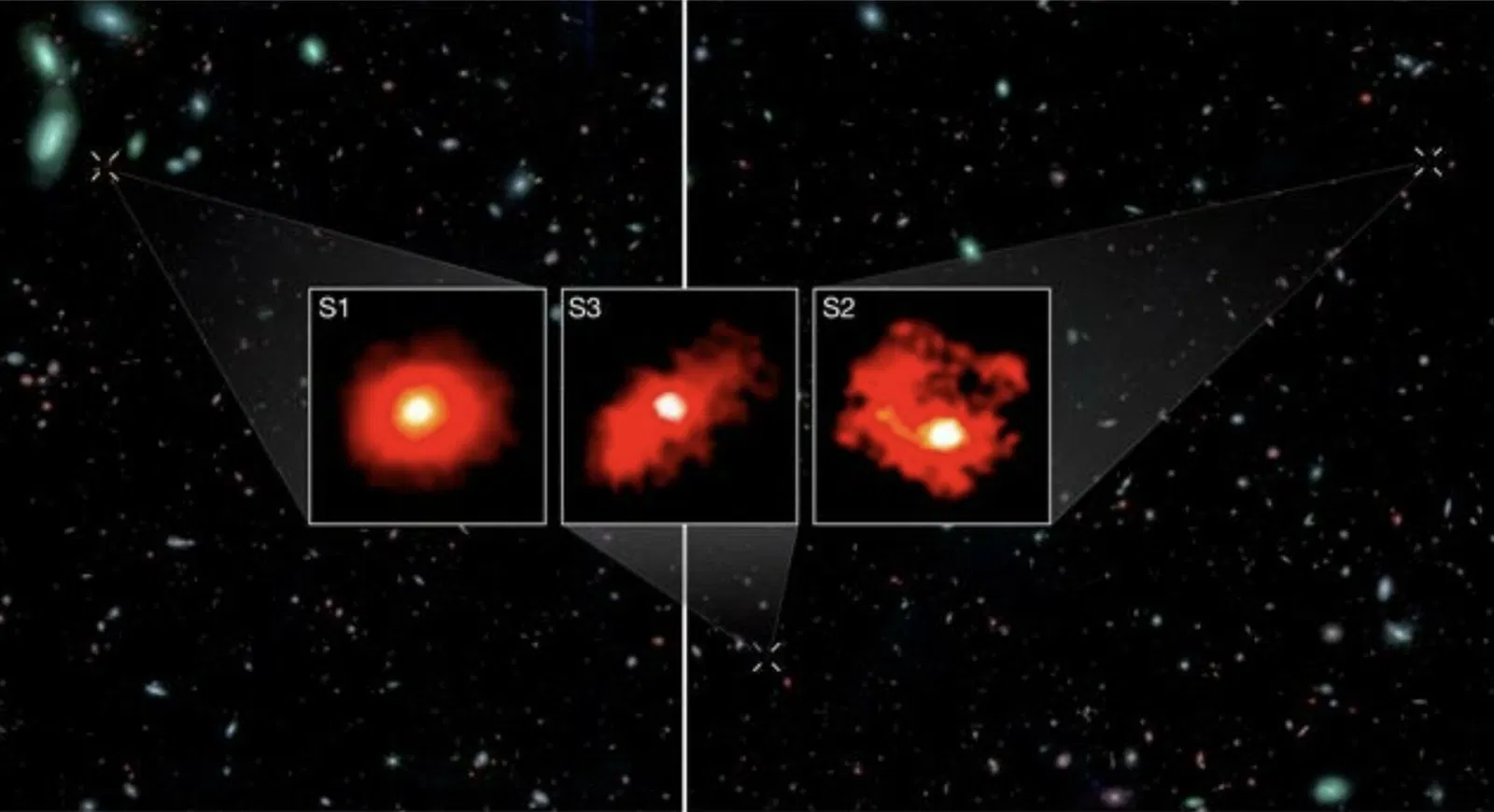


The James Webb Telescope Found “Red Monsters” in the Depths of the Cosmos, Objects That Challenge Current Theories About the Formation of the Universe.
Recently, three “red monsters” were identified by the James Webb Space Telescope (JWST), offering new and intriguing insights into the primitive universe. These ultra-massive galaxies, each the size of the Milky Way, surprised scientists by having reached such large sizes in the first billion years after the Big Bang.
The discovery, made by an international team led by Stijn Wuyts from the University of Bath in the UK, is shaking traditional ideas about galaxy formation.
Discoveries from the James Webb Telescope Challenge Old Models
The three galaxies revealed by the James Webb Telescope represent a mystery for astrophysicists. They are called “red monsters” due to the large dust particles surrounding them, creating a reddish appearance in the images captured by the telescope.
-
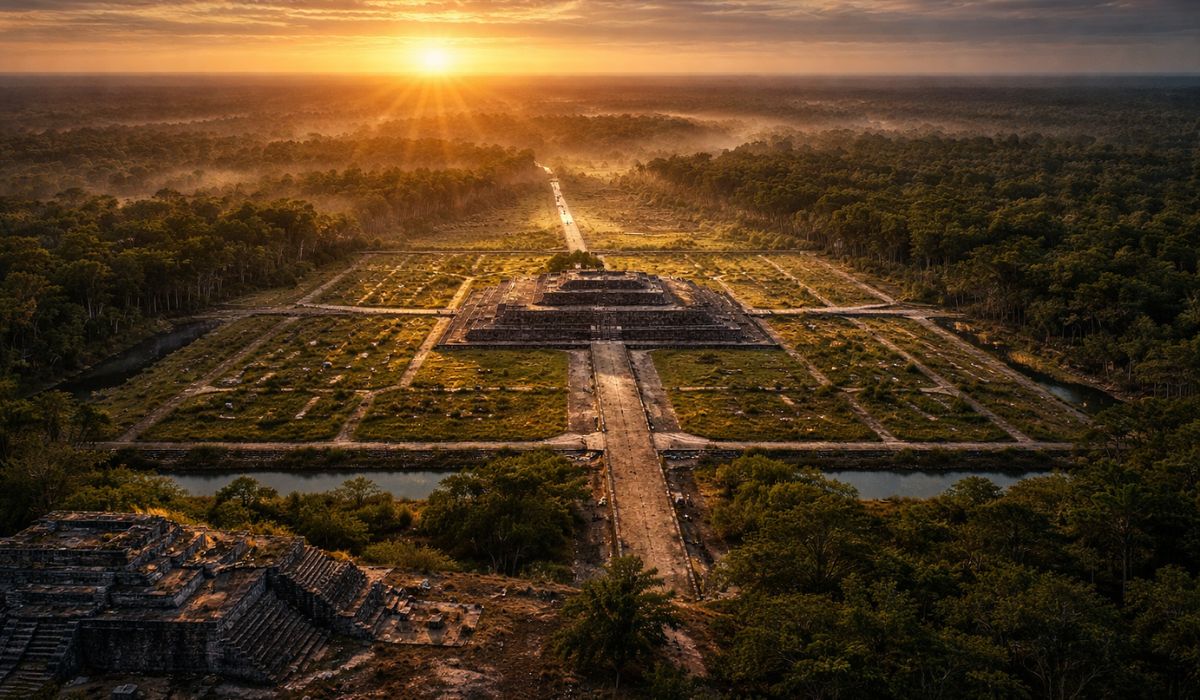
In Mexico, a 3,000-year-old Maya site with the dimensions of an entire city may have been built as a colossal map of the cosmos, created to represent the order of the universe and reveal how this people organized space, time, and rituals.
-
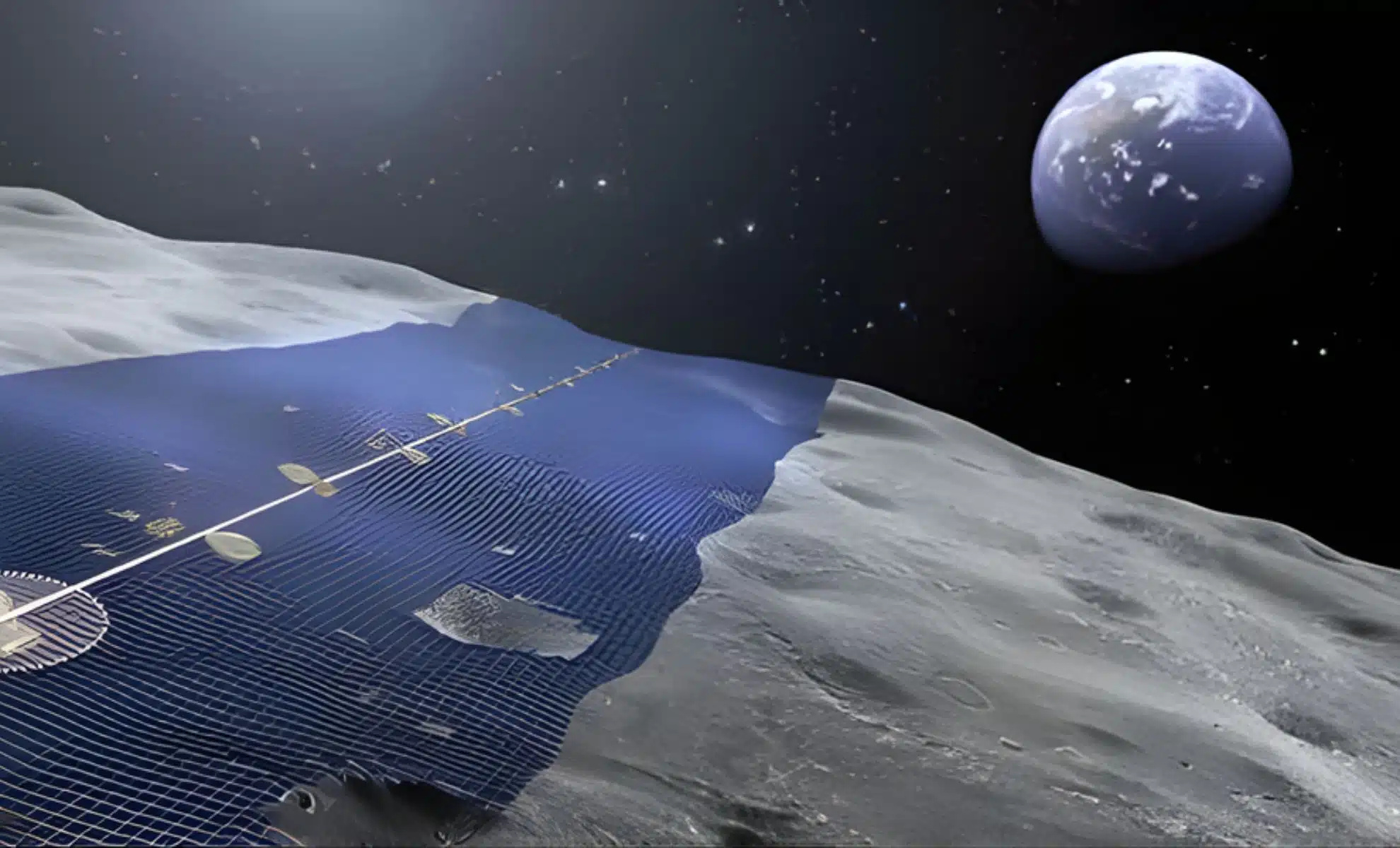
Japan wants to build a solar ring of 10,900 kilometers on the Moon to continuously send energy to Earth.
-
Weighing almost 1 ton, with temperatures of up to 3,000°C, the ability to launch 10,000 fragments within a radius of 1 km, capable of penetrating concrete and melting steel, Turkey’s terrifying bomb emerges as one of the most destructive non-nuclear weapons ever presented.

-
After a submarine disappeared beneath the “Doomsday Glacier,” scientists announce a new monstrous machine capable of operating at 3,000 meters depth to return to the heart of the ice and investigate a threat that could raise sea levels worldwide.


More than their impressive size, what stands out is the speed with which these galaxies grew, challenging conventional answers about how galaxies form.
The study of these galaxies was conducted through the FRESCO program (JWST First Reionization Epoch Spectroscopically Complete Observation), which collects data about the distances and stellar masses of the galaxies.
These galaxies, like others observed by the telescope, produce specific lines in their light spectra, allowing astronomers to calculate important details about the number of stars in each galaxy.

Red Monsters at the Edge of the Known Universe
Based on the specifics, Wuyts’ team discovered that three of these galaxies stand out for being immensely large and old. They formed stars more efficiently and rapidly than previously believed possible in the early universe.
The team was particularly surprised by the resilience of these galaxies in the widely accepted processes of stellar formation. Normally, it is believed that the gases present in galaxies slowly turn into stars, but these galaxies seemed to escape this process, growing much faster than expected.
According to Wuyts, until recently, astrophysicists argued that galaxy formation occurred more gradually, with dark matter creating “halos” around young galaxies. Within these halos, cosmic gases would be drawn by gravity, allowing for the formation of the first stars. However, the discovery of the “red monsters” suggests that something else was at play in this process.
Unprecedented Images and Revealing Details
One of the great advantages of the James Webb Telescope is its ability to observe the universe in infrared wavelengths, which allows it to see galaxies that are invisible in visible light. This was crucial for observing the “red monsters,” which are shrouded in cosmic dust, making them difficult to observe with conventional telescopes.
Thanks to NIRCam, one of the JWST cameras, astronomers are seeking unprecedented details about these massive galaxies. Furthermore, they showed a star formation rate much higher than other smaller galaxies from the same era.
David Elbaz, a collaborator on the study, explained that before the JWST, determining the properties of these galaxies was practically impossible due to the dust covering them. Now, with the new telescope, it was possible to reveal these “red monsters” in all their glory, allowing scientists to study their characteristics more deeply.
Implications for Cosmology and the Future of Research
Although the observations made by the James Webb Telescope do not directly challenge the standard model of cosmology, they raise questions about various aspects of galaxy evolution. The speed at which these galaxies formed and the efficiency with which they generated stars indicate that existing models about galactic formation still need to be revised.
For the scientists involved in the research, the discoveries of the “red monsters” represent just the beginning of a new era in the study of the primitive universe.
Mengyuan Xiao, the lead author of the study, stated that the new observations are changing how astronomers understand galaxy formation in the early universe. He emphasized that as more galaxies like these are studied, new insights into the conditions that shaped the early epochs of the cosmos will be revealed.
The Impact of Discoveries on Science
These discoveries have the potential to reshape the way we think about galaxy formation and the development of the universe.
The study of the “red monsters” is providing crucial clues about how galaxies can form much more rapidly than we thought, which could significantly alter our understanding of cosmic history.
As the JWST continues to unveil the secrets of the primitive universe, the expectation is that these massive galaxies and other similar discoveries will bring new challenges to existing models and deepen our understanding of the early days of the cosmos.
In the near future, astronomers hope that studying galaxies like these will provide us with more information about the conditions that allowed the birth of the first stars and the formation of the galaxies we know today.
The “red monsters” are just the beginning of a journey that promises to profoundly alter cosmological science. With the James Webb Telescope, scientists now have a powerful tool to look deeper into the universe and challenge old assumptions about galaxy formation. These discoveries indicate that there is still much to uncover, and each new galaxy revealed by the telescope opens a new window into our understanding of the cosmos. The future of space exploration is more exciting than ever.








OU O NOSSO UNIVERSO É MUITO MAIOR E ANTIGO DO QUE IMAGINAVAM.MUITO MAIS QUE BILHÕES DE ANOS.
Meras suposições, sobre o universo, mas nenhuma prova concreta. Conforme a fé, Deus não tem começo, sempre existiu.
Então devemos acreditar que também o UNIVERSO dificilmente vai ter um início conhecido.
Quem é DEUS? Jamais vai ter alguém pra dar uma explicação plausível. Algo que a nossa vã consciência jamais vai compreender por sermos limitados!
Achei interessante, mas ao ler o texto parei na metade, extremamente repetitivo na narrativa.
O comentário expressa uma visão mista sobre o artigo, apreciando o conteúdo, mas encontrando a narrativa excessivamente repetitiva. Isso pode ser considerado um feedback valioso para o autor, para melhorar a estrutura e a clareza do artigo.