





 Portuguese
  English
  Spanish
  5 min of reading
  19 comments


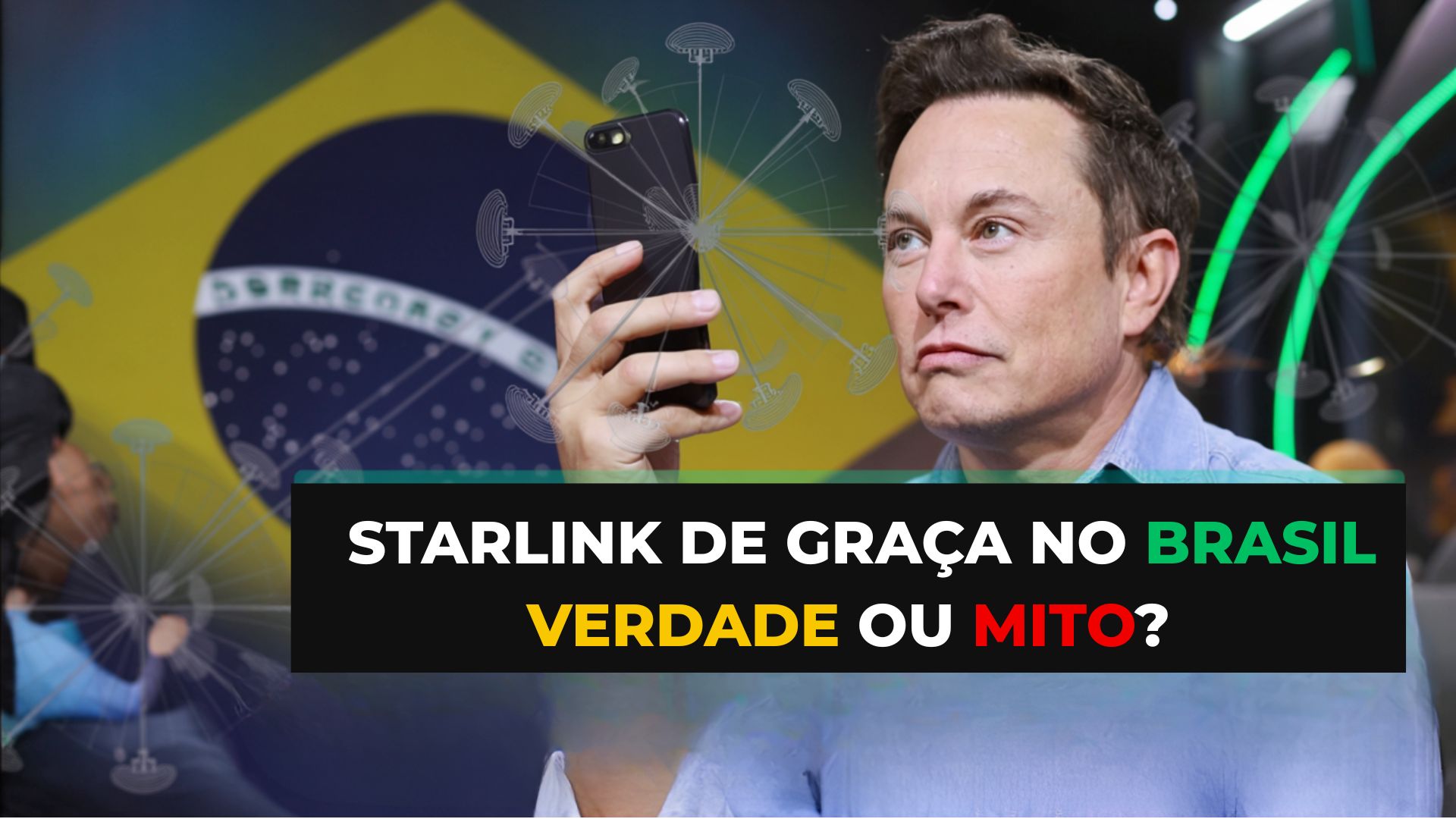


Starlink Satellite Technology Sparks Debate on Free Coverage, Direct Connectivity Expectations, and Regulatory Hurdles in Brazil. Understand the Scenario, Anatel’s Position, and the Service’s Situation in the Country.
Brazilian interest in the possibility of using Starlink internet, created by Elon Musk, for free on mobile phones has grown in recent months, driven by a series of rumors on social media and messaging apps.
According to the National Telecommunications Agency (Anatel), however, this technology is still not authorized for use on mobile phones in Brazil.
The agency clarified in an official statement that Elon Musk’s company does not have authorization to provide this type of service in the country, thus responding to one of the questions that intrigue millions of Brazilians in 2025.
-
After decades of failed attempts, Brazil is once again looking to space with an orbital rocket measuring 12 meters, weighing 12 tons, costing R$ 189 million, and scheduled for launch in 2026, in a new race to finally achieve autonomous access to orbit.
-
The Earth will plunge into a few minutes of darkness in broad daylight in August 2026, when a total solar eclipse transforms the sky into one of the most impressive astronomical phenomena in recent years.

-
How the terraforming of Mars can transform the planet: artificial aerosols can increase the temperature by up to 35°C in 15 years, creating conditions for liquid water.

-
Scientists drilled nearly 8,000 meters into the ocean floor above the fault that caused the 2011 tsunami in Japan and discovered that a layer of clay 130 million years old was responsible for making the wave much worse than any model had predicted.


The Starlink has gained global prominence by offering satellite internet connectivity in areas where traditional carriers do not provide coverage, such as rural areas, isolated communities, and hard-to-reach locations.
The new system, called “direct-to-device” or “direct to cell,” promises to further extend this coverage by allowing regular mobile phones to connect directly to satellites, without relying on antennas or ground towers.
However, despite the technological advancement, the functionality has not yet arrived on Brazilian soil.
The Starlink “direct-to-device” technology allows users in areas with no carrier signal to share their location and send and receive text messages through a direct connection to satellites.
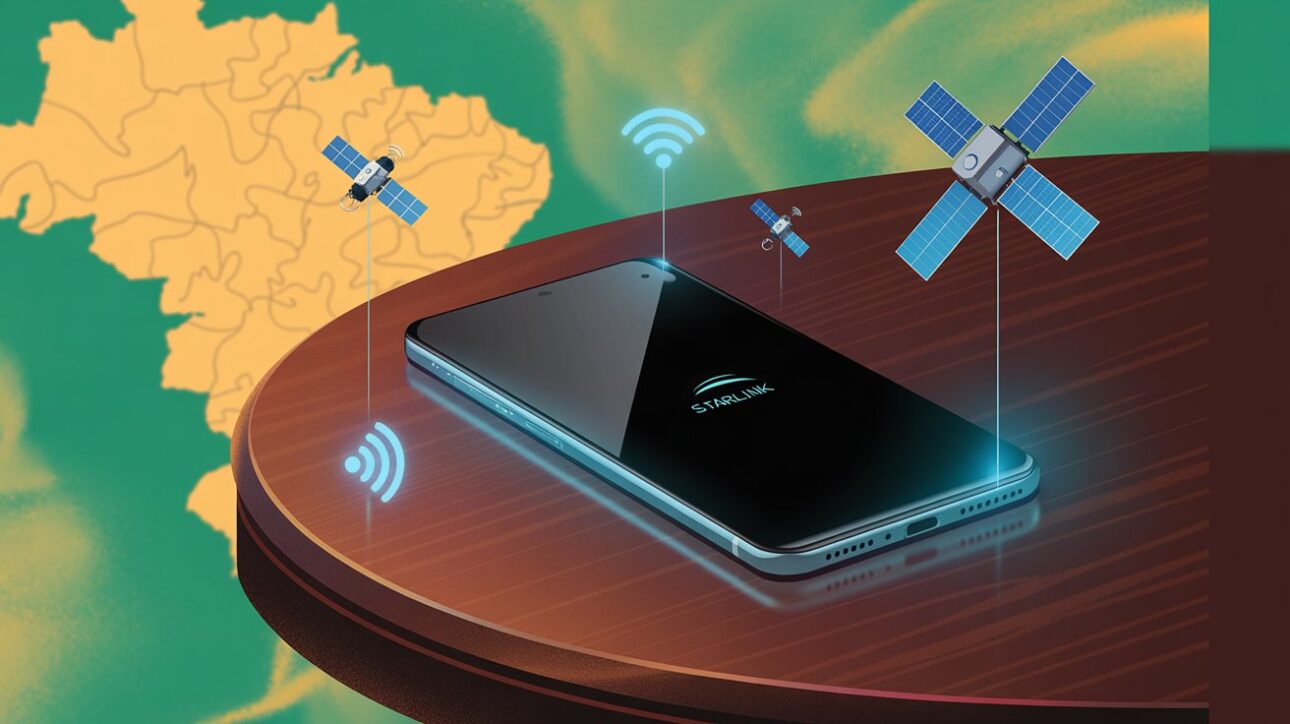
This innovation represents an important step for global connectivity, offering an alternative for emergencies or complete signal absence.
According to Anatel, however, no company is authorized to offer this service for free in Brazil, whether for mobile phones or any other mobile device.
In a recent statement, Anatel reiterated: “The Direct to Cell (or Direct to Device) technology can represent a significant advance in mobile phone coverage. Recognizing this potential, the Agency has taken the initiative to promote an environment conducive to experimenting with this technology, establishing a regulatory Sandbox that favors technical arrangements in this regard”.
However, the agency makes it clear that, until July 2025, Starlink has not obtained the necessary licenses and authorizations to operate this model in Brazil.
Starlink Internet on Mobile Phones: Why Can’t It Be Used for Free?
Currently, the satellite broadband service offered by Starlink is only available for homes, businesses, and rural properties, always requiring paid plans and specific antenna installation.
The direct connection to mobile phones, at no cost to the user, still depends on regulatory changes, as well as the need for compatible infrastructure.
According to Anatel, “The provision of mobile service in Brazil is regulated and requires the obtaining of specific licenses, as well as authorizations for the use of radio frequencies designated for mobile phone services. To date, Starlink does not directly possess these necessary licenses”.
In other words, even though the technology exists and is being tested in other countries, such as the United States, New Zealand, Australia, Canada, Chile, and Japan, in Brazil it still faces legal and regulatory issues.
The agency also emphasizes that any public offering of mobile internet, whether free or paid, must comply with the regulations set by Brazilian law and Anatel’s rules.
This includes obtaining specific licenses, ensuring minimum service quality, and complying with the fiscal and technical obligations stipulated by law.
Starlink for Mobile Phones: Where Is the Technology Already Available?
The “direct-to-device” system is already operating in some regions of the United States and New Zealand, where users of certain carriers can access satellite internet directly from their mobile phones.
In countries like Australia, Canada, Chile, and Japan, the technology is in testing phases, gradually increasing its availability.
Despite the progress, there is still no country where the service is offered completely free and unrestricted for any mobile phone user.
In general, carriers partner with Starlink to provide connectivity in specific situations, such as emergencies, remote areas, or exceptional events.
Full and free access, as some rumors suggest, is not part of the company’s business model.
Anatel and the Future of Starlink Internet on Mobile Phones
The National Telecommunications Agency closely monitors the evolution of satellite internet services and has already created a regulatory testing environment to stimulate the development of these solutions in Brazil.
The so-called “regulatory Sandbox” is an initiative aimed at experimenting with new technologies, allowing companies to test innovative features under the agency’s supervision and within specific rules.
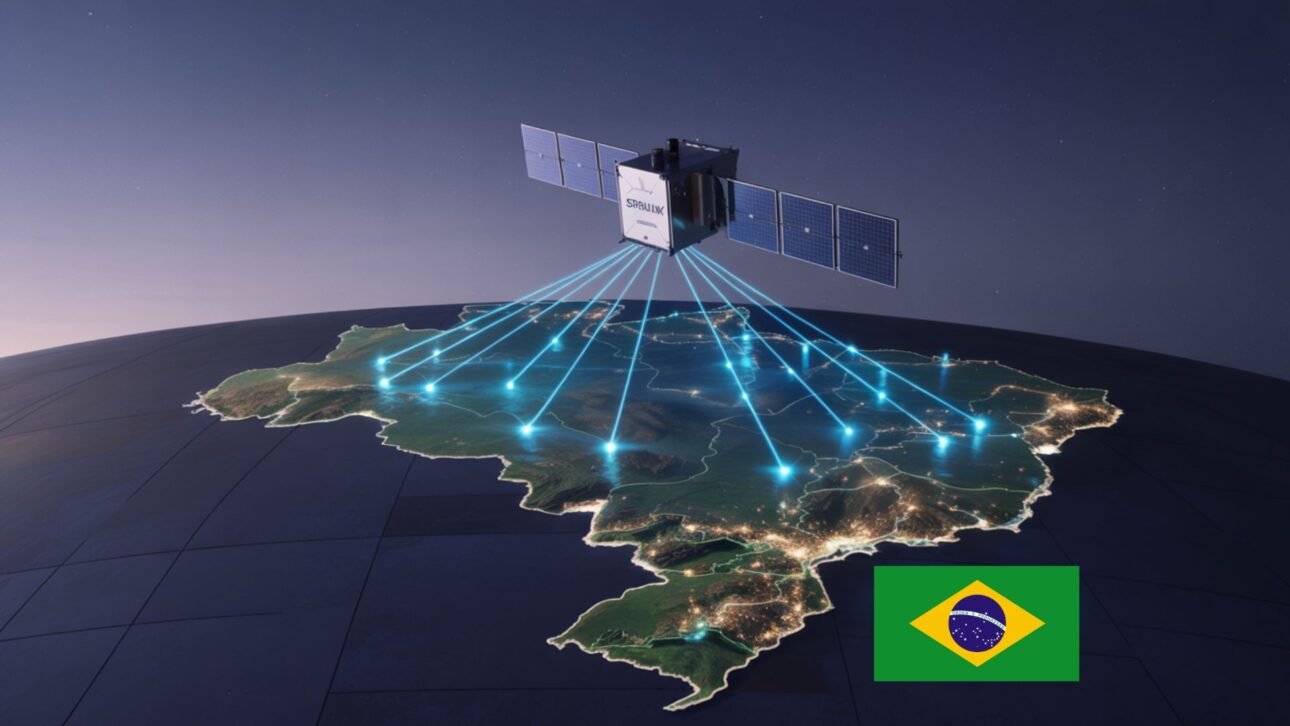
Despite this, to date, Starlink is only authorized to operate fixed satellite broadband plans in the country, primarily serving homes, businesses, schools, and rural properties.
The mobile service, which would allow direct connection of mobile phones to satellites, is still under analysis by Anatel and depends on detailed regulation for public release.
Rumors and Questions: Why Did Starlink Internet for Mobile Phones Become a Hot Topic on Social Media?
The topic gained significant attention after a series of videos, posts, and audios went viral on the internet, promising free Starlink internet for mobile phones in Brazil.
The messages, lacking official information, contributed to the spread of doubts and unfounded expectations among consumers.
Anatel reiterates that, until July 2025, any promise of free access to Starlink internet on mobile phones in Brazil has no legal or technical backing.
Those interested in using the company’s services should refer to the plans officially available in the country, aimed exclusively at fixed satellite broadband.
What to Expect from Access to Starlink Internet in Brazil?
Until there is authorization for the use of the “direct-to-device” service in Brazil, consumers will continue to depend on traditional mobile phone networks or paid broadband plans contracted for homes and businesses.
The expectation is that, with advancements in regulation and infrastructure, the technology may reach the country in the coming years, enhancing connectivity access in remote regions.
In light of this scenario, users are cautioned to be wary of free access promises to Starlink internet for mobile phones, especially from videos, messaging groups, or social media.
Anatel recommends always seeking information from official sources and avoiding sharing unverifiable content.
After all, do you believe Brazil is ready to embrace innovative technologies like direct satellite internet on mobile phones, or does it still need to overcome many regulatory and infrastructure challenges?








Essa gestão do Brasil, sempre ficará para trás nos avanços para a população. País inútil.
Quando a telefonia móvel nasceu foi pra usar directo do satélite mas o comércio achou melhor ter renda terceirizando sinal como uma galinha dos ovos de ouro. E no Brasil ninguém perder a oportunidade de por uma bela fortuna no bolso com oportunidade de encher de propagandas. de empresas que pagam pra vender seus produtos e dando um novo rumo nas comunicações de celulares que tem recursos de mídia altamente interessantes para o comércio de mercadorias com recursos aprimorados.
Ah coitada da anatel. Não manda nem em tv box. O q vai impedir de vc receber sinal direto no seu celular qdo a rede estiver indisponível? Ninguém! Tá parecendo o moraes impedindo de usar VPN.