





 Portuguese
  English
  Spanish
  3 min of reading
  7 comments


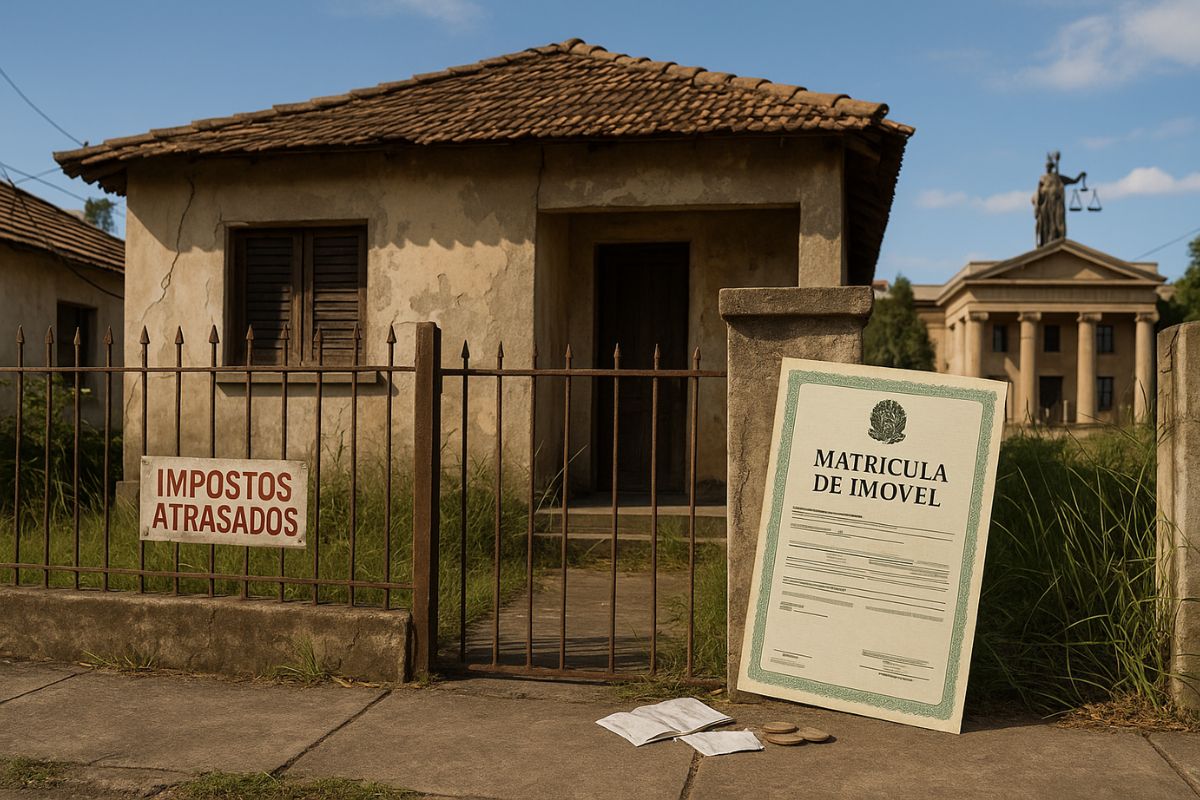


Even With Registration at the Notary, The Owner Can Lose The Property If They Fail to Pay Taxes, Abandon The Property or Fail to Fulfill Its Social Function; The Legislation Opens Space For Usucaption In Favor Of Those Who Occupy And Care, As The Specialist In Real Estate Law Rafael J Dias Explains.
Many people believe that having the registration recorded at the notary is an absolute guarantee of ownership. However, Brazilian law provides situations in which the owner can lose the property, including cases of abandonment, disuse, or failure to pay mandatory taxes.
According to the specialist in Real Estate Law, Rafael J Dias, the legislation establishes clear hypotheses for loss of property, such as alienation, renunciation, expropriation, and, mainly, abandonment. In these cases, those who occupy and care for the property can pave the way for recognition of usucaption.
When Registration Is Not Enough
The registration is, in fact, the document that proves ownership. But it is not enough to just have it at the notary to guarantee the right.
-
The Senate approves a bill that criminalizes misogyny, hatred, or aversion towards women, and includes the crime in the Racism Law with a penalty of up to 5 years.

-
Chamber Approves Bill That Allows Pepper Spray for Women Over 16 and Imposes Strict Rules for Purchase, Possession, and Use as Self-Defense

-
Chamber Approves Law to Combat Leucaena, Fast-Growing Plant That Dominates Land and Threatens Native Species in Various Regions of the Country

-
Asset Division: Know What Cannot Be Divided in Case of Divorce


The Civil Code, in Article 1,275, defines situations in which the owner can lose the property, including alienation, the destruction of the property, and abandonment.
Rafael J Dias explains that abandonment occurs when the owner ceases to perform acts of possession, such as taking care of the property and paying taxes like IPTU or ITR.
Under these conditions, the law presumes the intention to abandon the property, opening space for another to occupy and care for it.
Abandonment and Tax Burdens
Article 1,276 of the Civil Code is clear: abandoned urban property can be collected as vacant property after three years, passing to the municipality or Federal District if there is no occupant.
In rural areas, the property can be transferred to the Union.
However, if someone starts to occupy the property and assumes care, the possession exercised can generate the necessary time for usucaption.
Failing to pay taxes and abandoning the property not only weakens ownership but also creates conditions for another to acquire it legally.
Social Function of Property
Another fundamental aspect is the social function. According to Article 1,228 of the Civil Code, property is maintained only when the owner exercises their powers to use, enjoy, and dispose of the property.
If this does not happen, the right can be transferred to those who truly fulfill this role.
For Rafael J Dias, this logic ensures that properties do not remain unused while protecting occupants who give a social function to the property.
“The possession that generates usucaption is precisely the one where the occupant treats the property as their own, paying taxes and taking care of it,” emphasizes the specialist.
Usucaption As A Consequence

Usucaption is the most common form of property transfer in these cases.
The required time varies according to the modality — it can be reduced when there is habitual residence or use for subsistence.
In practice, this means that the negligent owner, who abandons the property and ignores their duties, can lose the property to someone who demonstrates a legitimate interest in caring for and occupying the space.
Having registered ownership is essential, but it is not an absolute guarantee.
The law provides clear hypotheses in which the owner can lose the property, whether due to abandonment, default, or lack of social function.
As Rafael J Dias explains, “the right to property requires care, responsibility, and fulfillment of tax obligations.”
And you, did you already know these situations? Do you think it’s fair that someone who abandons a property can lose it to another person who takes care of it? Leave your opinion in the comments — your experience can enrich the debate.









….até abandono de pagar impostos eu concordo,tenho escritura impostos em dia já ganhei em 2 estancias assim mesmo a justiça não me libera que faço?
Avalie com seu advogado a possibilidade de recorrer ao STJ ou entrar com medidas para cumprimento da decisão judicial.
Dúvida
Onde se tem o inventário, e um dos herdeiros mora no apartamento e o apartamento e livre de imposto, e somente a taxa do lixo
Ele pode ganhar uso capião ?
Sim, o herdeiro pode pedir usucapião do imóvel mesmo com o inventário, mas precisa provar que mora sozinho no apartamento e que cuida dele de forma contínua, pagando contas, fazendo reformas e sem que os outros herdeiros se oponham. Cada caso exige análise detalhada e provas consistentes.
Complicado mudei da minha residência, para outro imóvel deixei residência com todos impostos pagos iptu e outros documentação com registro junta de imóveis o que aconteceu viram imóvel fechado e entraram no mesmo,e roubaram tudo que estava dentro do imóvel dando um prejuízo muito grande para o proprietário. Inclusive pixaram todas paredes do imóvel quem vai pagar os prejuízos, a gangue não está nem um pouco preocupada com isso é ainda fazem leis usocapiao favorecendo bandidagem.
A usucapião não é uma autorização para invasão ou roubo — ela se aplica apenas quando alguém ocupa o imóvel de forma pacífica, contínua e com intenção de cuidar dele, e com base em prazos legais. No seu caso, como o imóvel estava fechado, registrado e com impostos pagos, qualquer invasão é crime, e os responsáveis devem ser responsabilizados criminalmente pelos danos causados.