





 Portuguese
  English
  Spanish
  4 min of reading
  0 comments



With the Advance of a Cold Front, the Country Wakes Up to Intense Contrasts: While the South Faces Storms and the Southeast Registers a Steep Drop in Temperature, the Northeast Remains Under Strong Heat and Dry Weather in the Weather Forecast Today
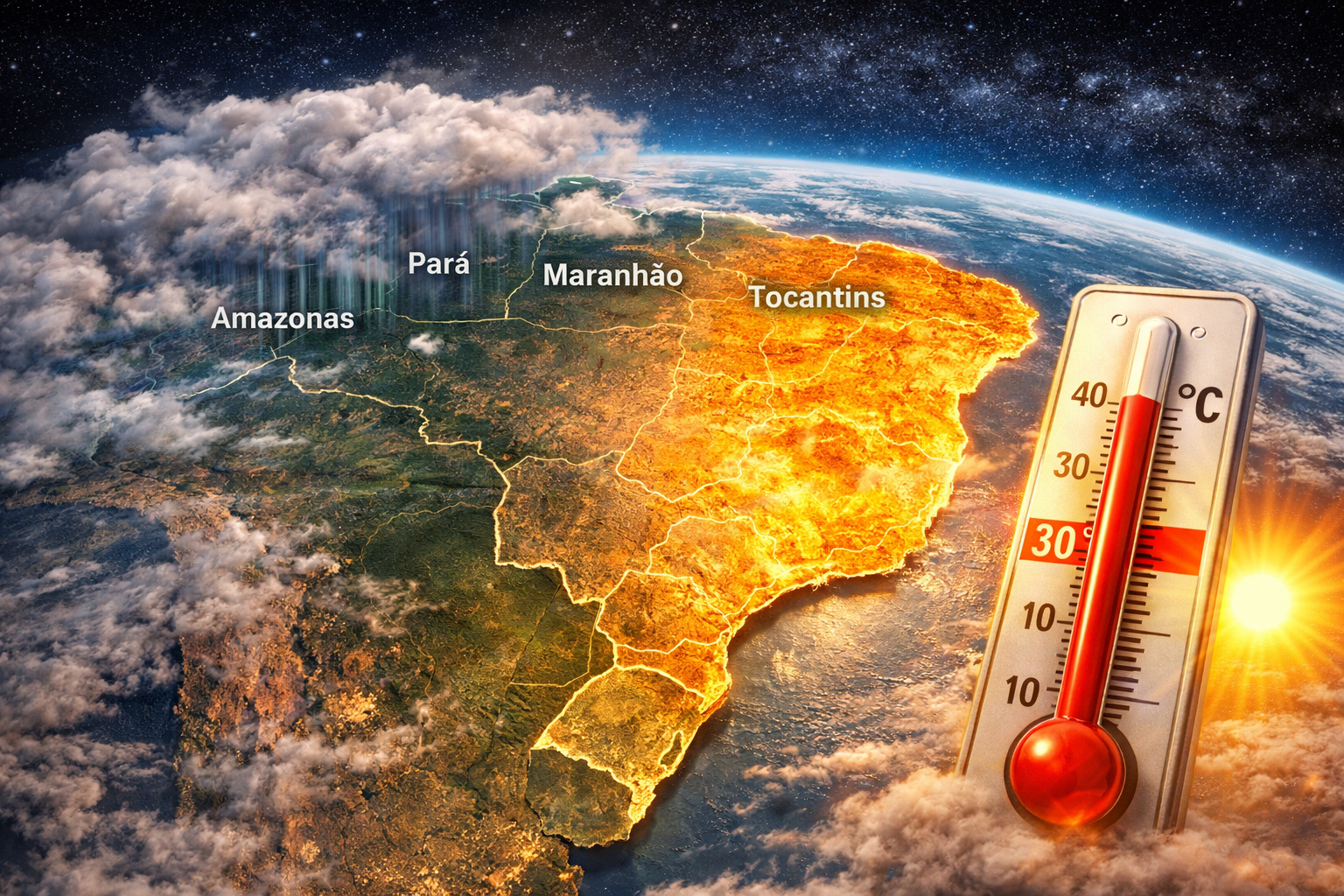
The weather forecast today shows a typical scenario of transition between spring and summer, with extremes ranging from heavy rain in the South to intense heat in the Northeast. The climatic contrast is the result of a cold front advancing through the country, altering the temperature and humidity pattern in several regions.
Meteorologists warn that this combination of cold and warm air masses may cause significant instability in the upcoming hours, especially in areas of the South and Southeast. The phenomenon is common during this period, but the volumes of rain and the drops in temperature stand out due to their intensity.
South Region: Storms and Falling Temperatures
The South of Brazil wakes up under a warning of heavy rain and a significant drop in temperature.
-
Scientists drilled nearly 8,000 meters into the ocean floor above the fault that caused the 2011 tsunami in Japan and discovered that a layer of clay 130 million years old was responsible for making the wave much worse than any model had predicted.

-
Thousands of years after causing the largest eruption of the Holocene, one of the world’s largest supervolcanoes is rebuilding itself beneath the sea south of Japan, receiving new magma and alarming scientists with its transformation.

-
China has activated a magnet 700,000 times more powerful than the Earth’s magnetic field that operates for over 200 consecutive hours while consuming little energy, and now the world wants to know what Beijing plans to do with this technology in 2026.

-
Mercado Livre has started selling medications in Brazil with delivery in up to 3 hours, and the project that launches in São Paulo may expand to the entire country, transforming the way millions of Brazilians buy medicines.


In Paraná, there is a forecast of large volumes of precipitation, with a risk of flooding in urban areas.
Santa Catarina is expected to record intense rain mainly in the northern part of the state, while Rio Grande do Sul remains unstable with temperatures close to 14 °C in cities like Pelotas.
Meteorologists highlight that the atmospheric conditions remain favorable for the formation of isolated storms, especially in the west and north of the region.
The advance of the cold front reinforces the humid and cold air, bringing a lower thermal sensation during the day.
Southeast Region: Cold in São Paulo and Rain on the Coast
The weather forecast today for the Southeast indicates abrupt changes in temperature and irregular rain.
In São Paulo, the weather becomes unstable, with isolated showers and a noticeable thermal decline in the capital and on the coast.
In the interior, rain is less frequent, but the sky remains cloudy.
Rio de Janeiro will also experience rain and a slight drop in temperature, with variations between 20 °C and 28 °C.
Meanwhile, in Belo Horizonte, the weather remains drier and hotter, with a minimum of 15 °C and a maximum of 22 °C, reflecting the lesser influence of the cold front over central Minas Gerais.
Central-West Region: Mild Weather and Climatic Transition
In the Central-West, the scenario is of passing clouds and mild temperatures. In Brasília, the day starts with a partly cloudy sky and no rain forecast.
In Goiás and Mato Grosso do Sul, humidity gradually increases, but the weather remains stable for most of the day.
This pattern marks the transition between the dry period and the gradual return of typical spring rains.
The expectation is that in the coming weeks, the heat will regain strength, accompanied by quick showers in the late afternoon.
Northeast Region: Intense Sun and Persistent Heat
The Northeast continues with high temperatures and low humidity levels.
Cities like Recife, Fortaleza, Salvador, and João Pessoa are experiencing hot and dry weather, with a thermal sensation above 35 °C in more inland areas.
Despite the heat, meteorologists warn of the risk of wildfires, especially in areas of interior Piauí and Bahia.
The stable weather favors the spread of fire outbreaks and reduces air quality.
North Region: Heat and Possibility of Isolated Rain
In the North, the pattern remains of stuffy heat and localized instability.
Manaus, Belém, Porto Velho, and Rio Branco register high temperatures and the possibility of showers throughout the day.
The humidity from the Amazon rainforest keeps the air heavy and the thermal sensation high.
Meteorologists observe that the rainfall regime is still irregular, with volumes concentrated in specific areas, which is typical for this seasonal transition period.
Climatic Context and Seasonal Factors
The month of October marks the end of spring and the approach of summer in the Southern Hemisphere, which intensifies the occurrence of climatic extremes.
Rains tend to spread over more areas of the country, while high temperatures remain dominant in the North and Northeast.
The phenomenon La Niña continues to influence Brazilian weather, altering the distribution of rains and contributing to periods of more intense cold in the South and Southeast.
This combination explains why some regions face storms while others deal with droughts and heat above the average.
Meteorologists emphasize the importance of following severe weather warnings issued by official agencies, such as the National Institute of Meteorology (INMET) and Civil Defense.
During periods of climatic transition, strong storms, intense winds, and abrupt drops in temperature can occur within a few hours.
On the other hand, in the drier areas, the risk of wildfires and respiratory problems remains high.
The recommendation is to avoid burning, stay properly hydrated, and seek safe shelter during storms.
Have you noticed abrupt changes in the climate of your region in recent days? Does the weather forecast today reflect what you have been feeling? Leave your comment and share your experience.







-

Uma pessoa reagiu a isso.