





 Portuguese
  English
  Spanish
  4 min of reading
  0 comments


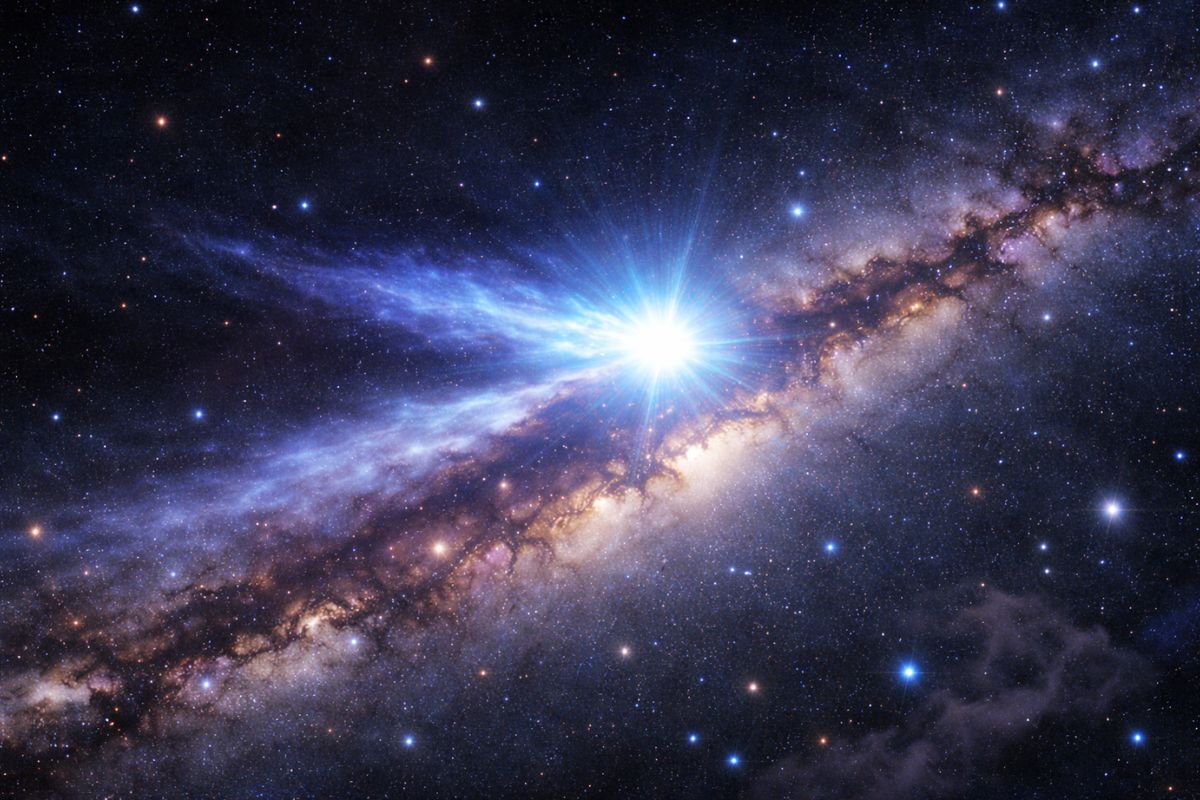
The star has half the heavy elements of the previous record, is made almost entirely of hydrogen and helium, was born outside our galaxy, and the study was accepted by Nature Astronomy, one of the most prestigious scientific journals in the world
It was supposed to be a homework assignment. Ten undergraduate students from the University of Chicago enrolled in a course called “Field Course in Astrophysics,” taught by Professor Alex Ji. The task was simple in theory: to sift through a mountain of astronomical data from the Sloan Digital Sky Survey, one of the largest sky databases ever created, with 25 years of operation and millions of cataloged objects.
No one expected a group of students to find there the most primitive star ever recorded in the history of astronomy.
The star is called SDSS J0715-7334. It is located 80,000 light-years from Earth. And what makes it extraordinary is not its size or brightness, but what it does NOT contain.
-
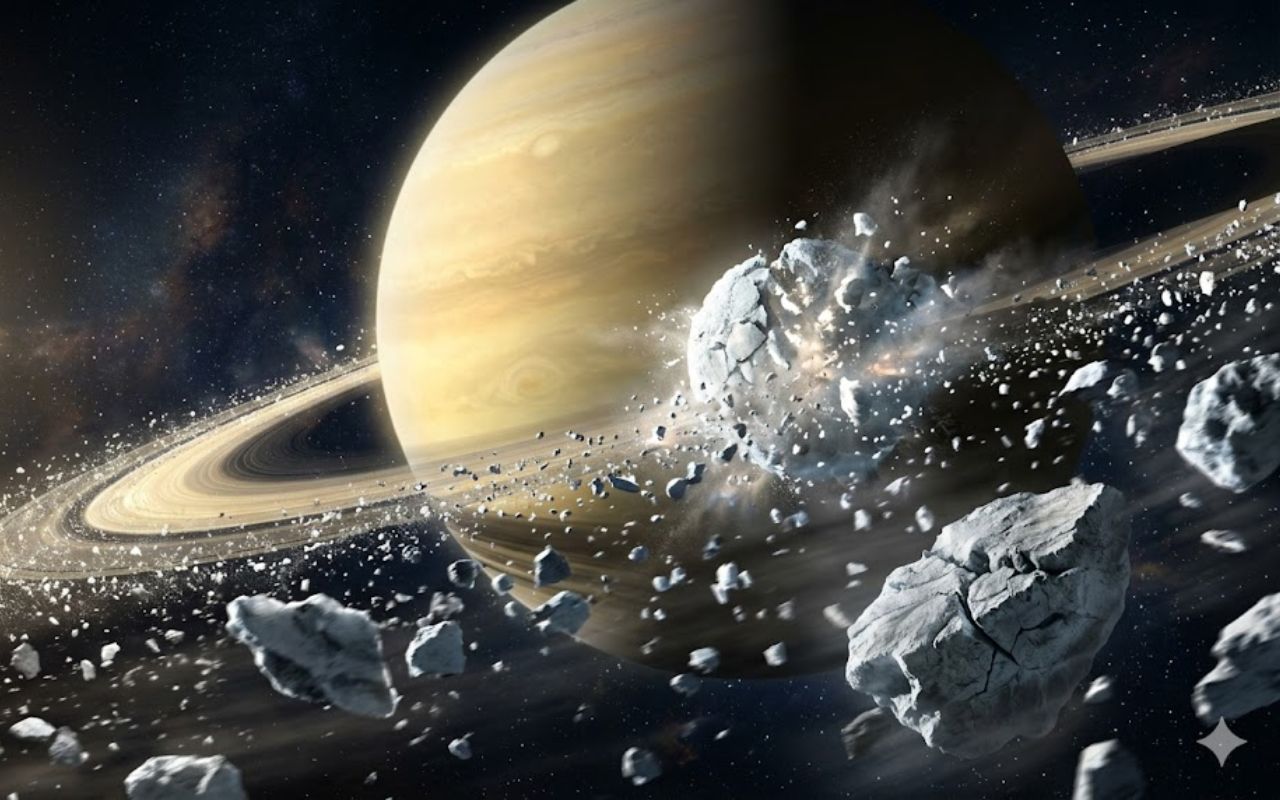
Scientists reveal that Saturn’s rings may have formed after the destruction of a moon, and a study indicates that the planet’s bright structure is only 100 million years old.
-
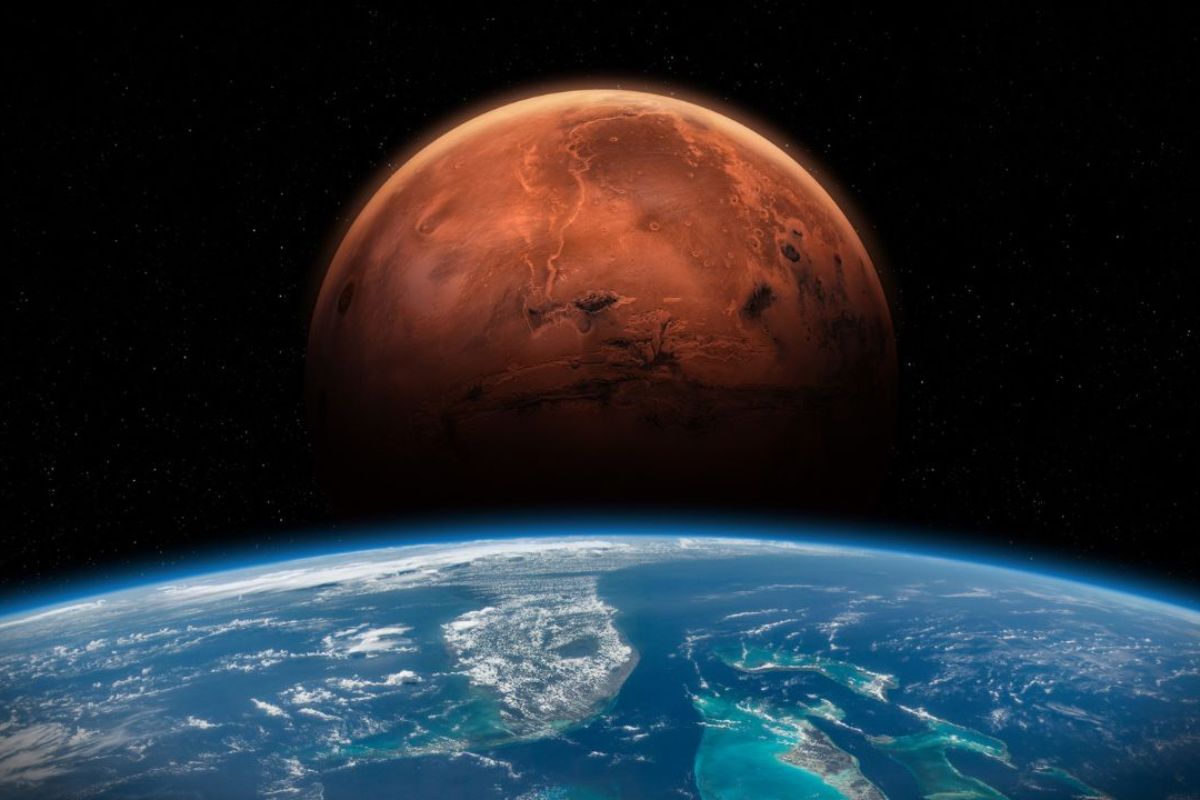
A Brazilian who does not work at any space agency calculated a round trip route to Mars in just 7 months using asteroid trajectories as cosmic shortcuts, and the study was accepted by one of the most prestigious scientific journals in the world.
-
A continent of plastic that keeps growing: what no one tells you about the largest garbage dump in the world, which continues to grow endlessly.

-
Archaeologists in the United States find the grave of a young 22-year-old soldier hastily buried during a hurricane; the discovery reveals how yellow fever killed soldiers over 150 years ago.

What makes a star “the oldest in the universe”?

Shortly after the Big Bang, about 13.7 billion years ago, the universe was basically made of two ingredients: hydrogen and helium. The first stars were born from this pure material, burned quickly, died young, and exploded. Inside their cores, nuclear fusion created heavier elements. When they exploded, they spread these elements through space. The next generation of stars formed from these remnants.
Each new generation of stars carries more “metals” (as astronomers call any element heavier than helium) than the previous one. It’s like a birth signature. The fewer metals a star has, the closer it is to the beginning of everything.
SDSS J0715-7334 has half the amount of heavy elements of the previous record. This means it is, by far, the most chemically primitive star ever found. Almost pure. Almost original. A time capsule from the beginning of the universe.
How did undergraduate students find what professional scientists did not find?
The data was already there. The Sloan Digital Sky Survey is public, open, accessible. Thousands of professional astronomers had already sifted through the same catalogs. But the ten students, guided by Professor Ji and graduate assistants Hillary Andales and Pierre Thibodeaux, were looking with fresh eyes.
They identified that the chemical composition of that star was abnormally clean. Almost no metal. Almost no trace of previous generations. It was like finding a bottle of crystal-clear water in the middle of an ocean of saltwater.
“These primitive stars are windows to the dawn of stars and galaxies in the universe,” said Professor Alex Ji, the lead author of the study. He added: “I expected great things from the students, but this exceeded all expectations.”
The ten undergraduate students were included as co-authors on the scientific paper, published on April 3, 2026, in Nature Astronomy, one of the most prestigious journals in the world in space sciences.
The star is not from here
In addition to being the most primitive, SDSS J0715-7334 has another detail that caught the researchers’ attention: it was not born in the Milky Way.
Using data from the Gaia mission of the European Space Agency, the team traced the star’s trajectory and concluded that it formed outside our galaxy, probably in the Large Magellanic Cloud or its vicinity. Over time, the gravity of the Milky Way pulled this star inward.
It is a cosmic immigrant. Born elsewhere, traveled billions of years through space, and is now being absorbed by our galaxy. The researchers nicknamed it “Ancient Immigrant.”
This detail is scientifically crucial. It means that this star carries information not only about the beginning of the universe but also about how other galaxies formed and evolved in the first billions of years.
Why does this change what we knew about star formation?
One of the big questions in astrophysics is: how did stars go from monstrous giants (the first ones) to smaller and more durable ones (like the Sun)? There were two theories: the presence of heavy elements or the existence of cosmic dust that fragmented gas into smaller pieces.
The composition of SDSS J0715-7334 points to the second hypothesis. Since it has so few metals but is already a second-generation star, cosmic dust likely existed at that time, fragmenting gas clouds and allowing smaller stars to form.
“Dust is everywhere in the universe now, but we weren’t sure if it existed back then,” explained Pierre Thibodeaux, a graduate student and co-author of the study. “If there was dust, it would fragment the gas into smaller clumps, and then you get several small stars instead of one giant.”
What comes of all this?
Ten undergraduate students, in a classroom in Chicago, with a computer and a public database, found the oldest star ever recorded in the history of science. A star that is not from our galaxy. A star that carries the chemical signature of the beginning of the universe. A star that helps solve one of the biggest questions in astrophysics.
There was no exclusive telescope. No billion-dollar mission. No team of 200 senior scientists. There were ten students, one professor, curiosity, and open data.
The next big discovery of the universe may not come from a NASA lab. It may come from a classroom.
With information from the University of Chicago and ScienceDaily. Study published in Nature Astronomy (DOI: 10.1038/s41550-026-02816-7).









Seja o primeiro a reagir!