





 English
  Francês
  Alemão
  Italiano
  Japonês
  Norueguês
  Portuguese
  Spanish
 4 min of reading
  0 comments


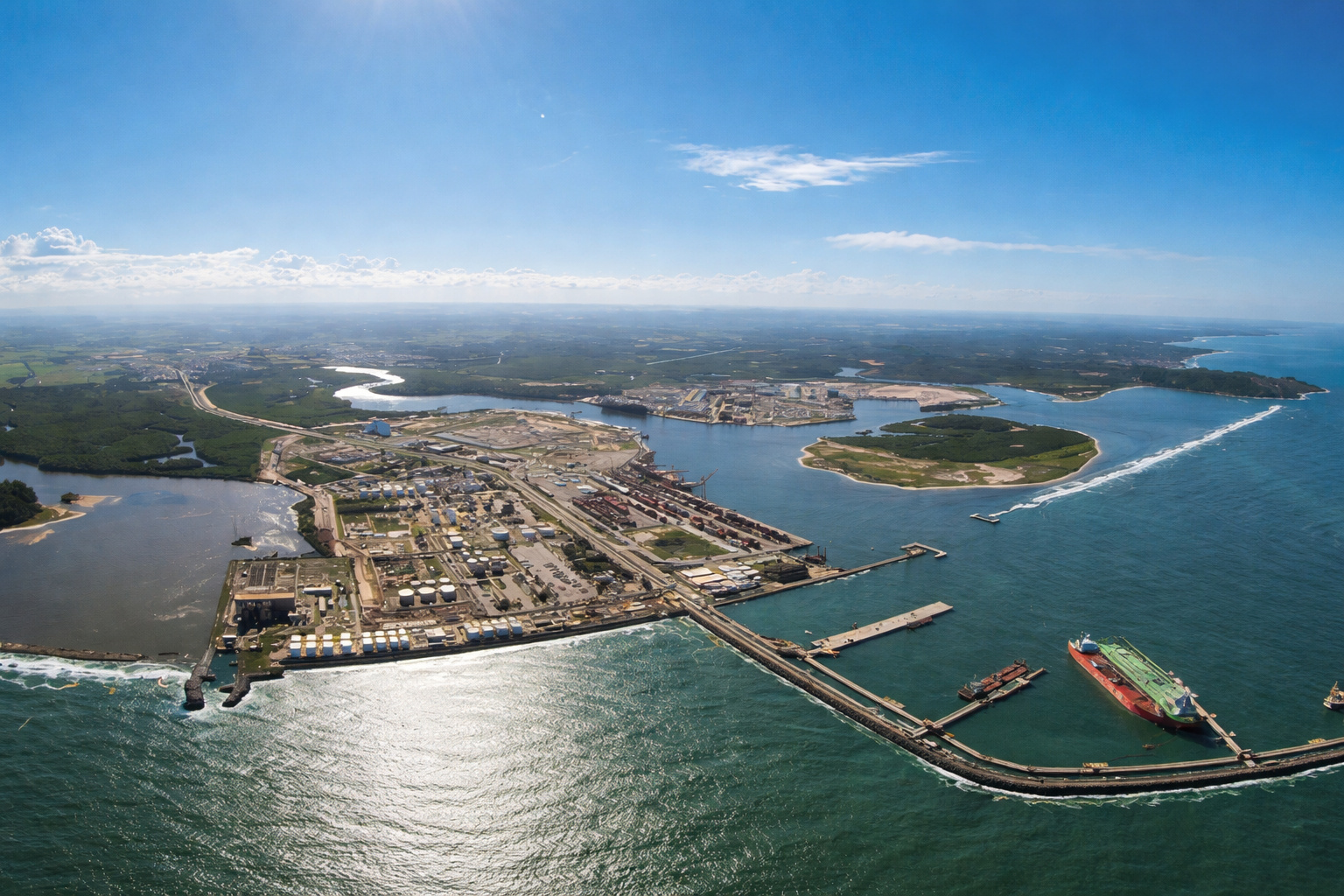
New Fully Electrified Terminal at the Port Industrial Complex of Suape Redefines Sustainability Standards, International Logistics, and Port Operations in Brazil
A significant investment for Brazilian logistics was presented at the Port Industrial Complex of Suape, in Pernambuco, marking a new moment for national port infrastructure.
The project received estimated investments of R$ 2.1 billion for the implementation of the new terminal located in Ipojuca, in the metropolitan region of Recife, approximately 40 kilometers from the state capital.
The facility will operate as the first fully electrified port terminal in Brazil and Latin America, running exclusively with electric equipment and eliminating the use of diesel in its operations.
Additionally, the initiative strengthens the strategy to develop a green port, aligned with emission reduction and the modernization of international maritime logistics.
Arrival of Chinese Equipment Marks the Start of Electrified Operations
The implementation of the terminal involved the participation of SANY Group, a Chinese multinational specializing in construction machinery and energy equipment.
The company sent 28 large electric machines, which will now be part of the operational infrastructure of the port terminal.
The equipment arrived at the port on Monday, the 9th, in a ceremony attended by authorities and executives from the logistics sector.
The event was attended by Pernambuco Governor Raquel Lyra (PSD), as well as representatives from companies linked to international trade and cargo movement.
According to data presented during the official announcement, the electric equipment represents an approximate investment of R$ 241 million within the total package for the terminal’s implementation.
Operations Will Be Conducted by Subsidiary of Maersk Giant
The management of the new terminal will be carried out by APM Terminals, a company that is part of the multinational group A.P. Moller–Maersk, one of the largest port operators in the world.
According to Daniel Rose, president of APM Terminals, the new infrastructure is expected to enhance Pernambuco’s relevance in international maritime logistics.
He stated that the terminal’s implementation puts the state in a prominent position on global trade routes, reinforcing its competitiveness in maritime transport.
Furthermore, the project aligns with the company’s environmental strategy, which aims to achieve carbon neutrality in its global operations by 2040.
-
São Paulo surprises the world with a colossal railway network project that promises over 1,000 km of tracks, R$ 194 billion in investments, and 40 projects connecting the capital to the interior with fast and sustainable trains.
-
The world’s largest escalator, measuring 905 meters in China, reduces urban travel time from 1 hour to about 20 minutes and transforms mobility in mountainous regions with an engineering solution adapted to the terrain.
-
A R$ 300 million logistics giant is taking shape in Serra with over 100,000 m² and raises a question: how can this transform e-commerce and distribution in the state?
-
Could Uber Rides Lose Minimum Fare? Understand What’s Happening!


Electric Equipment Eliminates Diesel Use at the Port
The new terminal has been designed to operate exclusively with electric port handling machinery, replacing traditionally diesel-powered equipment.
Among the equipment used in operations are ship-to-shore cranes, responsible for directly moving containers between ships and the dock.
In addition, the terminal utilizes rubber-tyred gantry (RTG) cranes for the transport and stacking of containers in storage yards.
The infrastructure also includes electric forklifts and tractors for cargo transport, which ensure internal movement within the terminal.
This way, all port operations will occur without fossil fuels, reinforcing the concept of a fully electrified port.
Port Complex Is One of the Main Logistics Hubs in the Northeast
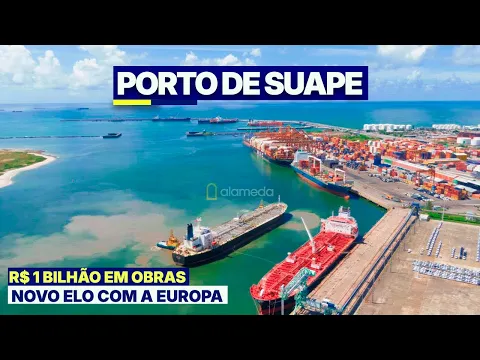
The Port Industrial Complex of Suape is considered one of the main logistics centers in northeastern Brazil.
The total area of the complex covers approximately 13,500 hectares, with around 4,000 hectares designated for the integrated industrial area.
Within this space, there are marine terminals, productive zones, and logistics infrastructure, connecting industries and port operations.
Currently, over 80 companies operate within the complex, forming an industrial network linked to foreign trade and cargo movement.

Port Moves Millions of Tons Per Year
According to data from the National Agency for Waterway Transportation (ANTAQ), the port of Suape moves over 24 million tons of cargo annually.
Additionally, the complex has the potential to reach over 40 million tons per year, considering its installed logistical capacity.
Among the main products moved are petroleum derivatives, including LPG and fuels, as well as cargo transported in containers.
Also circulating through the port are bulk solids, industrial inputs, fertilizers, chemicals, and food products destined for the international market.
Infrastructure Operates Continuously and Receives Large Ships
The port operates 24 hours a day, allowing continuous loading and unloading operations.
This structure enables the operation of post-Panamax ships, vessels used in main large-scale global maritime routes.
In addition, the terminal moves approximately 600,000 TEUs per year, the standard unit used to measure 20-foot containers in international trade.
Economic Impact of the Industrial Complex
According to data released by the Government of Pernambuco, the Port Complex of Suape accounts for approximately 20% of the state’s industrial Gross Domestic Product.
The hub is also responsible for about 20,000 direct and indirect jobs, distributed among refineries, petrochemical industries, logistics companies, and heavy capital firms.
This set of activities consolidates Suape as one of the main industrial and logistics centers in northeastern Brazil.
A New Benchmark for Brazilian Port Infrastructure
According to data released by the Government of Pernambuco, the Port Complex of Suape accounts for approximately 20% of the state’s industrial GDP.
Moreover, the industrial hub generates around 20,000 direct and indirect jobs.
Among the activities installed in the complex are refineries, petrochemical industries, logistics companies, and heavy machinery firms.
Thus, Suape maintains a strategic role in the industrial development of northeastern Brazil.
Therefore, with the implementation of the first fully electrified port terminal in Latin America, the complex enhances its logistical and industrial relevance.
Thus, the initiative reinforces the modernization of Brazilian port infrastructure and strengthens the role of the Northeast in international trade routes.









Seja o primeiro a reagir!