





 Portuguese
  English
  Spanish
 3 min of reading


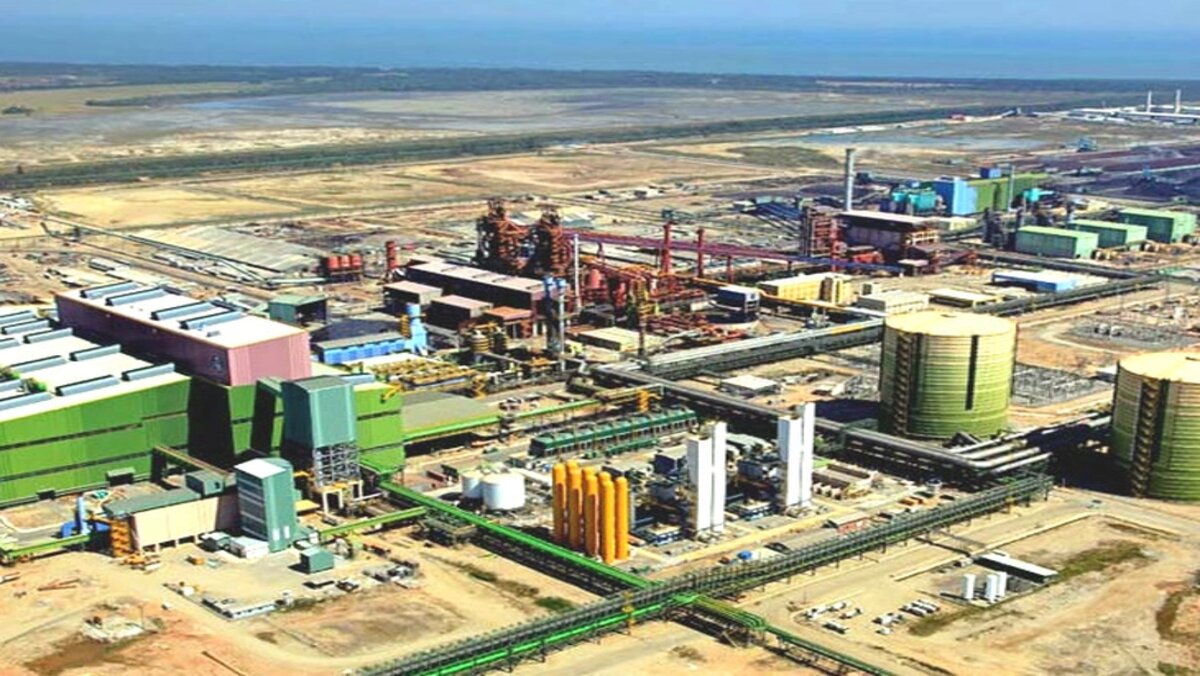
Ternium Steelworks Is Focused on Infrastructure Improvements to Ensure More Efficient Production and Will Make a Billion-Dollar Investment for the Renovation of Its Blast Furnace at the Santa Cruz Plant
Ternium is now moving towards new paths in search of an even more efficient structure for its production chain and will invest R$ 1.3 billion in its Santa Cruz Plant, located in Rio de Janeiro. Thus, for this Thursday (05/26), the company continues to seek to expand its production and the focus of future investment will be the renovation works on the infrastructure of the carioca furnace.
Ternium Seeks to Expand Productivity and Infrastructure and Will Make a Billion-Dollar Investment in Renovation Works of the Blast Furnace at the Santa Cruz Plant in Rio de Janeiro
Ternium is the largest steel company in all of Latin America and continues to seek new growth opportunities for its steel production on the continent. Moreover, the company has already invested R$ 11 billion in Brazil and is the largest shareholder of Usiminas, the country’s main flat steel producer, and is now looking to make these investments even heavier within its production chain in the national territory over the coming years.
Thus, the company is now preparing for an investment of R$ 1.3 billion aimed at renovation works on the blast furnace of its Santa Cruz Plant in the state of Rio de Janeiro over the coming years. This plan of works is happening at a time when Usiminas, in which Ternium holds shares, is also preparing for a renovation of the largest blast furnace at its plant in Ipatinga, located in the state of Minas Gerais.
-
Historic bankruptcy of Centauro shocks the market, and the century-old company puts more than 500,000 products, machines, and complete infrastructure up for online auction.
-
Brazil extracts 26.3 million tons of ore from what was previously treated as waste, transforming residues into wealth, producing over 3 million tons of sand, and demonstrating how national mining is relearning to generate value.

-
A $3.5 billion megaproject in Latin America pumps desalinated seawater at 1,050 liters per second over 194 km to keep a copper supermine in the Andes operational for another 20 years.
-
New shoe factory in Ceará is expected to create 400 jobs and strengthen the local economy.

Therefore, both companies are seeking to make their production infrastructure even more efficient in the future. In addition, Ternium has already initiated the processes to start the renovation work plan on the Santa Cruz Plant’s blast furnace as soon as possible, given that the lifespan of the 2.5 million tons annual capacity equipment extends until 2024.
Thus, the company will need to have the renovation work well underway this year so that steel production is not affected. Therefore, the investment of R$ 1.3 billion will be essential, as the company will be able to apply the capital in new solutions to expedite the project.
Renovation Works on the Blast Furnace Will Include Technological and Infrastructure Improvements to Boost Production at the Santa Cruz Plant
The Santa Cruz Plant, operated by Ternium, has the capacity to produce 5 million tons of steel plates per year, with a high level of sophistication, and is the largest steel manufacturer of the company, generating over 8,000 jobs, both direct and outsourced. Thus, the billion-dollar investment that the company will make on-site will serve to ensure that the plant becomes even more relevant, not only for Ternium, but also for the national and international steel market.
As a result, the renovation works on the plant’s blast furnace will involve an upgrade of the auxiliary technology used in the production chain, as well as a complete reconstruction of the thermal insulation system. To undertake this, the company is calculating months for all the renovation works to be completed and is already preparing for the period when the blast furnace will not be available for steel production.
The Santa Cruz Plant currently has two blast furnaces from Ternium, and with the renovation works planned, it will be able to further expand its production capacity after the year 2025, when the works on the structures are expected to be completed.






Seja o primeiro a reagir!