





 Portuguese
  English
  Spanish
  4 min of reading
  0 comments


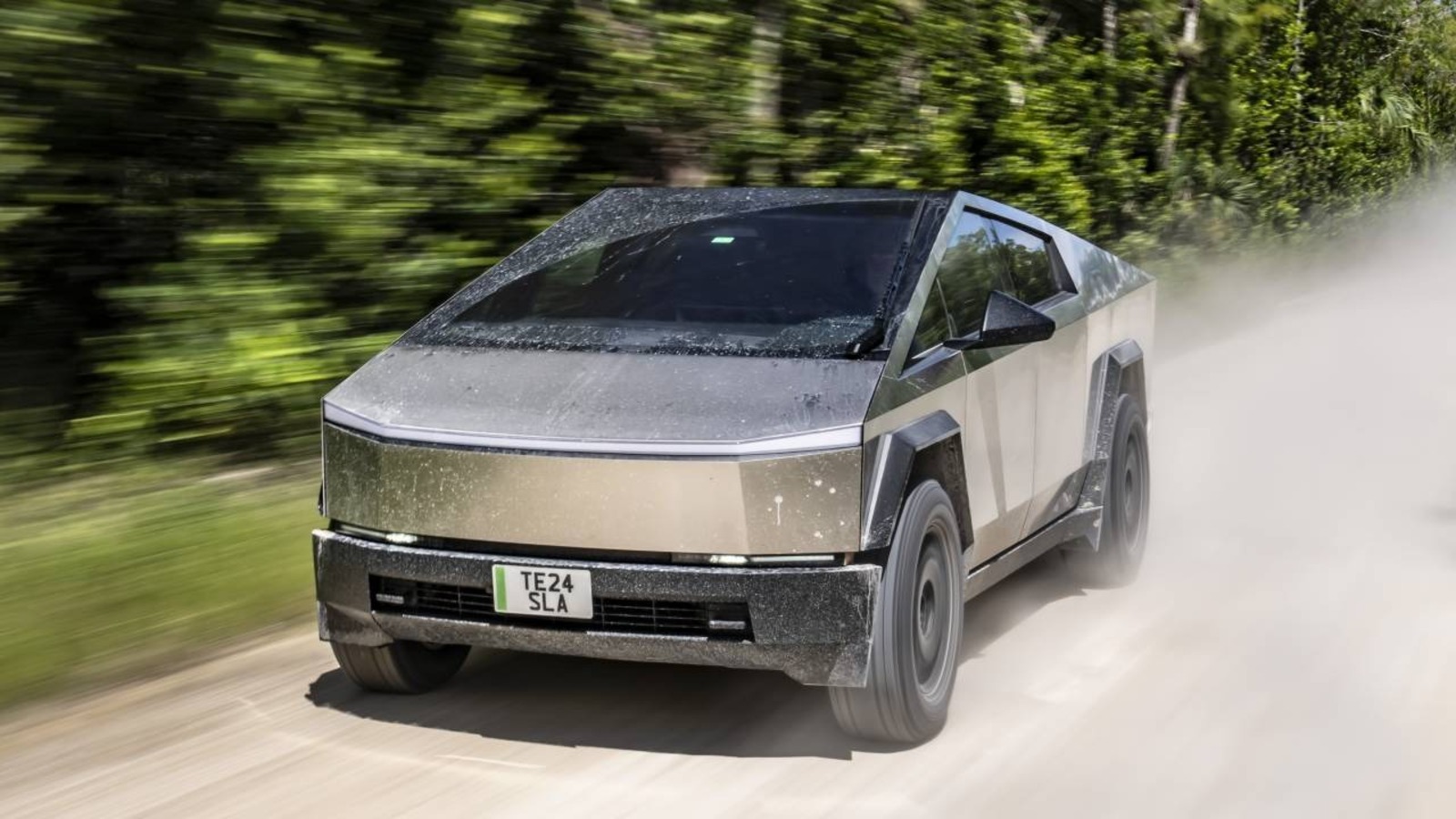
Cybertruck Cyberbeast Owner Reports Abnormal Tire Wear After 10,000 Km, Raising Debate About Durability in High-Performance Electric Vehicles
Weighing over 3,000 kg and boasting 845 hp, the Tesla Cybertruck in its Cyberbeast version impresses with its power. However, according to one owner of the electric pickup, the performance has a hefty price in another aspect: tire wear. In a forum for owners, he reported that after just 10,000 km, he already needs to replace them.
The complaint drew attention. The question that arises is whether this is an isolated problem or if other owners will face the same scenario.
Based on user reports, it seems this case is an anomaly. Nonetheless, the debate raised revealed common characteristics in electric vehicles that expedite tire wear.
-
The Argentine government celebrates the lowest poverty rate in 7 years, but experts warn that the methodology has changed, real wages have fallen, unemployment has risen, and the number of people on the streets of Buenos Aires has increased by 57% since Milei took office.

-
7.8 magnitude earthquake in Indonesia frightens the population, triggers tsunami alert, and hits an island with over 200,000 inhabitants this Thursday.

-
Google will finally let you change that embarrassing Gmail address you created in your teenage years without losing any accounts, logins, or old emails: the feature is already available in the United States.

-
Heading to Brazil in a Bonanza F33 single-engine aircraft: a couple departs from Florida on a visual flight, makes technical stops in the Caribbean to refuel and organize paperwork, and begins the staged crossing until they reach the country.


The Case of the Colorado Owner
“It must be a manufacturing defect,” stated the driver. A resident of Colorado, he received the Cybertruck on June 25.
Since then, he has driven just over 10,000 km and insists he has only driven on asphalt, without pushing the maximum speed of 212 km/h. He also assures that he did not excessively use the Beast Mode, the more aggressive version of the vehicle.
However, upon following the manual’s recommendation to rotate the axle wheels after reaching this mileage, he encountered an unpleasant surprise.
The tread grooves were very low. After measuring, he found that the front tires had 3.2 mm and the rear tires had 3.9 mm of depth.
The recommendation in the United States is to replace them when they reach 1.6 mm, the same rule applied in Brazil. New tires usually have between 6 and 9 mm.
For this reason, he scheduled a service appointment with Tesla to analyze the problem. He emphasized that the wear is abnormal and premature, as the natural expectation would be to drive at least double the mileage before replacement.
Why Electric Vehicles Wear Tires Faster
In electric cars, tire wear occurs at an accelerated rate. This is because the vehicle’s weight is greater, the motors are powerful, and the torque is instantaneous.
In addition, they use special compounds with low rolling resistance that enhance range but reduce durability.
Therefore, tires on electric vehicles typically last around 10,000 km less than in combustion models, as shown in a survey by a British fleet company. The study indicated a lifespan of 29,000 km.
Tesla Demands Even More From Tires
Additionally, Tesla tends to demand even more from tires. Even the Model 3, considered the least powerful of the brand, delivers 283 hp.
This led the manufacturer to include a feature called Relax Mode, which stiffens the pedal and softens the engine response, helping to reduce tire wear. Without it, rapid accelerations multiply the wear.
In the case of the Cyberbeast, the situation is even more critical. The model weighs over three tons and delivers 845 hp. It comes equipped with Pirelli Scorpion ATR or Goodyear Wrangler Territory RT tires, both all-season.
According to experts, these models typically last between 25,000 and 30,000 km, less than summer tires.
The Detail of the Used Tires
The car in question was using the Goodyear tires, which have a more off-road profile. This may have contributed to the rapid deterioration, as the owner only drove on asphalt.
The design of these tires, with shallower tread, aims to improve range and prevent mud buildup. However, this characteristic can accelerate wear during urban and highway driving.
Is It an Isolated Case or a Manufacturing Problem?
Other users on the forum, however, pointed out that this case seems to be an exception. No other owner has reported such significant wear after just 10,000 km.
This reinforces the idea that driving behavior may have played a significant role. Perhaps the driver did not frequently use the Relax Mode, exposing the tires to the full power of the three electric motors.
While insisting on a faulty batch, the driving behavior may explain part of the situation. After all, having over 800 hp at one’s disposal requires caution and responsibility.
Even though Tesla will investigate, many believe this is an isolated incident, but it raises a warning for future owners of the more radical version of the Cybertruck.
With information from Xataka.









-

-

2 pessoas reagiram a isso.