





 Portuguese
  English
  Spanish
  3 min of reading
  0 comments


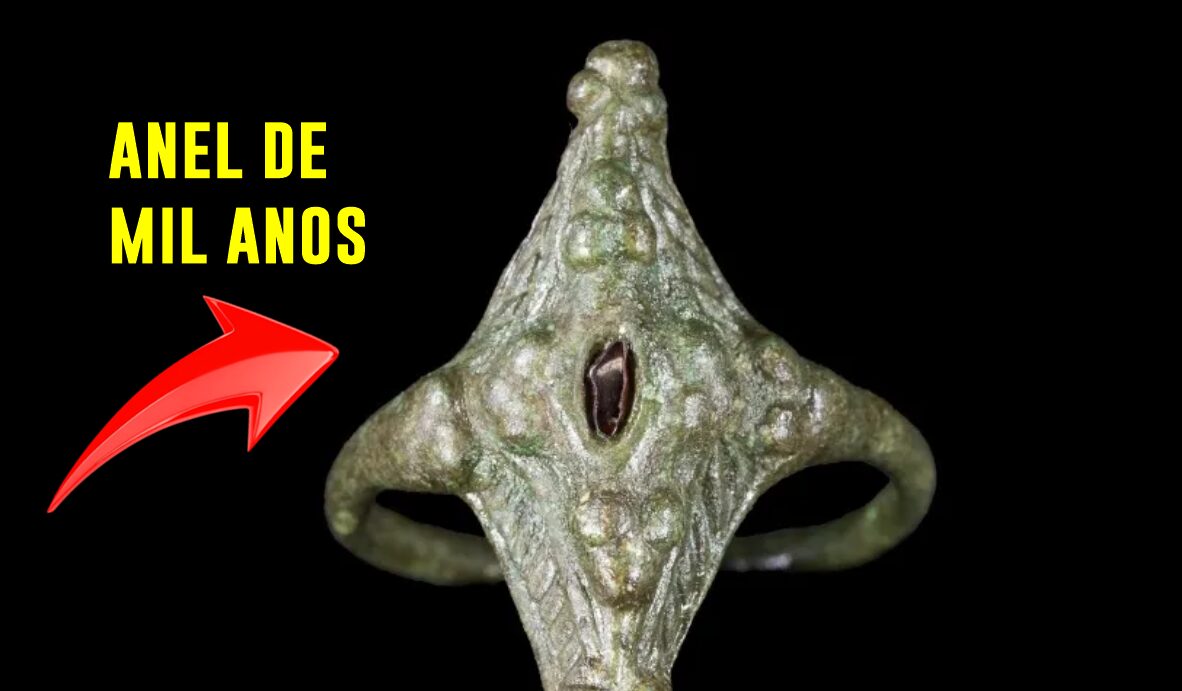
On The Last Day Of An Archaeological Dig In Scotland, A Volunteer Made An Amazing Discovery: A 1,000-Year-Old Ring. See How This Historical Relic Was Found At The End Of The Mission!
During an archaeological dig in northeastern Scotland, a volunteer made a remarkable discovery: a 1,000-year-old ring that may have belonged to the Picts, an ancient people who inhabited the region during the Middle Ages. The artifact, which has a pipe shape and a red stone in the center — possibly a garnet or glass — was found in Burghead, the site of an important Pictish settlement.
The discovery happened on the last day of a two-week archaeological investigation led by archaeologist Gordon Noble from the University of Aberdeen. While volunteers were examining the floor of an apparently insignificant ancient house, Ralph, one of the volunteers, found the ring. “I was cleaning the floor and initially saw a metal pin. Then, suddenly, there was the ring,” Ralph told BBC Scotland News.
Although he initially doubted the importance of the discovery, Ralph realized the object was special when he showed it to a colleague. When archaeologist Gordon Noble saw the ring, he immediately knew it was something significant. “It was incredible. Even before the conservation work, we could see it was an exciting find, with glimpses of the possible garnet setting,” Noble reported.
-
He started running at 66 years old, broke records at 82, and is now a subject of study for having a metabolic age comparable to that of a 20-year-old, in a case that is intriguing scientists and inspiring the world.

-
Oldest tree on the planet reappears after 130 years of searches: Wattieza, 385 million years old, was 10 meters tall and had no leaves or seeds; Gilboa fossils in New York solved the mystery in 2007.

-
A 48-square-meter house assembled in hours with 4,000 bricks made of recycled plastic that does not absorb moisture, has natural thermal insulation, and costs less than 90,000 reais in a complete kit.

-
Luciano Hang revealed that Havan’s air fleet has already accumulated more than 20,000 landings, 10,000 flight hours, and 6 million kilometers traveled, and he says that without the planes, the company would never have grown so quickly.


Who Were The Picts

The Picts, known as the “painted people,” lived in what is now northeastern Scotland between the 4th and 10th centuries, and were known for their resistance to Roman invasions. The Burghead fort, where the ring was discovered, was the largest known Pictish settlement, existing between the 6th and 10th centuries until the collapse of that society. It was believed that the construction of the modern town of Burghead in the 19th century had destroyed part of the archaeological record of the site. However, recent excavations led by Noble have revealed crucial information about the ancient people who lived there.
The discovery of this ring may provide new insights into the lives of the Picts in Burghead, especially since few Pictish rings have been found to date. The team now hopes to determine whether the ring was created on-site and for whom it may have been made. The artifact has been sent to the National Museum of Scotland for a thorough analysis, with hopes that the research will reveal more details about Pictish society and culture.
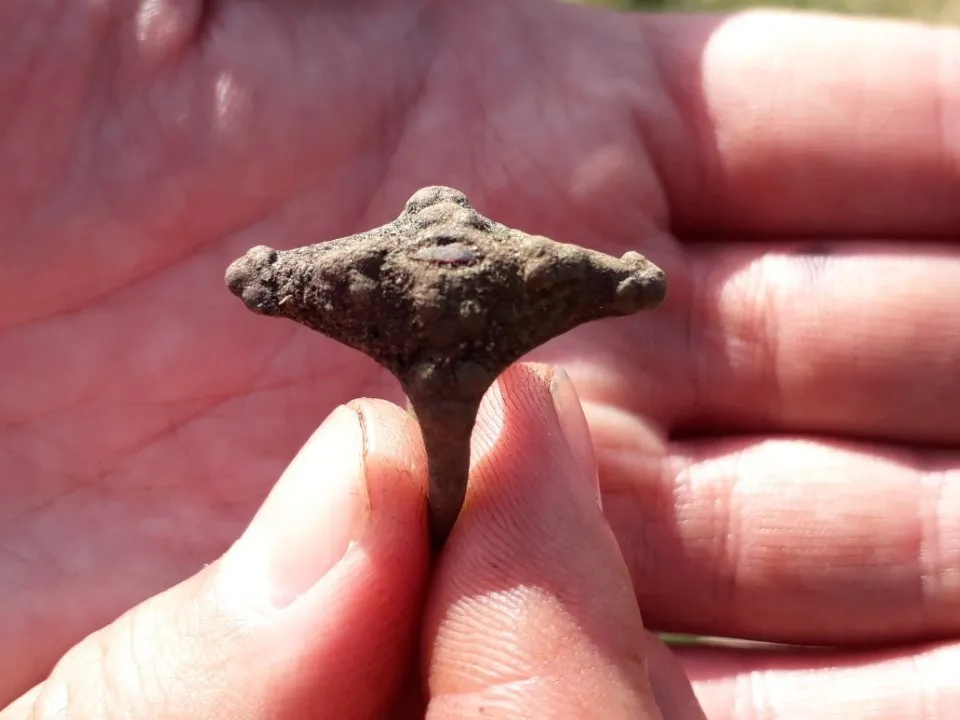
University of Aberdeen
The volunteer Ralph, who found the ring, joined the dig after retiring and seeing an ad on social media. “I have always been interested in archaeology, and after retirement, I was looking for something interesting to do. When I saw the call for volunteers, I decided to participate since Burghead is where I grew up,” Ralph explained to Fox News Digital.
The dig in Burghead continues to uncover new details about the Pictish people and their history, and the 1,000-year-old ring is yet another piece of the puzzle that archaeologists are trying to assemble.









Seja o primeiro a reagir!