





 Portuguese
  English
  Spanish
  5 min of reading
  1 comment


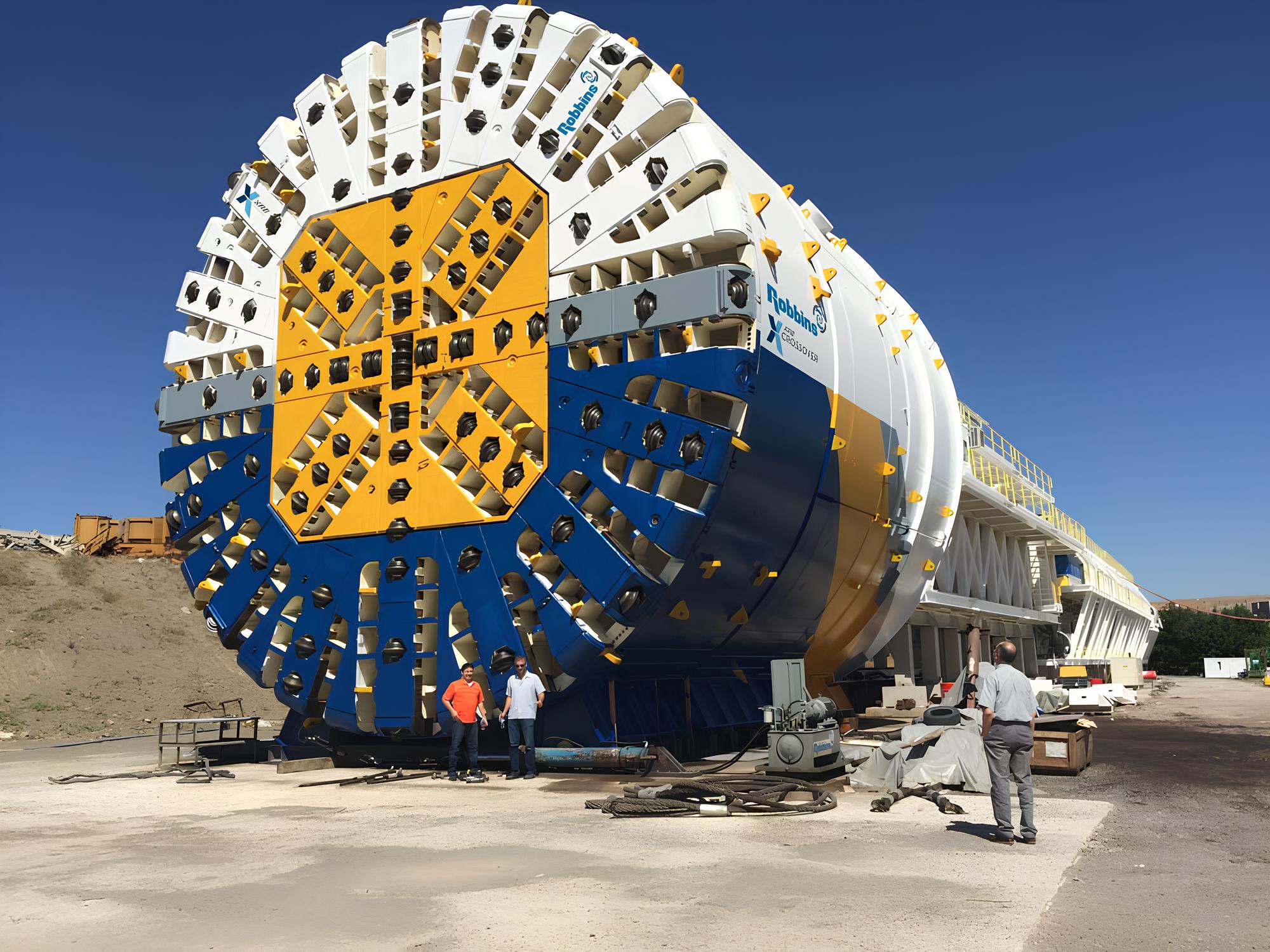

Few See It, but It Transforms Metropolises Below Ground. Meet the TBM — the 13,000-Ton Giant Tunnel Boring Machine That Digs Tunnels Under Cities with Surgical Precision and Is Essential for the Future of Underground Engineering
The acronym TBM, which comes from the English Tunnel Boring Machine – TBM tunnel, may seem technical, but it represents one of the biggest advances in modern underground engineering. Known in Brazil as “tatuzão“, the TBM is a giant tunnel boring machine used to dig tunnels in densely populated urban areas — without damaging the surface or disrupting traffic in cities.
At over 100 meters long, weighing 13,000 tons and with excavation shields exceeding 15 meters in diameter, these machines are true mobile underground factories. They excavate, remove debris, install concrete rings to form the internal lining, and keep digging — all in an automated manner with millimeter precision.
How Does a Machine That Digs Tunnels Beneath Cities Work? Understand the Functionality of the TBM Tunnel
The heart of a TBM is a rotating disc at the front called the cutter head. Equipped with dozens of tools, this cutter head spins and excavates the soil or rock, fragmenting the material while slowly advancing.
-
Trump wanted to spend $400 million on the White House, but the courts prohibited the million-dollar construction.

-
How the Egyptians erected giant structures like pyramids, temples, and obelisks without modern technology, cranes, or engines still amazes the world and reveals the power of engineering based on ramps, levers, ropes, and colossal organization.

-
The induction stove you know may be numbered: a new invisible technology hides the stove under the stone countertop, heats only the pot, and promises to cook up to 50% faster while using less energy.

-
Garlic with pure honey undergoes a natural fermentation that transforms the two ingredients into a versatile condiment for marinades, sauces, and roasted vegetables, and it can also be used as a natural treatment in your garden.

At the same time, the conveyor system transports the waste to the back, where it is removed by trains or belts. At the rear of the machine, pre-cast concrete segments are installed in the shape of circular rings, forming the tunnel.
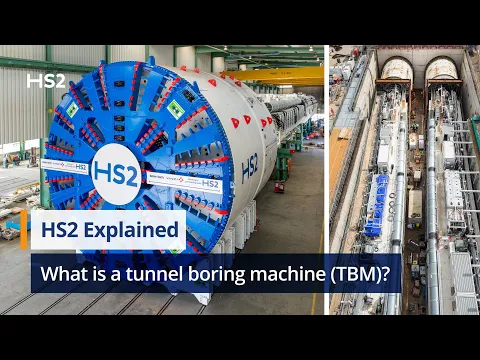

This continuous process allows the TBM to advance up to 15 meters per day, depending on soil conditions, terrain type, and tunnel diameter. All of this with minimal risk of seismic shocks or collapses, which makes the technology ideal for cities with sensitive infrastructure.
Applications of TBM Around the World and in Brazil
TBM machines are used worldwide to excavate:
- Subway lines;
- Road tunnels;
- Stormwater galleries;
- Sewage systems;
- High-speed rail transport infrastructure.
Notable Cases Around the World:
- Crossrail (London): one of the largest infrastructure projects in Europe, it excavated over 42 km of tunnels beneath the British capital with 8 TBMs operating simultaneously.
- Gotthard Base Tunnel (Switzerland): the longest railway tunnel in the world (57 km), excavated in part with TBMs.
- Seattle SR 99 Tunnel (USA): excavated by “Bertha”, a TBM with a diameter of 17.5 meters, one of the largest ever built.
And in Brazil?
The São Paulo Metro is the most famous example of TBM use in the country. On the Line 4-Yellow, for example, the “Tatuzão” machine excavated 6.5 km of tunnels beneath densely populated areas such as Pinheiros and Consolação. The operation was so precise that residents didn’t even notice that the excavation was happening beneath their feet.
The Line 6-Orange, currently under construction, uses one of the largest TBMs ever brought to the Southern Hemisphere: measuring 109 meters in length and nearly 11 meters in diameter, the machine can advance through rocky and sandy soil with equal efficacy.
Why Are TBMs Essential in Modern Underground Engineering?
Underground engineering is increasingly present in modern cities that need to expand without taking up more surface space. Subway lines, drainage tunnels to prevent flooding, and buried sewage networks are examples of essential infrastructure that require efficient and safe underground excavation.
The giant boring machines like TBMs offer numerous advantages:
- Safety: the risk of collapse is minimal.
- Precision: the course can be programmed with millimeter accuracy.
- Speed: large volumes of soil are excavated daily.
- Less Urban Impact: there is no need for large open trenches.
Additionally, TBMs reduce the environmental and social impact of construction, making them fundamental in sustainable urban mobility projects.
The Cost of Operating a TBM: Millions Underground
A TBM is not cheap. The costs can exceed R$ 300 million, depending on the diameter and complexity of the machine. Furthermore, there are logistical costs for assembling, operating, and disassembling the structure.
Each TBM must be transported in parts using hundreds of special trucks, and assembled at the construction site. The commissioning and decommissioning process can take months, requiring highly qualified professionals in mechanics, geotechnics, and robotics.
Despite this, the benefits of its application outweigh the costs. In projects like Line 6 of the São Paulo Metro, the savings generated in property expropriations and urban disruptions are enormous.
The Lifespan of TBMs: Reuse and Customization
After completing the tunnel, the TBM can be:
- Dismantled and reused in another project;
- Sold to other countries;
- Or partially discarded, depending on wear.
Companies like the German Herrenknecht AG, world leader in TBM manufacturing, develop customizable models for different diameters, soil types, and geological pressures. In Brazil, some TBMs used in São Paulo were later sold to countries in Latin America, with adaptations for new projects.
Curiosities About Giant Tunnel Boring Machines
- Some TBMs are named after women, a tradition that dates back to the medieval belief that female figures would protect miners.
- The TBM used in Seattle, named Bertha, weighed over 6,000 tons and had a diameter equivalent to a five-story building.
- In certain projects, such as the Thames drainage tunnel (London), the TBM operated over 60 meters below the surface, never to be seen.
The TBM and the Future of Underground Cities
With the scarcity of urban space, many metropolises have invested in underground infrastructures. In addition to subways, there are also:
- Underground parking lots;
- Electrical and fiber optic cable tunnels;
- Green tunnels for water reuse;
- Subterranean express lanes for autonomous vehicles.
Elon Musk, for example, bets on this future with his company The Boring Company, which develops high-speed tunnels for urban transportation in cities like Las Vegas, using smaller, yet equally efficient mini-TBMs.
The expansion of underground engineering depends directly on these giant boring machines. The precision, safety, and efficiency of the TBM make them the protagonists in building the cities of the future — invisible, yet vital.
The Invisible Machine That Transforms Cities
The machine that digs tunnels under cities is not a concrete-devouring monster, but a silent ally of urban engineering. With its dozens of meters in length and thousands of tons of technology, the TBM represents the pinnacle of precision engineering applied to the subsoil.
As the surface of metropolises becomes increasingly congested, it is underground that hope for mobility, sanitation, and infrastructure grows. And it is there that TBMs operate — discreet, powerful, and tireless.
In times of accelerated urbanization, it is impossible to imagine the future of large cities without the operation of a giant boring machine like the TBM. It may never be seen by those living on the surface, but it will remain, for many years, a fundamental part of the invisible foundation that supports urban life.






Será que algo impede essa máquina de ser usada nos subterrâneos do Rio de Janeiro? Talvez a Linha 3 já estivesse pronta…