





 Portuguese
  English
  Spanish
  4 min of reading
  1 comment


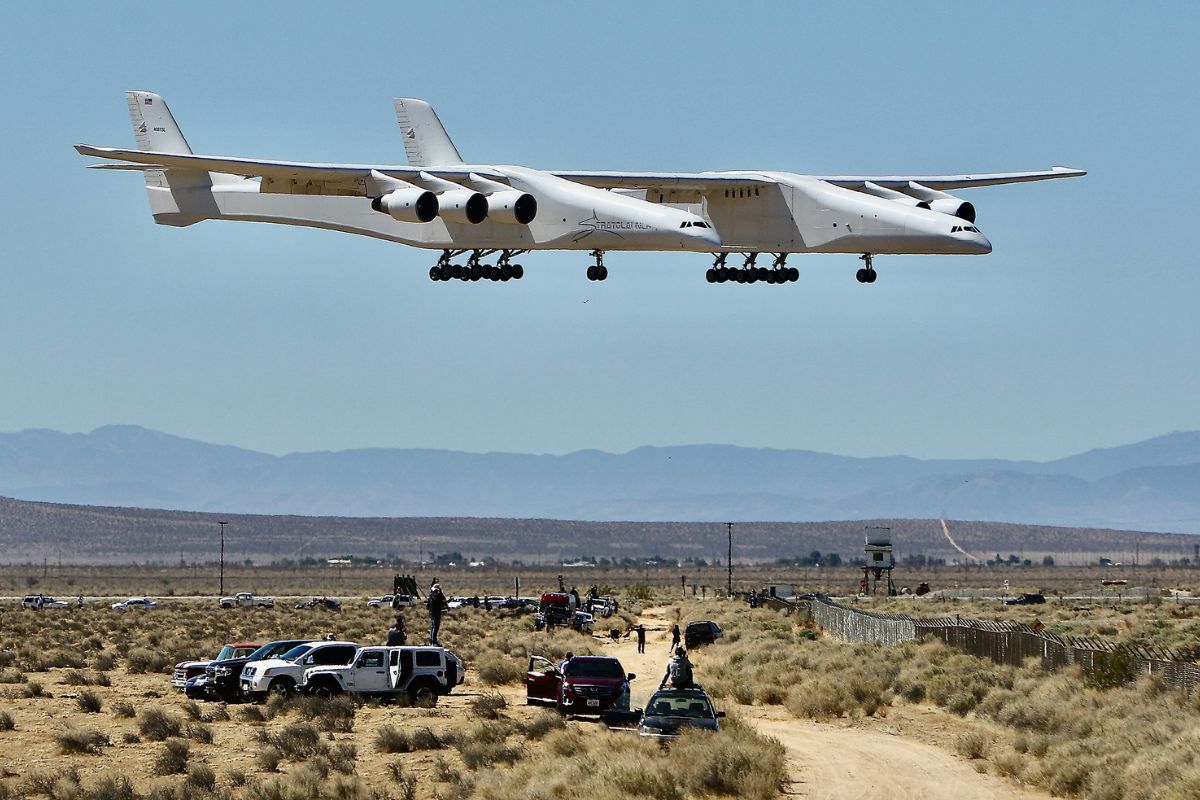

Meet the Stratolaunch Roc Airplane, the largest operational aircraft in the world by wingspan, featuring two fuselages and a new mission: to test ultra-high-speed flight technologies.
The Stratolaunch Roc airplane, formally known as Scaled Composites Model 351, holds the title of the largest operational aircraft by wingspan, measuring an impressive 117 meters. Originally conceived in 2011 to launch rockets and place satellites into orbit, its purpose has evolved significantly.
After a change of ownership and strategic reassessment, the Stratolaunch Roc airplane was redirected to serve as a launch platform for testing hypersonic vehicles. This adaptation reflects the growing global importance of hypersonic technology and the versatility of this colossal machine.
The Evolution of the Stratolaunch Roc Airplane
The conception of the Stratolaunch Roc airplane is linked to the vision of Paul G. Allen, co-founder of Microsoft, who sought to expand access to low Earth orbit. Announced in December 2011, the project involved collaboration with Burt Rutan and his company Scaled Composites for the design and construction of the aircraft. Allen’s death in 2018 and Stratolaunch’s acquisition by Cerberus Capital Management in 2019 were crucial.
-
The Argentine government celebrates the lowest poverty rate in 7 years, but experts warn that the methodology has changed, real wages have fallen, unemployment has risen, and the number of people on the streets of Buenos Aires has increased by 57% since Milei took office.

-
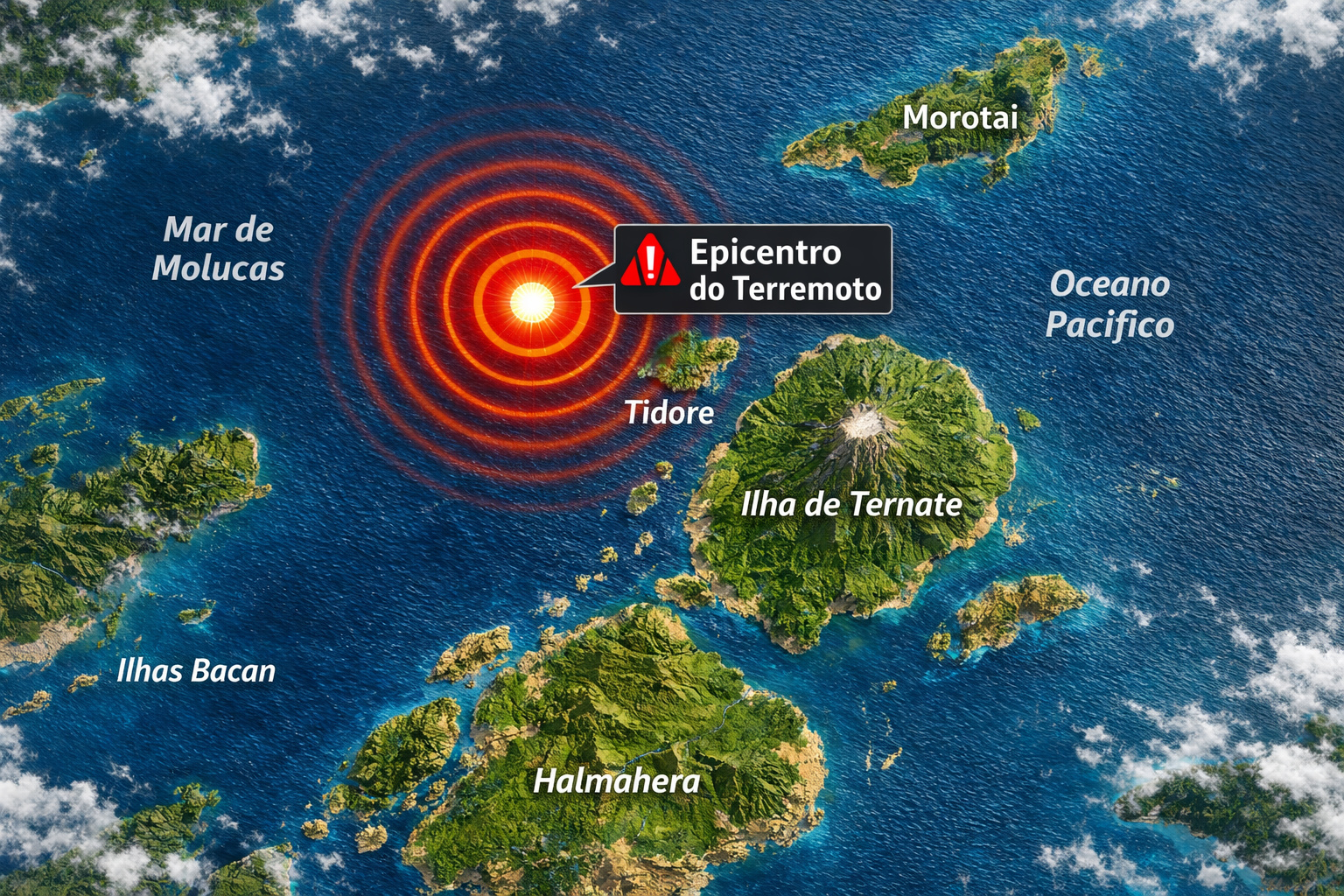
7.8 magnitude earthquake in Indonesia frightens the population, triggers tsunami alert, and hits an island with over 200,000 inhabitants this Thursday.
-
Google will finally let you change that embarrassing Gmail address you created in your teenage years without losing any accounts, logins, or old emails: the feature is already available in the United States.

-
Heading to Brazil in a Bonanza F33 single-engine aircraft: a couple departs from Florida on a visual flight, makes technical stops in the Caribbean to refuel and organize paperwork, and begins the staged crossing until they reach the country.

The new management redirected the aircraft’s focus to the growing hypersonic testing market, aligning with U.S. defense needs. The Roc’s fundamental capability to carry heavy and bulky payloads to high altitudes for mid-air release allowed for this adaptation, even with the cancellation of original orbital launch vehicles.
Monumental Engineering: The Design and Specifications of the Stratolaunch Roc Airplane

One of the most distinctive features of the Stratolaunch Roc airplane is its twin-fuselage design, each measuring 73 meters long, interconnected by a massive center wing section. This configuration allows for centralized transport and release of payloads, such as the Talon-A vehicles, enhancing safety and stability. The right fuselage houses the cockpit for a crew of three (two pilots and one flight engineer).
Measuring 117 meters, the Roc boasts the largest wingspan of any aircraft that has ever flown. Its primary structure is made of carbon fiber composites, combined with reused components from two Boeing 747-400s, including six Pratt & Whitney PW4056 engines, avionics, and a 28-wheel landing gear. The aircraft has a maximum takeoff weight of approximately 590 tons and can carry an external payload of up to 250 tons.
Operational Capabilities and the Launch of Hypersonic Vehicles
The air-launch concept employed by the Stratolaunch Roc airplane offers advantages such as flexibility in launch locations and mitigation of weather impacts. The release of payloads at high altitudes (around 35,000 feet) reduces initial atmospheric drag, improving efficiency for the launched vehicle. The central pylon, installed in April 2022 and developed by Dynetics, is crucial for integrating and releasing payloads like the hypersonic Talon-A vehicle, using explosive bolts for separation.
A typical mission profile begins at the Mojave Air and Space Port in California. The Roc ascends to the designated altitude, releases the Talon-A, which then ignites its own engine (Hadley from Ursa Major) to achieve hypersonic speeds (Mach 5+). After the test, the Talon-A (in reusable versions like TA-2) autonomously lands, and the Roc returns to base.
The Development Trajectory
The development of the Stratolaunch Roc airplane has been marked by several milestones. After the rollout in May 2017 and the first flight on April 13, 2019, the company underwent acquisition by Cerberus Capital Management in October 2019, which redefined its focus to high-speed testing. Test flights resumed in April 2021.
Key moments include the first captive transport flight of the test separation vehicle Talon-A (TA-0) in October 2022. In March 2024, the first in-flight release and the first powered flight of the Talon-A (TA-1) occurred. The first successful hypersonic flight with recovery of the Talon-A2 (TA-2) took place in December 2024, followed by a second flight in March 2025, confirming its reusability.
The Future at High Speed
The Stratolaunch Roc airplane will continue to be the primary platform for Talon-A vehicles. To increase flexibility, Stratolaunch acquired the “Spirit of Mojave,” a Boeing 747-400 (formerly Cosmic Girl from Virgin Orbit), which is being modified to launch the Talon-A and is expected to operate from summer or fall 2025, allowing tests from global locations. With this mixed fleet, the company aims to increase the testing cadence to one per month in 2025 and more in 2026.
Stratolaunch is establishing itself as a key player in the ecosystem of defense and aerospace, supporting programs like the MACH-TB of the Pentagon and contracts with the Missile Defense Agency (MDA). The ability to provide frequent and relatively affordable access to the hypersonic flight environment, especially with the reusability of the Talon-A, fills a critical gap and accelerates the development of strategic technologies.









Ótima matéria