





 Portuguese
  English
  Spanish
  6 min of reading
  0 comments


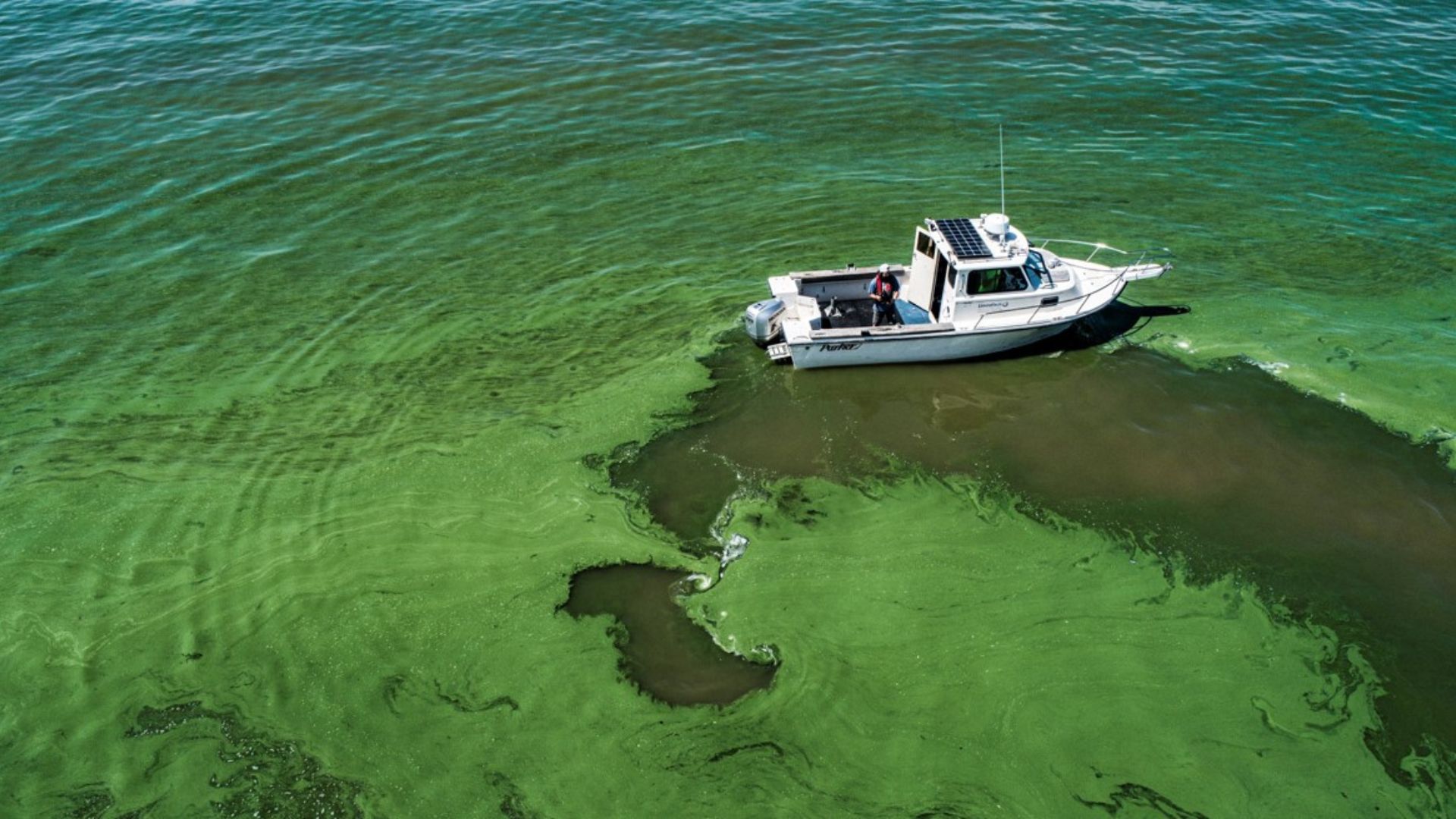
Algal blooms in European rivers cease to be merely a sign of pollution and begin to feed production chains with biogas, fertilizers, and industrial inputs, connecting environmental recovery, technological innovation, and circular economy in a model that seeks to reduce the impacts of eutrophication.
The removal of algae and cyanobacteria that accumulate in rivers and lakes in Lithuania and Poland has started to supply the production of biogas, fertilizers, phycocyanin, and cosmetics in a European initiative aimed at repurposing a biomass typically associated with the degradation of water quality.
The proposal, developed in the AlgaeService for LIFE project, combines the cleaning of aquatic environments with the attempt to give economic use to a material that generally appears only as a visible symptom of nutrient pollution.
This effort is supported by a known problem faced by environmental authorities in different countries.
-
Spain surprises the world by erecting 62 artificial dunes, mixing sand with natural remains of posidonia, and causing the structure to lose only 1.4% of its volume in 1 year.

-
With 16 Bulava missiles, improvements in acoustic stealth, and a design focused on silent patrols, Russia’s nuclear submarine was born to ensure Moscow’s invisible retaliation and has become one of the pillars of its maritime strength.

-
‘Populous’ city in Rio among the worst in Brazil in national ranking and exposes silent development crisis.

-
Couple buys house in the South Zone of São Paulo, opens a hidden door in the garage, and finds a secret wine cellar with dozens of old wines forgotten since the 1970s.

When there is an excess of nitrogen and phosphorus in water bodies, the growth of algae can accelerate, altering the ecological balance and reducing oxygen availability, a phenomenon associated with eutrophication.
NOAA describes this process as a result of excessive nutrient enrichment, while the EPA states that algal blooms can block light and compromise the survival of fish and other forms of aquatic life.

In parallel to the environmental impact, the intense presence of cyanobacteria is also treated as a public health issue.
The World Health Organization reports that cyanobacteria and cyanotoxins can affect environments used for supply and recreation, which requires adequate monitoring and management.
This scenario helps explain why biomass removal projects have ceased to be seen merely as cleaning operations and have begun to integrate broader strategies for mitigation, control, and repurposing.
Circular economy transforms algae into raw material
In the European case, the central logic was to transform an environmental liability into raw material.
Public information from the project indicates that the biomass collected in freshwater areas was directed to different production chains, rather than just being discarded.
Among the applications tested are energy recovery, agricultural use, and the extraction of commercially valuable compounds, in an attempt to bring environmental management closer to bioeconomy and circular economy.
Phycocyanin, one of the products mentioned by the project, is a blue pigment obtained from certain cyanobacteria and microalgae, with industrial interest in segments such as food, cosmetics, and biotechnology.

By including this type of application, the initiative broadens the debate on the destination of the removed material and suggests that biomass can have value beyond energy or agronomic use, as long as collection and processing are technically feasible and safe.
Technology for removing algae in rivers and lakes
The viability of the model depends not only on the market for the derivatives but also on the ability to remove the material from the water on an operational scale.
Therefore, the project developed and tested prototypes of machines aimed at harvesting freshwater macroalgae and cyanobacteria under real conditions, including rivers, lakes, and the Kaunas region.
This point is crucial because the dispersion, depth, and volume variation of water often hinder the efficient removal of this biomass in the natural environment.
The results released by the program indicate that the initiative has advanced beyond the conceptual stage.
The final summary of the project reports that the equipment was manufactured and subjected to prolonged field tests, with the aim of demonstrating an integrated chain of collection, processing, and use of the removed materials.
Although commercial expansion depends on economic and regulatory factors, the project was presented as proof that biomass can cease to be treated merely as difficult-to-manage waste.
Agricultural use drives economic interest
The initiative also drew attention for its trials aimed at the agricultural sector.

According to the European Commission’s disclosure about the project, the harvested biomass showed the capacity to stimulate the growth of barley, oats, and potatoes, in addition to increasing the productivity of these crops in tests reported by the initiative.
This data brings the proposal closer to the real economy because it suggests a pathway for using a material that leaves the water already with the potential to enter known production chains.
This type of application does not eliminate the technical challenges involved in transportation, processing, and standardization of biomass, but it changes the framing of the problem.
Instead of associating blooms only with murky water, fish kills, and health risks, the project shifts part of the attention to what can be done after removal.
As a result, the discussion about eutrophication gains a practical axis, linked to the useful destination of a material that previously remained in the realm of disposal.
Nutrient control remains a central challenge
Despite the economic potential, the removal of biomass does not replace the control of the causes that fuel the blooms.
NOAA and the EPA maintain the assessment that the root of the problem lies in the excessive input of nutrients into water bodies, especially nitrogen and phosphorus, from multiple human activities.
Without reducing this load, the tendency is that episodes of proliferation will continue to recur, requiring new management operations and increasing the environmental cost of degradation.
Still, the case of Lithuania and Poland indicates that the public response to the problem can be more sophisticated than simply collecting and discarding excess algae.

By connecting the cleaning of rivers and lakes, technological development, and the production of inputs, the project begins to engage with different agendas simultaneously, such as water security, industrial innovation, renewable energy, and agriculture.
This intersection of interests helps explain why the experience gained visibility within the LIFE program of the European Union.
New destination for biomass changes environmental approach
The strength of the initiative lies in the contrast between the origin and destination of the biomass.
On one side, intense blooms continue to be a clear sign of ecological imbalance, with recognized effects on water quality, biodiversity, and human health.
On the other side, the material removed from these environments begins to circulate as a resource with industrial, agricultural, and energy utility, opening space for an approach less limited to visible damage and more focused on recovery with economic value.
In this arrangement, the utilization of biomass does not emerge as an isolated solution to eutrophication but as a complementary tool within a broader environmental management strategy.
The European case shows that the removal of algae and cyanobacteria can go beyond emergency containment and integrate into usage chains that reinforce the logic of the circular economy, without losing sight of the fact that prevention still depends on controlling the nutrient sources that reach rivers and lakes.







Seja o primeiro a reagir!