





 Portuguese
  English
  Spanish
  5 min of reading
  0 comments


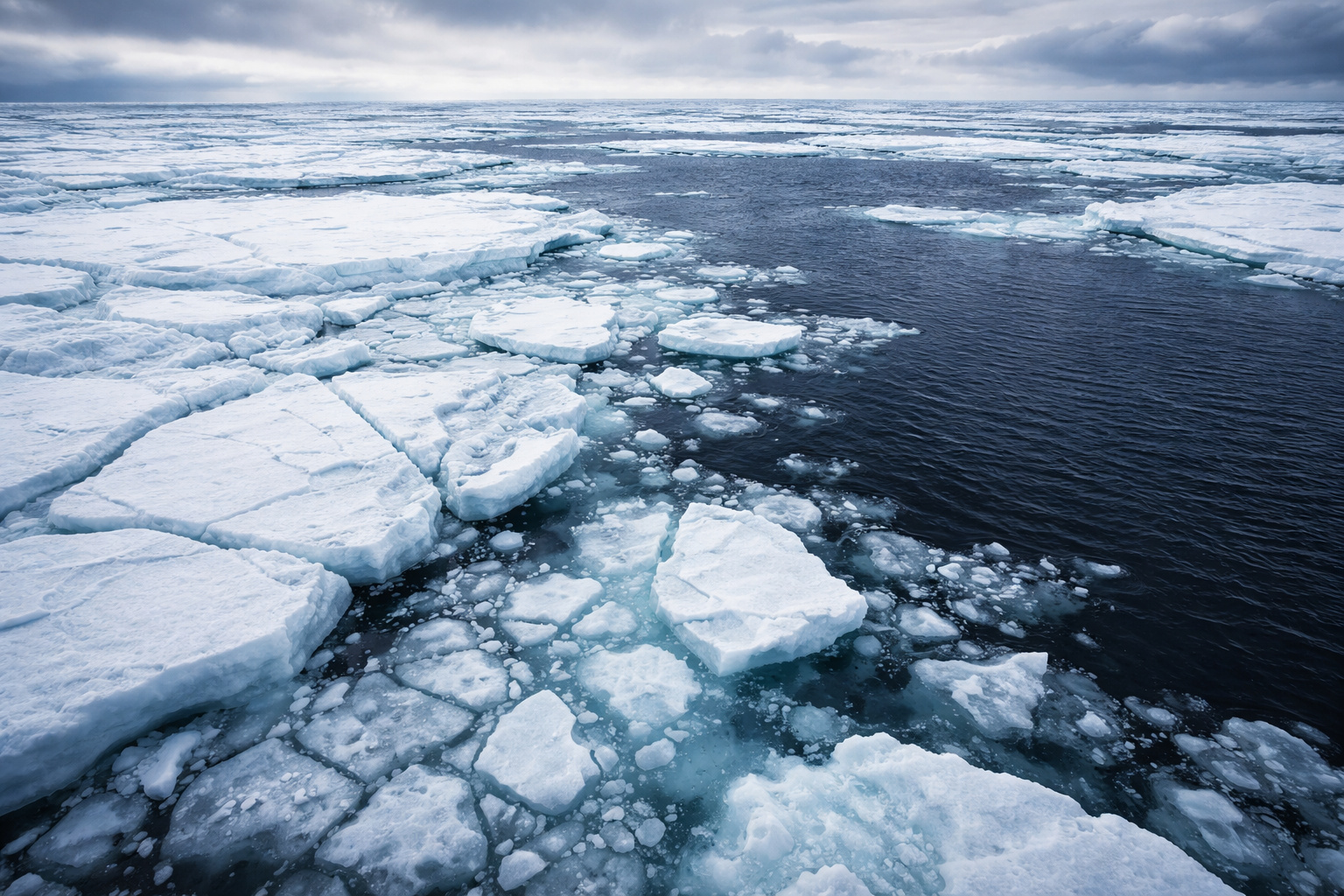
Arctic records one of the lowest ice levels since 1979 in 2026 and loss accelerates global warming by reducing solar reflection.
In March 2026, measurements taken by satellite and consolidated by the National Snow and Ice Data Center (NSIDC) confirmed that the maximum extent of sea ice in the Arctic Ocean reached one of the lowest levels ever recorded since the beginning of the historical series in 1979. According to official data released by the NSIDC, the annual maximum extent of ice has shown a consistent downward trend in recent decades, reflecting structural changes in the polar climate system.
The most relevant data is that, even at the height of winter, a period when ice should reach its greatest coverage, recovery has been limited compared to historical averages. This behavior had already been observed in recent years and indicates a possible transition to a new climate pattern in the Arctic, with less sea ice extent even during seasonal peaks.
Why the winter ice peak is one of the most important climate indicators
The annual cycle of sea ice in the Arctic is considered one of the main indicators of the planet’s climate state.
-
The waste that can double a household’s water bill is not in the faucet or the shower; it happens hidden within the walls and can go unnoticed for months, according to sanitation experts.

-
Darkness can surpass light in an optical phenomenon confirmed by scientists, which expands the understanding of relativity and reveals new behaviors of waves in the universe.

-
A Brazilian scientist created a pen that touches human tissue and identifies cancer cells in seconds using a drop of water and artificial intelligence, and Lívia Eberlin’s invention has already been used in over 400 surgeries in the United States and Brazil.

-
An inventor in China creates flying drones shaped like swords that respond to hand gestures in real time, with technology based on motion sensors transforming interaction into a scene worthy of a movie and redefining the control of machines in the air.


During the winter months, the absence of solar radiation and extremely low temperatures allow ice to expand, typically reaching its maximum in March. This peak serves as a kind of “thermal reserve” that influences the behavior of ice throughout the rest of the year.
When this maximum value appears reduced, it means that the system begins the melting period with less ice mass available. This creates a more fragile base for summer, accelerating ice loss and intensifying warming in the region. This phenomenon is particularly concerning because it indicates that the seasonal recovery of the Arctic is becoming increasingly inefficient.
The role of sea ice as a global thermal regulator
Sea ice plays an essential role in the Earth’s thermal balance through a mechanism known as albedo.
Ice-covered surfaces reflect a large portion of solar radiation back into space, reducing the amount of energy absorbed by the planet. This effect acts as a natural cooling system.
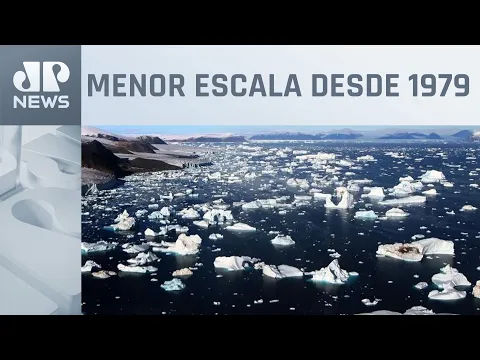

When ice coverage decreases, larger areas of ocean become exposed. Since water has low reflectivity, it absorbs much more solar heat. This process transforms the Arctic from an energy reflector into a heat absorber, directly intensifying global warming. It is one of the most critical climate feedback mechanisms.
Arctic amplification accelerates warming at a rate above the global average
Several scientific studies indicate that the Arctic is warming at a significantly faster rate than the rest of the planet, a phenomenon known as Arctic amplification.
This effect occurs due to a combination of factors such as ice loss, changes in atmospheric circulation, and increased heat absorption by the oceans.
In some recent analyses, warming in the region is up to four times faster than the global average, making the Arctic one of the most sensitive areas to climate change. This accelerated pace transforms the region into an early indicator of the changes that may occur on a planetary scale.
How ice reduction alters the climate in other regions of the world
The influence of the Arctic extends far beyond the polar regions. The decrease in ice coverage directly interferes with the dynamics of atmospheric currents, especially the behavior of the polar jet. This high-altitude air flow regulates climate patterns in various parts of the Northern Hemisphere.

When the Arctic warms more rapidly, the temperature contrast between regions decreases, weakening the polar jet. This can result in more unstable and extreme weather patterns.
Events such as intense heat waves, severe storms, and periods of unusual cold are increasingly associated with changes in Arctic dynamics.
Relationship between sea ice and ocean levels
Although sea ice itself does not directly contribute to sea level rise when it melts, its reduction triggers processes that directly affect the oceans.
The increase in water temperature accelerates the melting of large continental ice masses, especially in Greenland.
This land ice, when transformed into liquid water, directly contributes to rising ocean levels. Additionally, the warming of the water causes thermal expansion, further amplifying this effect. Thus, the loss of sea ice acts as an indirect trigger for broader changes in the global ocean system.
Impacts on Arctic fauna and ecosystems
Sea ice is a fundamental element for the survival of various species. Animals such as polar bears, seals, and walruses directly depend on ice for essential activities such as hunting, resting, and reproduction.
With the reduction of ice coverage, these animals face greater distances to find food and suitable areas for survival.
This imbalance alters entire food chains and compromises the stability of local ecosystems. The loss of habitat is considered one of the most immediate consequences of ice reduction.
Historical trend of decline reinforces structural change
Since the beginning of satellite monitoring in 1979, the extent of Arctic sea ice has shown a consistent declining trend.
This reduction is more pronounced during the summer, but recent data shows that the impact is already reaching the periods of maximum extent in winter.
The persistence of this trend over decades indicates that the system is not just varying, but undergoing a structural transformation. This behavior reinforces the scientific understanding that the Arctic is adjusting to a new climate regime.
What the 2026 data indicates about the future of the Arctic
The numbers recorded in 2026 show that ice recovery is becoming increasingly limited, even under favorable winter conditions. This suggests that the system may be approaching a point where ice can no longer return to historical levels.

This scenario raises the possibility of summers with extremely reduced ice coverage in the coming decades, profoundly altering the dynamics of the region. The implications of this process are still being studied, but already indicate significant changes in the global climate balance.
The reduction of sea ice in the Arctic is one of the most evident indicators of ongoing climate change. The 2026 data reinforces a trend that has been observed for decades and points to a system in transformation.
By losing its ability to reflect solar energy, the Arctic contributes to a continuously intensifying warming cycle, extending its effects beyond the polar regions and influencing the global climate as a whole.







Seja o primeiro a reagir!