





 Portuguese
  English
  Spanish
  5 min of reading
  0 comments


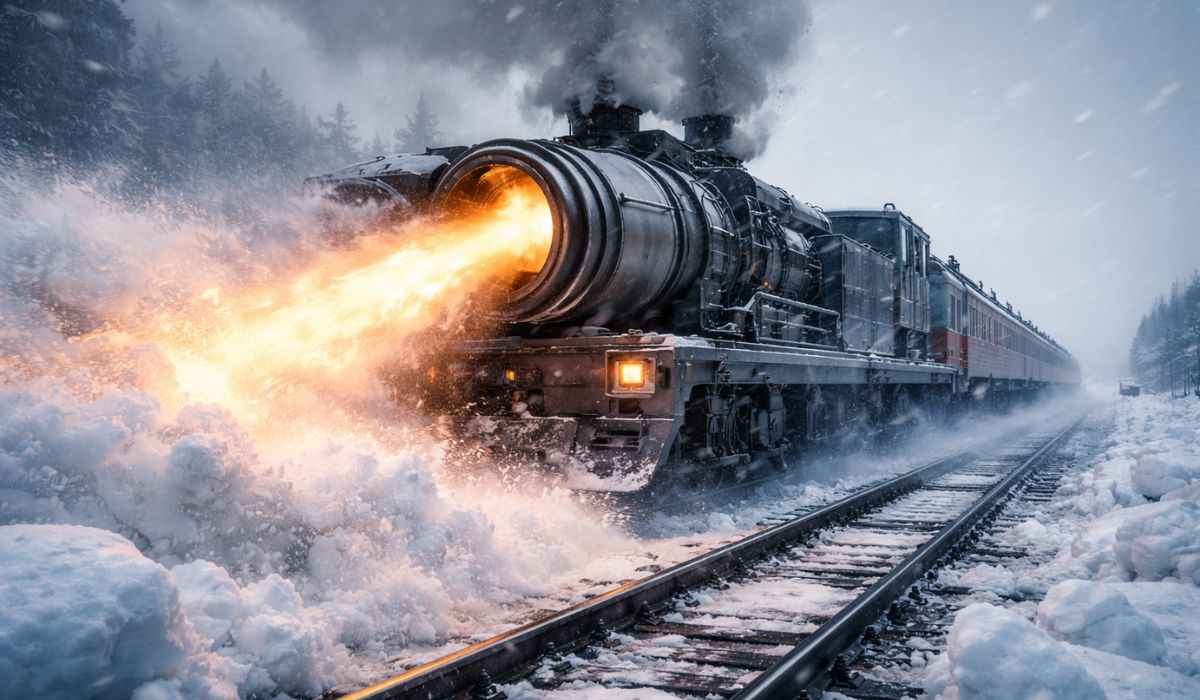
An uncommon railway technology repurposes aircraft engines to tackle snow and ice at critical points in the network, especially during storms and intense cold waves, keeping sensitive areas operational where localized failures can affect circulation.
Compacted snow and ice can block track switches and compromise railway circulation in yards, junctions, and maneuvering areas.
At these points, a single frozen switch can delay trains and interrupt operations.
To address this type of occurrence, railways have started using so-called jet snow blowers, cars adapted with repurposed aircraft engines to remove snow and ice from tracks, switches, and other critical components in just a few minutes.
-
Japan is transforming dirty diapers from babies and the elderly into an ambitious and surprising project that could forever change the way the world deals with one of the most difficult types of waste to dispose of.
-
Goodbye to waste: a Brazilian created a revolutionary brick that uses construction debris, has already entered the markets of the United Kingdom and the USA, and promises to shake up the global construction industry.

-
China has created a mass-produced hypersonic missile that costs the same as a Tesla, and this is changing everything in modern warfare because the United States cannot defend itself without spending millions.

-
100% Brazilian technology transforms agricultural waste into a meat-scented ingredient using fungi from the Amazon rainforest. The process does not use excessive water or chemicals, and it also increases the nutritional value of the final product.


The equipment became known for using jet engines in an unusual function outside of aviation.
In practice, however, its application is linked to a specific operational need.
Instead of clearing large stretches of track like other systems do, these machines primarily operate at points where freezing prevents the proper functioning of the infrastructure.
How the technology came to be used in railways
The adoption of jet engines in railway cleaning gained traction in the post-war period when this type of equipment became widely available and part of it was repurposed.
Historical records indicate that experiments with jets for snow removal were already appearing in the late 1940s, with subsequent advancements in North America.
Over the following decades, railway companies in the United States and Canada began testing solutions capable of quickly clearing crossings and switches during the winter.
The problem was practical: hardened snow and adhered ice were not always removed with the necessary speed by traditional mechanical equipment.
In this context, jet blowers began to be seen as an alternative for situations where cleaning needed to be done quickly.
The expansion of this use occurred mainly in networks subject to intense storms and long periods of cold.
Under these conditions, accumulation on metal components can prevent the movement of parts and affect the operation of freight and passenger trains.

Repurposed military engines in railway blowers
A large part of these vehicles was assembled with decommissioned military engines.
The repurposing occurred because several models produced in large quantities in the 1950s and 1960s ceased to be used in military aviation and became more affordable in the secondary market.
Among the engines associated with this type of adaptation is the J47, used in older projects.
There are also records of the use of the J57 in later railway applications.
In some cases, operators resorted to the TF33, the military designation of the Pratt & Whitney JT3, an engine used for decades in aircraft such as the B-52 bomber.
This reuse gave railway blowers an unusual configuration, but technically functional for the winter environment.
Instead of propelling an aircraft, the engine began to generate a high-intensity airflow aimed at removing snow and ice from the track.
How the jet snow blower works in practice
The jet snow blower does not operate like a conventional train at line speed.
Its movement is usually slow, precisely to allow the jet to act on the affected area with precision.
In many cases, the equipment works almost stationary or parked in yards, with the nozzle directed at specific points.
The principle of operation combines air displacement and heat.
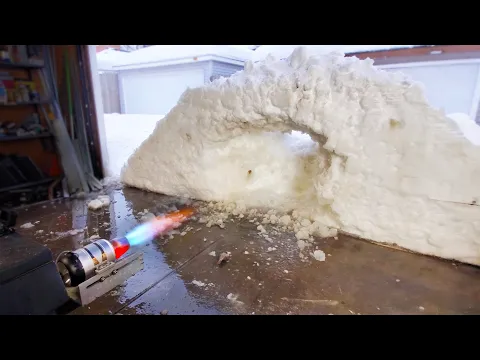
The engine produces an intense flow that helps break ice sheets, expel accumulated snow, and free stuck components.
Therefore, the use of this resource focuses on switches, crossings, and maneuvering areas, where a localized failure can affect a larger part of the operation.
The operational advantage lies in the response time.
In critical situations, the equipment can clear a switch more quickly than conventional manual or mechanical methods.
Still, its use depends on the type of accumulation, the condition of the infrastructure, and the safety rules adopted by each operator.

Where jet blowers are still in operation
Even with the advancement of other winter solutions, jet blowers have not disappeared.
Railway operators still resort to this type of equipment in specific contexts.
In February 2026, for example, NJ Transit reported that it maintains jet-powered blowers to remove snow and ice from tracks and switches during storms.
In the New York metropolitan area, Long Island Rail Road also reported in 2026 that it continues to use jet railway blowers for cleaning switches and the third rail during intense snow episodes.
These cases show that the technology is still employed in networks with high operational density and a need for rapid response.
The current use, however, does not mean predominance.
In most railways, combating the effects of winter combines different resources, such as switch heaters, application of salt, preventive inspections, and mechanical equipment.
The jet blower usually enters this system as a support tool for more severe or localized occurrences.
Why this equipment is still maintained
Rotary blowers and other mechanical methods remain more common in various networks, mainly due to cost and versatility.
Still, snow mixed with ice or hardened accumulations on delicate mechanisms may require a quicker and more concentrated response.
It is in this type of scenario that operators keep the equipment in service.
A frozen switch can affect the formation of trains, delay departures, and reduce circulation capacity in yards and junctions.
As these points concentrate an important part of the operation, the rapid clearance of infrastructure becomes a priority during storm periods.
For this reason, the jet railway blower remains associated with situations where the timely removal of snow and ice needs to occur without significant delay.
The persistence of the technology, according to institutional and historical records, is linked less to the unusual nature of the equipment and more to its utility in extreme winter conditions.
Risks and limits of operation on the tracks
The operational efficiency of this type of machine comes with restrictions.
Historical accounts and technical materials indicate that jet blowers consume a large volume of fuel, produce high noise levels, and require strict safety protocols.
Therefore, their use is usually reserved for situations where other resources do not deliver the same results in the necessary time.
There are also risks associated with the force of the jet on the track itself.
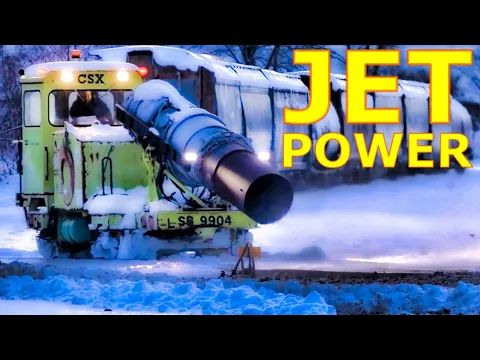
Depending on the condition of the site, the airflow can displace ballast, launch loose objects, and impose usage limitations in certain areas.
For this reason, the operation requires control of distance, direction, and exposure time on the infrastructure.
These factors help explain why the technology has remained present, but in a restricted manner.
Instead of replacing other snow removal methods, the jet snow blower has carved out a niche within winter maintenance, aimed at specific occurrences where speed and localized reach make a difference.







Seja o primeiro a reagir!