





 Português
  Inglês
  Espanhol
  5 min de leitura
  0 comentários


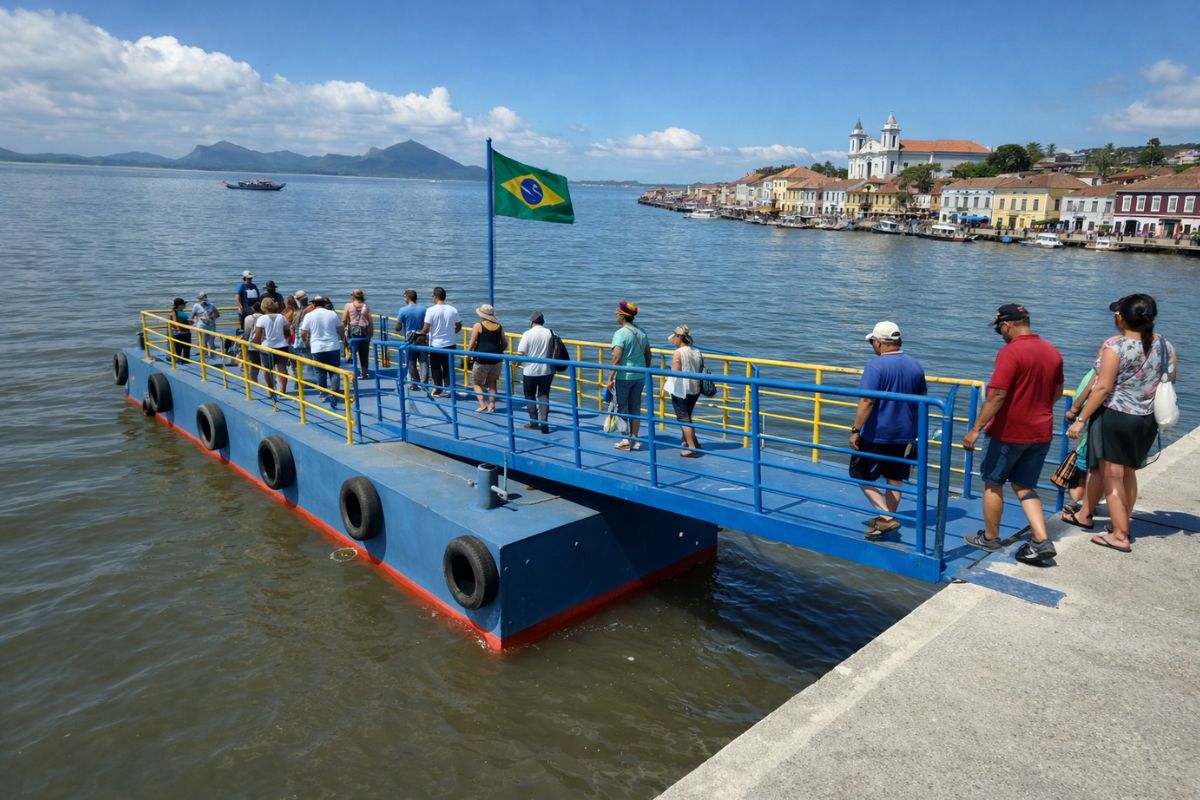
São Francisco do Sul, in the North Coast of Santa Catarina, installed a new floating dock at the Vila da Glória pier to expand the free crossing between the mainland and the historic center of the island, with boarding every day of the week and priority for children, the elderly, and public servants, reducing waiting time on one of the most important waterway connections in the state.
Those who use the crossing between the historic center and Vila da Glória in São Francisco do Sul have already noticed the changes. Last Thursday (26), a new floating dock was installed at the continental pier, expanding the boarding and disembarking structure that connects the island to the mainland. The intervention prepares the site to accommodate a larger vessel and meet the growing demand from residents and visitors who use the free service every day of the week.
The installation of the new floating dock is part of a set of improvements implemented since last year in local waterway transport. Among the changes already adopted are the increase in the number of trips throughout the day and the total free service for users, a measure that significantly expanded access to the service. The crossing continues to operate daily under the responsibility of the company Oceânica, ensuring continuous connection between the mainland and the historic center of São Francisco do Sul, considered the bluest city in Brazil for the beauty of its waters and the richness of its architectural heritage.
What changes with the new floating dock at Vila da Glória

The new floating dock installed at the Vila da Glória pier is larger than the previous one and was designed to accommodate a larger vessel.
-
In a silent race, Shopee signs a mega contract in Guarulhos and accelerates the e-commerce war with faster deliveries, pressured shipping, and a new threat to rivals in Brazil.

-
Oil surged to $115 a barrel due to the war in the Middle East, and diesel in Brazil has already risen to R$ 7.45 per liter, while the United States…

-
Brazilian city bets on the business environment to generate jobs and attract investments in the energy sector — secretary reveals strategy at Macaé Energy 2026.

-
50 viaducts, 4 tunnels, 28 bridges, and 40 kilometers of bike paths: BR-262 in Espírito Santo will receive 8.6 billion reais for the largest engineering project in the state’s history, inspired by the Immigrant Highway in São Paulo.


In practice, this means more space for boarding and disembarking, reduced waiting time, and greater organization in the flow of passengers—issues that had been worsening as the demand for the crossing grew.
The previous structure could no longer handle the volume of users, especially during peak hours and the tourist season. With the new floating dock, the service capacity increases without compromising safety.
The expansion allows the vessel to dock more stably and for passengers to board and disembark more comfortably, eliminating bottlenecks that made waiting uncomfortable on busier days.
Vila da Glória is the continental point of the crossing, where residents who work in the historic center, students attending schools on the island, and visitors wanting to know São Francisco do Sul without relying on the road bridge depart. The new floating dock transforms this boarding point into a structure more suited to the importance that the crossing has for the city’s mobility.
The free crossing that connects the mainland and the historic center
The free service of the waterway is one of the most relevant decisions made by the municipal administration in recent years.
Before the change, the crossing between Vila da Glória and the historic center was paid, which limited use by lower-income residents and reduced passenger flow. With the fare eliminated, the number of users increased and the crossing established itself as a real alternative for urban mobility in São Francisco do Sul.
The service operates every day of the week and maintains boarding priority for specific groups: children, the elderly, and public servants traveling for work. This policy ensures that those who need transportation the most have easier access, without facing lines that could discourage regular use of the crossing.
The connection between the mainland and the island is considered strategic for the city. The historic center of São Francisco do Sul, one of the best-preserved from colonial Brazil, concentrates commerce, public services, schools, and tourist attractions.
For residents of Vila da Glória and other continental communities, the crossing is the fastest and most direct route to these activities, avoiding the traffic of the bridge and the road detour that can take much longer.
São Francisco do Sul: why the city is called the bluest in Brazil
São Francisco do Sul is one of the oldest cities in Brazil, founded in 1504 on the North Coast of Santa Catarina. Its historic center is listed as a national heritage site and features colonial mansions, century-old churches, and cobblestone streets that tell centuries of history.
But the nickname “the bluest city in Brazil” comes from the waters of Babitonga Bay, which surround the island and create a landscape of blue tones that have become the municipality’s trademark.
The combination of historical heritage, preserved nature, and crystal-clear waters makes São Francisco do Sul a tourist destination that attracts visitors year-round.
The waterway crossing between Vila da Glória and the historic center is part of this experience: the boat ride through the bay offers a view that no road can replicate, turning the journey into an outing in itself.
With the new floating dock and improvements in the service, the trend is that more visitors will choose the crossing instead of accessing the island exclusively via the bridge.
For São Francisco do Sul, each passenger crossing the bay is someone experiencing the city in a different way and likely to return. Investment in waterway infrastructure is not just about mobility: it is also a tourism strategy.
What can still improve in the crossing of São Francisco do Sul
The installation of the new floating dock is a concrete advancement, but the crossing still has room to evolve. The increase in the number of daily trips—a measure already partially adopted—needs to keep pace with the growing demand, especially in the summer months when the city’s floating population multiplies the number of users.
The expansion of the fleet of vessels is another point that the community expects. With the new floating dock prepared to accommodate larger boats, the next logical step is the incorporation of a vessel with greater passenger capacity.
This would further reduce waiting time and allow the crossing to absorb demand peaks without compromising safety or comfort.
For residents of Vila da Glória and continental communities, each improvement in the crossing is a direct improvement in quality of life.
The new floating dock is more than just a concrete and metal platform at the pier; it is the assurance that the connection between the mainland and the historic center of São Francisco do Sul is being treated as a priority, not as an improvisation.
With information from the portal NDMAIS.
Have you crossed between Vila da Glória and the historic center of São Francisco do Sul? Do you know the bluest city in Brazil? Tell us in the comments how your experience was and if you noticed the changes with the new floating dock.









Seja o primeiro a reagir!