





 Português
  Inglês
  Espanhol
  5 min de leitura
  0 comentários


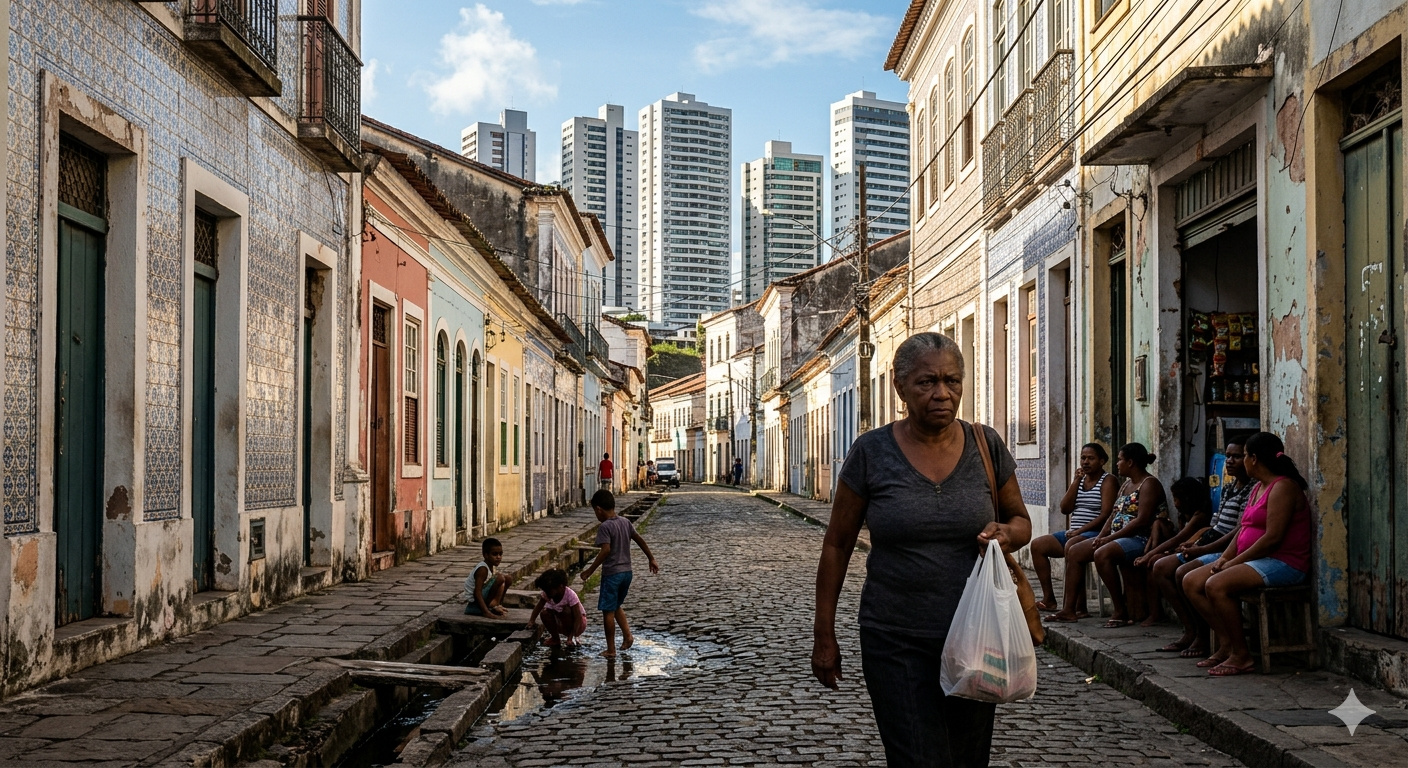
IBGE data shows that Maranhão has the lowest income in Brazil, a scenario that impacts São Luís with high poverty and persistent inequality.
In 2025, official data from the Brazilian Institute of Geography and Statistics (IBGE) confirmed that Maranhão has the lowest per capita household income in Brazil, at around R$ 1,219 monthly per inhabitant, according to a survey released by the agency itself. See the official IBGE data on per capita income. The low-income scenario directly reflects in the state capital: according to a study by the Center for Social Policies at the Getulio Vargas Foundation (FGV), São Luís ranks as the third poorest capital in Brazil, a position that highlights the high level of poverty and inequality in the city.
The figure represents just over half of the national average, highlighting a structural inequality that directly impacts the quality of life of the population. In a city with over one million inhabitants, like São Luís, these indicators become even more visible, especially when compared to other Brazilian capitals that have greater economic dynamism and significantly higher average income.
This set of data is not isolated. It is part of a broader picture that shows that, despite specific advances in recent years, Maranhão still faces historical challenges related to income distribution, access to opportunities, and social inequality, factors that are concentrated and intensified in the capital.
-
In a silent race, Shopee signs a mega contract in Guarulhos and accelerates the e-commerce war with faster deliveries, pressured shipping, and a new threat to rivals in Brazil.

-
Oil surged to $115 a barrel due to the war in the Middle East, and diesel in Brazil has already risen to R$ 7.45 per liter, while the United States…

-
Brazilian city bets on the business environment to generate jobs and attract investments in the energy sector — secretary reveals strategy at Macaé Energy 2026.
-
50 viaducts, 4 tunnels, 28 bridges, and 40 kilometers of bike paths: BR-262 in Espírito Santo will receive 8.6 billion reais for the largest engineering project in the state’s history, inspired by the Immigrant Highway in São Paulo.




Maranhão has the lowest income in Brazil and drags down the social indicators of the capital
The most recent data from IBGE places Maranhão in the last national position in per capita household income, at around R$ 1,219 monthly. For comparison, the national average exceeds R$ 2,300, while federative units like the Federal District surpass R$ 4,500 per inhabitant. This difference reveals an economic abyss that translates into lower purchasing power, less access to services, and greater social vulnerability.
As the main urban center of the state, São Luís concentrates a significant part of the regional economic activity, but also reflects the impacts of this unequal structure. Even with the presence of industrial, port, and service sectors, the capital cannot compensate for the low average income of the population. The result is a city where economic modernization coexists with significant pockets of poverty.
This scenario reinforces an important point: isolated economic growth is not enough to raise social indicators when there is no consistent income distribution. In São Luís, the concentration of income in certain sectors and regions of the city contributes to the maintenance of historical inequalities.
Almost half of the population lives in poverty in the state
The most recent available data indicates that about 47.9% of the population of Maranhão lived in poverty in 2022, one of the highest percentages in the country. Although social programs and economic changes have contributed to reducing extreme poverty in the following years, the level remains high compared to other regions of Brazil.
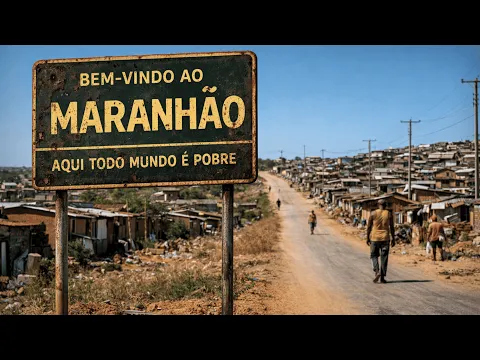
The reduction of extreme poverty, which fell from about 22.8% to just over 12% in 2023, represents a significant advance, but does not change the structural picture. The base of the social pyramid remains broad, and the average income remains low, limiting the economic mobility of the population.
In São Luís, this context manifests in peripheral areas with limited access to infrastructure, public services, and formal job opportunities. The capital concentrates both economic activity and inequalities, becoming an enlarged portrait of the difficulties faced in the state as a whole.
Recent income growth does not eliminate structural inequality
Despite the critical scenario, there has been growth in average income in Maranhão in recent years. Between 2022 and 2024, household income showed significant increases, reaching one of the highest levels in the state’s historical series. Still, the advance occurs from a very low base, which limits its real impact on the quality of life of the population.
Even with relevant percentage growth, the average income in Maranhão still represents just over half of the national average. This means that, in practice, the population still faces severe restrictions on consumption, investment, and access to basic services.
This mismatch highlights a structural problem: economic growth is not sufficient to reduce inequality at an accelerated pace. Improvement exists, but it is slow in light of the magnitude of the challenge.
São Luís concentrates economy, but also urban inequality
With more than 1.08 million inhabitants, São Luís is the main economic hub of Maranhão. The city houses the Port of Itaqui, one of the most important in the country, in addition to industrial, commercial, and service activities that drive the regional economy.

However, this economic concentration does not automatically translate into better income distribution. On the contrary, it can intensify internal inequalities. Central areas and more developed regions coexist with peripheral neighborhoods where the average income is significantly lower and access to public services is more limited.
This urban duality is common in large Brazilian cities, but tends to be more pronounced in states with lower average income. In São Luís, it becomes evident in the difference in quality of life between regions of the city itself.
The structural challenge that keeps Maranhão among the worst social indicators
The available data points to a problem that goes beyond isolated economic cycles. Maranhão faces a structural development challenge, involving historical, educational, economic, and social factors.
The low average income, combined with high rates of poverty and inequality, creates an environment where social mobility is limited. Even with recent advances, the gap in relation to the national average remains significant.
São Luís, as the capital and main urban center, amplifies this scenario. The city combines infrastructure, economic activity, and opportunities, but also concentrates inequalities that remain one of the main obstacles to regional development.
What the data reveals about the future of the capital of Maranhão
The IBGE data makes it clear that the current scenario is not the result of a single factor, but of a set of conditions that have accumulated over time. The recent improvement in income indicates that changes are possible, but also shows that the process is slow.
For São Luís, this means that the challenge is not only to grow economically but to transform that growth into effective improvement in the living conditions of the population. Without this, the city will continue to rank among the most critical social scenarios among Brazilian capitals.
What the numbers show, directly, is that the capital of Maranhão still carries one of the greatest social challenges in the country and that any significant change will depend on long-term structural transformations.










Seja o primeiro a reagir!