





 Portuguese
  English
  Spanish
  5 min of reading
  0 comments


“`html
Tap to Pay transforms cell phones into card machines, eliminates hardware costs, and threatens 19 million card terminals in Brazil.
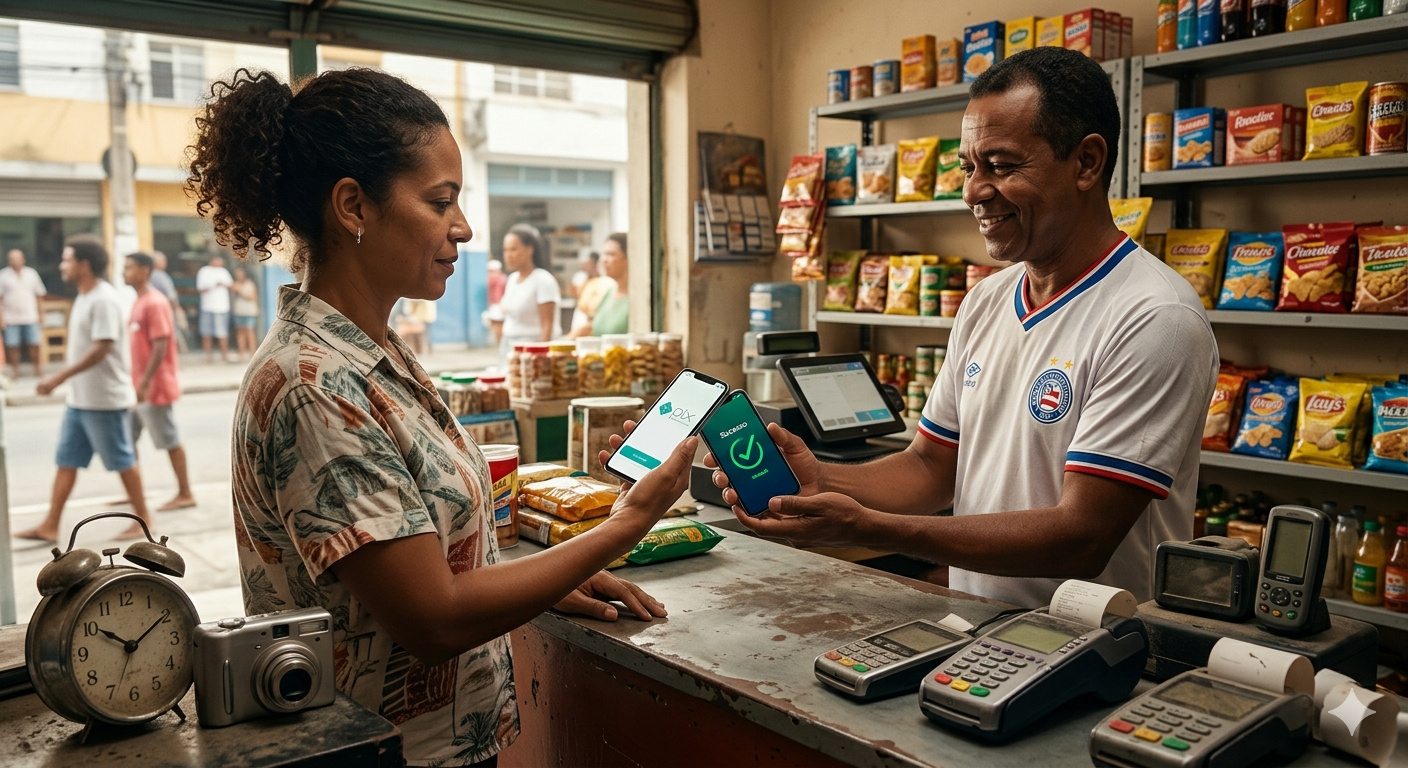
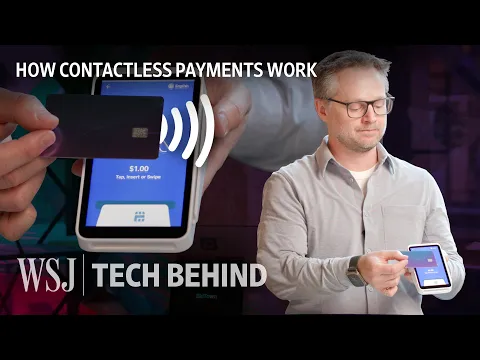
Three years ago, a street vendor in São Paulo needed a card machine, a separate data chip, and a backup battery to accept card payments. Today, he opens an app on the same phone he uses to send messages, brings the customer’s card close, and the payment lands in his account within seconds. No additional hardware. No monthly fees. No extra charges. The technology is called Tap to Pay, “tap to pay,” and works through the same NFC feature that already allows payments with a phone at the market’s card machine. The difference is that now the seller’s phone also becomes a payment terminal. Stone, Mercado Pago, Cielo, SumUp, Nubank, PagBank, and InfinitePay already have their own versions. Any Android smartphone from system 9.0 or iPhone X onwards is compatible. The app is free. The fee charged is the same as that of a physical card machine.
Tap to Pay in Brazil: technology transforms cell phones into card machines
Brazil has approximately 19 million active POS terminals, distributed across businesses of all sizes. Each of these devices represents costs for manufacturing, logistics, maintenance, energy, and technical support.
-
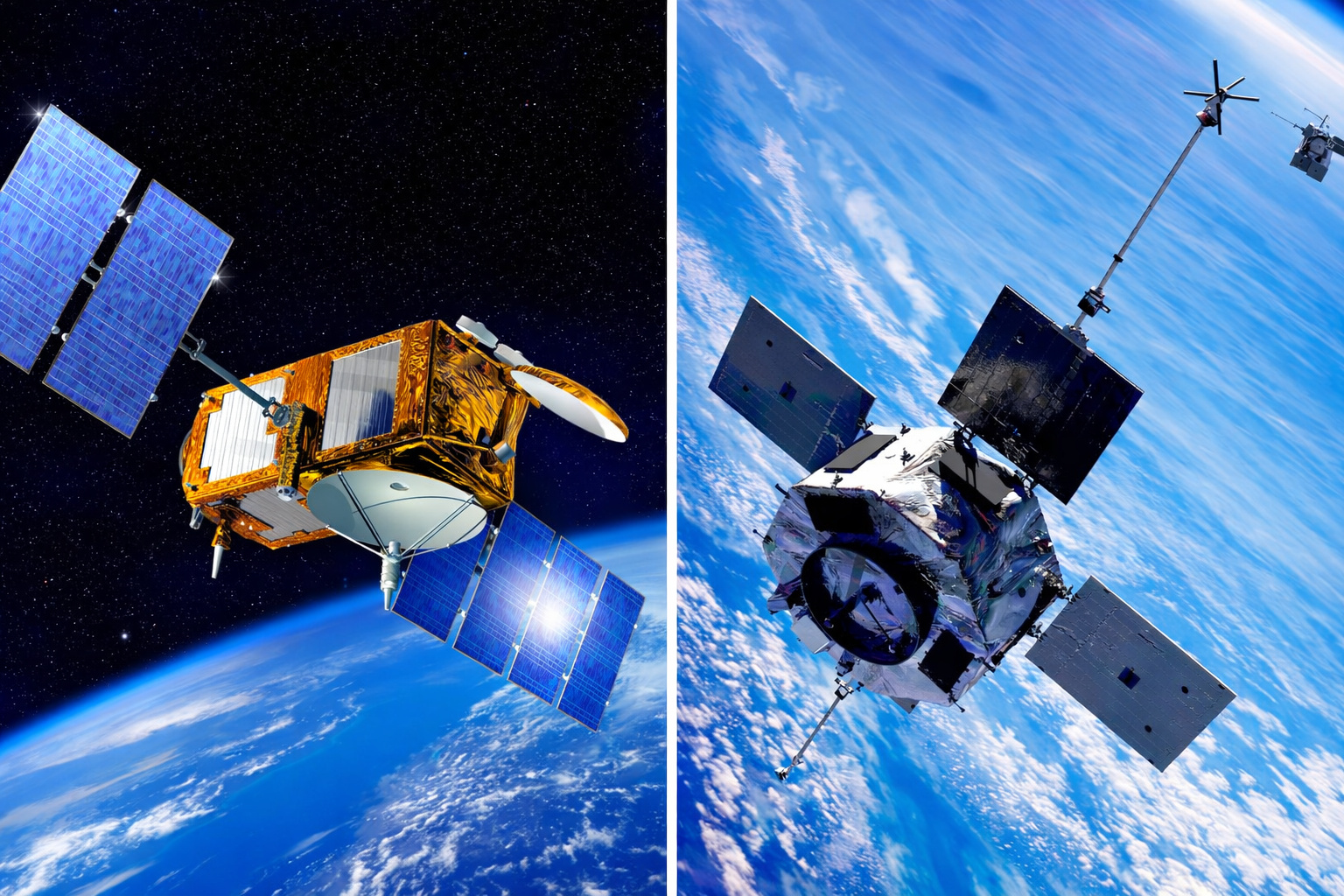
Scientists create a new propulsion system that allows satellites to use the air from Earth’s atmosphere as fuel to operate in space with lower costs and longer operational time.
-
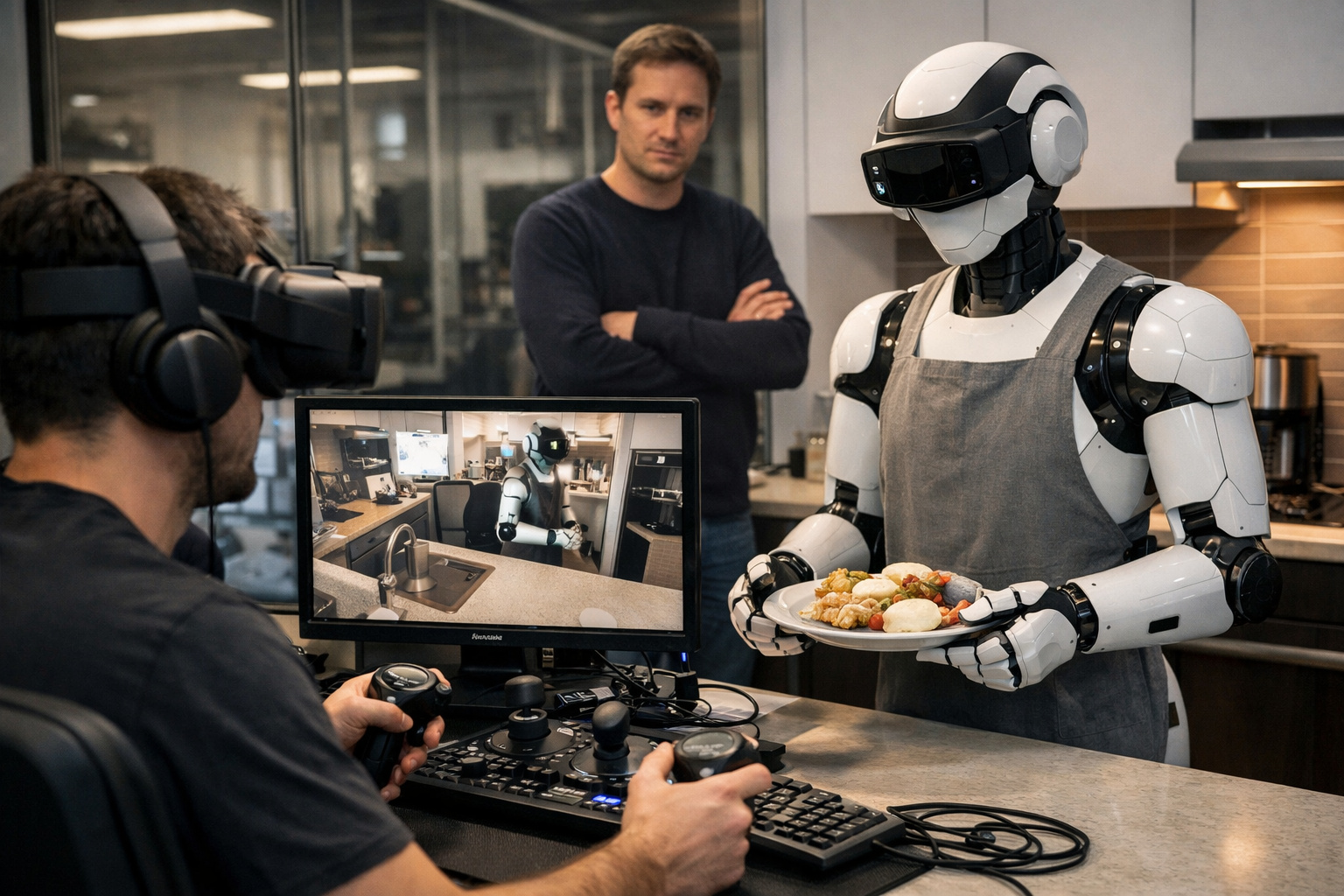
A startup backed by OpenAI has started selling a $20,000 robot for household tasks, but when the robot doesn’t know what to do, an employee puts on a virtual reality headset, sees the inside of the house through a camera, and operates each movement. The CEO said that without this, he cannot improve the product.
-
Scientists create a semiconductor that mimics the human brain using hydrogen and boost a new generation of smart chips with learning capabilities and the potential to revolutionize artificial intelligence applications.

-
The radio has been in more than half of Brazilian households for decades, and in 2024, for the first time in history, the number of households without a device surpassed those with a device, with a decrease of 2.3 million in just one year.


The cell phone, on the other hand, is already present in almost every corner of the country. According to IBGE, the device is found in 99.5% of Brazilian households. This completely eliminates the need to acquire hardware to start accepting payments.
For the 10.8 million individual micro-entrepreneurs, who have historically driven the adoption of card machines, the change is structural. A MEI that previously needed to invest between R$ 80 and R$ 200 in a terminal can now start accepting card payments immediately, with no initial cost.
Zero cost and immediate adoption drive the growth of Tap to Pay
The main bottleneck for card machines has always been the entry cost. Even basic models required an initial investment, in addition to potential data plans and monthly fees.
For an entrepreneur with reduced revenue, this cost represented a real barrier to entry. For occasional sellers, such as freelancers or informal merchants, the investment often did not justify itself.

Tap to Pay eliminates this obstacle. The app is free, registration takes just a few minutes, and the infrastructure is already in the seller’s pocket. Accepting card payments ceases to be an investment and becomes an immediate functionality.
InfinitePay and the accelerated growth of Tap to Pay in Brazil
CloudWalk, responsible for InfinitePay, was one of the first companies to explore the potential of this change with the launch of InfiniteTap in 2022.
The growth was exponential. In 2023, the user base grew, on average, by 123% per month, according to data released to the market. In 2024, the company reached 3 million customers, with revenue of R$ 2.7 billion and net profit of R$ 339 million.
In 2025, the base surpassed 4 million customers. Tap to Pay was identified as one of the main drivers of this expansion.
Fintechs and banks enter the race for Tap to Pay
The rapid advancement of technology triggered an immediate market reaction. Mercado Pago, Stone, Cielo, PagBank, Nubank, and SumUp launched their own versions of the solution in less than two years.

The competitive standard is similar across all platforms: free app, the same fees as physical card machines, and acceptance of cards and digital wallets via NFC. The competition has shifted from hardware to software, fees, and user experience.
Visa had already launched the concept of Tap to Phone in 2021, anticipating the transformation. In 2022, the number of establishments using the technology grew by 46% per month.
This movement was sustained by the expansion of NFC in Brazil. In 2024, 67.2% of in-person card transactions were made via tap, totaling 23.6 billion payments. The volume moved reached R$ 1.5 trillion, consolidating NFC as the dominant standard in physical retail.
Pix and mobile payments opened the way for cell phones as terminals
The popularization of Pix played a decisive role in this process. Since its launch by the Central Bank in 2020, the system has redefined how Brazilians pay and receive money.
In 2024, Pix recorded 63.8 billion transactions, surpassing all other payment methods combined. This behavior consolidated the cell phone as a complete financial instrument. Tap to Pay emerges as a natural evolution of this process, expanding the smartphone’s function to also include receiving card payments.
The advancement of Tap to Pay profoundly alters the structure of the acquiring sector. The physical distribution of card machines, which has always been a competitive barrier, loses relevance.
Without the need for hardware, the entry cost for new companies decreases significantly. This opens up space for new players and increases competition.
Traditional companies are migrating from a hardware-based model to a software-based model, with greater scalability and lower operational costs.
How Tap to Pay works in practice for sellers
The operation is straightforward and does not require additional infrastructure. The seller installs the app of the chosen platform, registers, and can start accepting payments.
At the time of sale, just enter the amount and ask the customer to bring the card or phone with NFC close. The processing occurs instantly, and the amount is credited according to the operator’s conditions.
Some platforms impose limits per transaction, usually in the range of R$ 10,000, which meets the needs of most retail.
The card machine does not disappear, but it is no longer mandatory
Despite the expansion of Tap to Pay, physical card machines are not expected to disappear in the short term. Establishments with high sales volume, a need for printed receipts, or structured operations still depend on hardware.
However, the role of the card machine is changing. From a mandatory tool, it becomes optional for a growing segment of the market. For millions of small entrepreneurs, the cell phone becomes sufficient to operate in the payment system.
The end of hardware? Logistical and environmental impact of the new technology
The gradual replacement of card machines also brings logistical and environmental implications. Physical terminals have a limited lifespan and require production, transportation, and disposal.
With the migration to cell phones, part of this chain ceases to exist. The software-based model reduces operational costs and increases system efficiency.
For fintechs, this represents a structural change: distributing software is more scalable than distributing hardware. In 2025, Pix via tap went into operation, allowing payments via NFC without the need to open apps.
This integration between Pix and tap technology unites two of the most used systems in the country. When these two curves reach full maturity, the cell phone will definitively consolidate its role as the main payment terminal.
In this scenario, the question shifts from whether the cell phone can replace the card machine to how long it will still make sense to maintain dedicated hardware for this function.
“`







Seja o primeiro a reagir!