





 English
  Francês
  Alemão
  Italiano
  Japonês
  Norueguês
  Portuguese
  Spanish
  4 min of reading
  0 comments


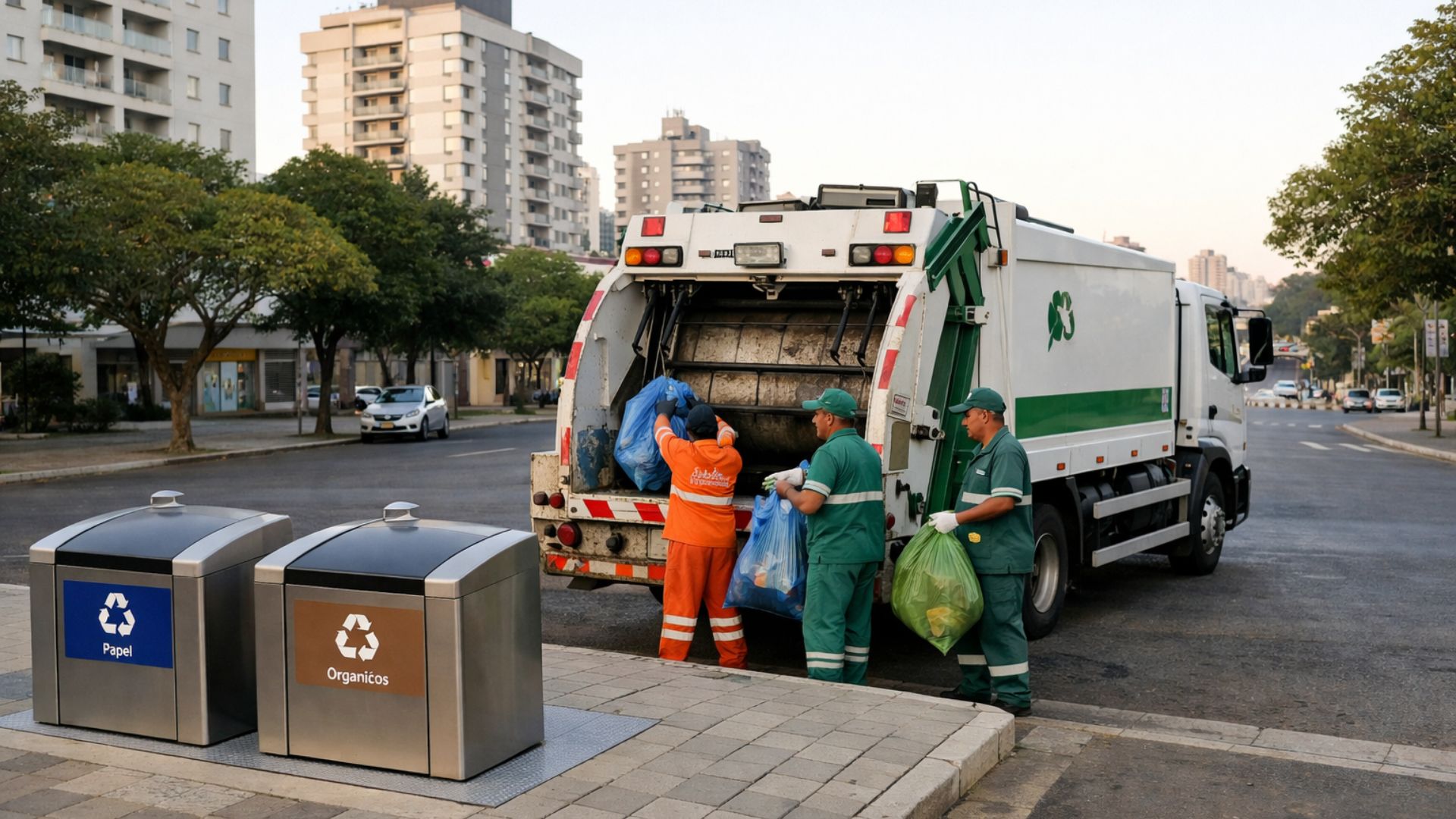
National recognition places Chapecó at the top of urban cleanliness, with indicators that combine high coverage, financial sustainability, and correct environmental disposal, highlighting the municipality among the few in the country that reach a considered high standard in solid waste management.
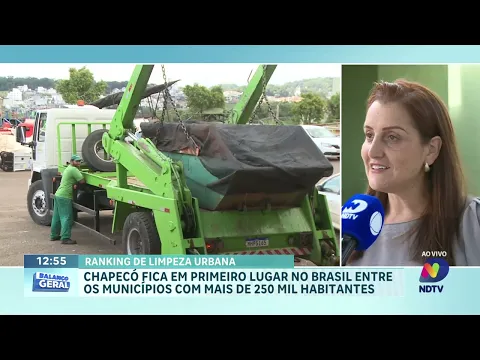
Chapecó has taken the national lead in urban cleanliness among municipalities with more than 250,000 inhabitants by achieving a score of 0.792 in the most recent survey of the Urban Cleanliness Sustainability Index (ISLU), released by Abrema based on data from 2025.
The result placed the city of Chapecó in the “High” rating category, a group that includes only 7% of the Brazilian municipalities evaluated by the indicator.
National ranking of urban cleanliness and Chapecó’s performance
The classification highlights a set of indicators related to service provision, the financial balance of the system, and the disposal of waste.
-
Seen from space, a colossal ‘Y’ cuts through the largest desert in China, blending a jade-filled river, red and white mountains, and revealing the absurd scale of the transformation of the Taklamakan surrounded by a green wall with billions of trees.

-
The Pacific Ocean reveals what the cliffs of Big Sur have hidden for millennia: Pfeiffer Beach, in California, features swirling purple sand formed by garnet crystals and displays a stone arch that is illuminated by the sun in winter for just a few days each year.

-
Aursjøvegen in Norway is a 100-kilometer gravel road that crosses chasms and dark tunnels carved into the rock at an altitude of 947 meters in the fjords and is only open for four months a year.

-
With about 4,000 m², the building constructed in a traditional neighborhood in France looks like a rainbow, has a colorful facade, mixes vibrant glass, and creates one of the most unusual visuals in Bordeaux.

In the case of Chapecó, the coverage of household waste collection reaches about 95% of the population, while the municipality also reports 27% waste recovery rate and 100% environmentally adequate final disposal, two of the most emphasized figures in the result announcement.
These data gain significance because the ISLU was created specifically to measure the degree of adherence of municipalities to the goals of the National Solid Waste Policy, the federal law that guides the proper management of urban cleanliness in the country.

According to Abrema, the index serves as a statistical tool to assess whether cities can effectively implement aspects such as collection, material recovery, economic-financial sustainability, and reduction of environmental liabilities related to improper disposal.
How the urban cleanliness sustainability index works
In the methodology of the survey, the final score results from the combination of four dimensions.
The calculation includes the financial sustainability of the service, the coverage of service to the population, the waste recovery rate, and the environmental impact associated with disposal.
In other words, it is not enough to collect the waste: performance improves when the city can finance the system, expand coverage, recover part of the material, and prevent waste from ending up in landfills or inadequate structures.
It is in this context that Chapecó has excelled.
The city hall reported that the local system can fully cover the expenses related to waste management without the need for subsidies, a fact that helps explain the performance in one of the most sensitive areas of urban sanitation.
At the same time, the recovery of 27% of waste appears, in the announcements about the ranking, as a rate close to the maximum levels considered possible for recycling at the municipal scale.
Large city and urban collection challenges
The result also positions Chapecó in a relevant segment of the country.
The municipality had 282,648 inhabitants in the IBGE estimate for 2025 and remains among the largest cities in Santa Catarina, which makes the performance achieved in a category reserved for larger urban centers even more significant.
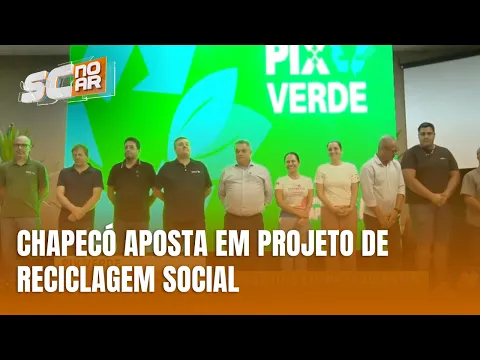
In larger cities, the logistical challenge tends to grow with territorial expansion, neighborhood densification, and the increase in daily waste generation.
Commenting on the ranking, Mayor João Rodrigues stated that the administration called the company responsible for collection, demanded improvements in the service, expanded environmental education actions, and invested in equipment such as shredders, in addition to the implementation of underground trash bins.
“We called the responsible company, demanded improvements, invested in environmental education and in equipment such as shredders, in addition to the implementation of underground trash bins.”
In the same announcement, the solid waste manager, Graciela Heckler, attributed part of the result to the involvement of residents in proper disposal.
“It is essential to recognize the involvement of the population, which has been making the correct disposal.”
Adequate environmental disposal and national scenario
Although Chapecó’s leadership draws attention, the national backdrop remains challenging.
Publications from Abrema itself show that waste management in Brazil still faces historical difficulties, including the persistence of inadequate disposal in some municipalities and the insufficient pace to fully meet the goals set in the national policy.
In this scenario, above-average results in large cities gain relevance because they indicate paths of administrative organization and service provision that can be sustained with greater regularity.
The performance in Santa Catarina is also not limited to an isolated case.
Reports published after the release of ISLU 2025 show that Santa Catarina placed four cities in the group of municipalities with the best evaluation among those exceeding 250,000 inhabitants: Chapecó, Florianópolis, São José, and Joinville.
Still, it was Chapecó that appeared at the top of the national list in this population range, consolidating the city as the main reference of the state in this cycle’s ranking.
In the case of Chapecó, the figure of 100% environmentally adequate final disposal carries special weight because this indicator is directly related to public health and environmental protection.
When the collected waste goes to structures compatible with the legislation, the municipality reduces the risk of soil and water contamination, avoids the maintenance of degraded areas, and improves adherence to legal requirements for the management of urban solid waste.
The combination of high coverage of collection, full financing of the service, material recovery, and adequate final disposal helps explain why Chapecó surpassed other large municipalities in the survey.
More than a symbolic recognition, the ranking exposes concrete operational indicators and shows how the municipality managed to convert management, infrastructure, and social participation into a high score within a national system that measures performance based on public data.








Seja o primeiro a reagir!