





 Portuguese
  English
  Spanish
  4 min of reading
  0 comments


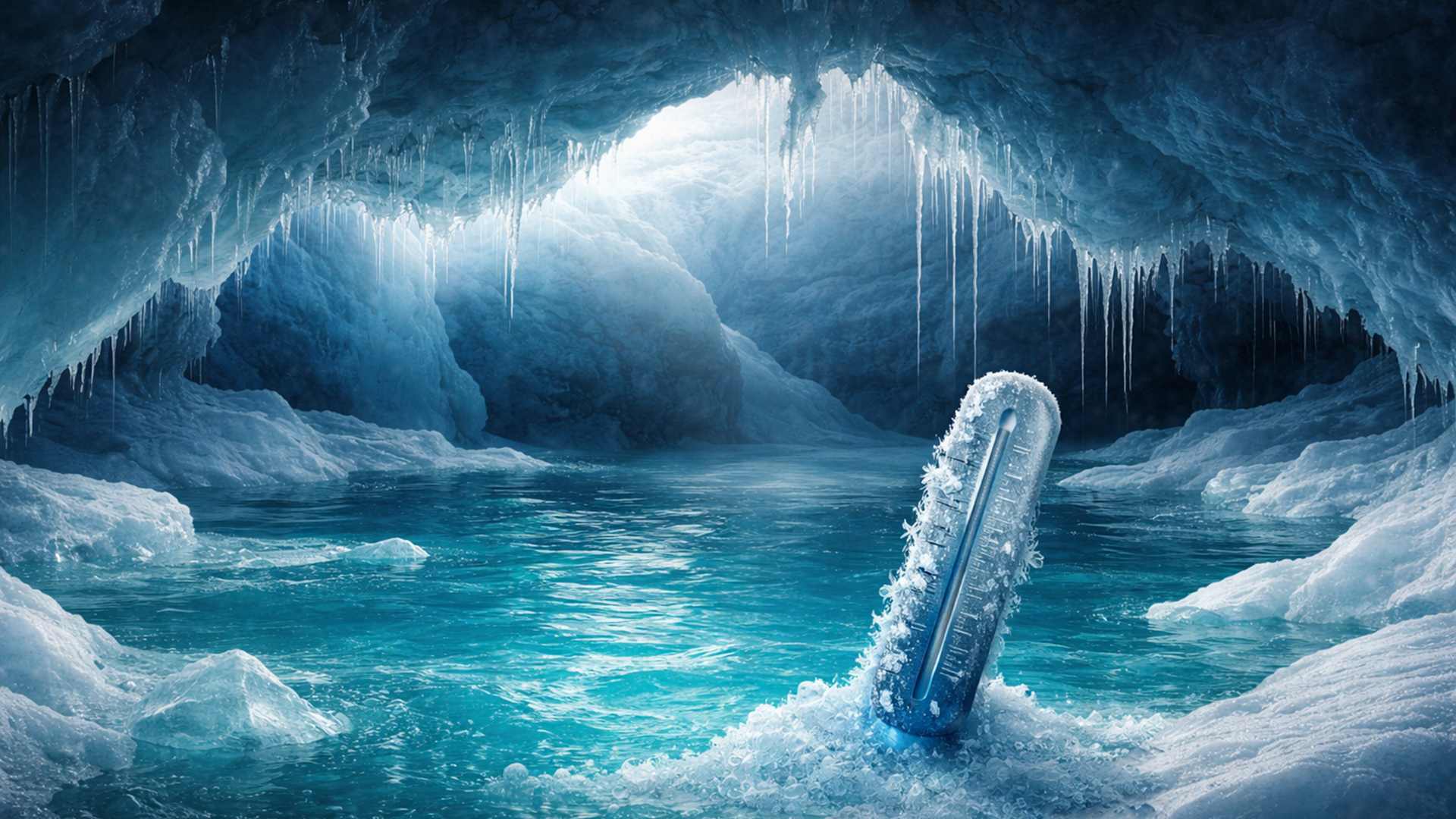
The discovery of seawater at about -15°C beneath the ice of Snowball Earth, 717 million years ago, revealed an ocean up to four times saltier than today and brought new clues about how the planet maintained liquid water during extreme global freezing
The seawater identified as the coldest in Earth’s history circulated beneath the ice layers of what is called Snowball Earth about 717 million years ago, when pockets of brine reached approximately -15°C, in an extreme scenario that helps explain how the oceans remained liquid even during one of the planet’s most severe ice ages.
The period, known for advancing polar glaciers to areas near the equator, transformed the planet into an environment covered by thick ice with strong limitations on sunlight. In this context, ecosystems were confined beneath the ice and subjected to much harsher conditions than previously thought.
The new research published in the journal Nature Communications indicates that these deep waters remained liquid despite the extremely low temperatures. The result enhances the understanding of the climatic intensity of Snowball Earth and the mechanisms that allowed the persistence of liquid water amid global freezing.
-
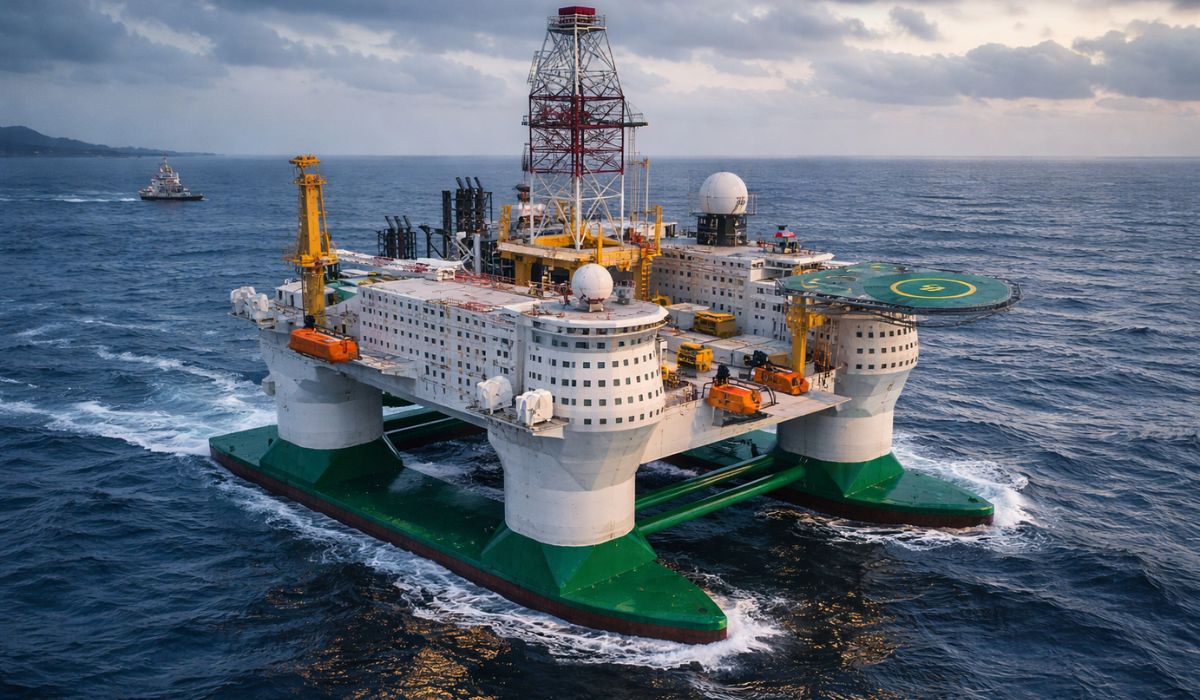
China has launched the world’s first floating artificial island, a scientific structure designed to face open seas, test equipment weighing hundreds of tons, and reach depths of 10,000 meters.
-
China accelerates global science and may surpass the United States in 2 years with increased public investment, continuous growth, and direct impact on the global technological competition.

-
Scientific studies indicate that drought may be strengthening a much greater silent threat: more resistant superbugs.
-
Man builds functional 5-meter submarine in his garage using gas cylinders, PVC pipes, and a refrigerator motor, and navigates with the vessel on a lake in Colombia.


Super salty seawater kept the ocean liquid
For seawater to remain liquid at -15°C, the salinity needed to be very high. The pockets of brine trapped beneath the ice were, according to Ross Mitchell, a geologist at the Chinese Academy of Sciences, up to four times saltier than today’s oceans.
This concentration of salt lowered the freezing point of the water and prevented it from solidifying, even at such low temperatures.
The environment is compared to the salty mud of Lake Vida in Antarctica, although the brines of Snowball Earth were even colder.
The presence of these extremely salty waters provides a more precise explanation for the maintenance of liquid seas beneath thick layers of ice. At the same time, it shows that the interior of these oceans was far from being a favorable environment for life.
Without sunlight and without oxygen, these brines formed a hostile scenario, akin to an alien world. The finding also challenges previous interpretations of the environmental limits that may have existed in Earth’s distant past.
Iron isotopes revealed the extreme cold
To estimate the temperature of the seas during that period, scientists analyzed ancient iron formations. These rust-colored minerals form when iron-rich seawater reacts with oxygen, preserving useful chemical signals to reconstruct the conditions of the ancient ocean.
The main indicator used was the isotopic composition of iron in the rocks. The isotopes present in these minerals acted as a kind of geological thermometer, allowing inference of the water temperature at the time these formations emerged.
By examining these records, the team concluded that the oceans of Snowball Earth were much colder than previously thought. The heavier iron isotopes found in the rocks suggest waters at least 40°C colder than the ancient seas of the Archean Earth, which existed about 2.4 billion years ago.
Andy Heard, a geochemist at the Woods Hole Oceanographic Institution, stated that the analysis provides compelling evidence of the frigid conditions during this period. Although the method does not determine an exact temperature for the entire ocean, it reinforces the extreme dimension of global cooling.
Snowball Earth froze the planet for more than 57 million years
The Sturtian glaciation, one of the most dramatic phases of Snowball Earth, lasted over 57 million years. During this interval, the planet was nearly entirely frozen, with glaciers potentially reaching the equator.
The advance of ice was intensified by a cooling cycle in which the frozen surfaces reflected more sunlight back into space. This process favored further drops in temperature and expanded the ice cover even more.
With the oceans trapped beneath thick layers and insufficient sunlight entering, photosynthesis became unfeasible for much of this system. On land, extensive areas were covered by glaciers, consolidating a picture of widespread freezing.
In this environment, seawater also became anoxic, meaning devoid of oxygen. This condition helps explain why the iron formations from this period exhibit such distinctive chemical characteristics, especially the abundance of certain iron isotopes.
The simultaneous absence of sunlight and oxygen made these waters especially hostile. The scenario described by the research points to a cold, isolated, and chemically extreme ocean beneath the global ice cover.
Study expands understanding of survival on a frozen planet
In addition to iron isotopes, researchers analyzed elements such as strontium and barium to reconstruct the conditions of the Cryogenian oceans. The set of data supports the interpretation that the ocean was not only very cold but also saltier than today’s seas.
With salinity high enough to push the freezing point down to -15°C, these brines became a central piece in explaining the functioning of the oceans during Snowball Earth. The result offers a more complete view of the environmental catastrophe experienced by the planet during this remote interval.
The discovery also helps clarify how Earth managed to maintain liquid reservoirs beneath the ice during such a prolonged glaciation. By detailing the combination of extreme cold, high salinity, and lack of oxygen, the study expands the understanding of one of the most radical episodes in the planet’s climatic history.








Seja o primeiro a reagir!