





 Portuguese
  English
  Spanish
  5 min of reading
  0 comments


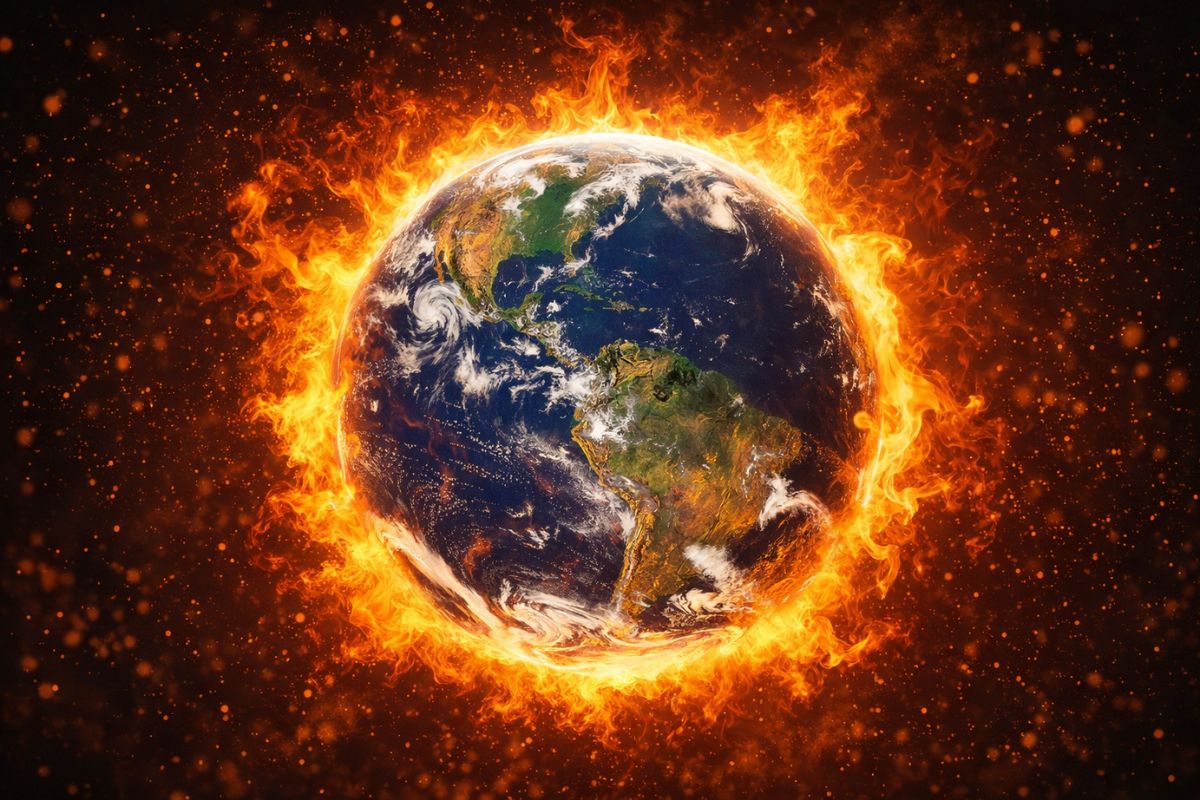
The annual report of the World Meteorological Organization revealed that the planetary energy imbalance reached record levels in 2025, with more than 91% of the extra heat being absorbed by the oceans, and the UN Secretary-General described the situation as an emergency by stating that the planet is being pushed beyond its limits, with consequences that could last centuries
The planet is retaining more heat than it releases, and the difference has just reached a record. The latest annual assessment from the World Meteorological Organization (WMO) revealed that the Earth’s energy imbalance has reached the highest level ever recorded in 2025. For the first time, the report treats this imbalance as a fundamental climate indicator, alongside traditional measures such as temperature and sea level, recognizing that the planet is accumulating a thermal debt that may have consequences for centuries.
The UN Secretary-General, António Guterres, described the situation as an emergency and stated that the planet is being pushed beyond its limits. Celeste Saulo, WMO Secretary-General, warned that human activities are increasingly disrupting the planet’s natural balance. The years 2015 to 2025 were the eleven hottest ever recorded in the planet’s history, with 2024 being the hottest of all and 2025 the second or third. In 2025, global temperature was about 1.4 degrees Celsius above the average from 1850 to 1900.
What it means to say that the planet is in energy imbalance

The planet’s energy imbalance occurs when more solar energy enters the Earth’s system than the amount of heat that escapes back into space. Greenhouse gases, such as carbon dioxide, act like an extra blanket that slows the rate at which heat leaves the atmosphere and the ocean.
-
Three submerged shipwrecks from the Iron Age found in the port of Dor challenge what was known about trade in the Mediterranean, and only 25% of the site has been excavated.

-
Dialysis as we know it may be numbered: researchers at the University of Southern California have managed to cultivate kidney cells in the lab that refuse to die and form mini-structures that mimic the actual functioning of a kidney.

-
They were going to build a highway, but they ended up finding in the Czech Republic an entire Celtic city buried for more than 2,000 years, with hundreds of gold and silver coins, precious amber, and one of the largest archaeological treasures ever discovered.

-
Archaeologists find lost medieval city in Poland with a central square, cemetery, forge, and more than 500 buried artifacts.


A small difference, distributed across the planet, accumulates over the years and creates a reserve of heat that needs to be stored somewhere.
A 2021 study led by Norman Loeb at NASA’s Langley Research Center found that the planet’s energy imbalance nearly doubled between 2005 and 2019.
The study compared satellite measurements of energy entering and leaving the Earth with estimates of the rate of ocean warming.
If satellites indicate that the planet is gaining energy, the oceans should also be gaining heat, and that is exactly what the data confirmed.
The oceans absorbed 91% of the extra heat that the planet retained
More than 91% of the excess heat that the planet retains is stored in the oceans. Only about 1% warms the air near the surface, which is the heat that people feel in their daily lives. The heat content of the oceans, measured up to 2 kilometers deep, reached a new record in 2025.
About 90% of the ocean surface recorded at least one marine heatwave in 2025, and the rate of warming more than doubled when comparing the period from 2005 to 2025 with that from 1960 to 2005.
The report estimates that, in approximately two decades, the ocean absorbed heat equivalent to 18 times the energy that humans consume in a year.
Warmer oceans do not stay still: they contribute to more intense tropical storms, harm marine ecosystems that support fishing, and over time weaken the ocean’s ability to absorb carbon.
The planet is literally heating from the inside out, and most of that heat is hidden beneath the ocean surface.
How the planet’s thermal debt transforms into heatwaves and storms
Although the air at the surface retains only a fraction of the planet’s extra heat, it is this fraction that shapes people’s daily lives. Warmer air holds more water vapor, which can increase the likelihood of heavier rainfall during storms.
Warmer soil dries out faster, contributing to droughts, fire risks, and water supply crises in regions already facing water stress.
Extreme events caused by the heat accumulated on the planet manifest as combinations of problems: a prolonged heatwave overloads electrical grids and raises cooling costs, while intense rains saturate drainage systems designed for a different climate.
The planet’s energy imbalance means that these events are likely to become more frequent and intense as the thermal debt accumulates, and the worst part is that some of this heat already stored in the oceans will continue to affect the climate for centuries, even if emissions were to be zeroed tomorrow.
Sea levels rise and ice melts as the planet accumulates heat
As ocean water warms, it physically expands, and the melting of land ice adds more volume, causing sea levels to continuously rise. The WMO report indicates that the global average sea level in 2025 remained close to record highs and was about 11 centimeters higher than in 1993, when satellite measurements began.
The Intergovernmental Panel on Climate Change warns that warming of the deep oceans and melting of polar ice caps may keep sea levels rising for centuries, even with emission reductions.
The melting of ice also alters the amount of sunlight that the planet reflects. Bright ice acts like a mirror, and when it shrinks, the darker ocean and land absorb more energy, accelerating warming.
This feedback cycle is one of the reasons why polar changes propagate and affect the entire planet, creating a cascading effect that connects Arctic ice to coastal flooding in tropical cities.
A silent record that could come due for centuries
The planet is retaining more heat than ever, the oceans absorbed 91% of this excess, and the UN treats the imbalance as an emergency.
The thermal debt accumulated by the planet will not disappear quickly: the heat already stored in the oceans will continue to cause heatwaves, stronger storms, and rising sea levels for centuries, even if carbon emissions are drastically reduced.
It is a record that almost no one noticed, but it defines the climate that our children and grandchildren will face. The planet is charging a bill that humanity has yet to calculate.
Did you know that the planet is retaining heat at record levels? Have you noticed that heatwaves and storms are becoming more frequent in your area? Do you think it is possible to reverse this thermal debt or is it too late? Leave a comment and share this article with those who need to understand what is happening with the climate.









Seja o primeiro a reagir!