





 English
  Francês
  Alemão
  Italiano
  Japonês
  Norueguês
  Portuguese
  Spanish
  5 min of reading
  0 comments


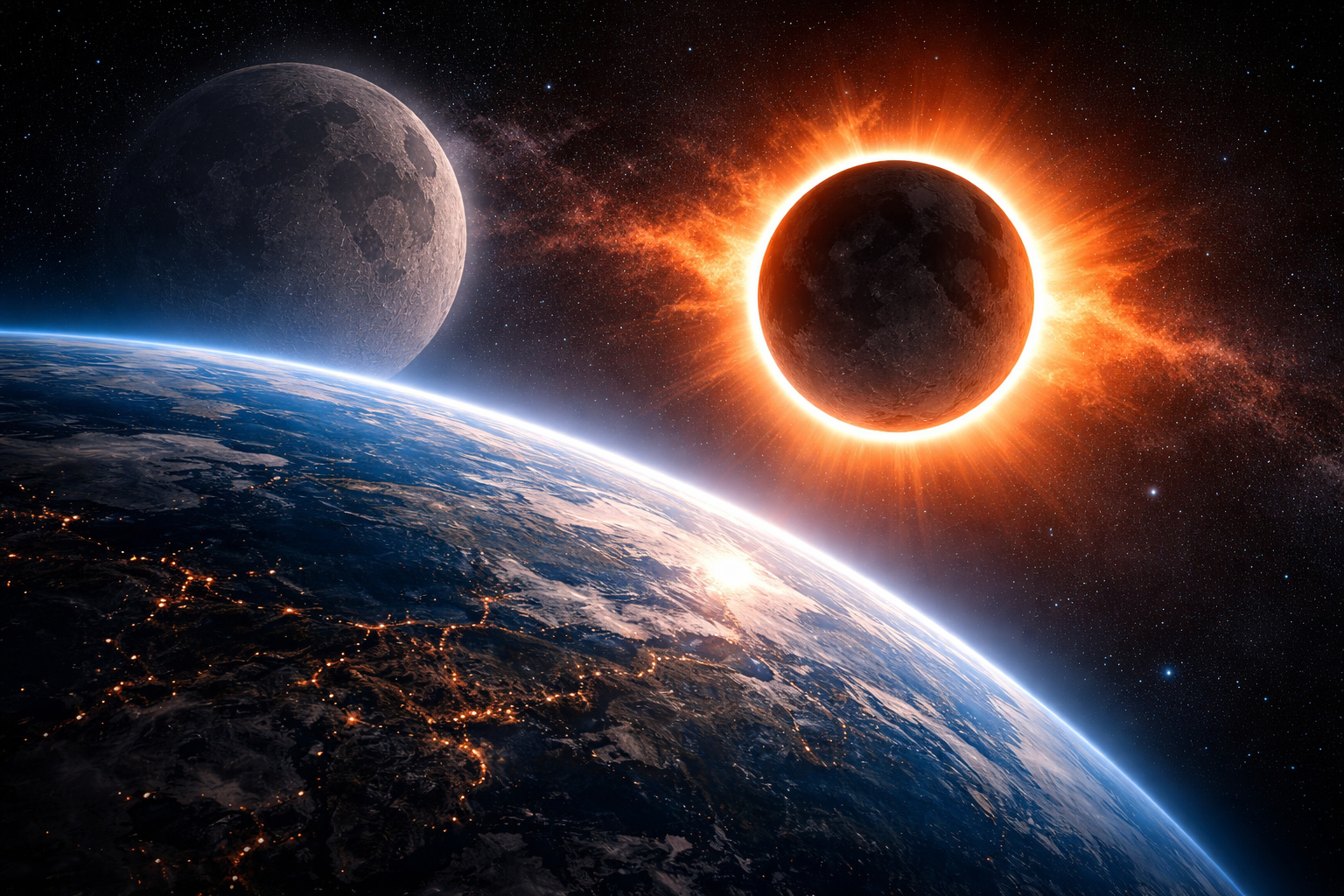
The Moon is receding 3.8 cm per year and may end total solar eclipses in about 600 million years, according to scientific measurements.
In 2024 and 2025, data continuously analyzed by NASA and international research centers reinforce one of the most precise measurements in modern astronomy: the Moon is moving away from Earth at an average rate of 3.8 centimeters per year. This number is not a theoretical estimate — it has been directly measured since 1969, when astronauts from the Apollo missions installed reflectors on the lunar surface. According to NASA itself, based on data from the Lunar Laser Ranging experiment, measurements made with laser beams reflected off the Moon show that the natural satellite is receding about 3.8 cm per year, allowing for millimeter-precision tracking of the evolution of the distance between the two celestial bodies.
The phenomenon may seem small on a human scale, but its accumulated effects over millions of years are profound. It not only alters the Moon’s orbit but will also permanently change the way we observe the sky from Earth.
How scientists measure the Moon’s recession with millimeter precision
The method used to measure the distance between the Earth and the Moon is one of the most elegant ever developed by science. The reflectors left by the Apollo missions act as extremely precise mirrors. From Earth, scientists fire laser beams towards the Moon. These beams are reflected back, and the time they take to return is measured with extreme precision.
-
Embraer’s flying car successfully takes off in SP, advances towards certification, has already completed 35 flights, reaches 43 meters in height, and promises to operate with much less noise than helicopters.

-
350-year mystery may have been solved: remains of a soldier who inspired the hero of The Three Musketeers found beneath a church in the Netherlands.

-
NASA photographed a nearly perfect square with 3 km sides on Mars, 13 times larger than the Great Pyramid of Giza, but the official explanation is natural erosion; still, no one has explained why the four sides have almost identical lengths.

-
Starlink breaks the barrier of 10,000 satellites in orbit and takes its expansion to an unprecedented level, with a direct impact on global internet, technological competition, and the race for space.


Based on the speed of light, it is possible to calculate the Earth-Moon distance with an error of just millimeters.
This technique has been used for over five decades, allowing us to observe that the Moon is indeed continuously moving away.
Why the Moon is receding from Earth
The Moon’s recession is not random. It is a direct result of the so-called tidal interactions between the two bodies.
The Moon’s gravity pulls on Earth’s oceans, creating tides. However, the planet’s rotation causes these masses of water to be slightly displaced from the Moon’s position. This misalignment generates a transfer of energy.
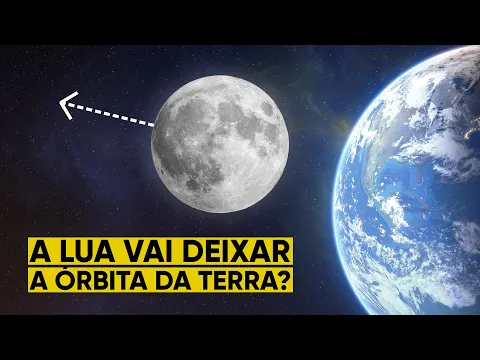

In practice, this means that:
- the Earth is slowly losing rotational speed
- the Moon gains orbital energy
- its orbit gradually expands
This process, although imperceptible in daily life, has been occurring continuously for billions of years.
The coincidence that makes total solar eclipses possible today
Currently, there is a rare coincidence that allows for the occurrence of total solar eclipses. The Sun is approximately 400 times larger than the Moon, but it is also about 400 times farther from Earth. This balance makes both appear to be nearly the same size in the sky.
It is this coincidence that allows the Moon to completely cover the solar disk during a total eclipse.
Without this almost perfect alignment, the phenomenon simply would not exist in the way we know it.
Why total solar eclipses will disappear
As the Moon continues to recede, its apparent size in the sky decreases. This means that, in the future:
- it will no longer be able to completely cover the Sun
- the alignment will still occur
- but it will always leave a visible luminous ring
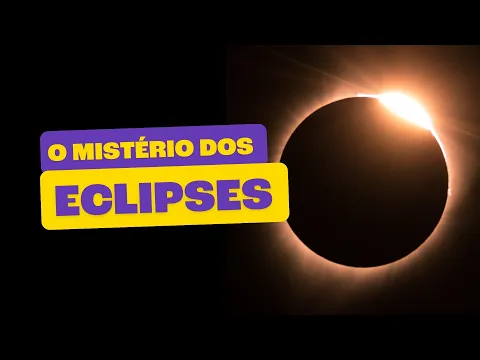
This type of eclipse already exists today and is called a annular eclipse, when the Sun appears as a “ring of fire” around the Moon. In the distant future, all solar eclipses will be of this type — total eclipses will cease to occur on Earth.
The estimated timeframe: hundreds of millions of years
Scientific models indicate that this point will be reached in about 600 million years, although the exact value may vary according to the dynamics of the Earth-Moon system over time.
This number may seem distant, but it is relatively short on a geological scale. It represents an inevitable change in the visual dynamics of the Earth’s sky. The Moon’s recession affects not only eclipses. It also influences other aspects of the planet.
Among the main effects are:
- gradual increase in the length of the day on Earth
- changes in tidal dynamics
- alterations in the stability of Earth’s rotational axis over millions of years
These factors have a direct impact on the evolution of the climate and environmental conditions of the planet over very long timescales.
A phenomenon that was different in the past
Interestingly, in the distant past, the situation was the opposite. Billions of years ago:
- the Moon was much closer to Earth
- it appeared larger in the sky
- total eclipses were more frequent and more intense
Over time, the system evolved to reach the current balance — which is temporary. The current moment is just an intermediate phase in a continuous process of orbital transformation.
The possibility of observing a total solar eclipse — when day turns to night for a few minutes — depends on an extremely specific coincidence between size and distance. This coincidence is not permanent. It exists now, but it will not last forever.
The constant recession of the Moon ensures that, at some point in the future, the Earth’s sky will no longer offer this rare spectacle, replacing it with less dramatic versions of the same alignment.
Although imperceptible on the scale of a human life, the Earth-Moon system is in constant change. Each year, the Moon moves a little farther away. Each million years, this difference accumulates. And over hundreds of millions of years, the result will be visible even to the naked eye — not as an isolated event, but as the absence of a phenomenon that today seems natural.
Total solar eclipses, which today fascinate millions of people around the world, are actually a temporary event in the planet’s history.








Seja o primeiro a reagir!