





 Portuguese
  English
  Spanish
  4 min of reading
  0 comments


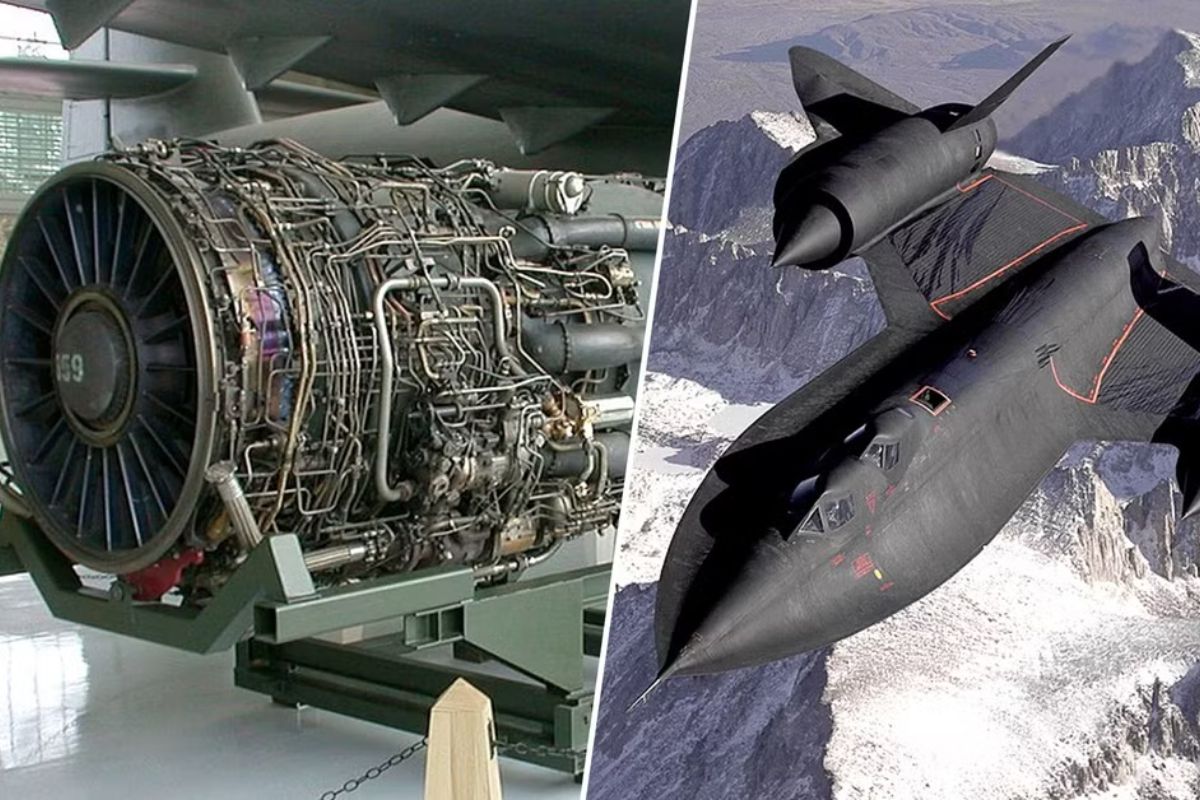
Designed During the Cold War, the Pratt & Whitney J58, the Engine of the SR-71 Blackbird Fighter, Was a Hybrid System That Transformed in Flight to Allow the Aircraft to Fly at Over 3,500 km/h.
In the pantheon of great machines, few are as legendary as the Lockheed SR-71 Blackbird spy plane. But the true secret to its ability to fly faster than a missile lay not only in its stealthy design but in its soul: a pair of Pratt & Whitney J58 engines. This was not an ordinary engine. The engine of the SR-71 Blackbird was a masterpiece of engineering, a variable cycle system that transformed in full flight to breathe the thin air at high altitudes and operate in a regime where conventional jet engines would fail.
Decades after its retirement, in 2025, the pioneering technology of the J58 continues to serve as the basis for the development of hypersonic missiles and aircraft. Understanding how it worked is to understand the prologue to the next era of high-speed aviation.
The Need for the Cold War: Why Did the Blackbird Need a Revolutionary Engine?
In the late 1950s, the U.S. main espionage tool was the U-2 plane, which flew extremely high to evade enemy defenses. This invulnerability ended on May 1, 1960, when a U-2 was shot down over the Soviet Union. The incident proved that altitude alone was no longer sufficient.
-
The world consumes 50 billion tons of sand per year and no one is monitoring it: the UN warns that the second most used resource on the planet after water is running out and has even created an international mafia.

-
With a length of 211 meters, a double iron hull, and propulsion by sails, paddles, and a screw propeller simultaneously, the Great Eastern was the largest ship on the planet and ultimately laid the first successful transatlantic telegraph cable.

-
A truck driver spent 21 years building a 15-meter replica of New York using balsa wood, cardboard, and regular glue; the work, featuring hundreds of thousands of buildings, has become an attraction in a museum in the city itself.

-
More than 138 stone tools found on the seabed between Turkey and Europe reignite the hypothesis of a lost land bridge from the Ice Age that may have been used by humans to cross continents.


A new philosophy was needed: “invincibility through performance.” The U-2’s successor, the SR-71, would have to fly not only higher (above 85,000 feet) but orders of magnitude faster. The doctrine was simple: if a missile was fired, the aircraft should simply accelerate to escape it. This need for extreme performance was the force that gave rise to the revolutionary engine of the SR-71 Blackbird fighter.
The Secret of the J58: A Turbojet That Transformed into a “Ramjet” to Fly at Mach 3
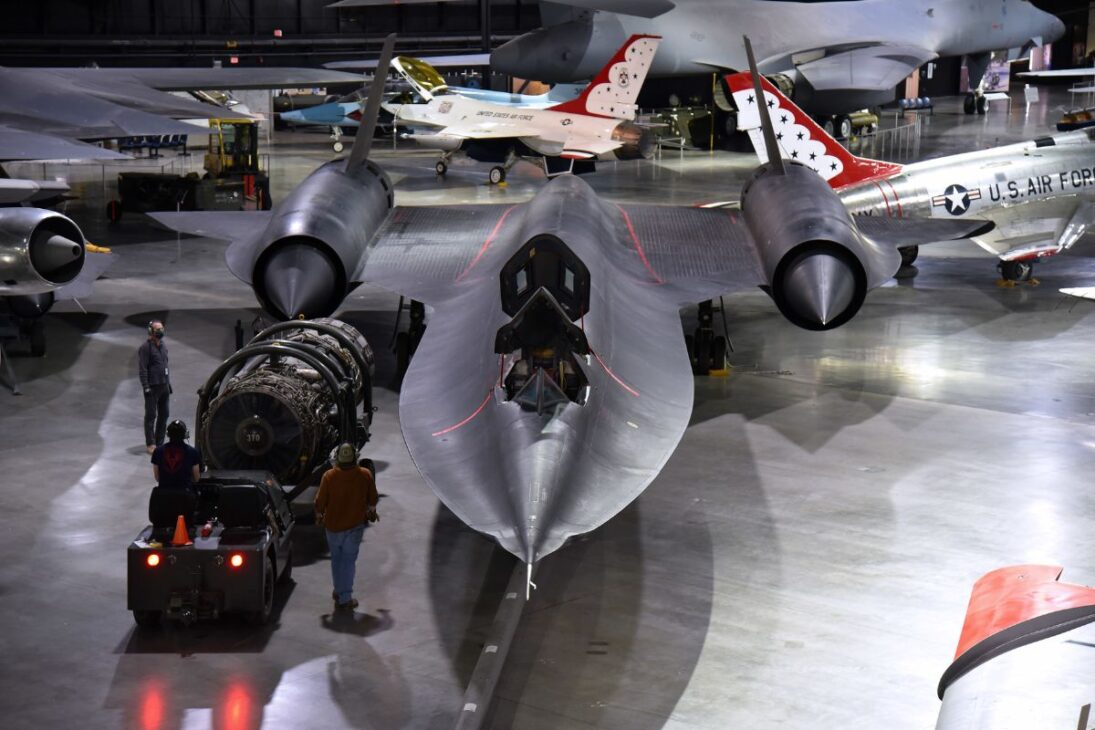
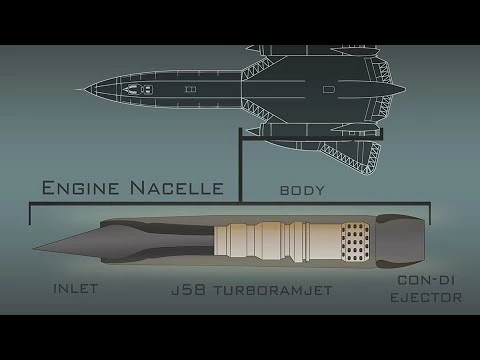
The J58 is often described as a turbojet, but it was much more. It was a “turbo-ramjet” hybrid engine with a variable cycle. At low speeds, it operated like a conventional turbojet. But as it accelerated, its operation changed completely.
Above Mach 2 (twice the speed of sound), a system of six bypass tubes opened, bleeding off about 20% of the partially compressed air and injecting it directly into the afterburner section. This “cooler” air cooled the engine, allowing the afterburner to stay engaged continuously, and provided extra oxygen for a more powerful burn. With this change, the engine acted like a ramjet, a type of engine that uses its own speed to compress air. The result was a drastic change in the source of thrust: above Mach 3, the air intake was responsible for 54% of all thrust, while the engine core contributed only 17.6%.
The “Magic Cone” and the Nightmare of the “Unstart”: Managing Air at Extreme Speeds
For the engine to function, the aircraft first needed to tame supersonic air. The centerpiece for this was the iconic movable cone, or “spike”, at the front of each engine. As the SR-71 accelerated, the cone moved backward, adjusting the shockwaves to slow the air from Mach 3 to a subsonic speed before it reached the engine.
This was a dangerous dance. A small failure or atmospheric change could cause a “unstart”, a violent and instantaneous expulsion of the shockwave, which would make the engine lose all thrust and create immense drag. Pilots described the sensation as “hitting a wall”. It was the greatest operational risk of the Blackbird, an event so violent it could lead to the loss of the aircraft.
Forged in Titanium and Lit with Chemistry: The Unique Materials and Systems of the Blackbird
To withstand the extreme heat of flight, which exceeded 316°C on the fuselage, the SR-71 was built with 93% titanium. In one of the greatest ironies of the Cold War, the material to build the world’s most advanced spy plane was secretly purchased by the CIA from the Soviet Union, the main adversary it was meant to surveil.
The engine also required unique solutions. The special fuel, JP-7, was so stable that it could not be ignited by a conventional spark. The ignition was done chemically, with an injection of Triethylborane (TEB), a substance that explodes upon contact with air, generating a green flame that then ignited the main fuel.
How the Engine of the SR-71 Blackbird Inspires Hypersonic Technology

Although its last flight occurred decades ago, the legacy of the J58 is more alive than ever. It is recognized as the world’s first successful combined cycle engine (TBCC), and the challenges its engineers solved are the same faced today in the development of hypersonic missiles and aircraft.
Cutting-edge programs, such as Lockheed Martin’s conceptual SR-72 “Son of Blackbird” and the “Chimera” engine from the startup Hermeus, are direct descendants of the J58’s philosophy. They seek to combine a turbine engine for low speeds with a ramjet or scramjet for hypersonic flight. The J58 not only proved it was possible but left a detailed manual on how to achieve sustained flight at extreme speeds, a roadmap that continues to guide aerospace engineering in 2025.







-

2 pessoas reagiram a isso.