





 English
  Francês
  Alemão
  Italiano
  Japonês
  Norueguês
  Portuguese
  Spanish
  4 min of reading
  0 comments


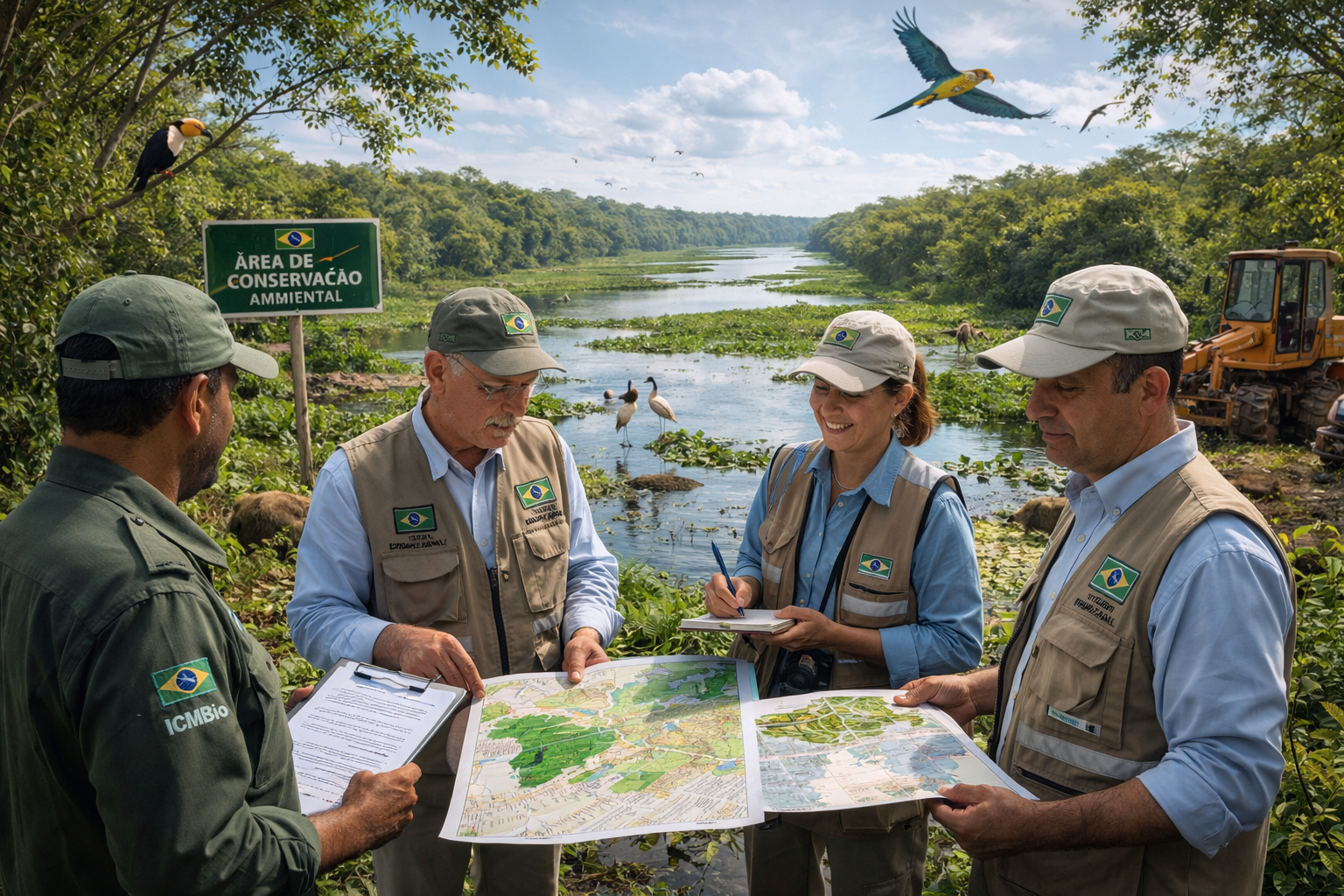
Expansion of conservation units in Taiamã and the Pantanal National Park strengthens fauna, flora, and environmental balance of the biome
The federal government officially announced, in 2024, the expansion of two important conservation units in the Pantanal of Mato Grosso. The announcement was made by President Luiz Inácio Lula da Silva during COP15, held in Campo Grande (MS), according to information from the Chico Mendes Institute for Biodiversity Conservation (ICMBio).
With this, the country adds 104.2 thousand hectares of direct protection to the biome, reinforcing environmental strategies aimed at preserving one of the richest ecosystems on the planet. The measure prioritizes the so-called flood pulse, an essential phenomenon for maintaining the fauna and flora of the region.
In addition, the management of the areas remains under the responsibility of ICMBio, the agency responsible for the conservation of federal units. In this context, the expansion also strengthens fundamental environmental services, such as climate regulation and preservation of water resources.
-
350-year mystery may have been solved: remains of a soldier who inspired the hero of The Three Musketeers found beneath a church in the Netherlands.

-
NASA photographed a nearly perfect square with 3 km sides on Mars, 13 times larger than the Great Pyramid of Giza, but the official explanation is natural erosion; still, no one has explained why the four sides have almost identical lengths.

-
Starlink breaks the barrier of 10,000 satellites in orbit and takes its expansion to an unprecedented level, with a direct impact on global internet, technological competition, and the race for space.

-
Japan finds an alternative to oil amid rising prices by transforming ocean balance into electricity with a new technology that maintains efficiency even when the sea changes.


Taiamã Ecological Station undergoes historic expansion
Created by Decree No. 86,061, on June 2, 1981, the Taiamã Ecological Station is located in the municipality of Cáceres (MT), about 220 kilometers from Cuiabá. With the new delimitation, its area will be expanded from 11.5 thousand to 68.5 thousand hectares, consolidating a significant advance in environmental protection.
According to ICMBio, Taiamã is a river island delimited by the Paraguay River, formed mainly by floodable fields. This scenario favors a great diversity of aquatic environments, including permanent ponds, temporary ponds, meander ponds, and corixos.
The name of the unit derives from the Taiamã bird, also known as the three-rayed (Phaetusa simplex). In this environment, the unit ensures the reproduction of fish species, birds, and diverse vegetation, ranging from herbs to large trees.
Scientific discovery reinforces the importance of the region
In 2021, researchers identified a population of jaguars with unusual feeding behavior, based on the capture of fish and caimans. This pattern differs from that observed in other groups of the species and reinforces the ecological uniqueness of the area.
The expansion of the station meets a long-standing demand from researchers at the State University of Mato Grosso (Unemat). According to biologist Claumir Cesar Muniz, Ph.D. in Ecology and Natural Resources, studies have shown that the previous area was not sufficient to adequately protect the jaguar population and the 131 species of fish identified.
According to the researcher, the expansion will ensure enough territory for the genetic viability of the jaguar and protect the natural nurseries of fish. Furthermore, as highlighted by researcher Ernandes Sobreira, larger areas contribute to carbon sequestration, climate regulation, and water purification.
Pantanal Mato-Grossense National Park is also expanded
Created by Decree No. 86,392, on September 24, 1981, the Pantanal Mato-Grossense National Park (PNPM) is located in the municipality of Poconé (MT), approximately 100 kilometers from Cuiabá. With the announced expansion, its area will increase from 135.9 thousand to 183.1 thousand hectares.
The park’s boundaries include the Paraguay River to the south and west, the São Lourenço River to the southeast, as well as the Caracará Grande River, the Caracarazinho, and areas subject to periodic flooding. This configuration reinforces the hydric dynamics of the region.
The park also maintains a connection with the Integrated Natural Management Area of San Matias, located in Bolivia, enhancing its ecological relevance on an international scale. It is a region with a high flooding index, which can remain flooded for up to eight months a year.
Endangered species gain enhanced protection
During flood periods, the park receives waters from the Paraguay River and the São Lourenço River, contributing to the maintenance of the natural cycles of the biome. In this environment, according to ICMBio, several endangered species find shelter.
Among them, the jaguar, the giant anteater, the margay cat, the giant armadillo, the giant river otter, the Pantanal deer, the brown-bellied jacu, the sertão caboclinho, and the stilletto stand out.
Thus, the expansion of conservation units in the Pantanal represents a significant advance in the preservation of Brazilian biodiversity. At the same time, it reinforces environmental policies aimed at protecting strategic and essential natural resources for ecological balance.







Seja o primeiro a reagir!