





 Portuguese
  English
  Spanish
 3 min of reading
  1 comment


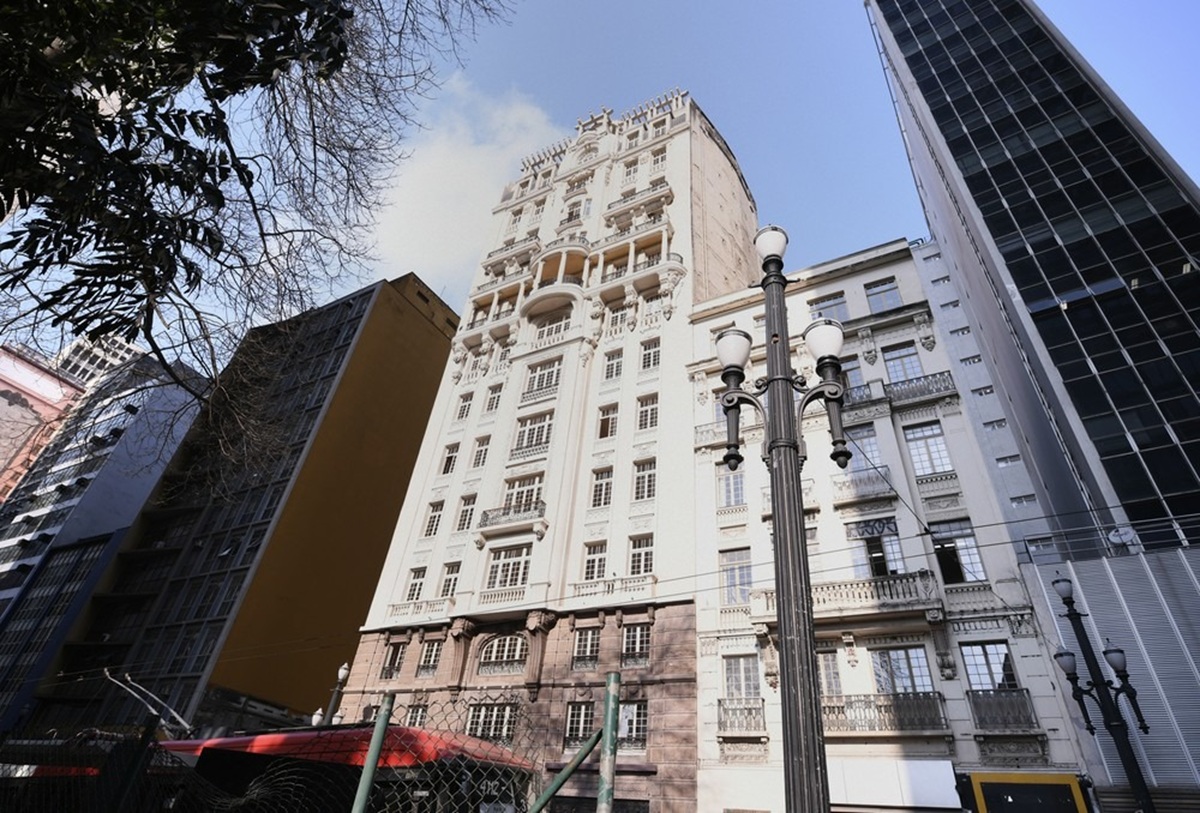


With 105 Years of History, the Sampaio Moreira Building Remains a Symbol of São Paulo’s Verticalization, Preserving Its Eclectic Architecture and the Legacy of Urban Pioneering Started in 1924.
The Sampaio Moreira Building, a historical landmark of São Paulo architecture, with 105 years, reaffirms its pioneering role in the urban transformation of São Paulo.
Designed by engineer Samuel das Neves and architect Christiano Stockler das Neves, father and son, the building was the tallest in the city between 1924 and 1929 — a period during which it broke the horizontal landscape and began the era of São Paulo skyscrapers.
With 12 floors and 50 meters in height, the building impressed at a time when most constructions had only four floors.
-
Friends have been building a small “town” for 30 years to grow old together, with compact houses, a common area, nature surrounding it, and a collective life project designed for friendship, coexistence, and simplicity.

-
This small town in Germany created its own currency 24 years ago, today it circulates millions per year, is accepted in over 300 stores, and the German government allowed all of this to happen under one condition.

-
Curitiba is shrinking and is expected to lose 97,000 residents by 2050, while inland cities in Paraná such as Sarandi, Araucária, and Toledo are experiencing accelerated growth that is changing the entire state’s map.

-
Tourists were poisoned on Everest in a million-dollar fraud scheme involving helicopters that diverted over $19 million and shocked international authorities.


Its grandeur made it a symbol of progress and verticalization of the capital. At the time, the building was the only tall one in the city.
It only lost the title to the Martinelli Building in 1929. Being the first skyscraper in São Paulo.
A Project Ahead of Its Time
The venture was envisioned by the Portuguese José Sampaio Moreira for commercial use.
Since its inauguration, the building has housed on its ground floor the traditional Mercearia Godinho, founded in 1890, and has 180 rooms distributed throughout its structure.
The architectural layout also attracts attention for resembling the North American model.
Eclecticism and Ornamentation as Identity
The building was constructed in the eclectic style, typical of the early 20th century, with rich ornamentation and intricate details.
This combination of styles and aesthetic refinement contributed to consolidating the building as an icon of the urban landscape of São Paulo and an example of transitional architecture between the classical and the modern.
Restoration and Preservation
The Sampaio Moreira is listed by Conpresp (Municipal Council for the Preservation of Historical, Cultural, and Environmental Heritage of São Paulo).
It underwent a structural renovation in 1990, which preserved its main original elements, such as the solid wood location panel with golden letters, the Carrara marble staircases, and the Riga pine windows.
The Swedish Brothers elevators maintained their original design, with wrought iron doors, elaborate mirrors, and gold adornments.
In 2010, the building was expropriated to house the Municipal Department of Culture.
Restoration works began in 2012 and concluded in 2018, recovering its original features and adapting the space to current accessibility and safety standards. The renovation also included an annex at the back with emergency stairs.
With 105 years of history, the Sampaio Moreira Building remains a symbol of memory and São Paulo’s verticalization — the starting point of the transformation that made São Paulo a modern metropolis.










I must say this article is extremely well written, insightful, and packed with valuable knowledge that shows the author’s deep expertise on the subject, and I truly appreciate the time and effort that has gone into creating such high-quality content because it is not only helpful but also inspiring for readers like me who are always looking for trustworthy resources online. Keep up the good work and write more. i am a follower.