





 Portuguese
  English
  Spanish
  6 min of reading
  0 comments


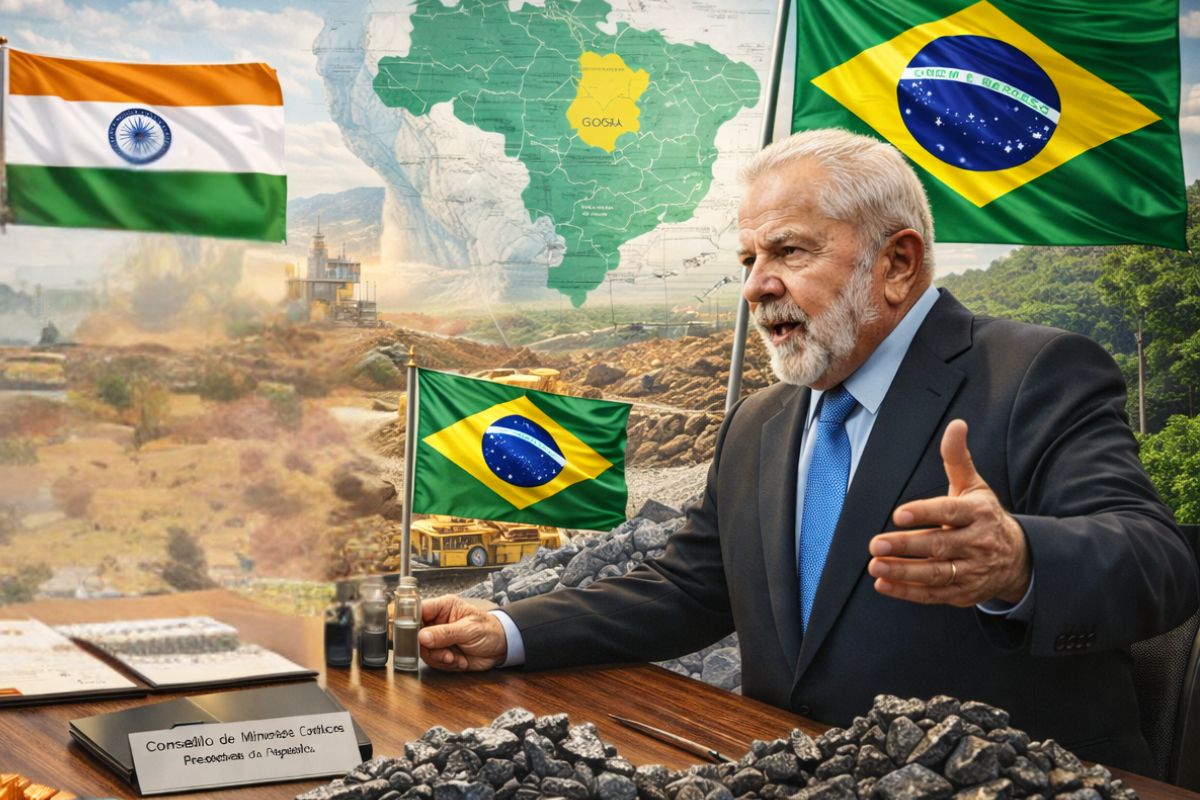
The Lula government is working on the creation of a strategic council linked to the presidency to centralize decisions on critical minerals such as copper, lithium, nickel, and graphite, after the United States signed an agreement directly with Goiás without consulting the Planalto and India got ahead with a partnership considered more advantageous.
The geopolitical competition for the minerals driving the global energy transition has reached Brazil and is forcing the federal government to act quickly. According to information from the portal Poder 360, the government of Luiz Inácio Lula da Silva is working on the final design of a special council linked to the presidency of the republic on critical minerals, focusing on copper, lithium, nickel, manganese, and graphite, essential inputs for batteries, electric vehicles, and high-tech industry. Brazil has significant reserves of these minerals, but production in the country accounts for only 0.09% of the global supply.
The urgency of the issue became clear when three events occurred almost simultaneously. The United States publicly declared that they are awaiting a Brazilian response on critical minerals. India has already closed an agreement with the Brazil considered more advantageous by the Planalto. And the government of Goiás signed a direct memorandum with the U.S. State Department without consulting the federal government, which was received by the Planalto as unconstitutional. The race for Brazilian critical minerals is open, and the government is rushing to maintain control.
The council that Lula wants to create to control critical minerals
The creation of the body was discussed in a meeting convened by Lula at the Palácio da Alvorada, with ministers Alexandre Silveira (Mines and Energy) and Dario Durigan (Finance), special advisor Celso Amorim, and executive secretaries from the Civil House and MDIC.
-
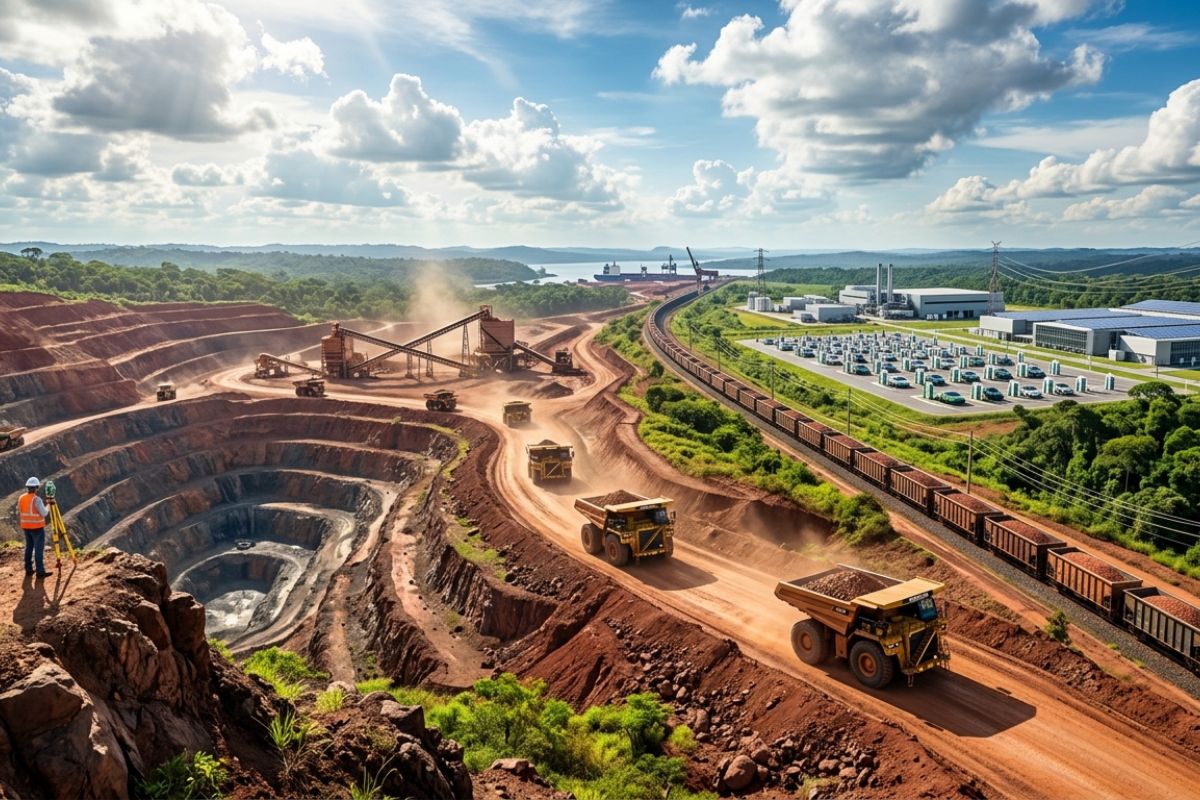
Brazil could become a key player in the “electrification metal”: global demand for copper is expected to soar with electric cars and AI, the IEA projects a deficit of up to 30% by 2035, and Carajás drives the bet for the country to move from just 1% of global production.
-
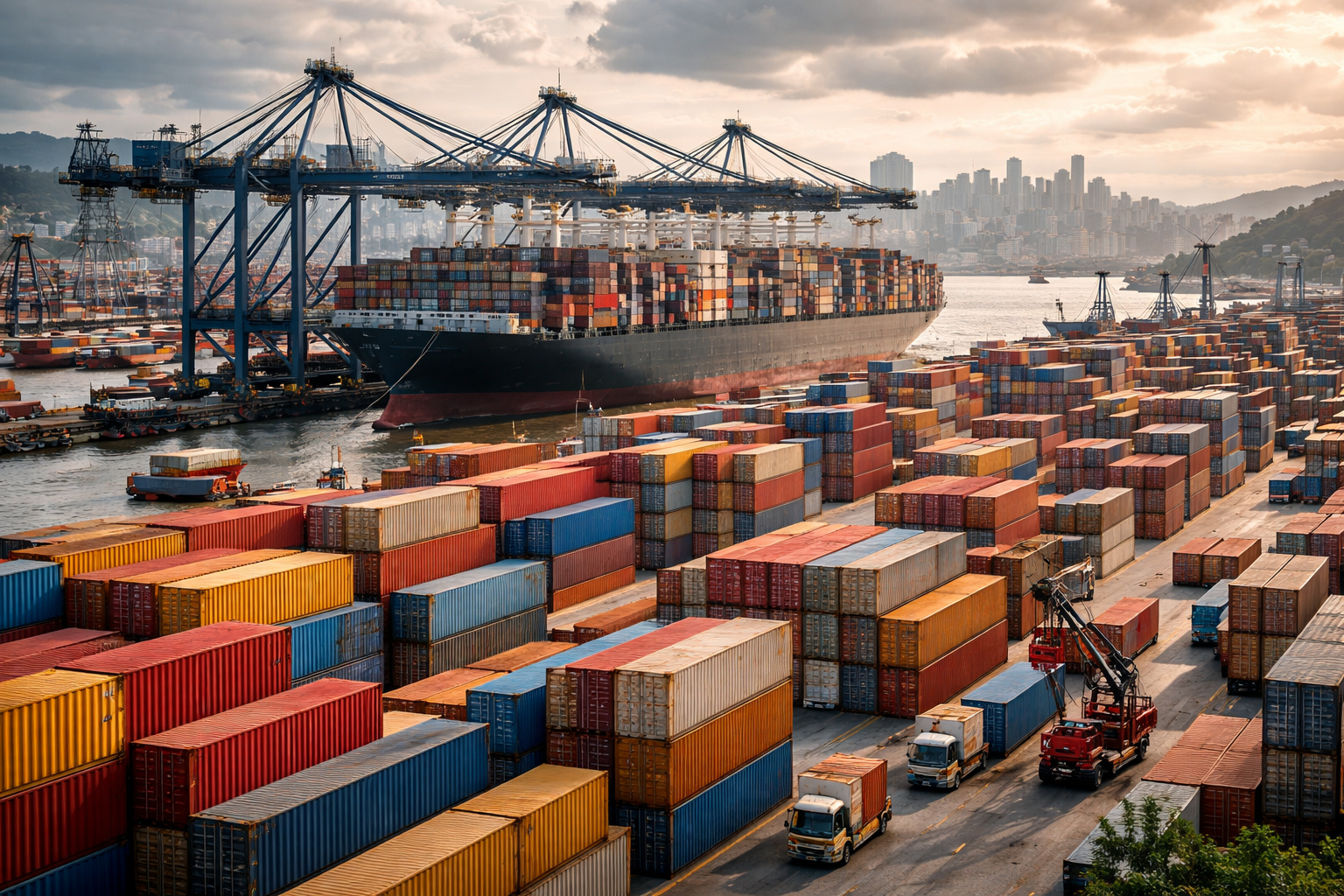
China surpasses the United States and becomes the largest trading partner of São Paulo with about US$ 31 billion in transactions, accelerated growth redefines the economic axis of the richest state in Brazil.
-
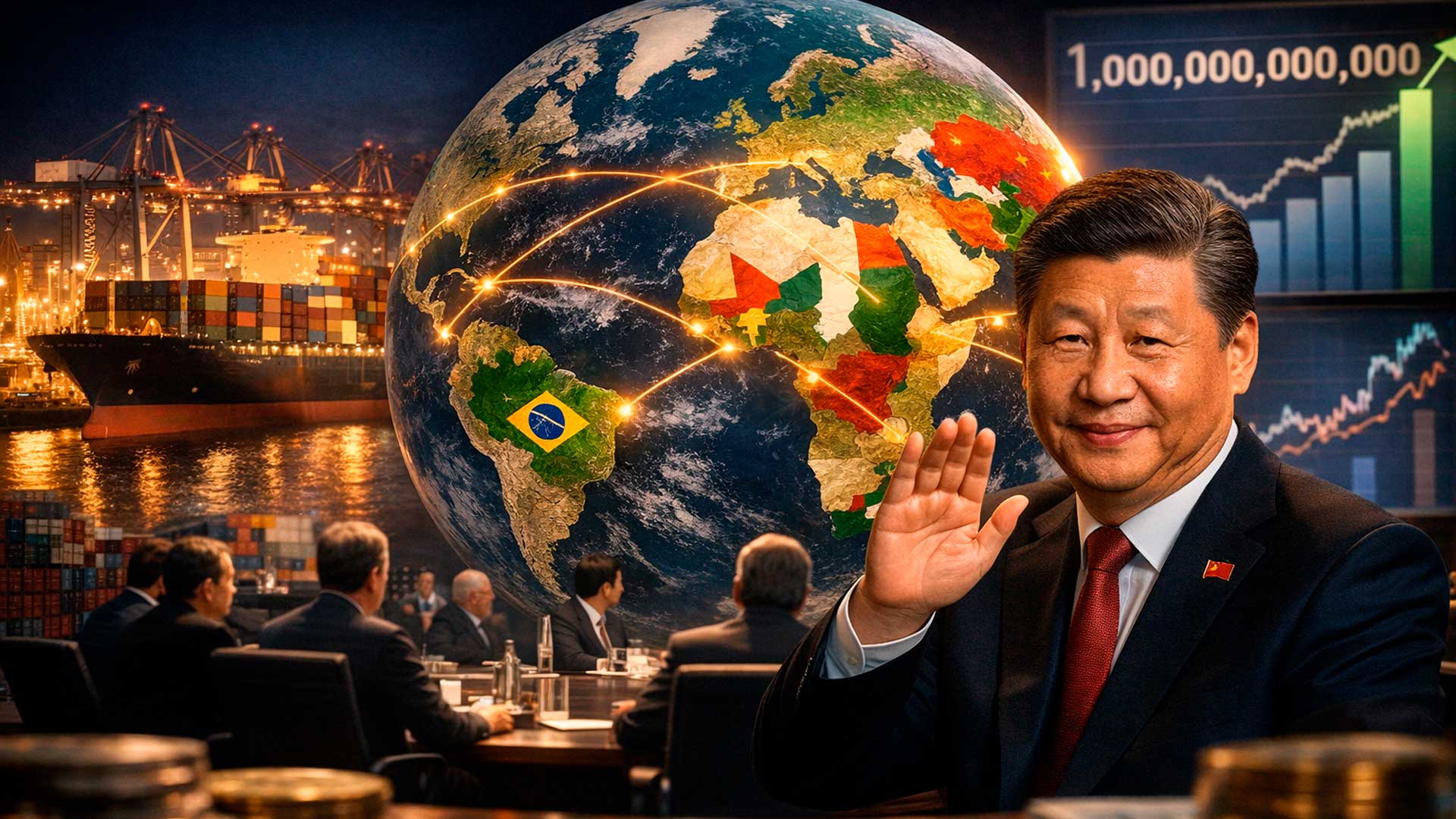
BRICS breaks the barrier of US$ 1 trillion in internal trade, accelerates the weight of the Global South, and pressures Brazil to react in the new economy.
-
Electrolux surprises, closes colossal factory and lays off 400 people in a mass dismissal that will have a direct effect later this year, following a cost review, with an impact of R$ 272.5 million and R$ 109 million in cash in Chile.
The new council will have a strategic and political profile, focusing on critical minerals and international negotiations related to the topic, functioning similarly to the CNPE (National Energy Policy Council) in the case of oil, gas, and biofuels.
Lula still needs to decide where the body will be located. The Ministry of Mines and Energy wants to host it, as it was the one that initiated discussions in 2025.
Meanwhile, the Planalto is working to have the structure under the Civil House, which would give direct political weight to the president in negotiations over critical minerals. The council is different from the CNPM (National Mineral Policy Council), reactivated in October 2025, which has a technical and sectoral character.
The new body will be a direct evaluation instance for the president, especially in the geopolitical dimension, and will serve as a bridge with the private sector.
The United States want Brazilian minerals, but there is no formal proposal
On March 18, in front of businessmen at the Amcham headquarters in São Paulo, the U.S. Chargé d’Affaires in Brazil, Gabriel Escobar, stated that Washington is awaiting a Brazilian response on critical minerals. At the Planalto, the statement caused surprise: according to the Lula government, there was no formal proposal to be responded to.
The United States treats the topic as an ongoing negotiation. The Brazilian government, in turn, claims that what was presented is too vague to be considered a proposal. Technical teams from Brasília and Washington, through the USTR (U.S. Trade Representative), hold regular meetings, but there has been no public announcement about the content.
There is resistance within the government to any model that turns Brazil into an exporter of critical minerals in raw form. The guideline under discussion prioritizes the export of processed products and preserves the possibility of restricting external sales in case of domestic need.
Goiás signed an agreement with the USA without consulting the Planalto
Without closing a deal with the federal government, the United States took another route. On March 18, the U.S. State Department signed a memorandum of cooperation directly with the government of Goiás, represented by then-governor Ronaldo Caiado (PSD), who signed in his capacity as president of AMIC/GO (Authority of Critical Minerals of the State of Goiás).
The special advisory of the presidency was not consulted before the signing. The Ministry of Mines and Energy and the Itamaraty were caught off guard.
The agreement establishes cooperation throughout the critical minerals chain, from geological research to industrial processing, including mapping mineral potential with foreign technical support, geological data exchange, and facilitation of investments with American companies.
The Planalto treats the memorandum as unconstitutional, arguing that defining the degree of openness of the critical minerals market is the exclusive competence of the Union.
A specific point raised alarm: the determination that data from geological surveys funded by the United States be jointly owned between Goiás and the American government. The Planalto classifies this as a national security issue.
Why the agreement with India is seen as more advantageous
While the relationship with the United States regarding critical minerals has not yet moved beyond statements, Brazil has already closed an agreement with India on the topic. The Planalto considers the partnership with the Indians more aligned with the Brazilian guideline of not exporting minerals in raw form and prioritizing domestic processing.
The difference in posture between the two countries is revealing. India accepted terms that include value addition in Brazil.
The United States, on the other hand, signed a memorandum with a Brazilian state without going through the federal government, and the Planalto interprets the State Department’s choice (instead of the Department of Energy) as an attempt to give political weight to the document.
For the Lula government, the ideal negotiation model for critical minerals is one in which Brazil exports processed products, maintains control over its geological data, and preserves the ability to restrict exports when necessary.
What is at stake: copper, lithium, and the future of the energy transition
The focus of the council and international negotiations is on five critical minerals: copper, lithium, nickel, manganese, and graphite. These are the inputs that enable electric vehicle batteries, solar panels, wind turbines, and all the infrastructure of the global energy transition.
Brazil has significant reserves of all of them, but produces only 0.09% of the global supply. This mismatch between potential and production is what attracts foreign powers and, at the same time, worries the government.
The creation of the strategic council aims to ensure that decisions on how to explore and negotiate these critical minerals go through the center of the government and are not fragmented among states or ministries. The Goiás case served as a warning: without a centralized instance, the risk is that agreements are made outside the national strategy.
The expectation is that the council will function as the single decision point for everything involving critical minerals in Brazil, from negotiations with foreign powers to defining which products can be exported and in what form.
Should Brazil negotiate its minerals with the USA or protect its reserves?
Brazil has what the world needs for the energy transition: critical minerals in abundance. The question is how to negotiate this access.
The United States want to enter directly, India has already closed a partnership, Goiás signed on its own, and Lula is trying to create a council to centralize everything before it’s too late.
And you, do you think Brazil should negotiate its minerals with the USA or protect its reserves? Was the Goiás agreement right or wrong? Let us know in the comments.






Seja o primeiro a reagir!