





 Portuguese
  English
  Spanish
  5 min of reading
  0 comments


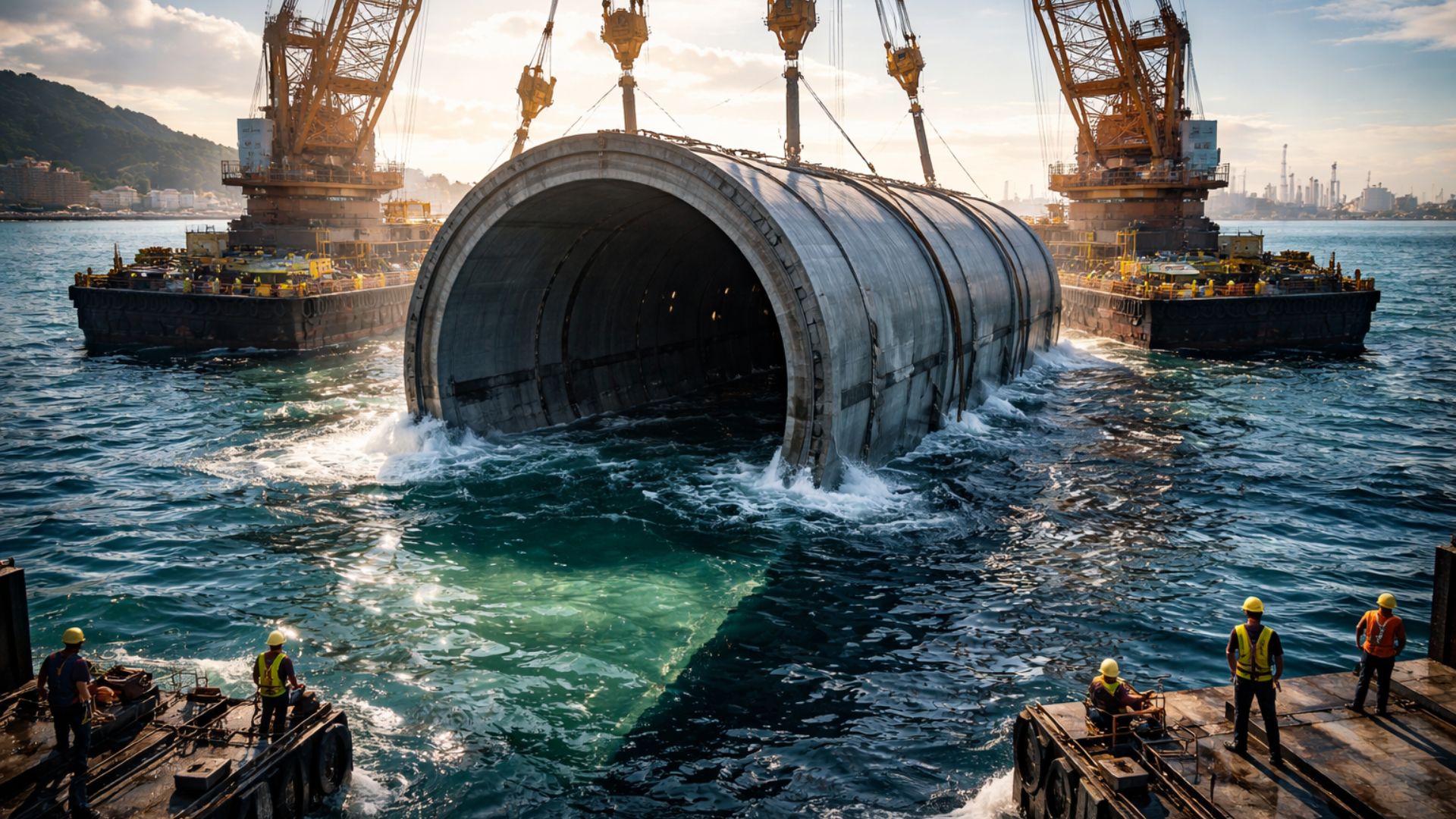
Billion-dollar project for unique connection between Santos and Guarujá advances with state funding and federal impasse still under review, while the promise to reduce crossing time from up to 50 minutes to few minutes maintains historical expectations in Baixada Santista.
The government of São Paulo deposited R$ 2.64 billion to enable the construction of the Santos-Guarujá tunnel, the country’s first immersed crossing, in a project estimated at R$ 6.8 billion and granted for 30 years to the Portuguese group Mota-Engil.
The work foresees a connection of 1.5 kilometers, with 870 meters submerged, and is part of a mobility and logistics package treated as a priority by state and federal governments.
Under the public-private partnership model, public investment accounts for the majority of the project.
-
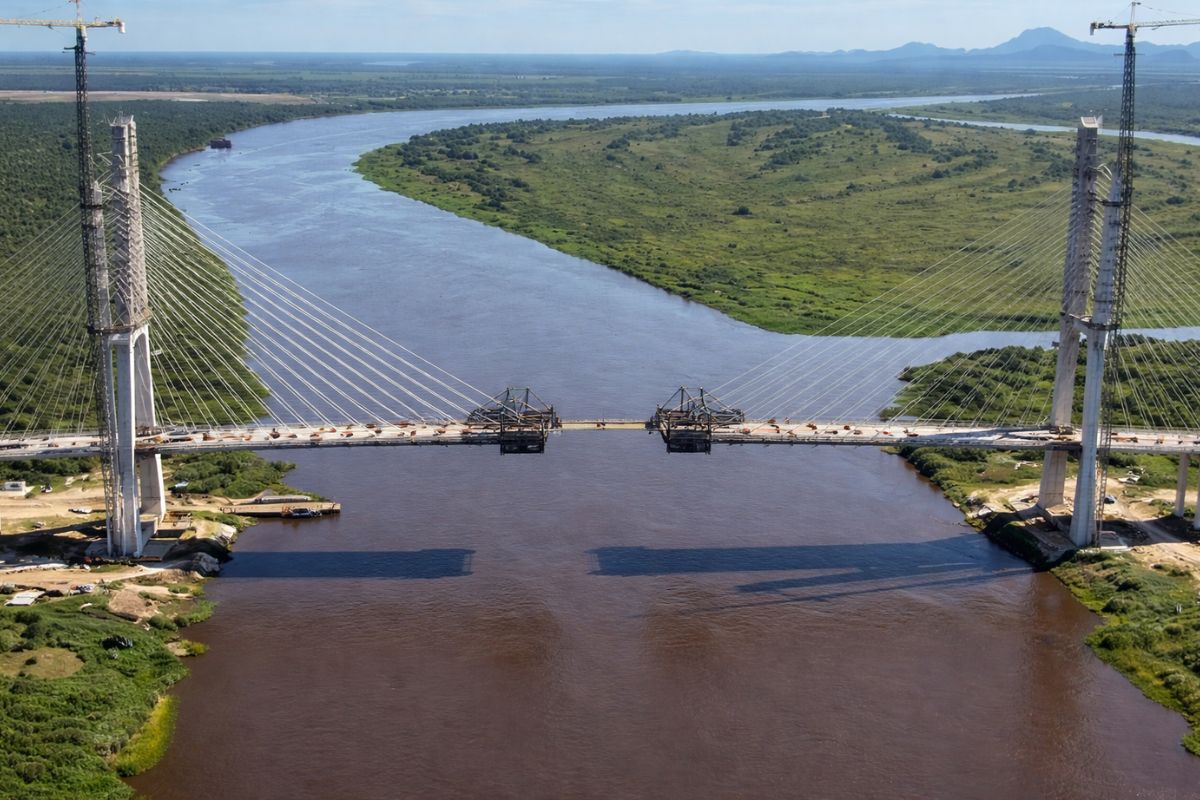
Only 46 meters remain for Brazil and Paraguay to connect via the Bioceanic Route bridge, the project that will link the Atlantic to the Pacific by land and change the logistical map of four countries in South America.
-
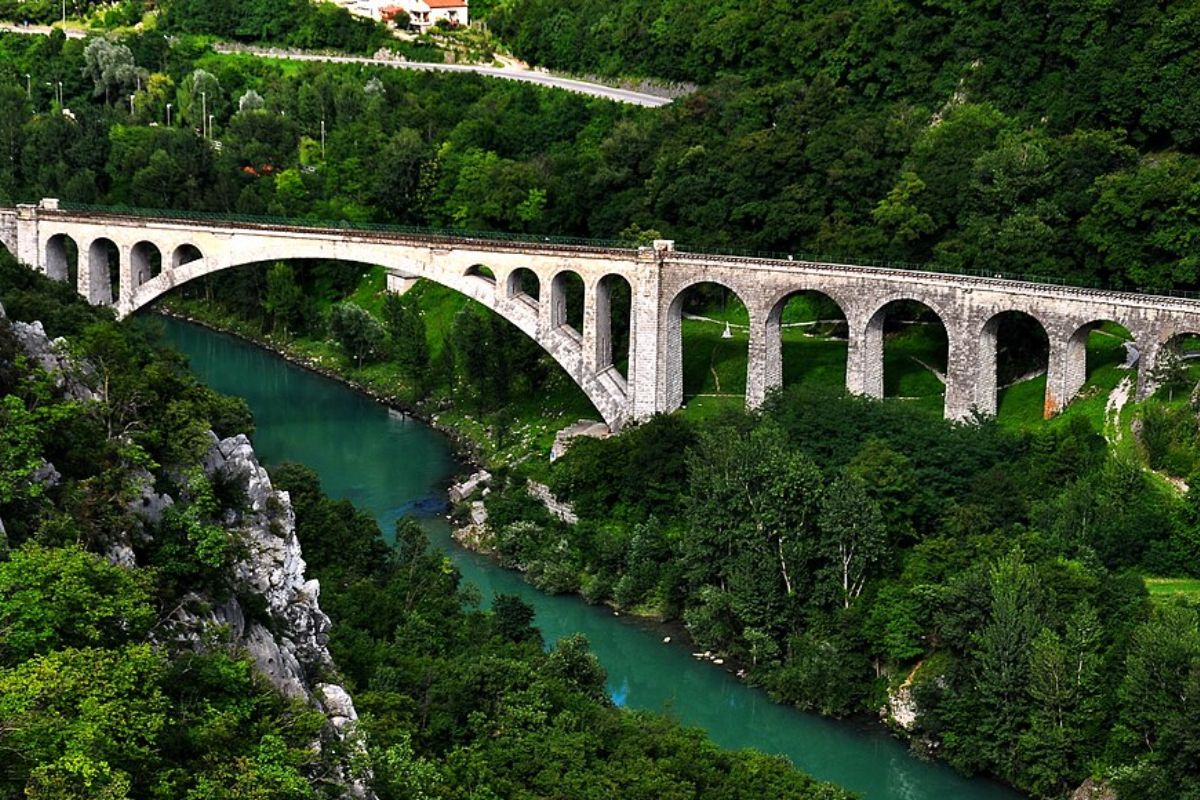
The bridge that holds the largest stone railway arch in the world: built over 100 years ago, destroyed in the war, and rebuilt to continue operating to this day, it still carries trains over the Soča River in Slovenia.
-
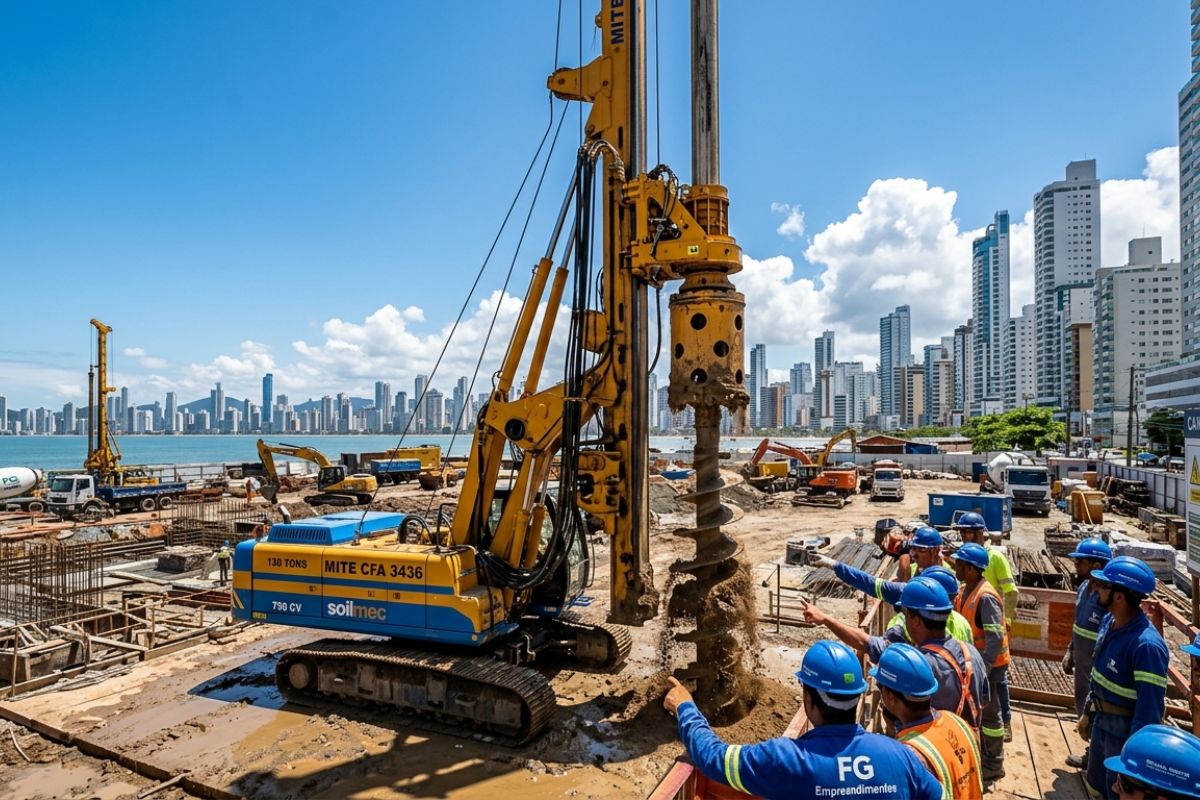
Italian giant of 130 tons arrives at the Senna Tower construction site and accelerates foundations: Mite CFA 3436 drills up to 50 m, 750 hp engine, investment of R$ 20 million, unique in Latin America.
-
The adobe house in Monteiro Lobato takes shape with bamboo and clay from the land, a stone foundation, and a roof for the wind; cracks are normal, and finishing with lime turns it into a “common house.”

Official project documents indicate about R$ 5.13 billion to R$ 5.2 billion in contributions from the State and Union, while the concessionaire covers the remaining amount.
The São Paulo administration maintains that the schedule has been preserved even after questions about the governance of federal resources.
Release of resources and federal impediments
The state release occurred in two stages.
First, the Palácio dos Bandeirantes published, in March 2026, the decree that opened a supplemental credit of R$ 2.64 billion in the budget of the Partnerships and Investments Secretariat.

Then, as the department itself reported, the amount was effectively deposited at the end of the month, reinforcing the account linked to the project and ensuring budget availability for the initial phase of the contract.
Meanwhile, the federal part remained under analysis.
The Federal Court of Accounts determined the temporary suspension of the R$ 2.6 billion contribution that would go to the Port Authority of Santos, requiring greater clarity in the governance of the operation.
The rapporteur, Minister Bruno Dantas, demanded a formal instrument signed between the parties to define the management of the resources before any transfer, citing the unprecedented nature of the inter-federal PPP.
In the decision released, Dantas stated that federal resources should only be released after the appropriate legal formalization.
The demand directly affected the project’s modeling, as the Union participates through the port authority, and not through traditional budget transfers.
The understanding was that, without clear rules on responsibility and control, the contribution would be exposed to legal insecurity.
Reserved resources and pressure for release
The Port Authority of Santos reported that it has the necessary amount to honor its share in the project.
The president of the state-owned company, Anderson Pomini, presented to the Ministry of Ports and Airports proof that the resources were reserved in a separate account from the general cash.
The strategy sought to demonstrate financial capacity and dispel doubts about the existence of the money, even though its use depends on the approval of the TCU.
How is the crossing currently

Currently, the movement between Santos and Guarujá mainly depends on the ferry system, small vessels, and longer road routes.
The São Paulo government claims that more than 28,000 people cross daily between the two shores, highlighting the historical demand for a fixed connection.
For ferry transport, pedestrians currently pay R$ 3.10, with charges only at boarding in Guarujá, valid for both directions.
Bicycles with human propulsion are exempt.
For residents, workers, and tourists, the system remains essential, but is subject to queues, operational variations, and the impact of seasonal movement in Baixada Santista.
Institutional project data indicate that a journey that currently takes about 50 minutes could drop to less than five minutes with the new connection.
In more optimistic estimates, the crossing could be made in approximately two minutes, depending on operational conditions.
Tunnel structure and impact on mobility
The project was conceived as a multimodal structure.
The project foresees three lanes in each direction, in addition to space reserved for Light Rail Vehicles, passage for pedestrians and cyclists.
The proposal has also been presented as a solution to reduce urban mobility bottlenecks without limiting the expansion of the Port of Santos.
The coexistence of urban traffic and port logistics is considered one of the main challenges in the region.
Auction, contract, and schedule of the work
The size of the contract helps explain the economic weight of the project. In addition to construction, the PPP assigns the concessionaire the operation and maintenance of the asset for 30 years.
The auction was held in September 2025, with Mota-Engil winning after offering a discount on the maximum annual public compensation.
Months later, the São Paulo government signed the contract that formalized the partnership and allowed progress to the technical phase of the project.
The schedule indicates 2026 as the period for contributions and technical preparation.
The program foresees the start of construction in 2027, structural stages in the following years, and completion with operations estimated for the beginning of the next decade.
Execution, however, remains conditioned to the release of federal resources and the resolution of governance requirements pointed out by control bodies. The relevance of the tunnel goes beyond the crossing itself.
For the governments involved, it is an intervention with the potential to transform mobility in Baixada Santista, reduce daily travel time, and improve circulation associated with the largest port in Latin America.
For the local population, expectations remain focused on the creation of a permanent connection capable of replacing a system still dependent on queues, waiting, and operational limitations.







Seja o primeiro a reagir!