





 Portuguese
  English
  Spanish
 4 min of reading
  0 comments


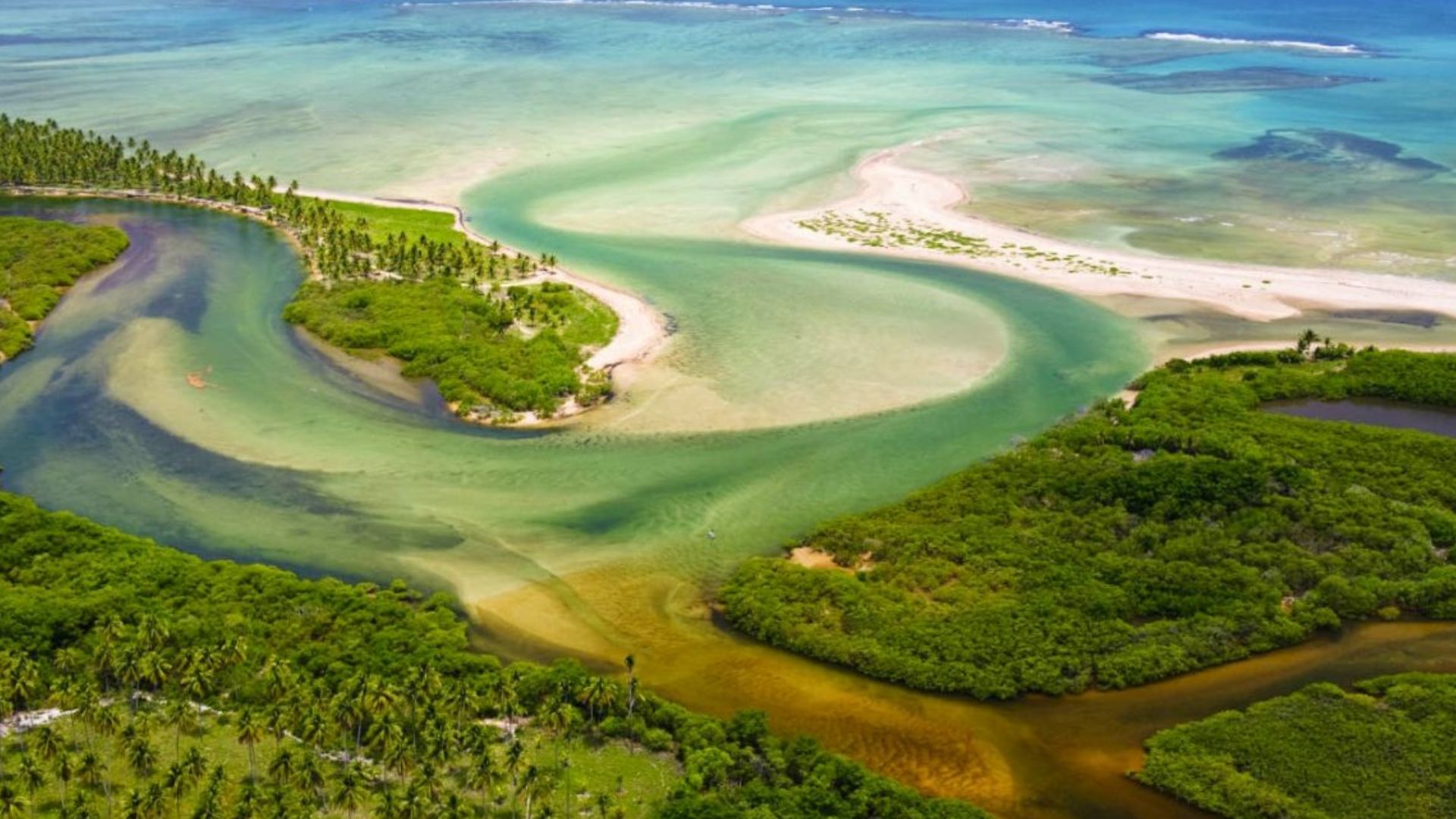
Almost Deserted Stretch of Sand, Beachfront Accommodation with Solar Energy and Raft Tours to Observe Manatees Make Tatuamunha the Best-Kept Secret of the Ecological Route of Milagres, Just Two Hours from Maceió.
Tatuamunha, a small community by the homonymous river, has transformed from a fishing village to a sought-after refuge for travelers seeking tranquility, sophistication, and genuine contact with nature.
Located 100 km from Maceió and 20 km from Maragogi, this northern Alagoan locality is part of the Ecological Route of Milagres, a 23 km corridor of almost untouched beaches protected by the Environmental Preservation Area (APA) Costa dos Corais.
Accessing this hidden beach in Alagoas requires patience and intention. There is only one narrow road — AL-101 North — and the accommodation options comprise fewer than two dozen beachfront inns and some holiday homes managed by local families.
-
Friends have been building a small “town” for 30 years to grow old together, with compact houses, a common area, nature surrounding it, and a collective life project designed for friendship, coexistence, and simplicity.

-
This small town in Germany created its own currency 24 years ago, today it circulates millions per year, is accepted in over 300 stores, and the German government allowed all of this to happen under one condition.

-
Curitiba is shrinking and is expected to lose 97,000 residents by 2050, while inland cities in Paraná such as Sarandi, Araucária, and Toledo are experiencing accelerated growth that is changing the entire state’s map.

-
Tourists were poisoned on Everest in a million-dollar fraud scheme involving helicopters that diverted over $19 million and shocked international authorities.


This logistical bottleneck, instead of being a disadvantage, has become synonymous with exclusivity: the destination is already gaining the nickname of “new Milagres,” thanks to the controlled flow of visitors and the commitment to low-impact construction — developments cannot exceed two stories or occupy more than 40% of the land, according to guidelines discussed by the Convention & Visitors Bureau of the route.
Ecotourism and Manatee Protection in Tatuamunha
The postcard of the region is the Manatee Sanctuary, maintained by the Manatee Association with the support of the Chico Mendes Institute for Biodiversity Conservation (ICMBio).
To protect the most endangered mammal on the Brazilian coast — with about 1,000 individuals remaining in the country — only 70 people per day are allowed to navigate the river on pole-pushed rafts.
The ticket costs R$ 100 and includes the assistance of community guides, of whom 53 rotate between guiding and rowing, reinforcing the character of local base tourism.
This combination of science, conservation, and income share a powerful narrative: those who visit the hidden beach in Alagoas also fund research, rescues, and rehabilitation of stranded animals.
What other experience offers proximity to a giant weighing up to 400 kg in a free habitat without compromising the well-being of the animal?

Boutique Hotels and Sustainability
The growing fame of the Ecological Route has not stimulated large resorts, but rather creative inns that rely on solar energy, waste separation, and organic supplies.
At Villa Tatuamunha, showers heated by photovoltaic panels reduce firewood consumption; at the Aldeia Beijupirá bungalow, a micro-plant ensures 100% autonomy.
For those dreaming of investing or extending their stay, the Sunrise Tatuamunha condominium — under construction since 2024 with delivery expected in 2027 — promises common areas powered 100% by clean energy, chargers for electric cars, and a beach bar just a few steps from the sand.
But can real estate luxury preserve the allure of this Alagoan paradise without repeating the mistakes of over-explored destinations?
Local Cuisine and Tailored Experiences in Tatuamunha
Chefs who traded capitals for a slower life have partnered with local shellfish harvesters; today lobsters, octopuses, and shrimp arrive from the canoe directly to the kitchen, transforming into tasting menus served under cashew trees.
Some establishments accept a maximum of 20 customers per service, a strategy that preserves the intimate proposal and reduces waste, reinforcing the reputation of the hidden beach in Alagoas among foodies from São Paulo, Buenos Aires, and Lisbon.
Want to dive deeper into regional culture?
The Manatee Association organizes, outside of tidal hours, kayak tours through the mangroves, filet lace workshops, and even Afro-Indigenous percussion classes.
Each activity reinforces the sense of belonging and prolongs average stays that already exceed six nights, according to local guides.
Controlled Growth and Collective Benefits
Recent state government data indicates that 72% of new jobs in Porto de Pedras come directly or indirectly from luxury tourism, with an estimated annual income of R$ 180 million — a considerable share for a municipality of just over 7,000 inhabitants.
Even so, community leaders advocate for limits: “We don’t want to repeat the mass model; our strength is maintaining the rustic essence,” they affirm in public meetings.
In environmental terms, the APA Costa dos Corais continues to monitor dredging and prohibits any fixed structure on reefs.
Those who insist face hefty fines and immediate embargoes.
These protective barriers help ensure that the Alagoan paradise preserves pool-blue waters, translucent natural pools, and coconut groves that complete the Instagrammable scenery — but still surprisingly empty outside of national holidays.


Dilemmas and Trends for 2026
With an average occupancy of 92% in high season and direct flights to Maceió Airport growing 18% annually, the pressure to relax urban limits is expected to increase.
Planners are discussing the creation of a kind of “stay fee” refundable on responsible consumption, similar to the model in Fernando de Noronha, to fund selective waste collection and rural sanitation.
Meanwhile, ecotourism operators are already offering cycling packages that connect Tatuamunha to the neighboring Patacho Beach on shaded routes through Atlantic Forest.
Is it worth trading the car for pedaling?
In addition to reducing emissions, visitors can quietly observe roseate spoonbills and blue herons, an experience rare even in other stretches of the coast.
The question remains: what other hidden beaches in Alagoas — or along the entire Brazilian coastline — still resist mass tourism and preserve the same alchemy of tranquility, biodiversity, and authenticity found in this Alagoan paradise?









-

-

-

-

-

-

123 pessoas reagiram a isso.