





 Portuguese
  English
  Spanish
  3 min of reading
  0 comments


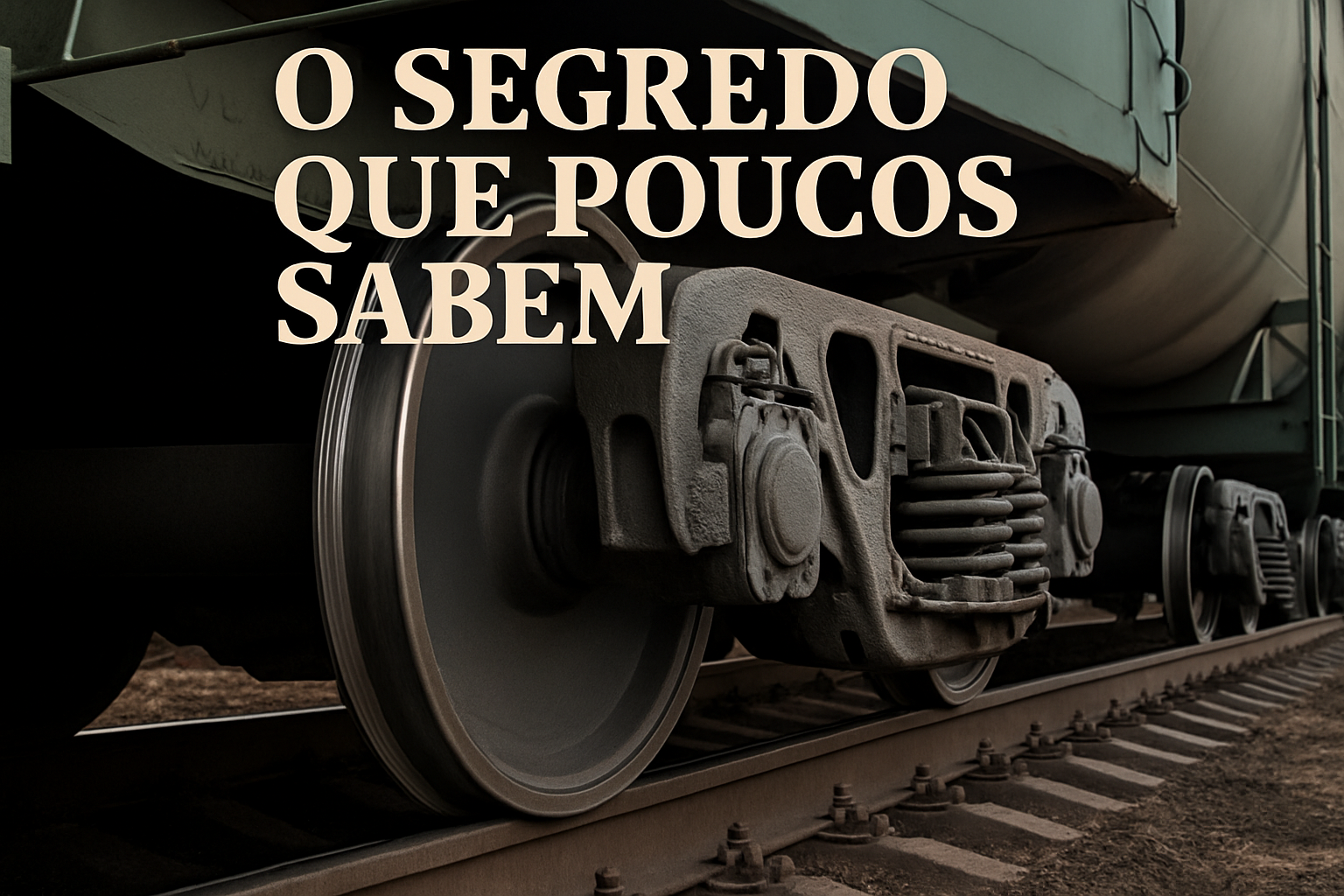
The Secret Of Train Stability Lies In The Engineering Of Conical Wheels That Adjust Movement Automatically During Curves And Sinuous Paths
Anyone watching a train in motion may wonder how these massive machines stay firmly on the tracks, even when turning. What many do not know is that the secret lies in the special shape of their wheels.
The wheels of trains appear cylindrical at first glance. However, they have a slightly conical shape. This subtle difference in geometry is what ensures the stability of the trains and prevents the risk of derailment.
The Importance Of The Shape Of The Wheels
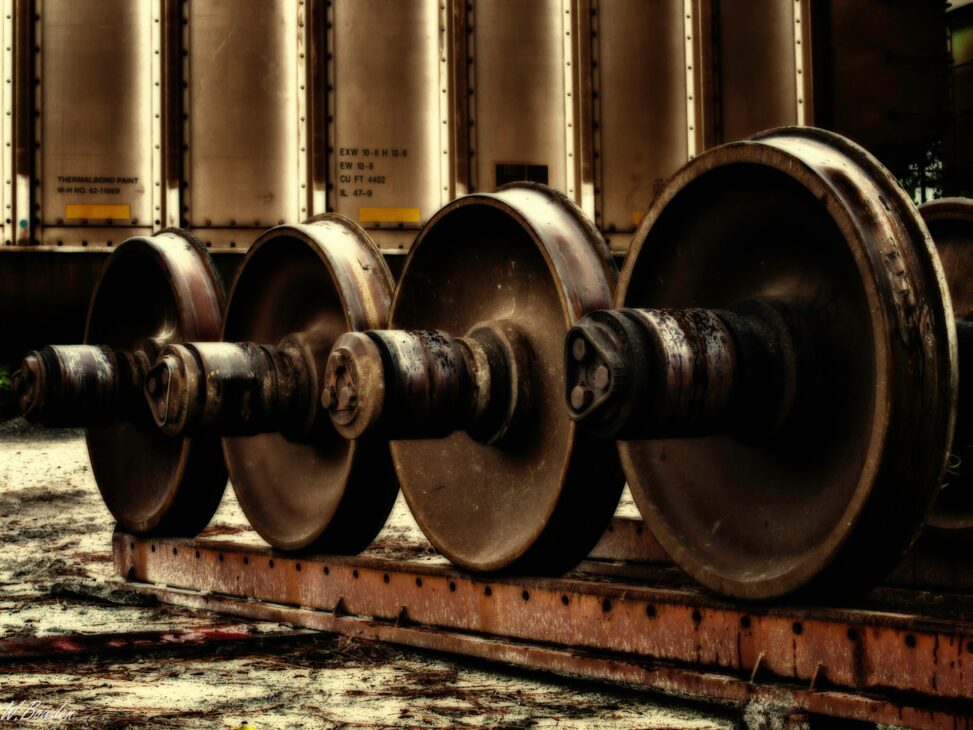
Each train car has a metal axle that connects the wheels on each side. This axle forces the two wheels to always rotate at the same speed while the train is in motion. On straight paths, this does not pose any problem. However, when facing curves, the situation changes.
-
Chinese researchers have created bamboo drones that fly with the same precision as conventional models and have released the flight control software for free to the entire world in a technology that could revolutionize sustainable aviation.

-
Russia reveals that it is already conducting 95% of all its business with China without using a single dollar; dedollarization has ceased to be a promise and has become a reality in record time, and the West watches helplessly.

-
While Brazilians work more than 44 hours a week, Norwegians leave the office at 3 PM and are now testing a four-day workweek with full pay and no loss of productivity.

-
A legend of Brazilian TV is 75 years old, returned to narrate the World Cup for SBT, and still finds time to manage a farm of over 100 hectares in Rio Grande do Sul where she produces award-winning wines, olive oil, and raises cattle.


When the train makes a turn, the outer side travels a longer distance than the inner side. Since the wheels rotate at the same speed, it would be natural for there to be a difference in trajectory between them. Without adjustments, this difference could lead to the derailment of the train.
To solve this difficulty, the conical shape of the wheels comes into play. The inner part of each wheel has a larger circumference than the outer part. This causes, during the turn, the train to rest more on one side of the wheel.
The inner side travels a shorter distance, while the outer side covers a greater distance, thus compensating for the difference in travel.
Why Trains Do Not Use Independent Wheels Like Cars
In automobiles, the wheels on each side can rotate at different speeds, especially during turns. This system is called a differential and ensures that each wheel travels the necessary distance. However, in trains, the wheels are fixed to the axle and cannot rotate independently.
If locomotives used completely cylindrical wheels, the risk of derailment would be high, especially on sharp curves.
The conical shape allows the weight and motion of the train to push the wheel into the correct position. Thus, the larger circumference remains on the outer side of the curve and the smaller one on the inner side.
How Movement Adjusts Automatically
A video published by @3d_printer_academy on social media shows how the system works in an illustrative way. The wheels rock slightly on the tracks, constantly seeking the ideal balance point. This constant adjustment occurs smoothly and imperceptibly to passengers.
Thanks to this precise engineering, trains can transport goods and passengers safely, even over long distances and complex curves. This system allows locomotives to operate efficiently on different types of terrains and paths.
The Mathematics And Engineering Behind Railway Transport
Trains are not just means of transportation. They represent a sophisticated combination of mathematics and applied engineering. Every detail, such as the slight angle of the wheels, has been designed to ensure efficiency, safety, and stability during the journey.
When observing a train in operation, it is important to remember all of the technical knowledge involved in this process. Thanks to this technology, it is possible to undertake long journeys and transport large volumes with precision and safety on the tracks.
With information from Mega Curioso.







Seja o primeiro a reagir!