





 Portuguese
  English
  Spanish
  3 min of reading
  0 comments


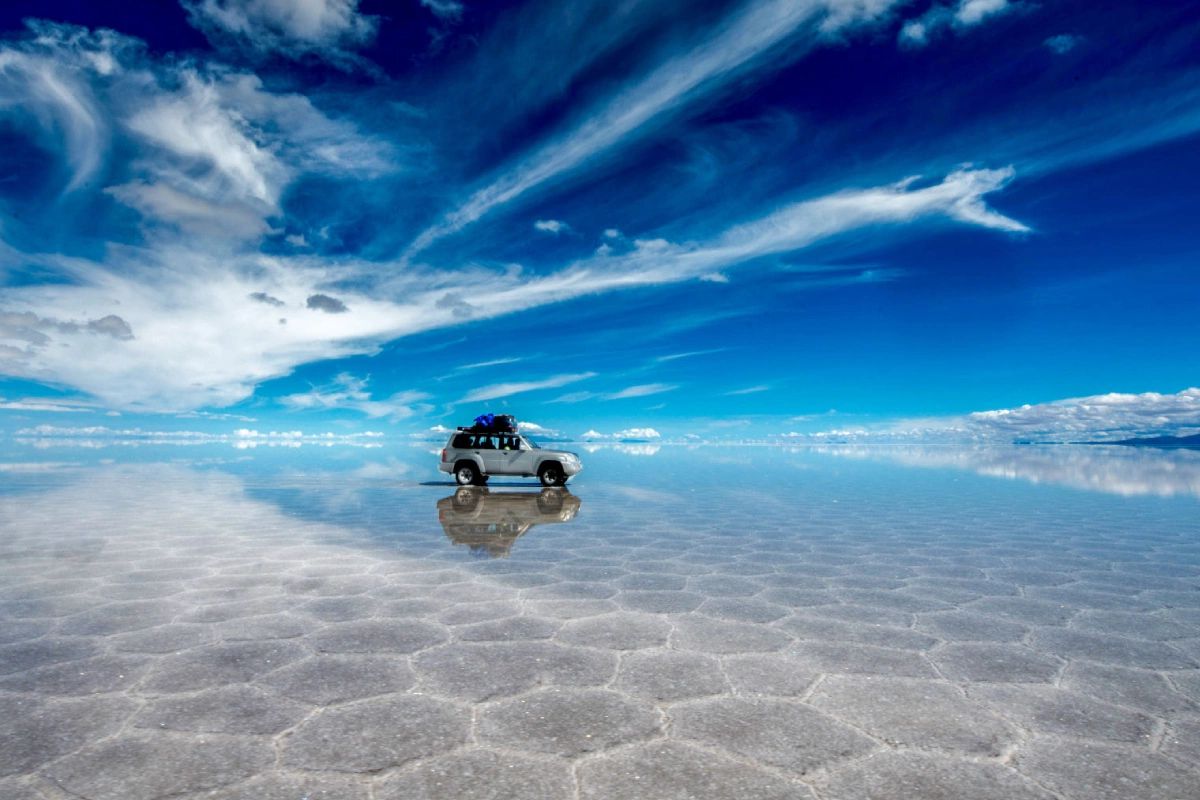
Discover the Salar de Uyuni, the Largest Salt Desert in the World. Explore Its Surreal Landscape, the Famous Mirror Effect, Attractions, and Tips to Plan Your Trip to This Unique Destination.
In the heart of South America, in the Bolivian Andes, lies the Salar de Uyuni. This vast white expanse is the largest salt desert in the world. The place challenges the imagination, where sky and earth merge in ethereal reflections, creating a panorama of surreal beauty.
Explore the unique characteristics of the Salar de Uyuni. We will detail its attractions, the best time to visit, and the challenges for its preservation.
Salar de Uyuni: Getting to Know the Largest Salt Desert in the World in Detail
The Salar de Uyuni is a natural wonder of monumental scale. Located in southwestern Bolivia, it covers an area of 10,582 square kilometers. Its altitude is approximately 3,656 meters above sea level, characterizing it as a high-altitude desert.
-
Friends have been building a small “town” for 30 years to grow old together, with compact houses, a common area, nature surrounding it, and a collective life project designed for friendship, coexistence, and simplicity.

-
This small town in Germany created its own currency 24 years ago, today it circulates millions per year, is accepted in over 300 stores, and the German government allowed all of this to happen under one condition.

-
Curitiba is shrinking and is expected to lose 97,000 residents by 2050, while inland cities in Paraná such as Sarandi, Araucária, and Toledo are experiencing accelerated growth that is changing the entire state’s map.

-
Tourists were poisoned on Everest in a million-dollar fraud scheme involving helicopters that diverted over $19 million and shocked international authorities.


The salt crust varies in thickness, reaching up to 10 meters in the center. The Salar is so vast that it is visible from space. Its extraordinary flatness, with elevation variations of less than a meter, contributes to its unique visual phenomena. Its origin dates back to the desiccation of prehistoric lakes, such as Lake Minchin and Paleo Lake Tauca.
When the Sky and the Earth Become One
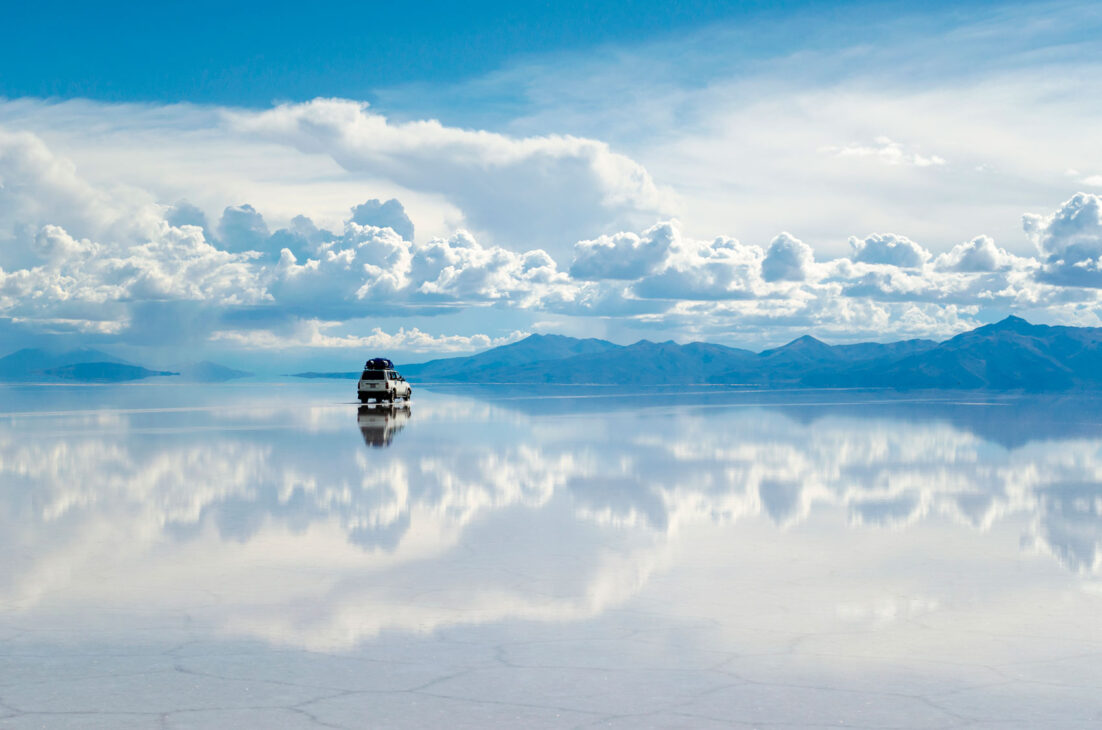
During the rainy season (December to April), the Salar de Uyuni transforms. It becomes “the largest mirror in the world”. A thin layer of water covers the salt flat, creating an almost perfect reflective surface. The sky, clouds, and stars are duplicated with impressive clarity.
The science behind it is fascinating. The rainwater accumulates on the impermeable salt crust. For the perfect reflection, a calm day with no wind is required. The extraordinary flatness of the Salar is equally crucial. March and April are noted as months with the highest likelihood of witnessing the effect. Experiencing this spectacle involves an element of luck, making it even more special.
Wonders of the Salar de Uyuni and Surroundings
Exploring the Salar de Uyuni and its surroundings reveals surreal landscapes:
Isla Incahuasi: Known as Cactus Island, it is a rocky outcrop covered with giant columnar cacti, some centuries old. It offers panoramic views of 360 degrees.
Train Cemetery: In the vicinity of the city of Uyuni, dozens of abandoned steam locomotives from the 19th and 20th centuries create a melancholic and photogenic sight.
Sol de Mañana Geysers: A geothermal field at 4,850 meters above sea level, with fumaroles, bubbling mud, and a strong sulfur smell.
Colored Lagoons: The Laguna Colorada (red) and Laguna Verde (emerald) are famous for their vibrant hues, due to minerals and algae, and for hosting flamingos.
Salt Hotels: A unique experience is staying overnight in hotels built almost entirely with salt blocks extracted from the Salar.










Seja o primeiro a reagir!