





 Portuguese
  English
  Spanish
  6 min of reading
  0 comments


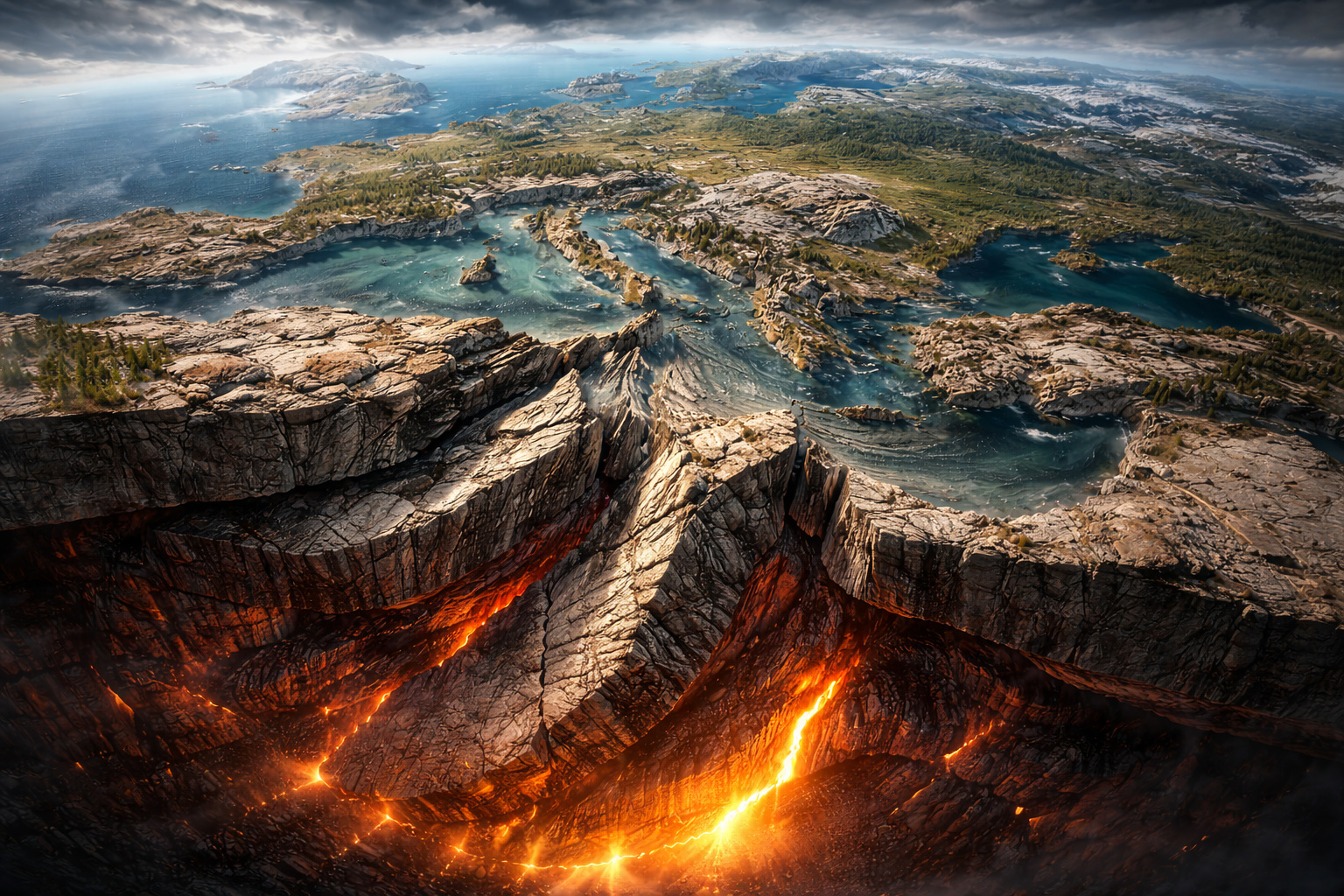
The continent the size of Greenland was ground down under Europe and left fragments from the Alps to the Balkans, revealing a lost world in the Mediterranean.
In 2019, an international team led by geologist Douwe J. van Hinsbergen from Utrecht University published a tectonic reconstruction that helped solve one of the greatest enigmas of European geology: the fate of a continent that had disappeared beneath southern Europe. According to a study coordinated by Utrecht University and published in the scientific journal Gondwana Research, widely reported by Science, the so-called Greater Adria had not been completely destroyed, but fragmented and pushed beneath the European crust over tens of millions of years.
This continent had dimensions comparable to those of Greenland and today survives in geological fragments distributed across mountain ranges and tectonic structures that stretch from the Alps to the Balkans, passing through parts of Greece and Turkey, forming an invisible structure that remained hidden for over 100 million years.
The discovery was made possible by integrating geological data from over 30 countries, in a reconstruction that gathered around 2,300 paleomagnetic sites and accurately reconstructed the trajectory of a continental mass that ceased to exist as a unit but never completely disappeared.
-
A cold front advances through the South this Saturday and reaches the Southeast on Easter Sunday with heavy rain and a drop in temperature, while the North and Northeast face the risk of storms and flooding throughout the holiday.

-
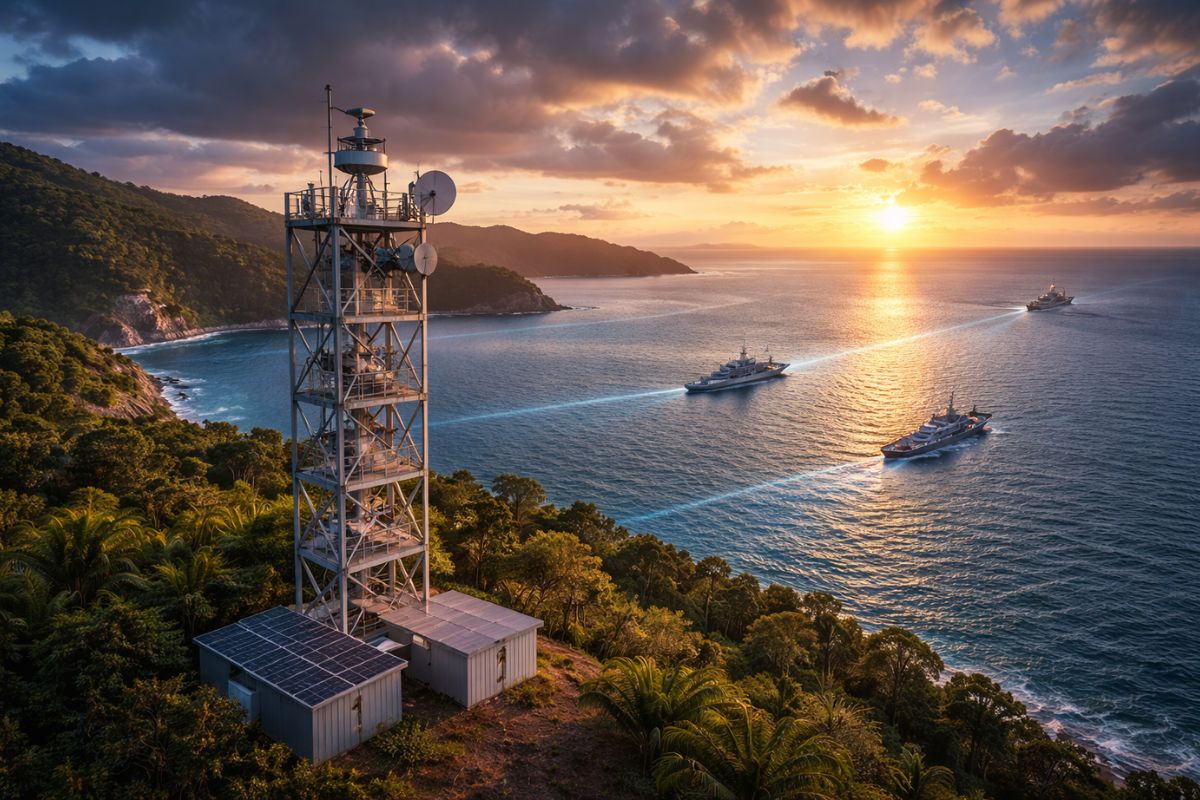
Brazil is about to inaugurate the largest maritime surveillance system in its history, with radars, infrared cameras, and autonomous sensors installed on Ilha Grande to monitor the entire Brazilian coast in real time.
-
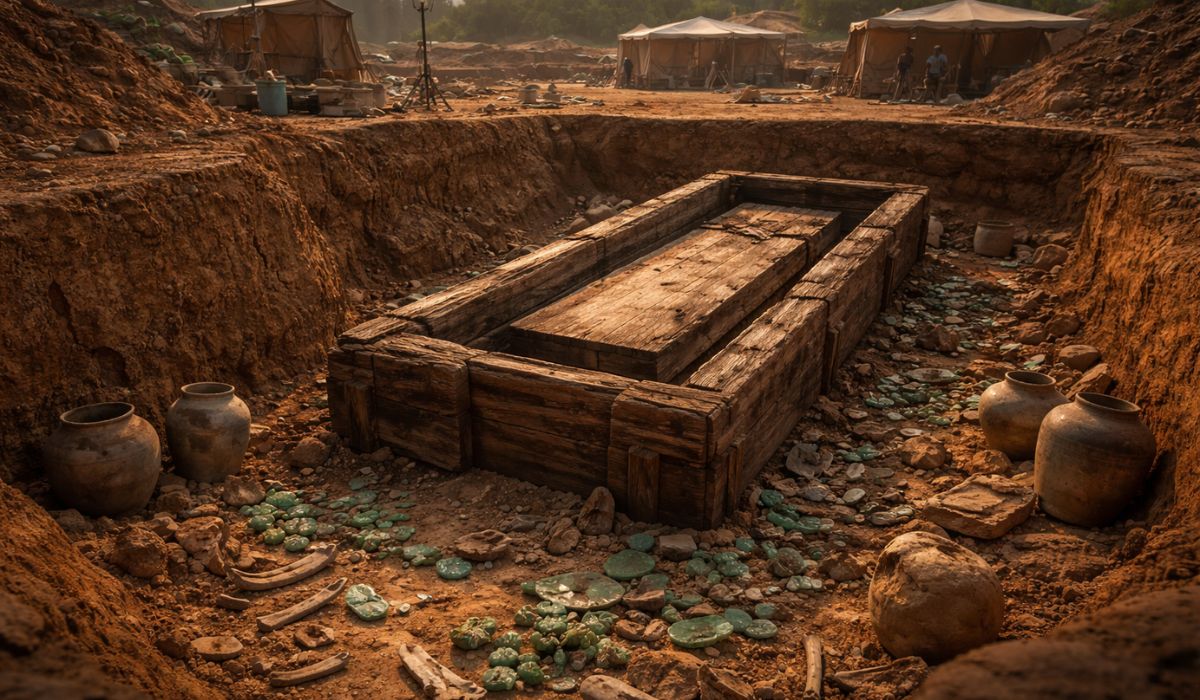
Archaeologists discover in China a 5,000-year-old tomb with over 350 artifacts, nearly 200 jades, and signs of intentional destruction, in a discovery that could be the gateway to a lost prehistoric kingdom.
-
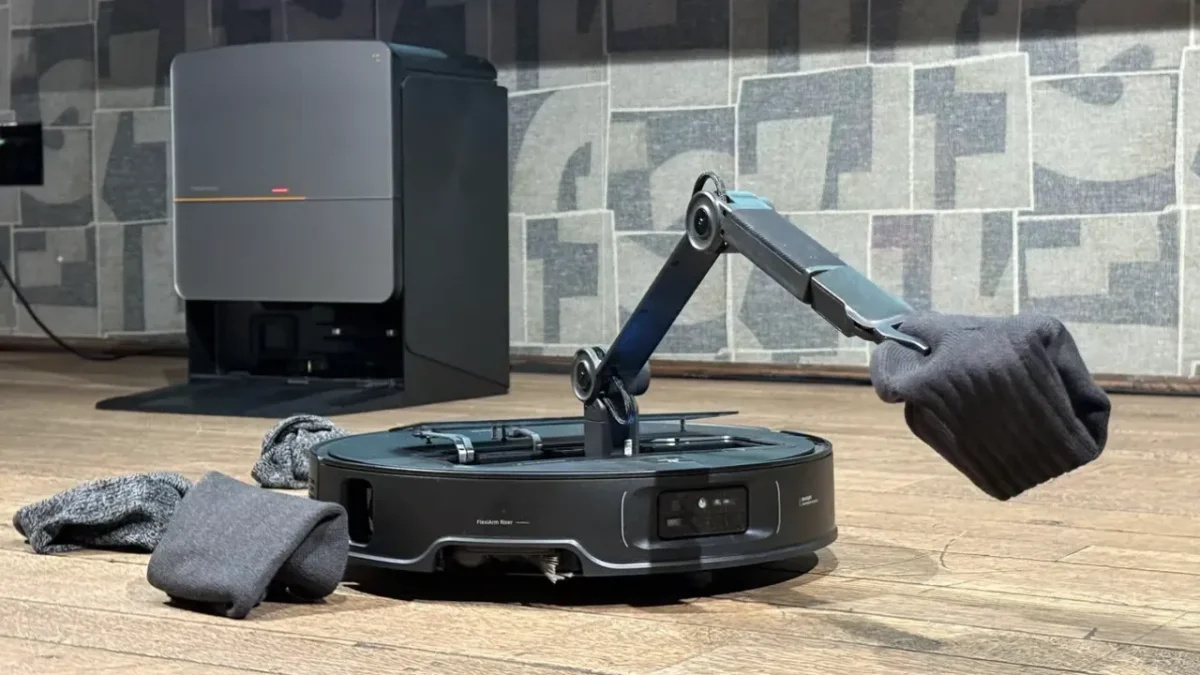
A vacuum robot with a five-axis mechanical arm capable of picking up objects from the floor, avoiding obstacles in real time, and continuing to clean on its own inaugurates a new generation of appliances that see, think, and act within the home.

What was Greater Adria and how did it emerge in the ancient supercontinent
Greater Adria was a continental mass that was part of the supercontinent Gondwana, the same block that gave rise to Africa, South America, Antarctica, India, and Australia.
About 240 million years ago, during the Triassic period, tectonic forces began to fragment Gondwana. In this process, a portion of the continental crust separated from northern Africa and began to slowly drift northward, entering the ancient Tethys Ocean.

This continent was primarily composed of shallow platforms, covered by warm tropical seas rich in carbonate sediments, similar to the environments that today form regions like the Caribbean.
Over millions of years, these sediments accumulated in thicknesses that would later become part of the European mountain ranges.
The long journey through the Tethys Ocean
After its separation, Greater Adria did not immediately collide with Europe. It underwent a long phase of continental drift. During this period:
- it slowly moved through the Tethys Ocean
- accumulated thick layers of marine sediments
- maintained characteristics of a shallow continental shelf
This movement occurred over tens of millions of years, in an extremely slow process typical of plate tectonics, where continents move at speeds comparable to human nail growth. This phase is crucial for understanding why Greater Adria left so many preserved geological records.
The collision with Europe and the beginning of destruction
Between approximately 140 and 100 million years ago, Greater Adria began to collide with the southern margin of Europe.
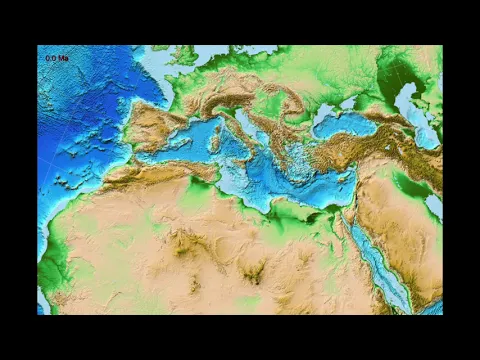

This event marked the beginning of a violent geological process known as continental subduction, in which one plate is pushed beneath another.
Unlike oceanic crust, which sinks relatively easily, continental crust is less dense, making this process more complex and fragmented.
As a result:
- parts of the continent were pushed into the mantle
- others were crushed and folded
- fragments were piled on top of the European crust
This process gave rise to several mountain ranges.
How Greater Adria turned into mountains in Europe
The remnants of Greater Adria did not completely disappear. They were incorporated into the geological structures of Europe.
Today, fragments of this continent can be found in regions such as:
- Alps
- Apenines
- Dinarides
- Helenides
These mountain ranges are, in part, formed by sediments and rocks that originally belonged to Greater Adria, transported and deformed during the tectonic collision.
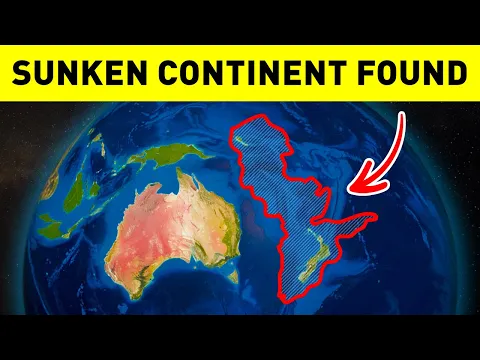
This means that by observing these mountains, we are looking at remnants of a continent that no longer exists as a unit.
Why the continent was not completely destroyed
The continental crust has physical characteristics that make its complete subduction difficult. It is:
- less dense than oceanic crust
- thicker
- structurally resilient
Therefore, instead of sinking completely, Greater Adria was fragmented into smaller blocks that were partially preserved. These blocks were pushed, folded, and redistributed along the collision zone, creating a true geological mosaic.
The geological puzzle that took decades to assemble
For decades, geologists observed inconsistencies in the geology of southern Europe. Rocks with different origins appeared in distant regions, with no clear explanation for their distribution.
The absence of a unified model led to fragmented interpretations until researchers from Utrecht University gathered data from multiple countries and reconstructed the complete history.
The study involved:
- analysis of geological maps
- paleogeographic reconstructions
- tectonic plate data
- computational modeling
This effort allowed the identification of Greater Adria as a key piece in the formation of the Mediterranean.
The role of the Tethys Ocean in the history of the continent
The Tethys Ocean was the setting where much of this history occurred. It separated the continental masses of the north and south during the age of dinosaurs.
Greater Adria moved within this ocean until it collided with Europe, contributing to the gradual closure of the Tethys and the formation of the modern Mediterranean.
This process is also linked to the formation of other important geological structures in the region. The discovery of Greater Adria has profound implications for science. It shows that:
continents can be completely fragmented and incorporated into others without disappearing entirely, leaving traces that can be reconstructed millions of years later.
Moreover, the discovery helps refine models of:
- mountain formation
- tectonic plate movement
- ocean evolution
It also contributes to understanding where natural resources may be concentrated.
The Mediterranean as a mosaic of ancient worlds
The Mediterranean is not just a sea between continents. It is the result of complex geological processes involving multiple continental masses.

The presence of Greater Adria reinforces that the region is formed by fragments of different origins, creating one of the most geologically complex areas on the planet.
This explains the diversity of:
- rock formations
- seismic activities
- mountain relief
Although Greater Adria no longer exists as a continuous continent, it is still present. Its fragments remain beneath mountain ranges, buried in the Earth’s crust and distributed across several countries. This means that part of modern Europe is, in fact, built on the remnants of an ancient continent.
The reconstruction of Greater Adria reveals that the Earth still holds hidden records of its own history. A continent the size of Greenland was ground down, fragmented, and incorporated into Europe, leaving traces that today form some of the most well-known landscapes on the planet.
This discovery broadens the understanding of the dynamics of the Earth’s crust and shows that the planet is in constant transformation, reorganizing its structures over millions of years.
More than a lost continent, Greater Adria is proof that entire worlds can disappear without completely vanishing, remaining hidden beneath our feet, waiting to be reconstructed by science.





Seja o primeiro a reagir!