





 Portuguese
  English
  Spanish
  6 min of reading
  0 comments


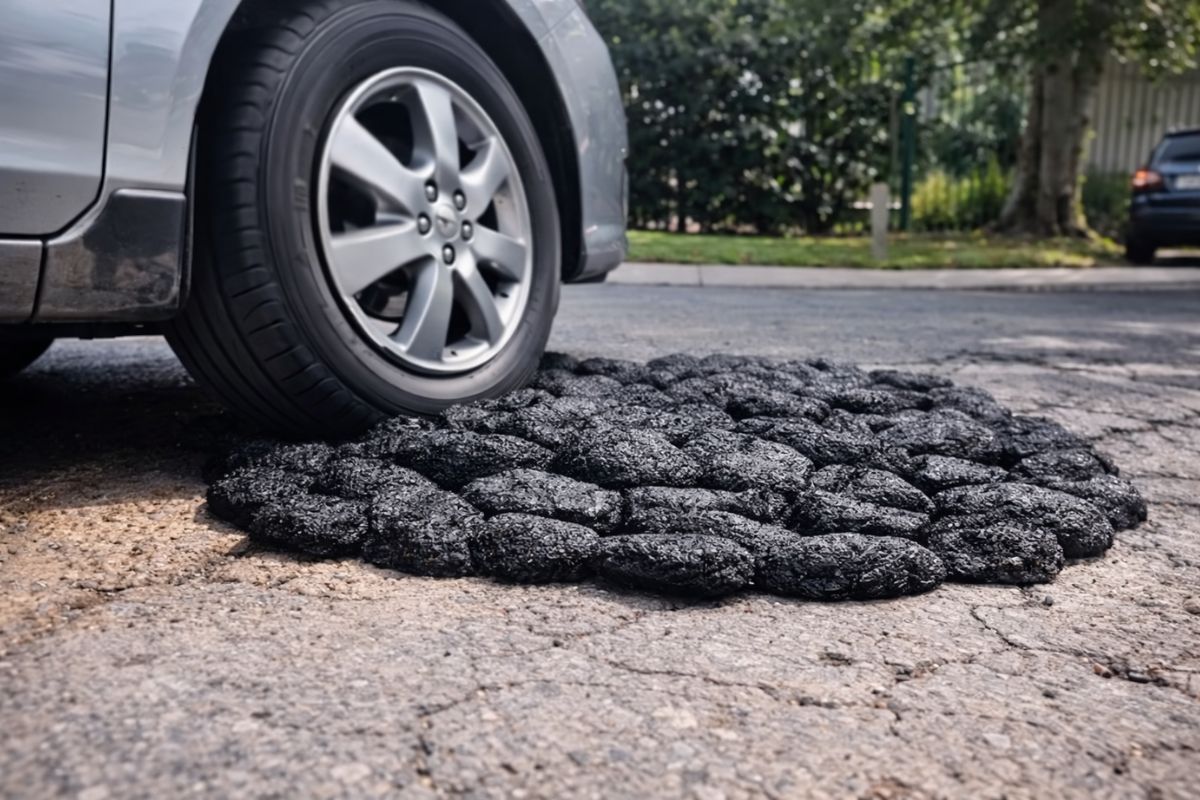
A South African company called PatchPal created a low-cost solution to repair holes in the streets in minutes using cold mix bags that just need to be thrown in the hole and compacted by the traffic itself, without heavy machinery, surpassing all industry standards for cold asphalt and already being tested in three municipalities of Johannesburg and on roads in five neighboring African countries.
The frustration with tires and wheels destroyed by holes in the streets of South Africa has generated a solution that is now catching the attention of entire countries. PatchPal, an engineering company just over a year old, developed a low-cost method to repair holes in minutes without specialized teams, without heavy machinery, and without the bureaucratic process that makes conventional repairs take months. The system uses small bags containing a special cold mix: just throw them into the hole and let the traffic do the rest.
The result challenges what is expected from a quick repair. Unlike traditional cold asphalt, which cracks over time and allows water infiltration, PatchPal’s mix does not crack, does not allow water in, and becomes more compact with each vehicle that passes over it. Tests have shown that the product exceeded all industry standards for conventional cold asphalt in all evaluated metrics. The system is already being tested in three municipalities of Johannesburg and on roads in Zimbabwe, Mozambique, Malawi, Botswana, and Zambia, with growing interest from other African countries.
How the PatchPal solution works to repair holes

The process is so simple that it seems too good to be true. The team, which can be anyone from the local community without technical engineering training, receives ready bags with PatchPal’s cold mix.
-
The 2nd safest city in Brazil is attracting new residents, industries, formal jobs, and also has a giant free park.

-
“Brazilian California”: the city is one of the best places to live in Brazil.

-
A collector bought a black stone in Morocco in 2011 without knowing that he had in his hands a Martian meteorite 4.45 billion years old with ten times more water than any other fragment of Mars ever found on Earth.
-
European cities are building public climate refuges to cope with extreme heat.

The bags are placed directly into the hole in the street, with no need to cut edges, apply primer, or heat asphalt. Then, just drive over it with a car.
The initial compaction done by the vehicle is just the beginning. As traffic continues to pass over the repaired section, the mix compacts even more.

Each car that drives over the repair does not wear down the surface; on the contrary, it closes the internal spaces and strengthens the structure. It is the opposite of what happens with traditional pothole patching methods, where heavy traffic accelerates deterioration.
After about two weeks, the bag that contained the mix disintegrates naturally, and the material is already fully integrated with the road surface.
The repair is level with the surrounding asphalt, with no bumps or depressions. To repair holes in rural or urban community roads, the method eliminates the need for hot asphalt trucks, compactors, and weeks of road closures.
Why this low-cost solution outperforms traditional cold asphalt
Conventional cold asphalt is the most common alternative for quickly repairing holes, but it has known problems. It cracks with temperature variations, allows water to infiltrate beneath the repair, and tends to come loose with heavy traffic which means the same hole needs to be repaired repeatedly, generating recurring costs and frustration.
PatchPal’s mix was designed to address exactly these flaws. According to the creators, the product exceeded all industry standards for traditional cold asphalt in every evaluated metric. Resistance to rut formation is one of the highlights: tests showed a loss of only 3 millimeters for every 20,000 vehicle passes a performance that places the material at a higher level than conventional solutions.
Waterproofing is another differentiator. By not allowing water to enter the repair, PatchPal prevents the vicious cycle that deteriorates roads the most in the world: water infiltrates the hole, weakens the base, the asphalt gives way, and the hole reappears larger than before.
This low-cost solution interrupts this cycle, making each repair last significantly longer than traditional methods at a much lower cost.
From South Africa to the continent: where PatchPal is already being tested
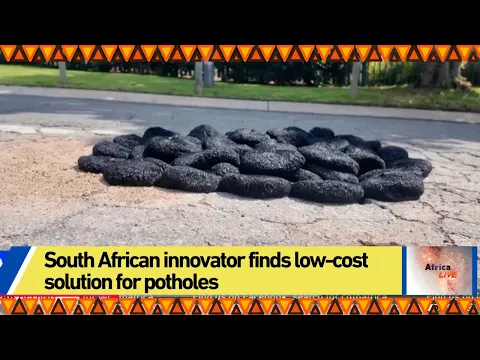

The company was born from the founders’ frustration with the conditions of South African roads. “What led us to create PatchPal was simply frustration. We had spent so many tires and wheels that we reached a breaking point”, the creators explain. The solution was developed with South Africa in mind, but international demand came naturally.
Since its launch, PatchPal has received contact from all neighboring countries. The system is already being tested in Zimbabwe, Mozambique, Malawi, Botswana, and Zambia, in addition to the three municipalities of Johannesburg where the operation began.
The interest comes from local governments, mining companies that need to transport goods on poorly maintained roads, and rural communities where public power simply does not reach.
The problem of roads goes far beyond cities. In rural areas of South Africa and neighboring countries, agriculture and mining depend on roads that are often impassable. Repairing holes on these roads with traditional methods is unfeasible; the cost is high, the logistics are complex, and the result often lasts little. PatchPal offers an alternative that any community can apply with minimal resources.
The community model: how repairing holes generates local employment
One of the most relevant aspects of PatchPal is not just the technology, but the application model. Instead of hiring expensive and distant contractors, the system delivers the work directly to local communities.
Residents receive the bags with the cold mix, learn the simple application process, and start repairing holes on their own roads.
The result is threefold: the roads improve, the residents earn income, and the community takes charge of maintaining its own infrastructure.
“You involve the community. They earn money, improve their own roads, and take care of their infrastructure”, the creators state. It is a model that works especially well in regions where governments do not have the budget or logistical capacity to maintain roads in acceptable condition.
For governments with tight budgets and poor infrastructure, PatchPal offers a practical solution. Repairing holes ceases to be an expensive and time-consuming public work and transforms into a quick and low-cost community action. The model can be replicated in any country where pothole-ridden roads are the norm, including much of Latin America, Asia, and the African continent itself.
What this low-cost solution could mean for countries like Brazil
The problem of potholes on roads is universal, and Brazil knows well the frustration of drivers who destroy tires, wheels, and suspensions on poorly maintained roads. If PatchPal already works under the severe conditions of South African roads with intense heat, heavy rains, and mining truck traffic, the method has the potential to work in any tropical scenario.
The simplicity of the process is what makes the idea scalable. It does not require imported machinery, does not depend on specialized labor, and the cost per repair is a fraction of the conventional method.
For Brazilian municipalities that spend fortunes on pothole operations that last weeks and need to be redone in months, a low-cost solution that strengthens with traffic sounds almost utopian, but PatchPal’s data shows that it works.
While governments struggle with poor infrastructure and insufficient budgets, scalable solutions like this can be the temporary and perhaps permanent way to efficiently repair potholes. The innovation from South Africa proves that the solution does not always have to be expensive or complex. Sometimes, all it takes is a bag of cold mix and the weight of the cars that already pass by every day.
With information from the Channel CGTN Africa.
Do you think a solution like PatchPal would work on the streets of your city? Have you ever lost a tire or wheel because of potholes in the roads? Share in the comments; the debate about road infrastructure needs to move from paper to practice.







Seja o primeiro a reagir!