





 Portuguese
  English
  Spanish
  4 min of reading
  0 comments



Energy consumption becomes a deciding factor in the choice of refrigerators in Brazil, with differences exceeding 200% between models and direct impact on the monthly electricity bill.
With electricity bills under pressure and frequent adjustments from distributors, energy efficiency has become a central factor when choosing a refrigerator, especially since the appliance operates continuously, 24 hours a day, every day of the week.
In a survey published by Canaltech with data from the WebPrice platform, the Samsung RT32K5A11S8 appears as the model with the lowest monthly consumption among the compared refrigerators, with 26.5 kWh/month, equivalent to R$ 20.67 using the reference of R$ 0.78 per kWh.
The difference to the more energy-consuming appliances in the same category is wide.
-
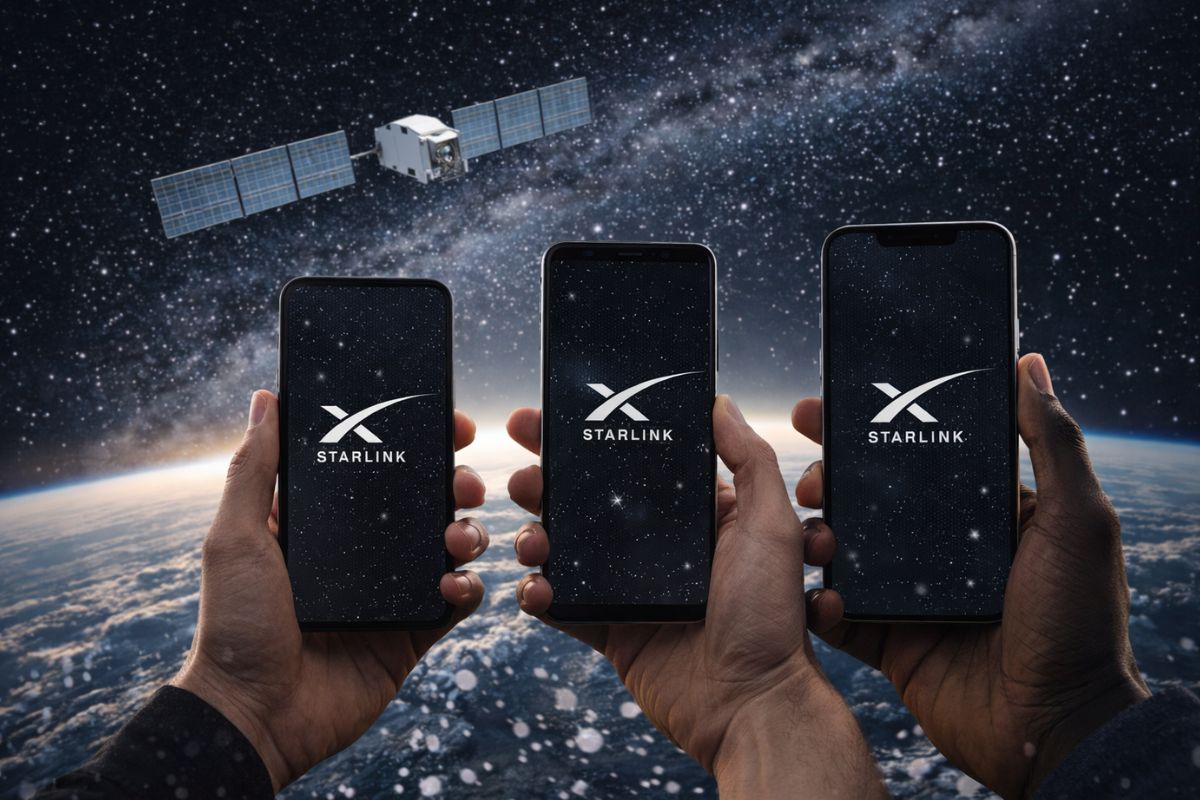
More than 50 cell phones are already compatible with Starlink without an antenna, which promises to eliminate signal dead zones on the planet, but Brazilians still need to wait for the operators to finalize agreements for the service to work here.
-
An extratropical cyclone with winds exceeding 100 kilometers per hour and a risk of hail is forming between Rio Grande do Sul and Santa Catarina this week, and a cold front will advance over the entire Southeast shortly thereafter.

-
Brazil has a laboratory with more lethal viruses and operates with restricted access and strict protocols.

-
Scientists use fungi to create plant flour with a meat-like smell from waste such as potato peels and açaí, a solvent-free technology from Unicamp that increases protein, generates vitamin D, and has a patent pending.

Considering the numbers released in this ranking, the gap between the Samsung RT32 and the Tramontina Gourmet 94500/010, listed with 84.2 kWh/month, reaches just over 217%, which helps explain why electricity consumption has come to weigh as much as capacity, finish, and extra functions in the comparison between models.
Compact refrigerators: lower consumption and focus on efficiency
Among models up to 350 liters, the lead is held by the Samsung RT32, driven by the use of Digital Inverter compressor technology, which adjusts operation to avoid unnecessary peaks and maintain internal temperature with less fluctuation.
In the same group are the Eos EcoIce EFE430D, with 33 kWh/month, the Midea MD-RT468MTA011, with 34.8 kWh/month, the Consul CRB39AB, with 36.6 kWh/month, the Esmaltec RCD34, with 38.5 kWh/month, and the HQ360, with 41.2 kWh/month.
In practice, this range concentrates appliances that usually serve smaller apartments, compact kitchens, and offices, scenarios where the relationship between internal space and monthly expenditure weighs more than sophisticated connectivity features or premium compartments.
Still, the gap between the first and last place in the category shows that visually similar products can generate quite different bills throughout the year, even when belonging to the same size segment.
Medium models: balance between capacity and economy
In the group of 351 to 500 liters, the published ranking places the Panasonic NR-BT41PD1X in the lead, with 31 kWh/month and an estimated cost of R$ 24.18, ahead of the Electrolux IF45, listed with 37 kWh/month, the Brastemp BRM44HB, with 42 kWh/month, the Continental TC41, with 45.6 kWh/month, the TCL P470, with 46.1 kWh/month, the Hisense RB43, with 46.9 kWh/month, and the Philco PRF533ID, with 47.5 kWh/month.
It is in this range that consumers typically try to balance usable capacity, price, and impact on the electricity bill.
However, there is an important point in this part of the comparison.
On retail pages and in the official Panasonic sheet for the BT41 line, the model NR-BT41PD1X/PD1W appears with 39.4 kWh/month and without indication of Econavi technology, which diverges from the data of 31 kWh/month and the mention of the feature published in the ranking.
A similar situation occurs with the Electrolux IF45, advertised by retailers with 42.4 kWh/month, above the 37 kWh/month reported in the survey.
Large refrigerators: higher consumption accompanies size
Above 500 liters, the listing places the Samsung RF23R62E3B1 in first position, with 48 kWh/month, followed by the LG GM-B298NLNH, with 58 kWh/month, and the Gorenje ONRK193, with 61 kWh/month.
Next are Elettromec 600L, with 64 kWh/month, Tecno TR70, with 68 kWh/month, Cuisinart Arkas 540L, with 71.2 kWh/month, Evol JC-145, with 74 kWh/month, Bertazzoni REF90X, with 78.5 kWh/month, Invita I-FD-540, with 81 kWh/month, and Tramontina 94500/010, with 84.2 kWh/month.
This segment makes it clear that premium finishes and high capacity usually come with an additional bill at the end of the month, even though some manufacturers try to offset this with more efficient compressors and electronic temperature management.
In the case of LG, for example, consulted retailers display a consumption of 59 kWh/month for the GM-B298NLNH, a number close to that presented in the ranking.
Meanwhile, international documents from Samsung for the RF23R62E3B1 indicate 427 kWh per year, a unit that does not allow for direct comparison without confirming the methodology used in the Brazilian market.
Impact on the electricity bill varies between capitals
When applying the monthly consumption of 26.5 kWh from the Samsung RT32 to the average residential tariffs mentioned in the survey, the monthly expense would be R$ 22.71 in Manaus, R$ 19.13 in Fortaleza, R$ 19.69 in Brasília, R$ 17.78 in São Paulo, and R$ 16.67 in Curitiba.
This scenario highlights how the final bill depends not only on the appliance but also on the concession area and the adjustments authorized by Aneel.
In São Paulo, for example, Enel reports that the tariffs approved in 2025 came into effect in July of that year, reinforcing that the cost per kWh changes over time and needs to be checked with the local distributor.
The safest reading of this ranking, therefore, is to use the numbers as a starting point for research and cross-reference them with the Inmetro label, the official technical sheet, and the tariff actually charged on the household electricity bill.
This care is even more important because some of the consumption and technology information published in the comparison do not fully coincide with data displayed by manufacturers and retailers for certain highlighted models, especially in the intermediate category.









Seja o primeiro a reagir!