





 Portuguese
  English
  Spanish
  6 min of reading
  0 comments


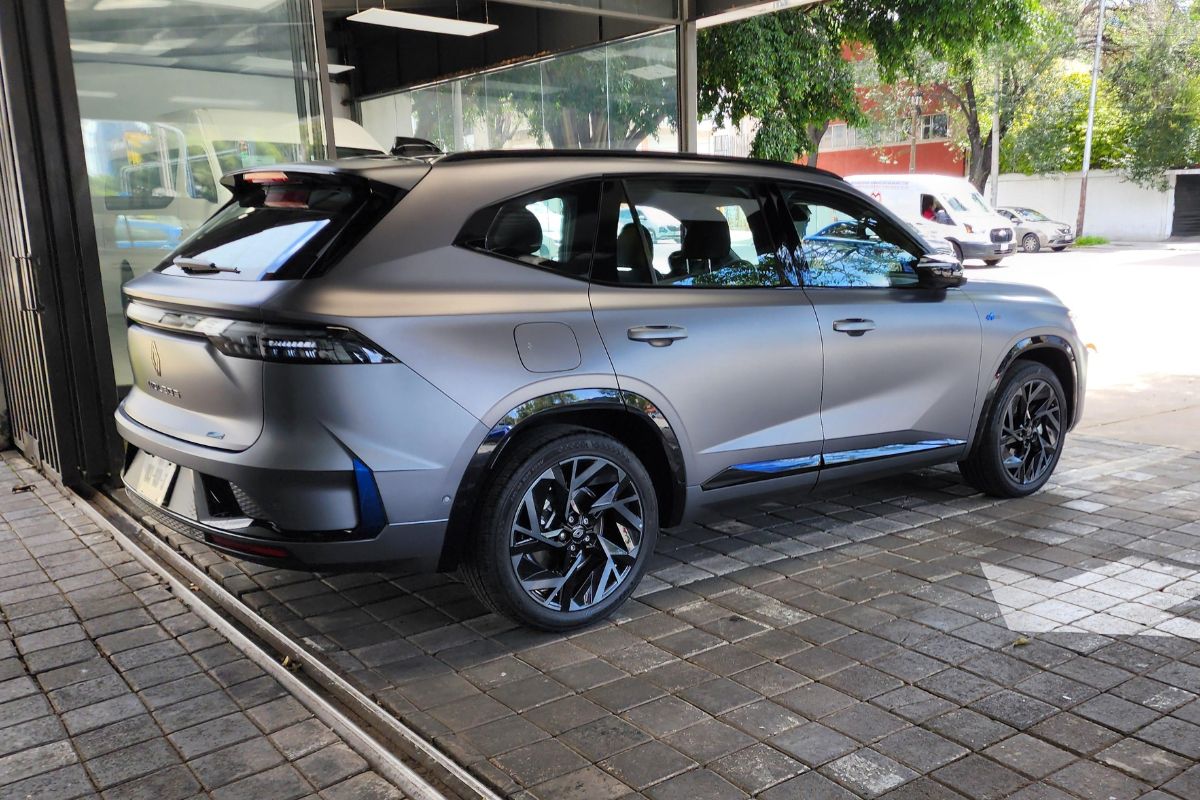
The Renault Koleos arrives in Brazil for R$ 289,990 with three screens on the dashboard, a hybrid system of 245 hp, and a list of features that includes heated seats even in the second row, but the BYD Song Plus and the GWM Haval H6 charge much less and deliver superior numbers.
Renault officially announced on Wednesday (01) the launch of the Koleos in the Brazilian market. The hybrid SUV is already available for pre-sale and can be priced at R$ 279,990 for those who trade in a used car. The French brand’s bet is clear: to abandon the image of a manufacturer of popular cars and compete on equal terms in the premium segment with a model packed with technology.
According to G1, the scenario is challenging. The Renault Koleos enters a segment where Chinese brands have already gained ground with aggressive prices and generous technical specifications. The Song Plus costs R$ 249,990, the Haval H6 is priced at R$ 249,000, and both offer plug-in engines with electric range that the French model simply does not have. The question that Brazilian consumers will ask is straightforward: what does the Koleos offer to justify this difference?
The invisible screen that no competitor has

The interior of the Renault Koleos is undoubtedly the model’s strongest selling point. There are three 12.3-inch screens aligned on the dashboard. The first functions as an instrument panel behind the steering wheel. The second is the multimedia center positioned on the console. Up to this point, nothing that the competition does not also offer.
-
The car stored for 38 years: when opening the barn door, what appears is breathtaking and looks like a scene from a movie!

-
Fiat works miracles in the Brazilian market, lowers the price of its 0 km hatch to R$ 69,990, reestablishes the model as the cheapest car in the country, and reignites the battle against Kwid and C3.
-
Chevette with cooking gas: How the gas cylinder ends up being used in cars clandestinely and why this makeshift solution can result in leaks, explosions, damaged engines, and seized vehicles.

-
Fiat launches the new 2027 Toro hybrid with 48V, 176 hp, an electric motor of 15.5 hp, a 0.85 kWh battery, up to 7% fuel savings, 8% fewer emissions, and possible exemption from IPVA.


The difference lies in the third screen, positioned right in front of the passenger. It allows control of the air conditioning, selecting music on the Bose sound system with 10 speakers, and even opening streaming apps to watch series and movies.
The most interesting detail is that this screen uses a privacy technology similar to that of cell phone films: anyone looking from the side sees only a dark surface. The driver cannot see the content, which theoretically avoids distractions.
However, there is an important caveat. Brazilian legislation prohibits the playback of videos while the vehicle is in motion, even with this visual privacy feature. This means that movies and series can only be watched with the Renault Koleos completely stopped.
In practice, the feature works better during long stops or while waiting for someone than during a road trip.
Rear space and comfort that few deliver in this range
The Renault Koleos uses the CMA platform, the same as models from Volvo and Geely. The wheelbase of 2.82 meters and the compact positioning of the battery in the center of the car ensure a practically flat floor in the second row.
The space for knees, shoulders, and head is generous and superior to that of many direct competitors.
But what really stands out in the rear seats of the Renault Koleos are the features. There are air conditioning vents with independent temperature control, something relatively common, and heated rear seats, something rare in this price segment.
The backrest is also reclinable, which makes a difference on long trips. Compared to the interior of the BYD Song Plus, for example, the Koleos bets on a more harmonious integration of elements into the dashboard. The Song Plus impresses with its giant floating screen, while the French model conveys technology in a more discreet and integrated way. Which approach is more appealing is a matter of personal taste.
29 driver assistance systems in a single package
The list of technologies embedded in the Renault Koleos is extensive. There are 29 driving assistance systems gathered in a single version, without the need to choose optional packages.
The SUV performs parking maneuvers completely autonomously, without the driver needing to accelerate or brake.
The semi-autonomous driving is level 2. On highways and fast roads, the Renault Koleos maintains speed and distance from the vehicle ahead adaptively, identifies the lane, and keeps the car centered.
There is also an evasive maneuver assistant that detects when the force applied by the driver on the steering wheel may be insufficient to avoid a collision and adds extra steering assistance.
The complete list includes a 360-degree camera, automatic high beams, speed limiter, hill start assist, safe distance alert, automatic braking even in curves, blind spot monitoring, braking for rear and front cross traffic, and safe exit warning for occupants. It is a security arsenal that is hard to match among direct competitors in this price range.
The mechanical set that may divide opinions
Under the hood, the Renault Koleos combines a 1.5 turbo gasoline engine with 144 hp with two electric motors that total 136 hp.
The combined power reaches 245 hp and the combined torque hits 32.6 kgfm from the electric side plus 23.4 kgfm from the combustion engine. The transmission is a three-speed gearbox and the traction is exclusively front-wheel drive.
Acceleration from 0 to 100 km/h occurs in 8.3 seconds and the top speed is limited to 180 km/h. The consumption measured by Inmetro was 13.1 km/l in the city and 12.1 km/l on the highway. For a hybrid, these numbers are not impressive.
The battery of only 1.64 kWh serves to assist the combustion engine in certain situations but does not allow for purely electric driving over significant distances. This is a point where the Renault Koleos clearly falls behind the competition.
The comparison with the Chinese is inevitable
The BYD Song Plus has just been updated, costs R$ 249,990, and delivers 239 hp of combined power. Its 26.3 kWh battery allows for up to 99 km of electric driving without activating the combustion engine. For those making short urban trips, this means entire days running only on electricity. The Renault Koleos simply does not offer this possibility.
The GWM Haval H6 PHEV19 is sold for R$ 249,000 and goes even further. The combined power reaches 326 hp and the acceleration from 0 to 100 km/h occurs in 7.6 seconds, almost a second faster than the Koleos. In raw performance numbers and price, both Chinese models have the advantage.
The Renault Koleos costs about R$ 40,000 more and delivers less power and less electric range than both.
Renault itself acknowledges that the Song Plus, Haval H6, Volkswagen Tiguan, Chevrolet Equinox, and Jeep Commander are the direct rivals. “We are not going to compete for sales volume, but to be a reference in the segment,” said Guilherme Ruibal, product manager of the brand.
So is it worth paying more for the Koleos?
The Renault Koleos bets on a different proposal from the Chinese competition. Instead of competing head-on in power and electric range, the French SUV focuses on finish refinement, technological integration, and a safety package with 29 assistance systems. The exclusive passenger screen, heated rear seats, and the overall interior experience are strong arguments.
On the other hand, it is impossible to ignore that R$ 40,000 difference buys a lot. For consumers who prioritize performance, electric range, and price, the Chinese models remain unbeatable. For those who value the onboard experience, European finish, and do not give up an extensive list of safety items, the Renault Koleos may be the right choice.
The model is already available at more than 250 sales points of Renault across Brazil. Information about warranty and maintenance plans has not yet been officially confirmed.
And you, would you pay R$ 40,000 more for the Renault Koleos or take one of the Chinese models home? Let us know in the comments what weighs more in your decision: finish and technology or price and power.









Seja o primeiro a reagir!