





 Portuguese
  English
  Spanish
  3 min of reading
  0 comments



Know The Details Of The B-52 Stratofortress Drogue Chute, A 50s Technology That Remains Essential To The Safety Of One Of The Most Iconic Bombers In History
The drogue chute of a B-52 bomber is one of the most visually impressive components of military aviation. Designed in the 1950s, the Boeing B-52 Stratofortress continues to be a pillar of the U.S. Air Force in 2025. To safely land its 183,250 pounds, it relies on a massive drogue chute that helps slow down the aircraft.
This system is not a luxury, but an engineering necessity. Its function is crucial to decelerate the bomber, reduce landing distance, and, most importantly, save the brakes. The technology, although old, remains so relevant that it will continue to be used in modernized B-52s, which are expected to fly until the 2050s.
Why Does An Airplane Designed In The 50s Still Need A Chute To Land In 2025?
The Boeing B-52 Stratofortress entered service in 1955. One of its design features is the absence of thrust reversers in its eight engines. These reversers are common in modern jets and help slow down the plane by redirecting airflow forward.
-
Oldest tree on the planet reappears after 130 years of searches: Wattieza, 385 million years old, was 10 meters tall and had no leaves or seeds; Gilboa fossils in New York solved the mystery in 2007.

-
A 48-square-meter house assembled in hours with 4,000 bricks made of recycled plastic that does not absorb moisture, has natural thermal insulation, and costs less than 90,000 reais in a complete kit.

-
Luciano Hang revealed that Havan’s air fleet has already accumulated more than 20,000 landings, 10,000 flight hours, and 6 million kilometers traveled, and he says that without the planes, the company would never have grown so quickly.

-
A historical discovery in the Andes Mountains reveals a gold deposit valued at 770 billion reais hidden over 4,000 meters above sea level on the border between Chile and Argentina, and the whole world is watching.


Without this capability, the B-52, with its colossal weight, needed an auxiliary method to decelerate upon landing. The solution was the drogue chute of a B-52 bomber, an effective tool that has served this purpose since the aircraft’s early versions.
The Actual Specifications, 13 Meters In Diameter And 90 Kilos Of Technology
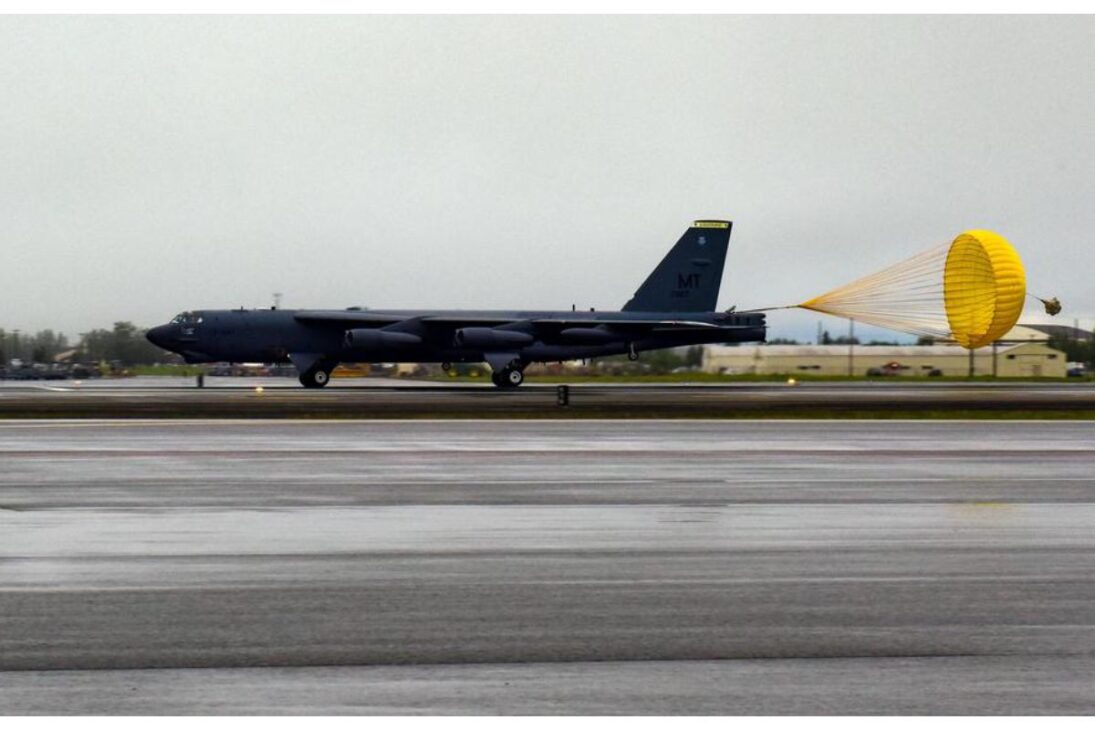
The B-52’s drogue chute is a robust piece of engineering. It measures approximately 13.4 meters in diameter and 27.4 meters in length, weighing about 90 kilos. Its deployment occurs in two stages.
First, a smaller pilot chute, white in color, is released when the aircraft touches down at about 170 knots (315 km/h). This smaller chute then pulls the main chute, orange in color, out of its compartment, creating the drag necessary for braking.
Does The Chute Have The Size Of A Football Field?
The comparison of the chute to a football field is a popular hyperbole that helps illustrate its large scale, but it is not accurate. A FIFA-recommended football field is about 105 meters long and 68 meters wide.
The B-52’s chute, at 27.4 meters long, is approximately one-quarter the length of the field. Its diameter of 13.4 meters is about one-fifth the width of the field. While not as large as an entire field, its dimensions are still formidable for an airborne component.
The Operational Importance, How The Chute Saves Brakes And Costs
The use of the drogue chute of a B-52 bomber goes beyond simple deceleration. By absorbing much of the kinetic energy during landing, it drastically reduces wear on the aircraft’s brakes and tires. This results in significant savings in maintenance costs and increases fleet availability.
Maintaining the chute itself is a logistical challenge. In humid locations like Guam, wet chutes need to be dried in a special seven-story tower. The recent restoration of this tower, at a cost of US$ 2.4 million, has quadrupled the efficiency of the process, reducing drying time from two days to less than 18 hours.
The Future Of The B-52 And Its Chute, A 50s Technology Flying Until 2050
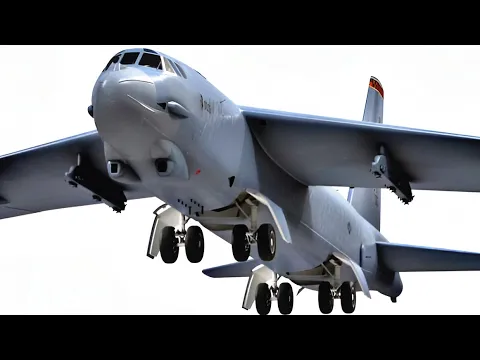

Even in 2025, the B-52 continues to be a strategic asset. The fleet is undergoing major upgrades, including new Rolls-Royce engines and an updated radar system. After the improvements, the aircraft will be redesignated as B-52J and its lifespan extended until the 2050s.
It is noteworthy that, even with all this modernization, the drogue chute of a B-52 bomber will remain an essential component. The robustness of the original design is so great that a braking solution conceived more than 70 years ago remains indispensable to ensure the safe operation of one of the most enduring aircraft in history.








-

-

10 pessoas reagiram a isso.