





 Portuguese
  English
  Spanish
 3 min of reading
  1 comment


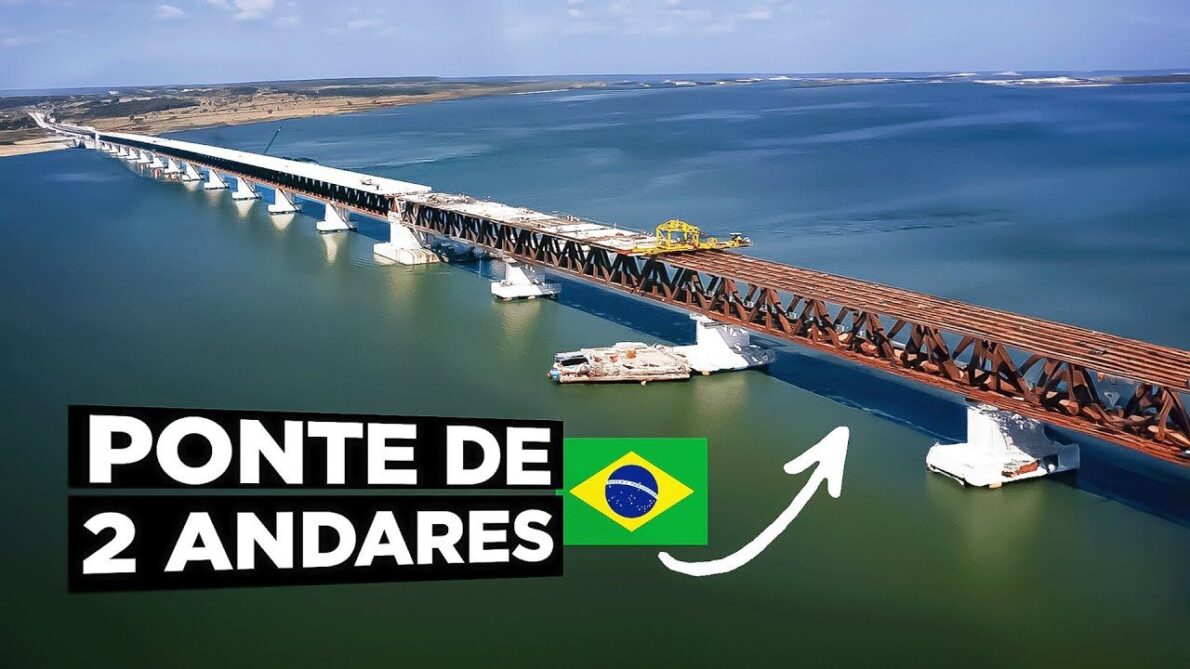


The Rollemberg-Vuolo Bridge, with over 3 km in length, connects São Paulo to Mato Grosso do Sul. Inaugurated in 1998, this monumental work facilitates the transport of vehicles and trains, reducing crossing time and promoting regional economic development.
The largest road-rail bridge in Brazil, the Rollemberg-Vuolo Bridge, is an impressive construction that connects the states of São Paulo and Mato Grosso do Sul. With over 3 km in length, this engineering work facilitates the transport of vehicles and trains, in addition to offering a stunning view over the Paraná River.
Inaugurated in May 1998, the bridge connects the cities of Rubineia, in São Paulo, and Aparecida do Taboado, in Mato Grosso do Sul. Let’s learn more about this incredible structure and its importance to the country.
Largest Road-Rail Bridge in Brazil


The Rollemberg-Vuolo Bridge is a true landmark of Brazilian engineering. With 3,700 meters in length, 26 meters in height, and 18 meters in width, it is the largest road-rail bridge in Brazil. The construction cost about R$ 50 million at the time, a value that, adjusted for today’s standards, exceeds R$ 4 billion.
-
With 74% of companies facing difficulties in hiring, technicians and engineers in renewable energy are becoming scarce in Brazil and are essential to support the expansion of solar, wind, and green hydrogen projects.

-
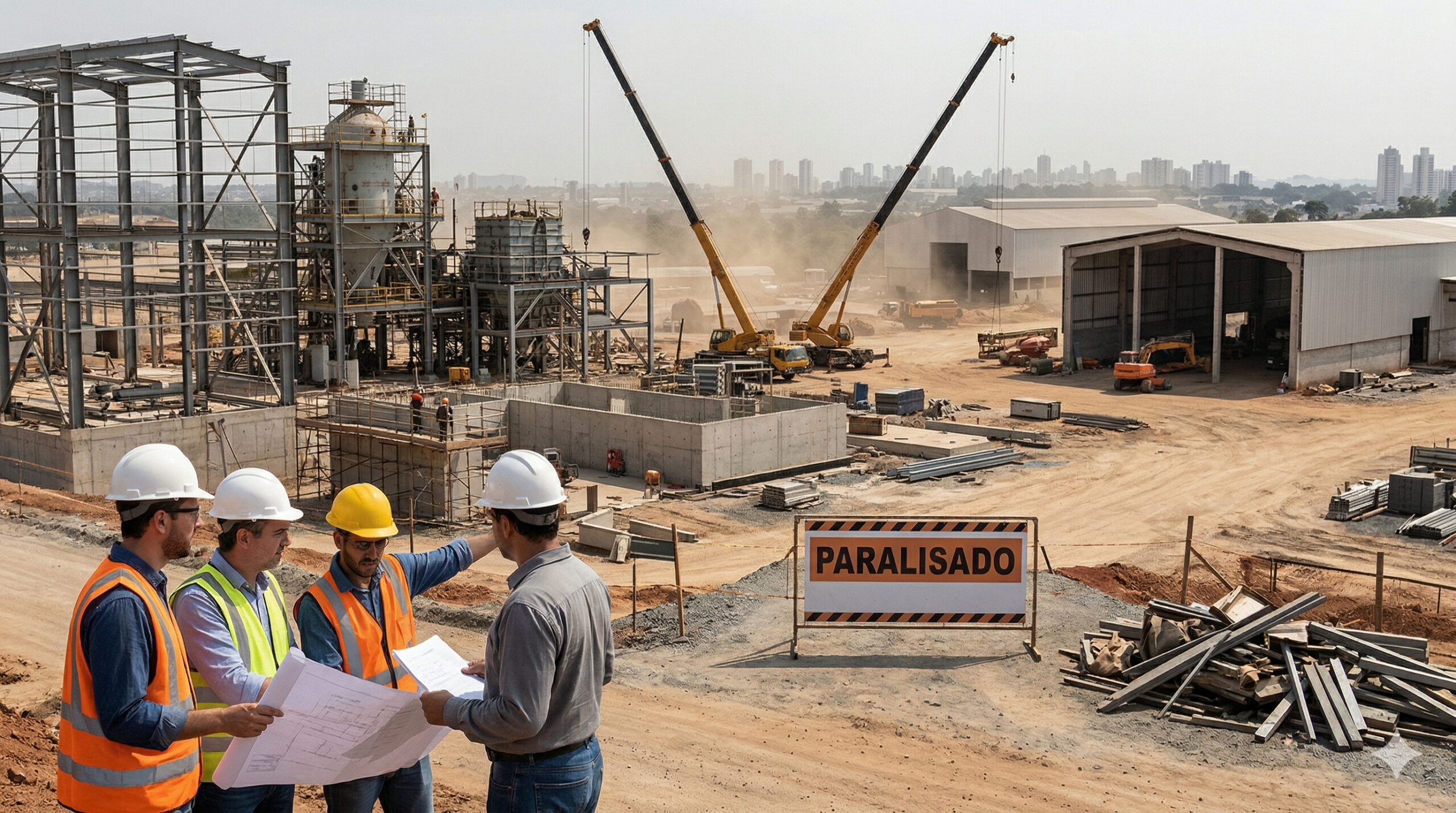
The lack of welders, electricians, and operators becomes a structural threat in 2025, with the construction industry and manufacturing already suffering from delays, cost pressures, and labor shortages in Brazil.
-
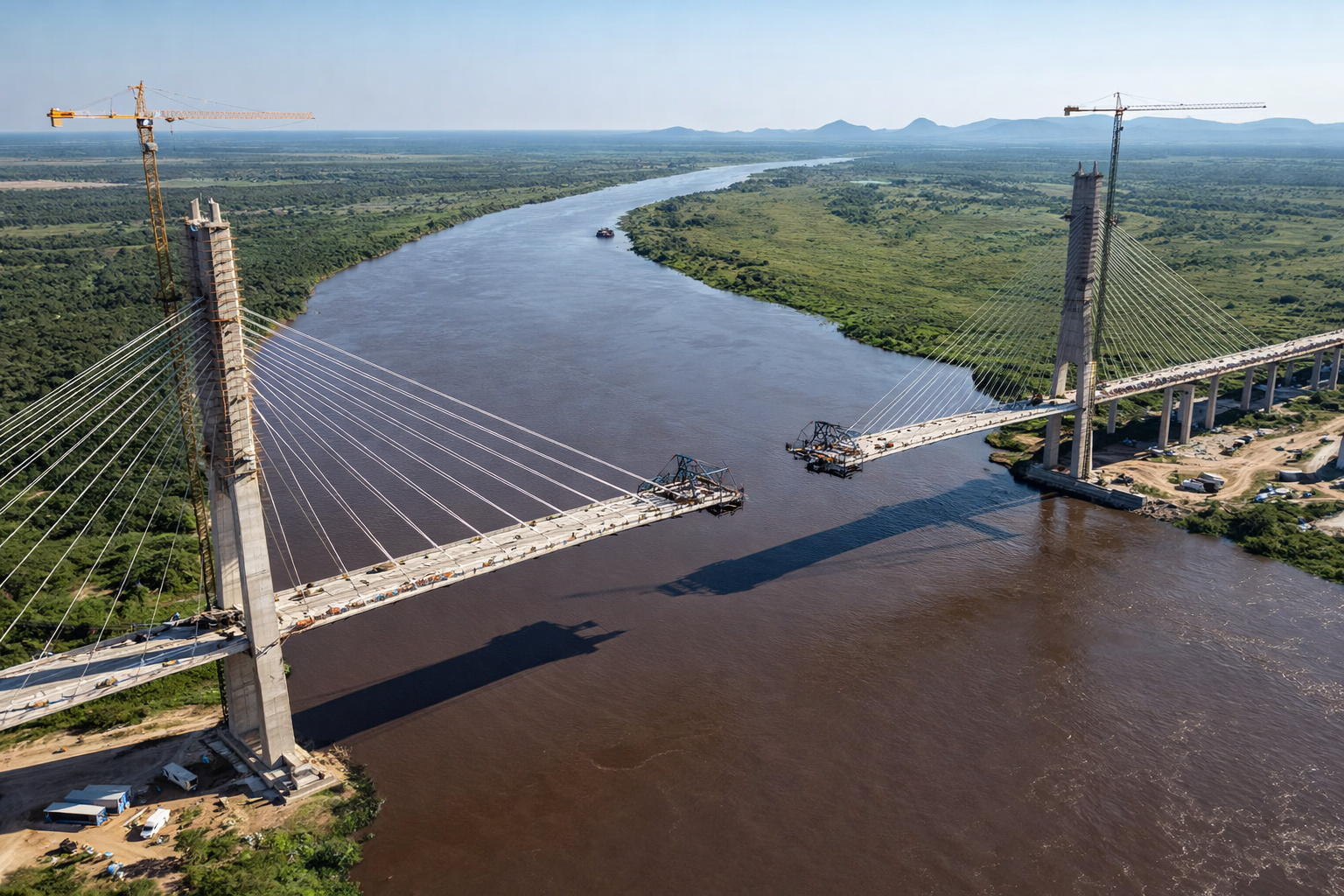
Brazil and Paraguay are just 46 meters away from a historic union on the bioceanic bridge that promises to revolutionize trade between the Atlantic and the Pacific.
-
With 55 km over the sea, a cost of US$ 20 billion, and enough steel to build 60 Eiffel Towers, China’s largest project has connected Hong Kong, Zhuhai, and Macau in a colossal bridge that defies the logic of engineering.


The bridge was designed to facilitate transport between São Paulo and Mato Grosso do Sul, reducing the crossing time from one hour to just five minutes. Before the bridge, the crossing was done by ferries, which depended on weather conditions.
Rollemberg-Vuolo Bridge Project Took Shape in 1901
The Rollemberg-Vuolo Bridge project took shape in 1901, when writer Euclides da Cunha suggested the construction of a bridge over the Paraná River. However, it was only in 1974 that federal deputy Vicente Vuolo presented a concrete project, which was only initiated in 1991 and completed in 1998.
The construction faced many challenges, such as the presence of rocks in the riverbed and strong winds. Advanced engineering techniques, such as the use of a hoisting platform imported from the Netherlands and storm alert systems, ensured the safety and stability of the work.
Rollemberg-Vuolo Bridge Has Two Levels
The Rollemberg-Vuolo Bridge has two levels: the lower one is designated for the railway, which is part of Ferronorte, while the upper one is a highway with four lanes. This versatility allows for the passage of cargo trains and road vehicles, making the bridge a crucial piece in the logistics and economic development of the region.
Today, the Rollemberg-Vuolo Bridge is not only a functional work but also a symbol of progress and innovation in Brazilian civil engineering. With impressive figures, such as the 100-meter spans and robust concrete pillars, it continues to be an attraction for visitors and an example of overcoming challenges in civil construction.
The largest road-rail bridge in Brazil, the Rollemberg-Vuolo Bridge, continues to play a vital role in connectivity between São Paulo and Mato Grosso do Sul, being a true icon of development and efficiency.









Maravilhas da Engenharia Brasileira.