





 Portuguese
  English
  Spanish
  5 min of reading
  0 comments


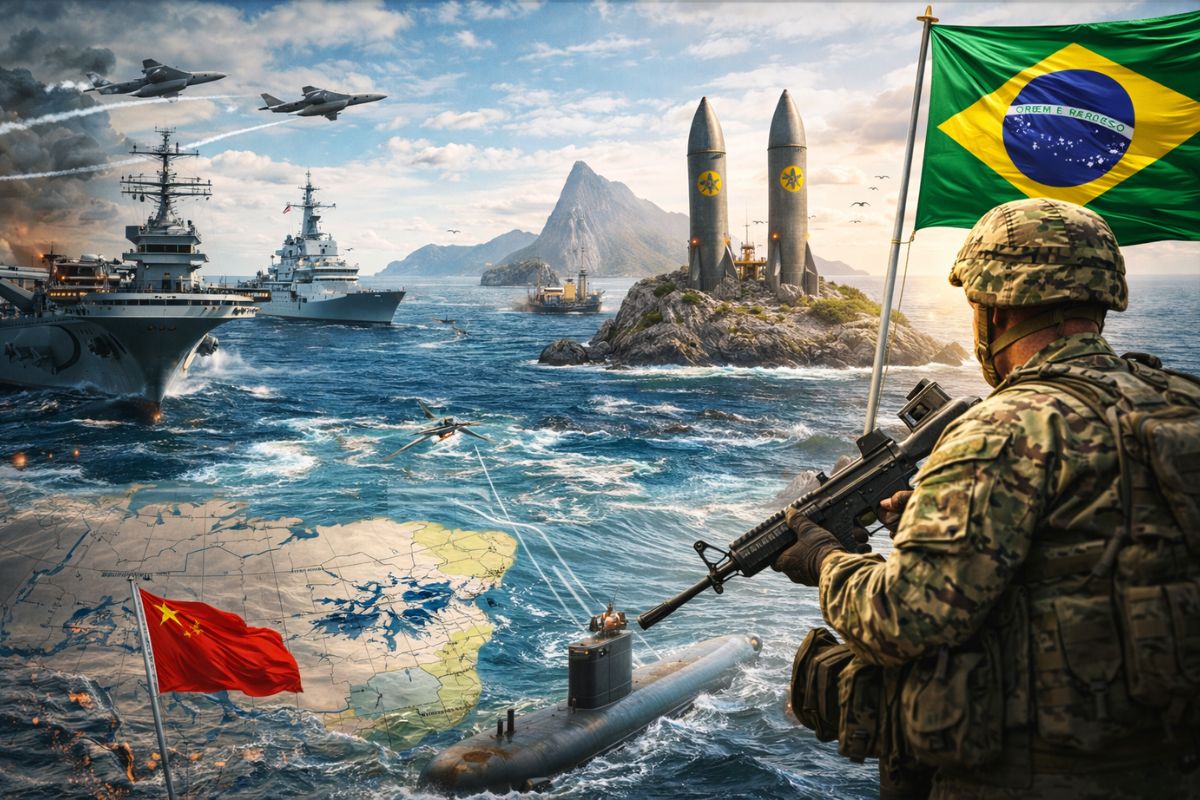
The South Atlantic hosts American and British islands with nuclear material; Argentina still claims sovereignty over the Falklands, and 95% of Brazilian foreign trade passes through maritime routes that could be congested in case of conflict, while the Blue Amazon of 5.7 million km² remains vulnerable
According to the portal of the Maritime Agency, Brazil treats the South Atlantic as a zone of peace. But Professor Vinícius de Carvalho from the Department of War Studies at King’s College in London warns that this perception is more wishful thinking than reality. “There is a declaration that the Atlantic is a zone of peace, but we must not fall into the illusion that there are peaceful and protected areas in the world that will never cease to be so,” the researcher stated in an interview with the Maritime News Agency. In the region, there are American and British islands whose countries possess nuclear weapons, unresolved territorial disputes, and major powers with growing interests.
The scenario becomes even more critical when considering what Brazil has at stake. About 95% of Brazilian foreign trade passes through maritime routes in the South Atlantic, and the so-called Blue Amazon, with over 5.7 million square kilometers under Brazilian jurisdiction, concentrates oil, gas, biodiversity, and submarine cables that support global communications. The Interministerial Commission for Marine Resources estimates that the sea generates more than R$ 2 trillion per year for Brazil, equivalent to 19% of GDP. Protecting this space is protecting the entire economy of the country.
Why the South Atlantic is not the peaceful zone Brazil believes it is
The idea that the South Atlantic is a region free of threats does not withstand closer scrutiny. Professor Carvalho points out that American and British islands in the region belong to countries that possess nuclear arsenals, which in itself introduces an element of strategic tension.
-
Solar panels freeze water during the day, a fan and radiator release the cold at night, and a man demonstrates that small spaces can be cooled without an electrical grid.

-
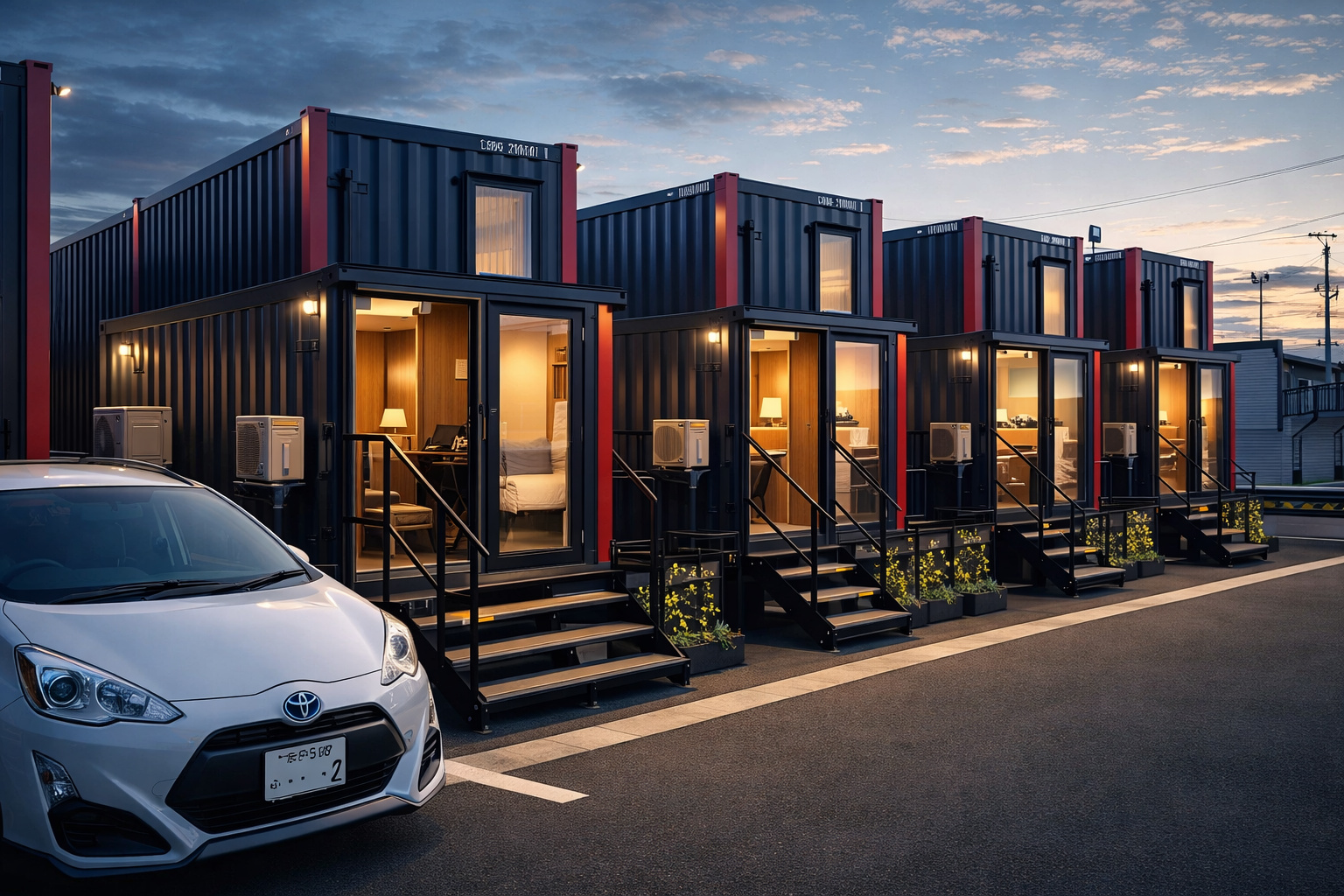
For less than R$ 200, container hotels become the solution for those traveling by car, with affordable prices, 24-hour accessible beverage machines, air conditioning, television, a full bathroom, and high-quality beds.
-
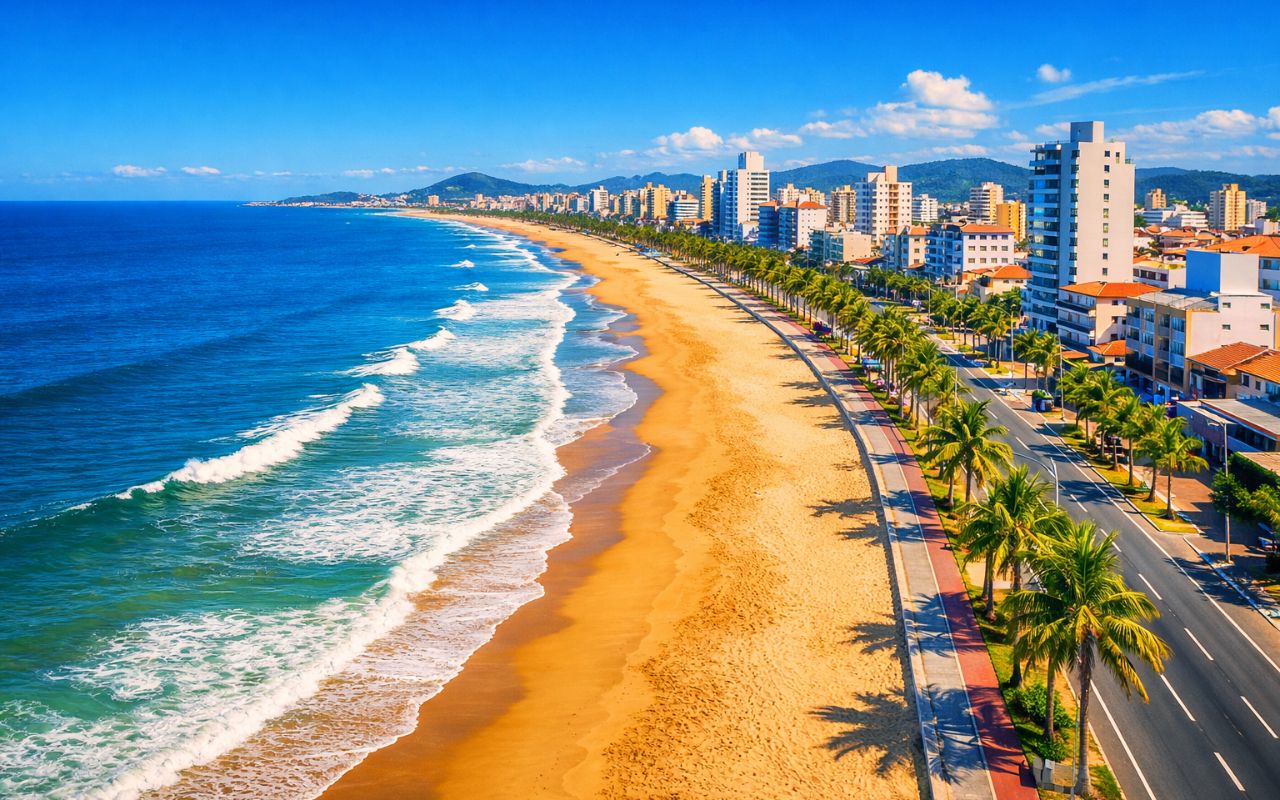
It looks like a movie scene: “Forgotten” Brazilian city surprises with a waterfront of nearly 11 km, tranquil beaches, and a GDP that exceeds R$ 6 billion; meet Navegantes, in Santa Catarina.
-
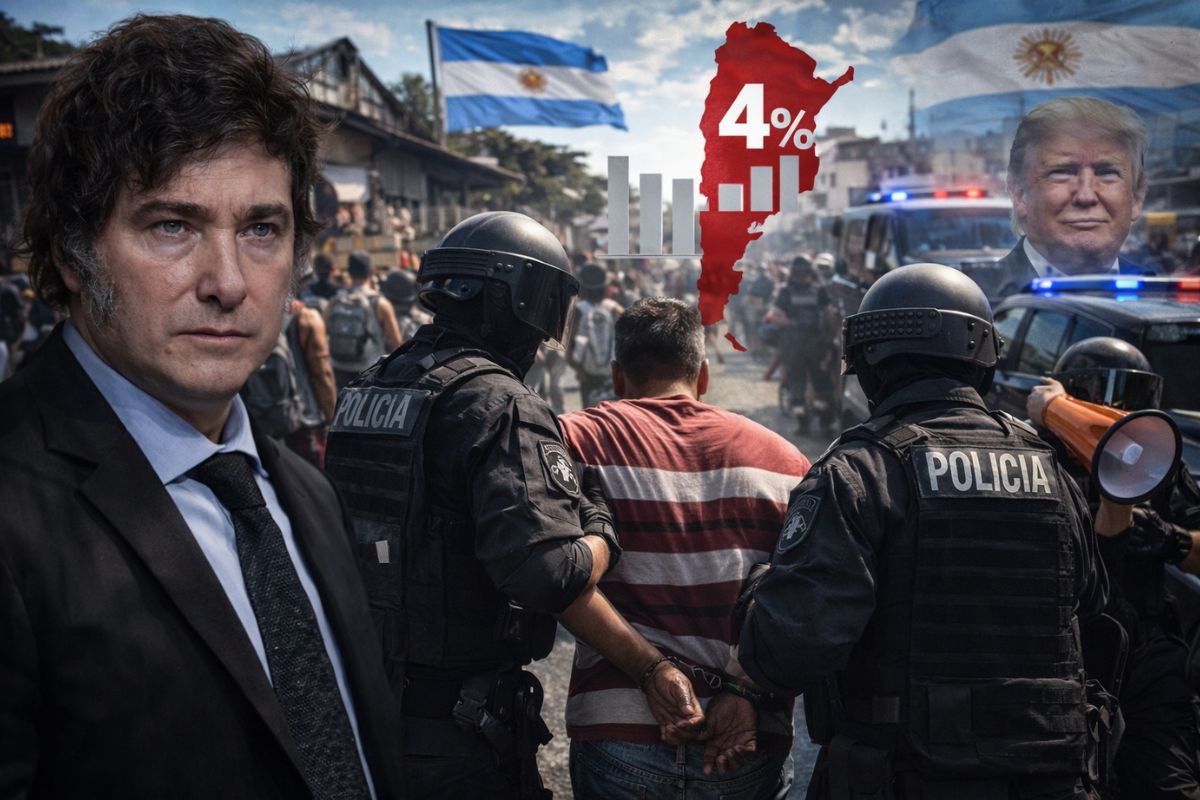
Milei’s government launches surprise police operations on the streets of Argentina to hunt undocumented immigrants, but the government’s own data reveals that only 4% were irregular. Critics say it is a copy of Trump’s policy without real necessity.
Argentina still claims sovereignty over the Falklands, and even without kinetic conflict at the moment, the territorial dispute remains open and could be reactivated by geopolitical changes.
In the Gulf of Guinea, on the African coast of the South Atlantic, piracy and instability are well-known realities. The professor warns that “we are experiencing something we haven’t seen in over half a century: countries suggesting taking parts of territories or islands that belong to other nations, directly violating the fundamental principle of sovereignty.”
For Brazil, this means that oceanic islands like São Pedro and São Paulo and Trindade, essential for extending Brazil’s continental shelf, could eventually attract the interest of larger powers. The country’s response needs to be up to the task.
What happens to Brazil if routes in the South Atlantic are interrupted
Brazil’s dependence on the sea is structural. Without the maritime routes of the South Atlantic, the country simply stops. The professor compares a potential interruption to an athlete who suffers an accident:
“Even if they manage to return after a few days, it will take time to be what they were before, requiring physiotherapy, training, and other care.” The reopening of a route does not mean immediate recovery; the effects drag on for months.
Brazil produces oil on a large scale and does not depend as much on fuel imports as other countries, but that does not protect it from indirect effects.
When crises affect sensitive points like the Strait of Hormuz, global prices rise and impact the Brazilian consumer in their daily lives.
Vulnerability lies not only in what Brazil imports through the South Atlantic but in the fact that any global instability in maritime routes generates systemic effects that reach the domestic economy in fuels, food, and industrial inputs.
The vulnerability of submarine cables in the South Atlantic
In addition to trade and oil, the South Atlantic hosts critical infrastructure that rarely appears in public debate: the submarine cables that support global communications. Professor Carvalho is direct: “The whole world is quite vulnerable to sabotage in this field.”
“It is practically impossible to completely protect the routes of these cables worldwide.” Even the best-equipped navies, such as those in the North Sea and the Baltic Sea, struggle to protect these infrastructures.
For Brazil, the risk is real. The Navy has already conducted exercises 90 kilometers off the coast of Fortaleza simulating suspicious actions against submarine cables.
Protecting these cables in the South Atlantic is essential because a successful sabotage could interrupt communications between continents, affecting everything from financial transactions to the functioning of digital services that millions of Brazilians use daily.
What Brazil needs to do to protect its wealth in the South Atlantic
Professor Carvalho argues that it is an illusion to think that Brazil can control and protect every inch of the Blue Amazon, given its size of 5.7 million square kilometers.
The solution, according to him, is to develop mechanisms like the SisGAAz, the Blue Amazon Management System, and invest in means that allow continuous surveillance and protection in the South Atlantic. The Navy needs constant modernization and coordination with other actors to manage a maritime area larger than the continental territory.
There is also the risk of clandestine scientific research and attempts to patent resources from the region without authorization.
The professor warns that “there have been several attempts to extract or patent resources in our region” of the South Atlantic, and that Brazil needs to ensure, through its Naval Defense, that there are no unauthorized activities that violate national sovereignty.
Protecting the Equatorial Margin, oceanic islands, and resources of the Blue Amazon is a matter of sovereignty that requires constant presence and response capability that goes beyond mere surveillance.
The Navy as the last line of defense in the South Atlantic
If a conflict escalated to the South Atlantic, Brazilian trade routes would become congested, and the country would need a permanent military presence to ensure the minimum functioning of its economy. “In this scenario, the presence, deterrence, and operation 24 hours a day of the Brazilian Navy will be necessary,” says Professor Carvalho.
The Navy is also the Maritime Authority responsible for regulating commercial activities, ensuring navigation safety, and safeguarding human life in Brazilian waters.
The debate about the South Atlantic gains a new forum on April 10, when the Navy will hold the 3rd Maritime Symposium of the Zone of Peace and Cooperation of the South Atlantic (ZOPACAS), with the theme “Strengthening Maritime Cooperation and Security in the South Atlantic.”
The event, in hybrid format at the Naval School, will discuss integrated maritime situational awareness and marine spatial planning—topics that translate into technical language the same concern of Professor Carvalho: the South Atlantic cannot be treated as a safe zone by inertia.
Did you know that the South Atlantic hosts nuclear weapons on foreign islands? Do you think Brazil is prepared to protect the Blue Amazon? Leave your opinion in the comments.






Seja o primeiro a reagir!