





 Portuguese
  English
  Spanish
  4 min of reading
  0 comments


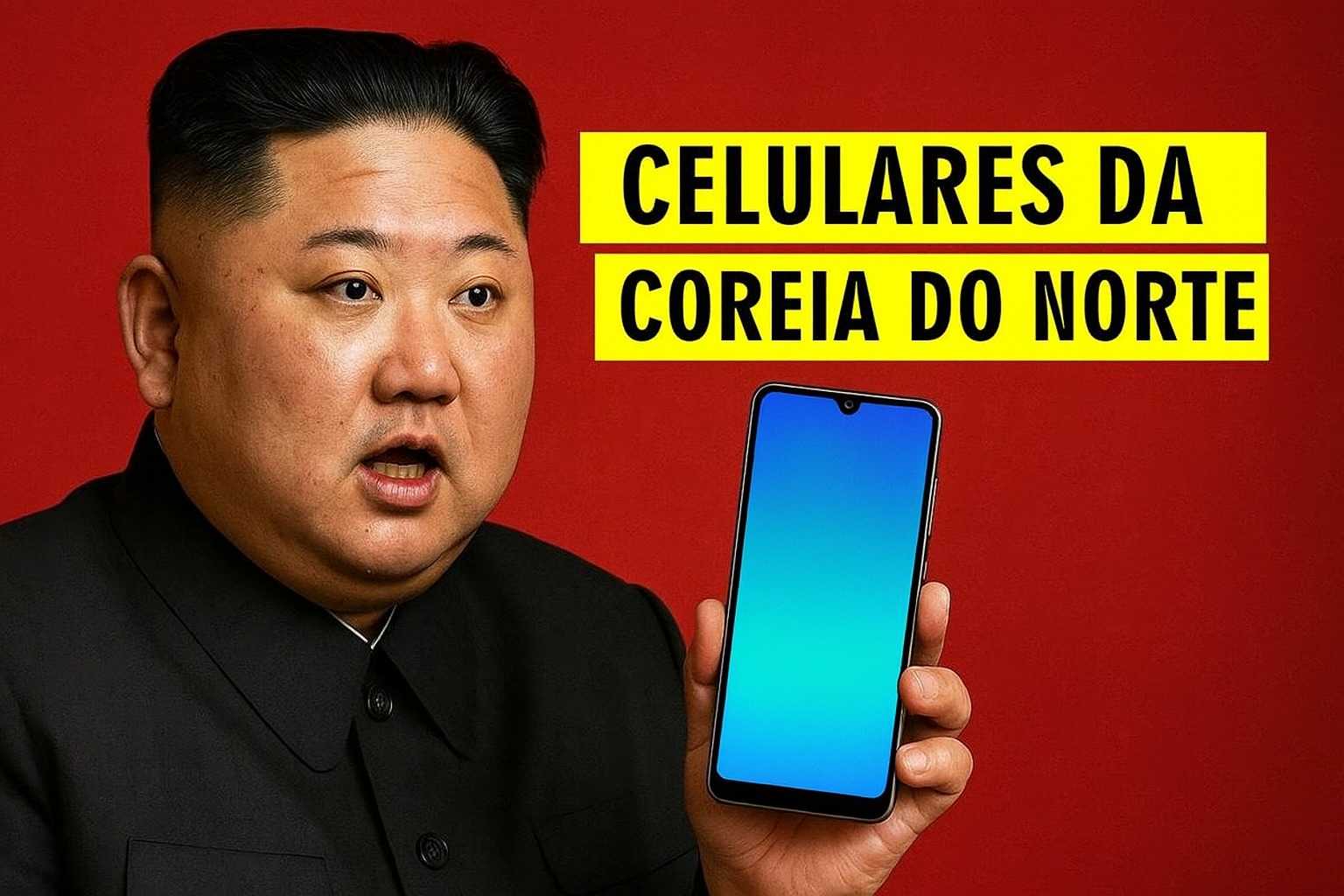
Although many people imagine that North Korea is disconnected from the world, the country has an operating mobile market. But what seems to be a simple smartphone is actually part of a surveillance and tight control system, unlike any other in the world.
North Korea has one of the most restrictive mobile networks in the world, and the phones sold in the country reveal a unique reality, where even a simple game can hide a massive surveillance system.
A Mobile Phone That Flies — But Only in Advertising
The Arirang 151 is one of the models available in the country. It comes in three colors, has a camera, a battery, and, interestingly, can be connected to a standard-size keyboard.
But before anyone gets excited, it’s good to know that this phone is not for sale outside of North Korea.
-
Motorola launched the Signature with a gold seal from DxOMark, tying with the iPhone 17 Pro in camera performance, Snapdragon 8 Gen 5 that surpassed 3 million in benchmarks, and a zoom that impresses even at night.

-
Satellites reveal beneath the Sahara a giant river buried for thousands of kilometers: study shows that the largest hot desert on the planet was once traversed by a river system comparable to the largest on Earth.

-
Scientists have captured something never seen in space: newly born stars are creating gigantic rings of light a thousand times larger than the distance between the Earth and the Sun, and this changes everything we knew about stellar birth.

-
Geologists find traces of a continent that disappeared 155 million years ago after separating from Australia and reveal that it did not sink, but broke into fragments scattered across Southeast Asia.

In fact, it is just an example of what is found in the local market: basic devices, full of limitations, but with strict control functions imposed by the government.
The Late Arrival of Mobile Phones
Mobile phones are a relatively recent novelty in North Korea.
The first functional network only emerged in 2008. Before that, there were only limited landlines, and 90% of them were connected to government agencies or state companies.
There was an attempt between 2002 and 2004 to install a mobile network using old equipment from Hungary, but the experience lasted only 18 months.
An assassination attempt nearly killed Kim Jong-il, and the network was shut down. There was no direct correlation between the events, but the punishment was collective: everyone lost access.
The Stolen Network
In 2008, North Korea tried again.
The Egyptian company Orascom was convinced to install the network called Koryolink, which ended up being taken over by the local government.
The network serves 15 cities and some railways, but it is extremely limited.
Calls can only be made within the country, all numbers have the same prefix, and, of course, there is no internet access.
Instead, devices access Kwangmyong, a local network with about 5,000 state-sanctioned websites. It is possible to watch propaganda films, see controlled news, and access local services — all under strict censorship.
Fake Smartphones and Ghost Factories
In 2014, images showed Kim Jong-un visiting an alleged smartphone factory.
The announced model was the AS1201, presented as completely made in the country.
But the reality is different. The device is almost certainly a rebranded version of the Uniscope U1201, a cheap Chinese phone.
The same goes for other models like the Arirang 171 and the Samtong 8. North Korea probably does not manufacture phones.
It only imports and modifies. What really changes is the operating system of the devices.
Modified Android Loaded With Games
North Korean phones use a customized version of Android. The model Pyongyang 2407, for example, was analyzed by German researchers.
They discovered a system full of limitations and control.
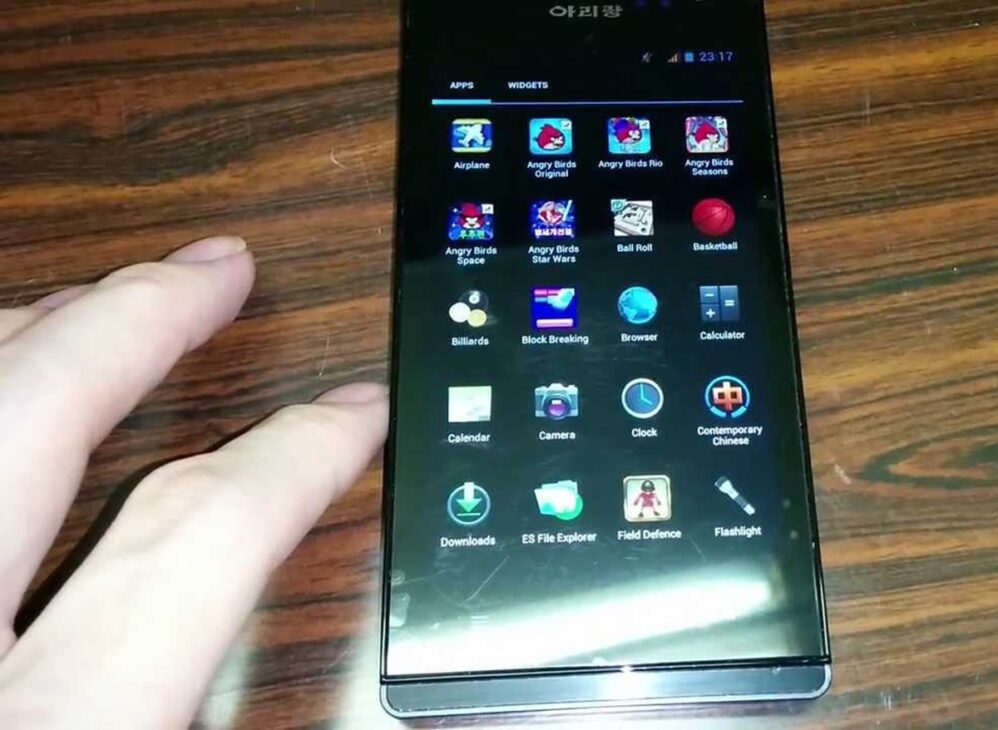
However, the phones come packed with games. The Arirang 151, for example, includes five versions of Angry Birds, a copy of Candy Crush, an emulator of Super Mario Galaxy, and even an app that emits noises to scare insects away.
But there is a reason for so many games: it is not possible to download new apps. Without internet access and without an online store, users can only acquire new applications physically.
The Physical App Store
In North Korea, there is a “literal app store.”
Generally, it is a counter inside another business, such as a supermarket or electronics store. There, apps are installed directly on the phone from a computer.
All applications must be approved by the government. If the app is not verified, the phone’s system simply does not allow it to run.
Mandatory Signature and Closed System
Every file — photo, music, or app — needs to have an encrypted signature. There are two types:
- The Nata Sign, issued by the government, ensures that the file is “safe.”
- The Self Sign, generated by the phone itself, is for files created on the device, such as photos taken with the camera.
If the file does not have either of these signatures, it is automatically deleted when opened.
Constant Surveillance
To ensure that the verification system is not removed, phones come with a program called Red Flag, which runs in the background all the time. It checks the system and records a screenshot every time an app is opened.
These captures go to a folder that only the government can access. The user cannot delete, edit, or view these images. But they can see that they exist through a pre-installed app called Trace Viewer, which serves only to remind the user that they are being monitored.
Freedom? Only in Appearance
The result is a closed, controlled system full of limitations. North Korean phones are not just communication devices: they are tools for control. Even with games and a modern look, they are made to surveil and limit.
In North Korea, even an Angry Birds game can be part of the State’s surveillance.








-

Uma pessoa reagiu a isso.