





 Portuguese
  English
  Spanish
  3 min of reading
  0 comments


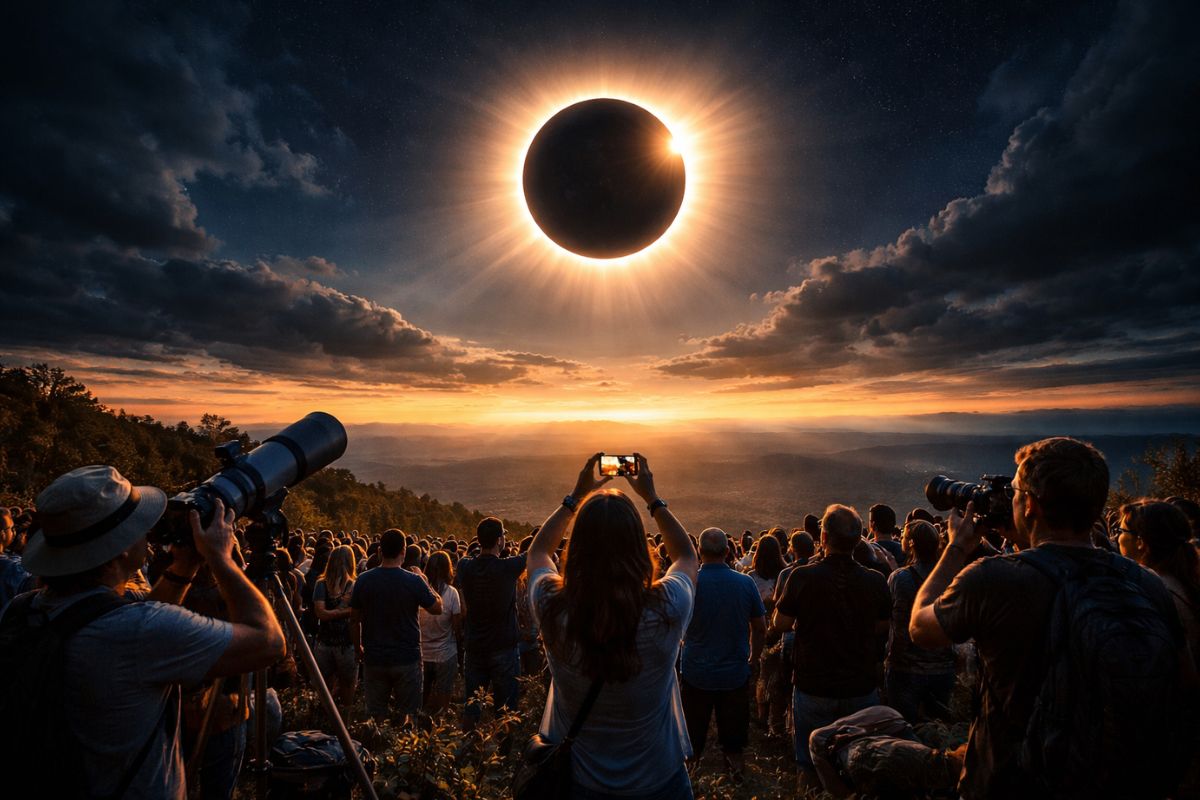
Solar eclipse will be total in the country for the first time since 1905, and the path of totality, about 300 km wide, crosses from west to east, from Galicia to the Balearic Islands
The total solar eclipse on August 12, 2026 is already being treated as one of the most anticipated astronomical events in Spain. In the path of totality, the Moon completely covers the Sun and the landscape darkens like twilight, for about one to two minutes.
What increases the expectation is the rarity of the spectacle. It will be the first total solar eclipse visible in Spain since 1905, and the forecast of occurring in August fuels hope for clearer skies for those intending to observe.
Why this solar eclipse is so special
In a report from Xataka, the event is described as a rare opportunity in over a century. It’s not just about seeing the Sun “almost disappear”, but witnessing the phase when the solar disk is completely covered, abruptly changing the ambient light.
-
Scientists want to sink giant concrete balls in the sea to transform the ocean floor into a renewable energy storage system that looks like science fiction, using the pressure of the depths as a battery in a kind of invisible power plant underwater.

-
Researchers dive nearly 5,000 meters deep in Japan, discovering a rare “glass castle” inhabited by unknown species and demonstrating that the oceans remain one of the greatest mysteries of the planet.

-
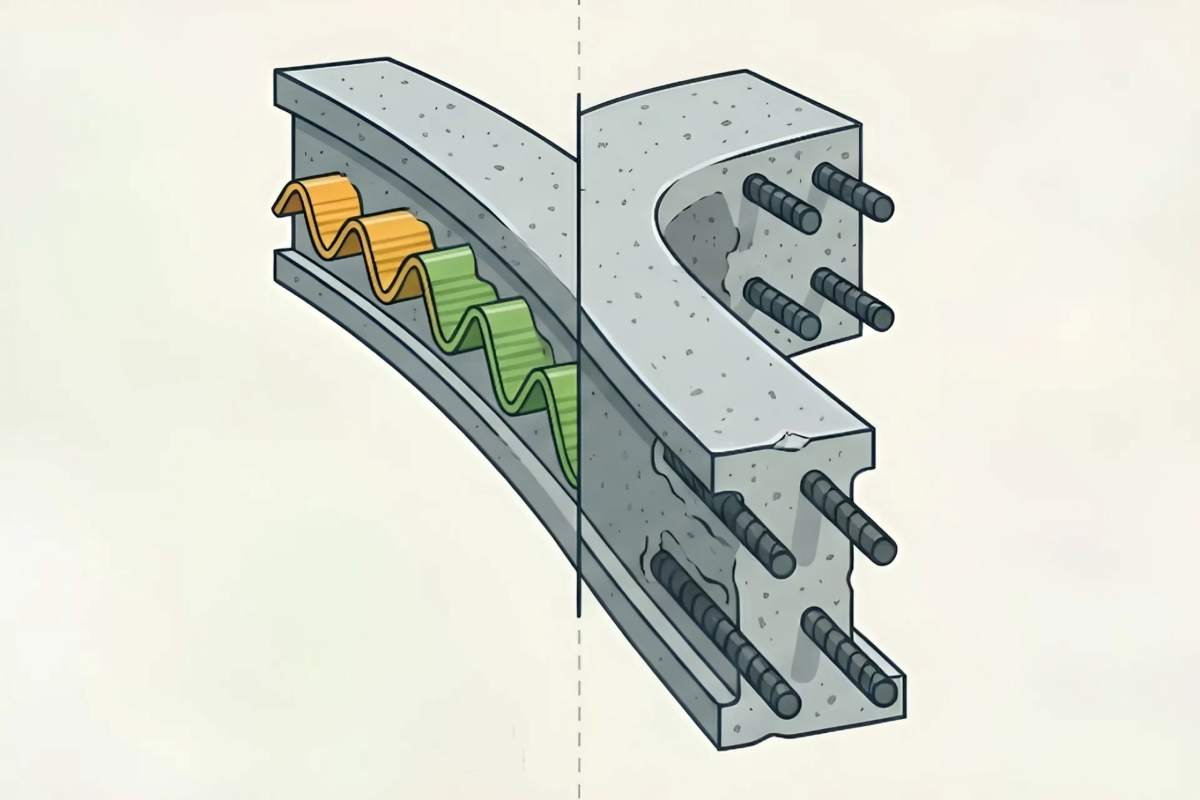
Researchers in Dubai develop a solution for concrete with biodegradable plastic that resists corrosion, provides ductility comparable to that of steel, and paves the way for modular, temporary, and prefabricated structures.
-
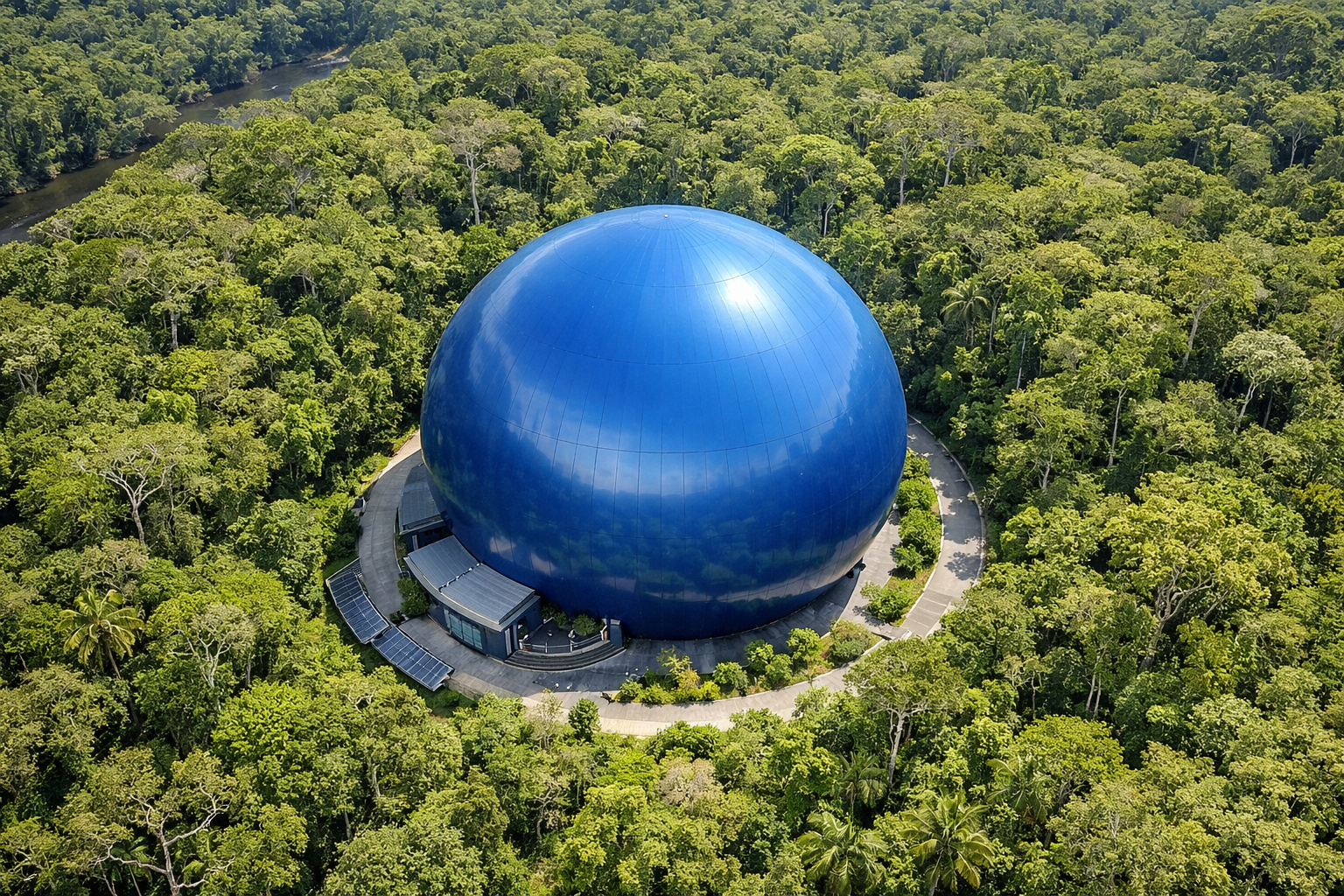
The mysterious giant blue sphere in the middle of the Amazon that went viral on the internet is the Planetarium of Médio Solimões, an impressive project that is revolutionizing access to astronomy in Brazil.
Moreover, the chance to observe all phases of the solar eclipse raises the interest of tourists and observers, especially in locations within the path of totality.
What is the path of totality and where will it pass
A total solar eclipse occurs when the Moon perfectly aligns between the Sun and the Earth, casting a shadow on the surface. This shadow outlines the path of totality, where the darkening is complete.
Xataka highlights that the path of totality will be about 300 kilometers wide and will cross Spain from west to east, from Galicia to the Balearic Islands. The communities within this path include Galicia, Asturias, Cantabria, Castile and León, Basque Country, La Rioja, Aragon, Catalonia, Valencian Community, and Balearic Islands.

Madrid is on the edge, with a brief glimpse of totality in the north of the region. Outside the path, the solar eclipse is still expected to be very intense, with coverage exceeding 90% in much of the country and up to 74% in the Canary Islands, with Lanzarote as the best local viewing point.
Duration and timing: why it becomes a race against time
The solar eclipse is expected to begin just before sunset, and totality is likely to occur around 8:30 PM in peninsula daylight saving time, with the Sun already low on the horizon.
This changes everything in practice: there is little time and with the Sun descending quickly, so choosing the right location becomes part of the planning. In cities like Oviedo, totality may last 1 minute and 48 seconds, with similar durations in Burgos, León, and the island of Mallorca, which is likely to attract many observers.
Safety: what never to do when viewing a solar eclipse
Looking directly at the Sun, even during a partial solar eclipse, can cause permanent eye damage. During all partial phases, it is mandatory to use certified eclipse glasses or indirect viewing methods.
Viewing with the naked eye is only safe during complete totality, when the Sun is fully covered, and even then requires caution because the window is short.
How to choose a good place to observe
To enjoy the solar eclipse, the practical rule is simple: look for a high point, with a clear horizon to the west, without buildings or mountains blocking the view in the late afternoon. This helps not to miss totality when the Sun is lower.
Would you travel to see the solar eclipse within the path of totality, or would you prefer to watch from wherever you are, even if it’s partial?






Seja o primeiro a reagir!