





 English
  Francês
  Alemão
  Italiano
  Japonês
  Norueguês
  Portuguese
  Spanish
  4 min of reading
  0 comments


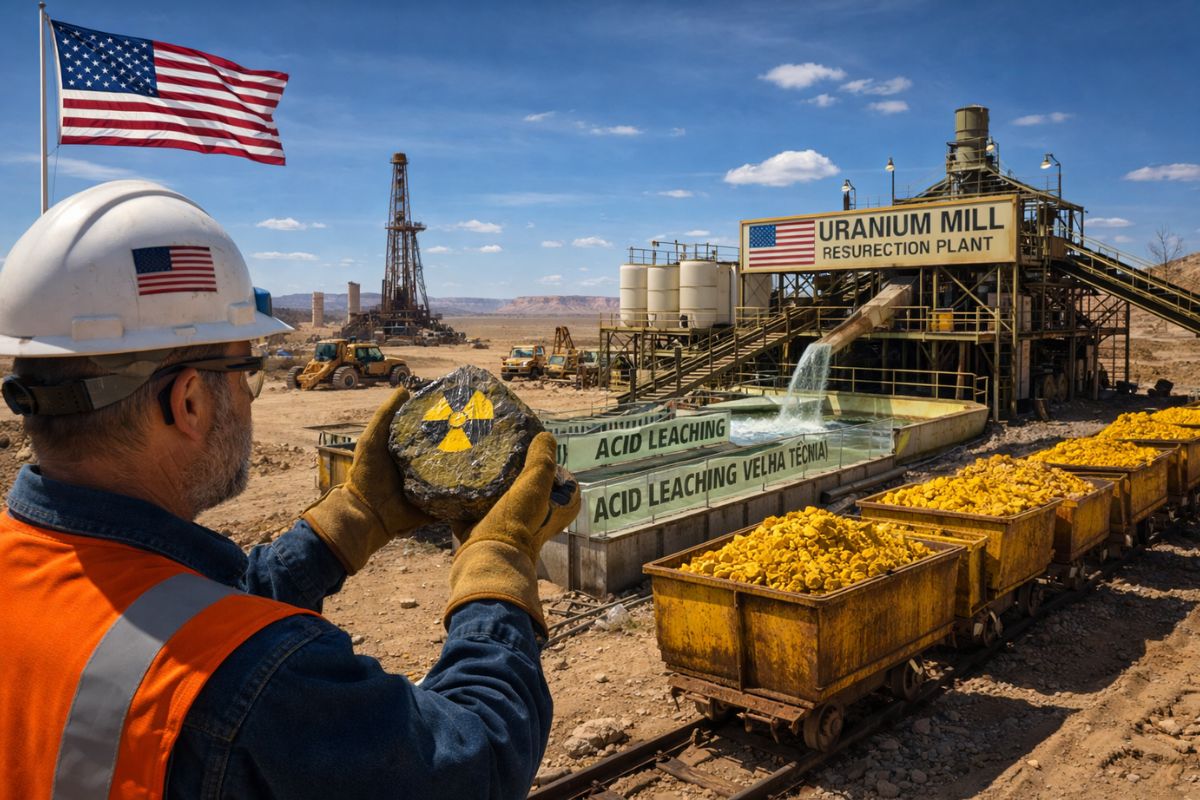
The NNSA confirmed the production of the first purified enriched uranium button at the Y-12 Complex in Oak Ridge, Tennessee. The electrorefining technique reaches 99.9% purity and replaces old chemical processes. The produced uranium is essential for nuclear weapons and fuel for submarines and aircraft carriers of the United States.
The United States has just ended a two-decade hiatus in the production of its most critical uranium. The National Nuclear Security Administration, the NNSA, confirmed the successful production of the first purified enriched uranium button at the Y-12 National Security Complex, located in Oak Ridge, Tennessee. The facility was established in 1943 as part of the Manhattan Project and for over 20 years had its most advanced nuclear processing sector idled. Now, with a technique called electrorefining, the United States resumes the ability to purify uranium with 99.9% purity.
The purified uranium at Y-12 is classified as critical material for American national security. It is used in the production of nuclear weapons and in providing fuel for the reactors of submarines and aircraft carriers of the United States Navy. The resumption of uranium production responds to defense guidelines from the Trump administration and the inclusion of uranium in the list of 60 critical minerals from the United States Geological Survey, a measure aimed at shielding the country from disruptions in global supply chains.
What is electrorefining and how does it purify uranium with 99.9% accuracy

The secret behind the resumption of uranium production in the United States is called electrorefining. Despite the technical name, it is a well-established commercial process commonly used to purify metals such as aluminum, titanium, and copper. The method was developed by the Argonne National Laboratory and refined by the technical team at Y-12 itself.
-
350-year mystery may have been solved: remains of a soldier who inspired the hero of The Three Musketeers found beneath a church in the Netherlands.

-
NASA photographed a nearly perfect square with 3 km sides on Mars, 13 times larger than the Great Pyramid of Giza, but the official explanation is natural erosion; still, no one has explained why the four sides have almost identical lengths.

-
Starlink breaks the barrier of 10,000 satellites in orbit and takes its expansion to an unprecedented level, with a direct impact on global internet, technological competition, and the race for space.

-
Japan finds an alternative to oil amid rising prices by transforming ocean balance into electricity with a new technology that maintains efficiency even when the sea changes.

The process uses an electrolytic cell where two electrodes are submerged in a chemical solution. The impure uranium is placed at the anode, and through a controlled electrical reaction, the metal ions travel to the cathode, where pure uranium is deposited, while impurities fall to the bottom.
The result is uranium with 99.9% purity. The process first generates crystals of purified uranium, which are then melted in a furnace to create the so-called high-purity uranium buttons.
In addition to purity, electrorefining drastically reduces the waste generated compared to old chemical treatments and also allows for the recovery and recycling of uranium from various by-products, as explained by researcher Nikolai Sokov from the Vienna Center for Disarmament. The NNSA classified the technique as revolutionary for the processing of enriched uranium.
Why did the United States go 20 years without producing this uranium

For two decades, uranium processing at Y-12 relied on complex chemical treatments inherited from the Cold War. These processes were inefficient, generated large volumes of waste, and posed greater risks to workers.
The most advanced nuclear processing sector of the facility remained idle while there was no viable technological alternative. Electrorefining is that alternative: cleaner, safer, and more efficient.
The authorization for the electrorefining project at Y-12 was granted in September 2025. It was the first authorization of its kind since the opening of the Highly Enriched Uranium Materials Facility 15 years ago.
The resumption was not sudden: it took months of preparation until the first purified uranium button was successfully manufactured. This achievement marks the definitive abandonment of the old chemical processing plants at Y-12 in favor of a technology that the NNSA considers superior in every aspect.
The Y-12 Complex: from the Manhattan Project to the new era of American uranium
The Y-12 National Security Complex in Oak Ridge, Tennessee, carries the weight of contemporary history in its foundations. Born in 1943 as a vital cog in the Manhattan Project, the secret program that developed the first atomic bomb, Y-12 has since been the uranium processing center of the United States.
The facility also carries a dark legacy: during the 1950s and 1960s, massive amounts of mercury were used in lithium separation. It is estimated that over 317,000 pounds of mercury were lost in the buildings and the surrounding environment.
Today, alongside the resumption of uranium production, Y-12 conducts an environmental cleanup program to remove this mercury. The Mercury Outfall Treatment Facility 200, scheduled for 2027, will be capable of treating up to 3,000 gallons of water per minute.
This infrastructure will allow for the safe demolition of the oldest and most contaminated facilities in the complex, such as Alpha-2 (scheduled for 2029) and Beta-1 (for 2030), without mercury contaminating the Upper East Fork Poplar Creek.
What the resumption of uranium production means for US defense
The manufacture of the first purified uranium button at Y-12 is not just a technical milestone. It is a geopolitical signal. After 20 years of paralysis, the United States resumes a capability that directly supports its nuclear arsenal and naval fleet.
Submarines and aircraft carriers of the US Navy rely on enriched uranium as fuel for their reactors. Without domestic production, the country was vulnerable to external disruptions.
The inclusion of uranium in the list of 60 critical minerals of the United States reinforces the message: the country wants total independence in this input.
With uranium flowing again at Y-12, the United States abandons aging infrastructures and sends a message to the world: the American nuclear sector has taken a leap into a future where efficiency, worker safety, and arsenal reliability are once again defense priorities. The electrorefining of uranium is the beginning of this new phase.
What do you think about this resumption?






Seja o primeiro a reagir!