





 Portuguese
  English
  Spanish
  5 min of reading
  0 comments



In Kodinhi, India, Having Twins Is Almost the Norm: Over 400 Pairs in a Village of 2,000 Inhabitants Intrigue Scientists and Challenge Modern Biology.
While the global average for twin births is around 9 for every 1,000 births, there is a village lost in southern India that breaks all the statistics. This is Kodinhi, a small rural community located in the state of Kerala, which became internationally famous for housing one of the largest concentrations of twins on the planet. According to the latest estimates, with a population of approximately 2,000 inhabitants, the village boasts over 400 pairs of twins registered. This means that the local rate reaches 45 per 1,000 births, or five times the global average.
This phenomenon, which defies the logic of biology and intrigues doctors and scientists, has turned Kodinhi into a global reference for studies on genetics, heredity, and environmental factors influencing the formation of twins.
Where Kodinhi Is Located and How Its Fame Arose
Kodinhi is a remote village, situated about 35 km from the city of Malappuram, in the state of Kerala, a region marked by strong cultural and religious traditions.
-
A 48-square-meter house assembled in hours with 4,000 bricks made of recycled plastic that does not absorb moisture, has natural thermal insulation, and costs less than 90,000 reais in a complete kit.

-
Luciano Hang revealed that Havan’s air fleet has already accumulated more than 20,000 landings, 10,000 flight hours, and 6 million kilometers traveled, and he says that without the planes, the company would never have grown so quickly.

-
A historical discovery in the Andes Mountains reveals a gold deposit valued at 770 billion reais hidden over 4,000 meters above sea level on the border between Chile and Argentina, and the whole world is watching.

-
With just joint compound, white glue, and pigment, you can make a homemade paint that yields double the conventional amount, saves up to 70%, and leaves the wall with a finish that no one would believe wasn’t store-bought paint.


Until the 1980s, it was just another agricultural village, living off rice, spices, and small commercial activities.
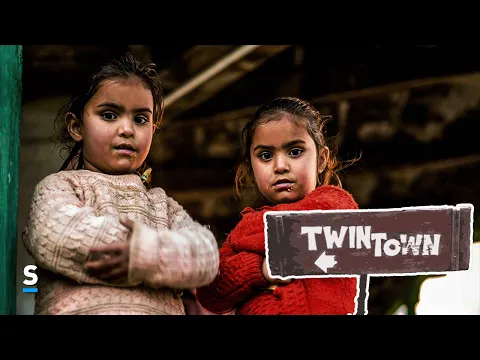

However, as official records began to indicate unusually high rates of multiple births, researchers from India and other countries started to visit the area. In no time, international media dubbed Kodinhi the “Twin Town” or “the Village of Twins”, and the name of the village began to circulate in newspapers and documentaries around the world.
The Mathematics of Kodinhi’s Twins
To understand the magnitude of the phenomenon, just compare the numbers:
- Global Average: 9 pairs of twins per 1,000 births.
- India’s Average: about 4 per 1,000 births, below the global average.
- Kodinhi: 45 pairs per 1,000 births — five times more than expected.
This means that in a single classroom in the village, it is not uncommon to find more than 15 pairs of identical siblings, confusing teachers and classmates.
A Mystery for Science
Despite decades of studies, there is no definitive explanation for the phenomenon. Some hypotheses have been raised:
- Genetics: families with a history of twins tend to increase the probability, but the number in Kodinhi is too high to be explained solely by heredity.
- Diet: some believe that a diet based on certain minerals or plants in the region may influence multiple ovulation.
- Local Water: some researchers have raised the hypothesis that the composition of the village’s water may have some biological role, although nothing has been proven.
- Environmental Factors: the geographical isolation and climatic conditions of Kerala have also been considered.
Interestingly, the phenomenon does not only occur with the natives of Kodinhi. Women who moved to the village and became pregnant later also showed a high chance of having twins, reinforcing the idea that environmental factors may be involved.
Twins Everywhere
Walking through the streets of Kodinhi is an almost surreal experience. Identical children playing side by side, teenagers who look like clones sitting in parks, young couples sharing the same facial traits.
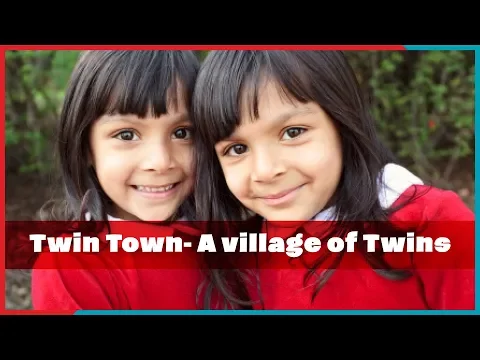
In schools, the resemblance is so striking that teachers report constant difficulties in identifying students. Many parents even sew discreet marks on the clothes to differentiate their children.
The village has also begun to organize meetings and celebrations dedicated to twins, attracting curious tourists and reinforcing the local identity.
Cultural and Social Impact
The abundance of twins has transformed how Kodinhi is perceived in India. The village gained cultural and even economic prominence, as curiosity tourism began to boost the region.
Sociologists claim that living with so many twins creates a unique perception of collective identity. Instead of exclusivity, the twins of Kodinhi represent normality. There, being a twin is not an exception, but the rule.
Global Comparisons
Kodinhi is not alone in the list of “twin villages,” but it stands out for its proportions:
- Cândido Godói (Brazil): a small town in Rio Grande do Sul, famous for its unusual number of twins, which also intrigues scientists.
- Igbo-Ora (Nigeria): known as the “twin capital of the world,” with extremely high rates of multiple births attributed to the local diet rich in yam.
- Kodinhi (India): the most studied due to its consistent statistical phenomenon, with official records confirming the numbers.
This network of villages has become a reference for researchers seeking to understand the biology of multiple births.
Despite its fame, Kodinhi also faces problems:
- Limited Infrastructure: the village lacks large hospitals, creating difficulties in prenatal care and monitoring births.
- Low Income: many families are poor and struggle to support two children born at once.
- Education: overcrowded schools must deal with large classes and the challenge of differentiating students.
Still, the community finds strength in its identity as the “village of twins” and seeks support from the government and research institutions.
The Future of the Village of Twins
Kodinhi continues to be monitored by scientists. Advanced genetics and biotechnology research may, in the future, reveal the mechanisms behind the phenomenon.
In the meantime, the village remains one of the greatest mysteries of modern biology, attracting the curiosity of visitors, documentarians, and even fertility doctors who try to understand how nature creates a “living laboratory” on a community scale.
In the end, Kodinhi is more than a biological phenomenon. It is a reminder of how life can defy statistical patterns and turn what is rare into something ordinary.
There, each multiple birth reinforces the collective identity of a people who have learned to live with uniqueness. For science, it is a challenge. For culture, it is a spectacle. And for the world, a curiosity that shows how biology still holds secrets.








-

-

-

-

-

-

71 pessoas reagiram a isso.