





 Portuguese
  English
  Spanish
  5 min of reading
  0 comments


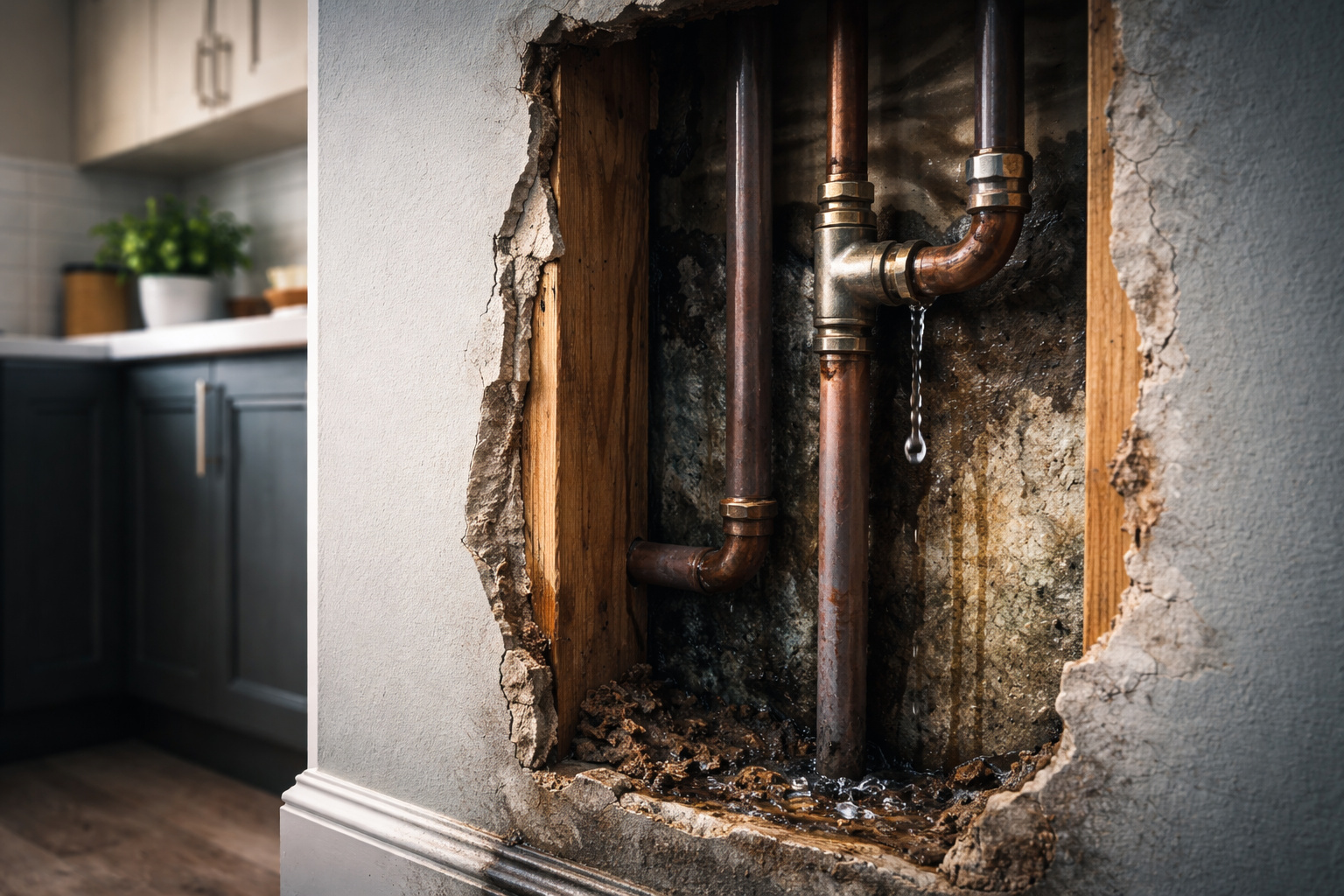
Hidden leaks inside walls can double the water bill and go months without being detected, according to experts.
In technical surveys on water consumption and loss control, sanitation institutions have been warning about a recurring problem in the domestic environment: invisible leaks. These leaks occur inside walls, floors, and embedded pipes, remaining active for long periods without evident signs. According to the technical booklet from Sabesp on water losses, leaks in plumbing systems are one of the main sources of waste, even when they are not perceptible to the user, which makes their identification difficult and prolongs the occurrence time. This type of loss does not only occur in the public network but also within residences. Studies in sanitary engineering indicate that internal leaks, especially in embedded pipes, can persist for months without clear visual signs, precisely because they are hidden in structures like walls and slabs.
The most relevant data is that even small leaks, when continuous, accumulate significant volume over time. As this consumption occurs constantly and invisibly, it can cause progressive increases in the water bill without any change in usage patterns, being considered one of the main causes of domestic waste.
How leaks inside walls happen and why they are difficult to detect
Residential plumbing networks are composed of pipes embedded in masonry, responsible for distributing water to faucets, showers, and other points of use. Over time, these pipes can suffer wear, corrosion, micro-cracks, or even installation failures.
-
Darkness can surpass light in an optical phenomenon confirmed by scientists, which expands the understanding of relativity and reveals new behaviors of waves in the universe.

-
A Brazilian scientist created a pen that touches human tissue and identifies cancer cells in seconds using a drop of water and artificial intelligence, and Lívia Eberlin’s invention has already been used in over 400 surgeries in the United States and Brazil.

-
An inventor in China creates flying drones shaped like swords that respond to hand gestures in real time, with technology based on motion sensors transforming interaction into a scene worthy of a movie and redefining the control of machines in the air.

-
100 times less energy consumption: the innovation that could solve the huge energy crisis of AI.




Materials such as PVC, copper, and PEX have high durability but are not immune to pressure variations, structural movements, or natural wear. Small cracks can appear and allow continuous water escape.
As these leaks occur inside walls, the flow of water dissipates slowly through the structure, without forming visible puddles, making immediate identification of the problem difficult.
Moreover, in many cases, the infiltrated water may partially evaporate or disperse into different layers of the construction, masking external signs.
Why consumption spikes even without change in habits
The impact on consumption occurs because the leak functions continuously, regardless of the use of the house. Unlike an open faucet, which depends on user action, an internal leak remains active 24 hours a day.
Even small losses can generate significant volumes over time. A low-intensity leak can represent dozens or hundreds of liters per day, accumulating thousands of liters by the end of a month.

This constant behavior causes the consumption recorded by the water meter to gradually increase, raising the water bill without any noticeable change in the household routine. This type of waste is classified as non-apparent loss.
Indirect signs that indicate a hidden leak
Although they are not visible, internal leaks often leave indirect evidence. Changes in the structure of the house may arise over time, depending on the intensity and duration of the problem.
Moisture stains, bubbles in paint, mold, and characteristic odors are some of the most common signs. In more advanced cases, there may be damage to coverings or even structural damage.
Another important indicator is the continuous operation of the water meter, even when all consumption points are closed, signaling active water flow within the system. This simple test is often recommended by sanitation specialists.
Structural impacts go beyond the increase in the bill
In addition to water waste, internal leaks can cause significant damage to the property’s structure. Constant infiltration compromises materials such as concrete, mortar, and coverings.
Over time, moisture can weaken structural elements, increase the proliferation of fungi, and compromise the durability of the construction.
This type of problem can generate high repair costs, especially when the source of the leak requires breaking walls or floors to access the pipes. In some cases, the intervention may be more complex than the leak itself.
Modern technologies allow detecting leaks without breaking walls
In recent years, technological advancements have brought more precise solutions for detecting hidden leaks. Equipment such as geophones, thermal cameras, and acoustic sensors allow identifying loss points without the need for destructive intervention.
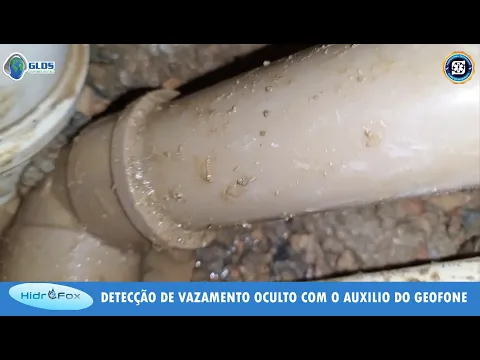
These systems work by capturing sounds or temperature variations associated with water flow outside the norm. Specialized technicians can map the origin of the leak with greater precision.
The use of these technologies reduces costs, diagnosis time, and impact on the property’s structure, making the process more efficient. This type of service has become more common in urban areas.
Difference between apparent losses and hidden losses in the domestic network
Water losses can be classified into two main types. Apparent losses are those visible, such as dripping faucets or leaks in exposed connections. Hidden losses occur within the structure of the building.
While apparent losses are easily identified and corrected, hidden losses require more detailed investigation. This factor contributes to their remaining active for prolonged periods.
Studies indicate that a large part of domestic waste is associated with non-visible leaks, precisely because of the difficulty in detection.
This scenario reinforces the importance of periodic monitoring.
How the measurement system registers waste
The water meter installed in the residence measures all the volume of water that passes through the internal network, regardless of the destination. This means that any leak, even invisible, will be accounted for.
There is no distinction between useful consumption and waste in the equipment’s record. All the water that circulates is converted into charges on the bill.
For this reason, hidden leaks have a direct impact on the bill, as they represent continuous consumption recorded by the measurement system.
This operation explains why the increase in consumption can occur without apparent explanation.
Importance of preventive maintenance in hydraulic installations
Preventive maintenance is one of the main ways to avoid hidden leaks. Periodic inspections can identify early signs of wear or failures in the piping.
Replacing old components, checking pressure, and analyzing connections help reduce the risk of leaks.
Hydraulic systems, like any infrastructure, are subject to aging and require monitoring to ensure proper functioning over time. Prevention is considered a more efficient strategy than late correction.
Hidden leaks inside walls represent one of the main causes of unexpected increases in the water bill. Since they occur out of sight, these problems can persist for long periods without detection.
While increasing consumption, these leaks compromise the structure of the property and increase maintenance costs, becoming a problem that goes beyond the monthly bill.
Identification and correction depend on monitoring, technical knowledge, and, in many cases, the use of specialized technology, highlighting the complexity of a problem that starts silently but can generate significant impacts over time.








Seja o primeiro a reagir!