





 Portuguese
  English
  Spanish
  5 min of reading
  0 comments


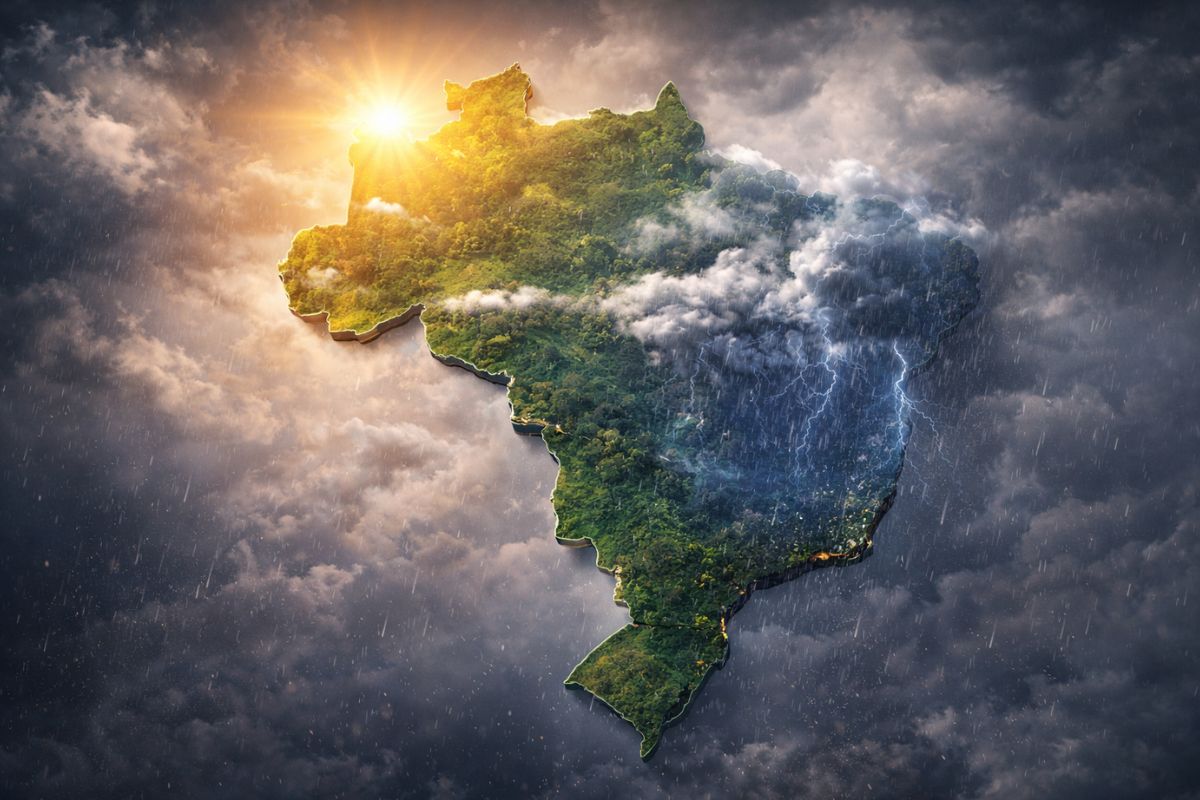
Meteorological projections indicate that winter 2026 in Brazil will have above-average temperatures and greater rainfall in the South, with more than a 60% chance of El Niño establishing itself between June and August, altering the behavior of cold fronts, increasing the risk of extreme events, and creating a scenario of climate irregularity throughout the country
The winter of 2026 in Brazil is expected to be different from what Brazilians are used to expecting from the coldest season of the year. Meteorological projections indicate that the country will face an unusual climate pattern, with above-average temperatures and more intense rainfall in regions that normally remain dry during winter. The main explanation is the advance of El Niño, which is already warming the waters of the Pacific Ocean and is expected to consolidate exactly during the period when winter 2026 sets in Brazil.
According to g1, international climate models indicate that there is more than a 60% chance of El Niño establishing itself during winter 2026, although the intensity is still uncertain. The scenario is already beginning to take shape since autumn, with signs of warming in the sea surface off the west coast of South America. For the South of Brazil, this means more rain. For the North, drier periods. And for the Central-South, heat where it should be cold. Winter 2026 could be one of the most atypical in recent decades.
What does El Niño have to do with winter 2026 in Brazil
El Niño is the climatic phenomenon characterized by the abnormal warming of the waters of the Equatorial Pacific Ocean. When this warming intensifies, it alters atmospheric circulation on a global scale, changing the distribution of rainfall and temperatures across different continents.
-
For the first time, humanoid robots will compete in a full half-marathon without any human assistance in Beijing, with over 100 teams from China registering machines that need to complete the course with autonomous navigation on two legs.

-
Submarine cables installed to transmit the internet now also help scientists detect earthquakes.

-
After so many blackouts, a family transforms an electric truck into a power source for their home and shows how a 100 kWh battery can keep everything running for days.
-
Ukraine is already testing, and China has already shown the world, and now the Brazilian Army is developing its own swarm of autonomous drones with artificial intelligence that share data in real time and operate without centralized control, uniting military and universities.


In Brazil, the most common pattern during an El Niño is increased rainfall in the South and above-average temperatures in the Central-South, while the North and Northeast tend to experience drier periods.
Climate models indicate that the warming process in the Pacific may gain strength starting in May and consolidate between June and August, exactly during the winter of 2026. There are already records of above-average temperatures in the sea surface, especially off the coasts of Peru and Ecuador.
This warming tends to expand and directly influence the climate in Brazil, altering the behavior of cold fronts that normally bring low temperatures and dry weather during winter.
Why will winter 2026 be warm and rainy at the same time
The combination of heat and rain during winter seems contradictory, but it is exactly what El Niño produces when it acts on the Brazilian climate.
The cold fronts that normally advance through the South and Southeast during winter are altered by the warming of the Pacific: instead of bringing dry air and low temperatures, they interact with warmer and more humid air masses, generating more intense rainfall than normal in regions that would expect dry weather during winter 2026.
In the South of Brazil, this pattern translates into episodes of strong and frequent rain, with a risk of flooding and landslides in vulnerable areas.
In the Central-South, temperatures are expected to remain above historical averages throughout the season, reducing the cold waves that characterize traditional winter.
The contrast between regions reinforces the climate irregularity that marks winter 2026: while the South faces excess water, the North may experience prolonged droughts.
The risk of extreme events that winter 2026 brings to Brazil
Experts warn that the advance of El Niño may intensify extreme climatic events during winter 2026. More violent storms, out-of-season heat waves, and prolonged dry periods in regions that depend on regular rainfall are scenarios that gain probability when the Pacific warms beyond normal.
The last decade has already been the hottest on record, and the arrival of a new warming cycle associated with El Niño may further raise temperatures during winter 2026.
The most recent precedent is concerning. The El Niño from 2023 to 2024 contributed to devastating floods in Rio Grande do Sul and to heat waves that broke records in several Brazilian capitals.
If the El Niño of 2026 reaches a similar intensity, winter 2026 may be marked by climatic disasters in a country that is still recovering from the damage caused by the previous cycle.
Even before its complete consolidation, the warming of the Pacific can already influence atmospheric circulation, altering the formation of weather systems over Brazil.
What each region of Brazil can expect from winter 2026
The South is the region most directly affected by El Niño during winter. Rio Grande do Sul, Santa Catarina, and Paraná are expected to record above-average rainfall, with more intense and frequent episodes.
The change in the behavior of cold fronts means that winter 2026 in the South may have fewer days of dry cold and more days of continuous rain, increasing the risk of flooding.
In the Southeast, temperatures are expected to be above average, with fewer cold waves and a greater feeling of heat during months that are normally mild.
The North and Northeast, on the other hand, may face more pronounced dry periods, with a direct impact on agriculture, water reservoirs, and hydropower generation.
Winter 2026 will be felt in opposite ways depending on where you live in Brazil, but in all regions, the pattern will be different from the usual.
A winter that will surprise those who are not prepared
Winter 2026 will not be cold and dry as many Brazilians expect. With El Niño advancing over the Pacific and more than a 60% chance of consolidating between June and August, Brazil is expected to face a season marked by above-average heat, intense rains in the South, and drought in the North.
The risk of extreme events grows along with ocean warming, and winter 2026 may be yet another chapter in a decade where the Brazilian climate has become increasingly unpredictable.
Have you noticed changes in the climate of your region? Do you think winter 2026 will really be warm or are meteorologists exaggerating? How did El Niño affect your city in the last cycle? Leave your comments and share this article with those who need to prepare for a winter different from anything we’ve seen before.







Seja o primeiro a reagir!