








Global beer production declines in 2025, major markets lose strength and manufacturers bet on non-alcoholic beverages to weather the crisis.
Global production fell 0.7% in 2025 and reached 189.6 billion liters, according to a survey released by BarthHaas.
The volume also includes non-alcoholic beers, which have gained ground due to changing consumer habits.
-
Goodbye to the dream of becoming a boss? Understand why Generation Z and millennials are turning down leadership positions, higher salaries, and promotions to preserve balance, flexibility, purpose, mental health, and a less pressured professional routine.

-
Anvisa issues national alert and bans San Oliveto olive oil and Fatti a Mano sweets after identifying unknown origin, technical failure, and irregular production.
-
ZIP code and area code become strategic data for companies

-
How to organize the finances of a small business from the first month


Countries like Germany, the United States, China, Australia, and Poland recorded declines.
Brazil, on the other hand, went in the opposite direction and surpassed 15 billion liters produced.
Global beer production loses strength
The largest proportional decline was recorded in Australia and Oceania.
The region produced 1.8 billion liters, after a 2.4% reduction in 2025.
Europe also showed negative performance and ended the period with 51 billion liters.
The European decline reached 1.6%, mainly influenced by the drops in Germany and Poland.
Germany remained the sixth largest global producer, with approximately 7.9 billion liters.
China, the United States, Brazil, Mexico, and Russia continued to lead the German market.
China leads, but Asian production declines
Beer production in Asia fell 1.2% and ended 2025 close to 59 billion liters.
India recorded growth, but the advance was outweighed by declines in other markets.
China, Vietnam, Japan, South Korea, and Myanmar reduced their production volumes.
China remained the world’s largest manufacturer.
The country accounted for more than one-sixth of all beer produced on the planet.
Brazil advances while the United States loses volume
North America produced about 34 billion liters in 2025.
The regional decline reached 1.9%.
The United States lost almost a billion liters and ended the year with just over 17 billion.
Mexico showed significant growth and approached 15 billion liters.
The Mexican expansion was not enough to avoid the negative outcome of the continent.
South America grew by 1.7% and reached approximately 25 billion liters.
Brazil was the main driver of the growth and surpassed 15 billion liters produced.
Africa also grew by 2.6% and came close to 17 billion liters.
Hop Production Falls, but Supply Remains Excessive
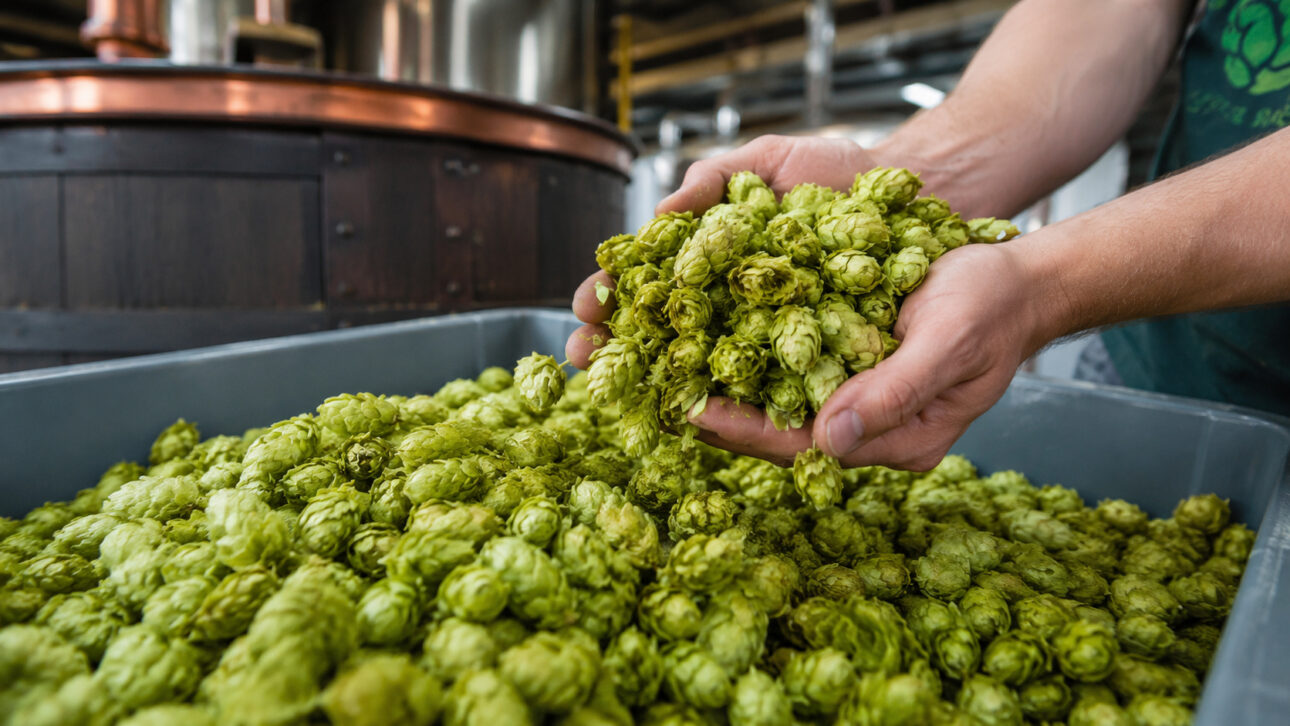
Global hop production decreased at a faster rate than recorded in the beer market.
The cultivated area fell by 5.5% and stood at 52,660 hectares.
The harvest volume decreased by 3.8% and reached 109,188 tons.
Germany maintained the global lead in planted area and harvested quantity.
The country remained ahead of the United States.
Heinrich Meier, from BarthHaas, stated that production once again exceeded demand in 2025.
Thomas Raiser, the company’s general manager, predicts stability or a new decline in beer production.
The growth of Africa, Asia, and Latin America is expected to be offset by the contractions in Europe and North America.
German Breweries Face Historic Crisis
German breweries are struggling with lower sales and increasingly higher costs.
Destatis, the Federal Statistical Office of Germany, recorded a 6% drop in sales in 2025.
The volume sold was close to 7.8 billion liters.
The result was the worst since records began in 1993.
Energy, labor, transportation, production, and packaging became more expensive.
Consumers also started to spend more cautiously amid economic uncertainties.
Young Germans have reduced consumption and many have decided to completely give up alcoholic beverages.
Major breweries close units and cut jobs
Veltins managed to increase its total sales in the first half of 2026 after purchasing the Karamalz brand.
Karamalz produces a non-alcoholic drink with a slightly caramelized flavor.
Sales of the company’s main brand, Veltins Pils, fell by approximately 4.3%.
The Warsteiner Group announced, in May 2026, the closure of the brewery located in Herford.
Another factory, located in Paderborn, was sold.
About 220 jobs were affected by the decisions.
The German Brewers Association reported that approximately 100 breweries have closed since the end of 2019.
Non-alcoholic beer becomes an alternative against the crisis
Non-alcoholic beverages have taken on a strategic position within the sector.
Breweries have expanded the production of soft drinks, carbonated juices, energy drinks, and flavored waters.
Diversification aims to reach consumers who do not wish to drink traditional beer.
Non-alcoholic beers already represent more than 10% of the German market.
Germany also leads European production in this category, according to the German Brewers Association.
Experts warn, however, that the segment shows signs of saturation.
The strategy may help some manufacturers, but it will hardly prevent the closure of all companies pressured by the crisis.
Do you believe that non-alcoholic beers will be enough to save traditional manufacturers or will the sector need to seek new ways to win over consumers?


