





 Português
  Inglês
  Espanhol
  4 min de leitura
  0 comentários



An industrial octopus farm in the Canary Islands aims to reach 3,000 tons per year and become a landmark in aquaculture. At the same time, the plan intensifies criticism regarding sustainability, waste, and animal welfare.
The proposal to farm octopuses on an industrial scale in the Canary Islands, a Spanish archipelago in the Atlantic, has placed the region at the center of a discussion that goes beyond food production. The project seeks to bring a species historically linked to open-sea fishing into a fully controlled environment.
The initiative has also gained international dimension as it involves sensitive topics such as animal welfare, intensive use of marine resources, and the limits of modern aquaculture. The advancement of the plan is now being monitored not only by the production sector but also by researchers, environmentalists, and public policy makers.
Operation in Las Palmas aims to transform octopus supply
The project is led by Nueva Pescanova, a Spanish group in the fishing and food sector, and plans to be established at the port of Las Palmas in Gran Canaria. The announced goal is to achieve an annual production close to 3,000 tons, which would equate to the breeding of about 1 million specimens of Octopus vulgaris.
-
Drought may be creating stronger superbugs in the soil and helping antibiotic resistance reach hospitals, warns a study highlighting a problem that could grow alongside extreme weather.

-
The biggest scam in history: Napoleon’s France deceived the United States by selling them a territory that was Spanish.

-
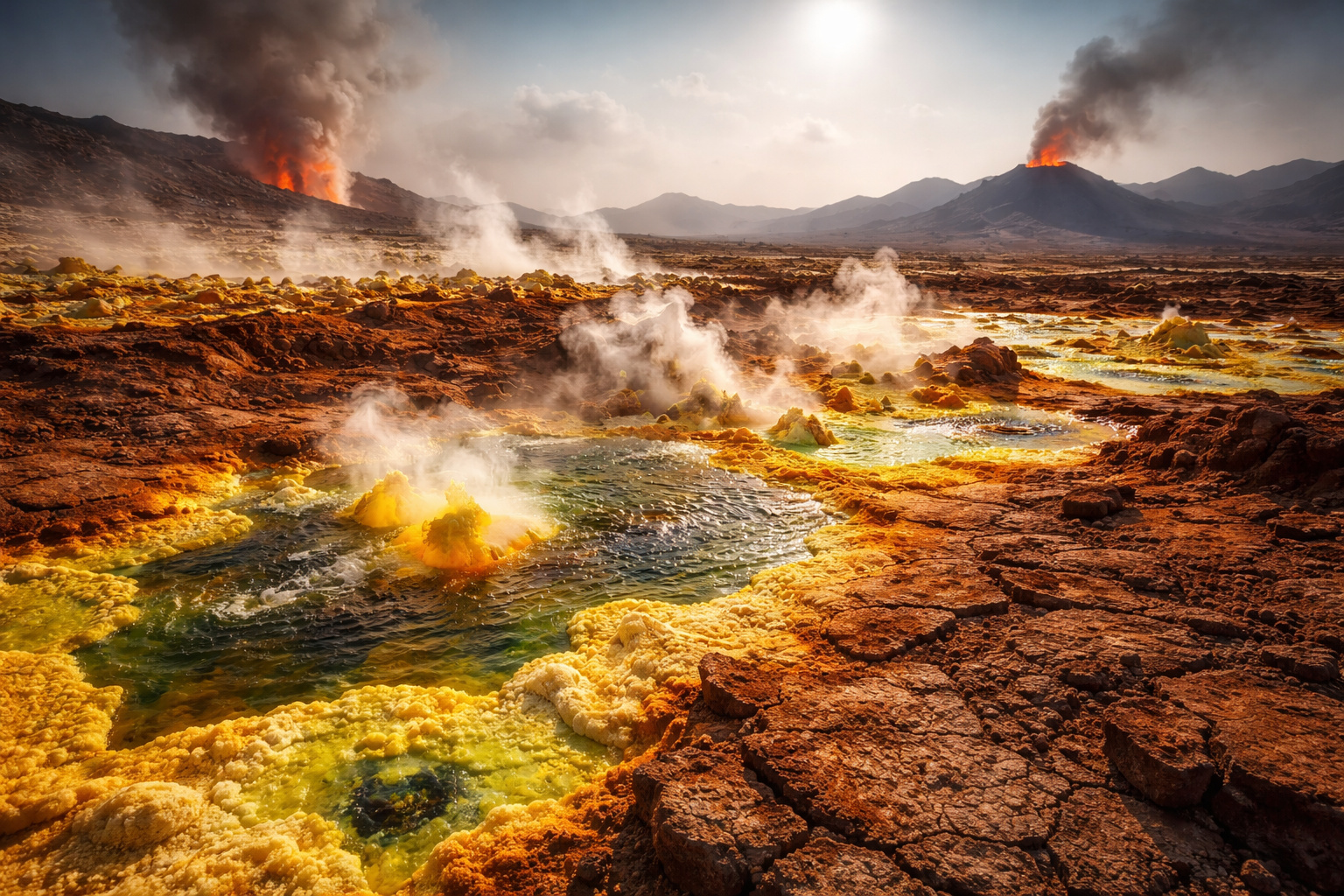
Why is the Danakil Desert so dangerous? It has unstable terrain and how extreme temperatures and toxic gases turn the region into one of the most hostile environments on Earth.
-
With a height of 221 meters and a capacity for trillions of liters, Hoover Dam still holds a trick that makes water defy logic.


The estimated investment is around 70 million euros. If it advances through the administrative and environmental stages, the facility could become the world’s first dedicated to the intensive farming of this species.
Industrial model bets on closed tanks and constant control
The proposed system follows the logic of intensive aquaculture. The animals would be kept in tanks within closed facilities, with control over water temperature, feeding, and population density.
In practice, the goal is to standardize growth and fattening, something already common in other aquatic species, but still unprecedented for octopuses at this scale. This change represents a break from the traditional model based on capture in a natural marine environment.
Biological complexity of the species drives controversy
An important part of the controversy stems from the characteristics of the animal itself. Octopuses are described in scientific studies as beings with a complex nervous system and a wide capacity for interaction with their environment.
According to Frontiers in Systems Neuroscience, a scientific journal focused on neuroscience research, octopuses possess around 500 million neurons distributed between their brain and tentacles. This situation is associated with abilities such as problem-solving, learning from experience, and object manipulation.
Intensive production raises alarm about pain, stress, and behavior
The debate intensifies because the species is also considered sentient, with the capacity to experience pain and stress. This point has led experts to question whether closed industrial environments would be compatible with the animal’s biological needs.
Another relevant factor is the solitary behavior of octopuses. In high-density conditions, critics of the project point to risks of chronic stress, aggression, and even cannibalism, elements that amplify the ethical discussion surrounding the initiative.
Carnivorous diet increases concern over marine resources
The environmental issue has also gained weight because the octopus is a carnivorous predator. This means that its farming depends on large volumes of fish intended for feed formulation.
Estimates mentioned for this type of operation indicate that producing 1 kilogram of octopus may require between 3 and 5 kilograms of fish. In a scenario of overfishing in different regions of the world, this data reinforces doubts about the sustainability of the model.
Environmental assessment keeps the Canary Islands at the center of a larger dispute
Beyond the demand for food, the project is a source of concern due to the generation of organic waste rich in nitrogen and phosphorus, the possible compromise of water quality, and the effects on nearby marine biodiversity.
The proposal is still under environmental assessment, a stage that analyzes its potential impacts. As this process advances, the case of the Canary Islands is already consolidating as a reference in a broader discussion about the ethical, scientific, and ecological limits of intensive farming of marine species.
The project has ceased to be just a local production initiative. It has started to function as a scale test for the future of aquaculture and for how different countries intend to balance food supply, environmental protection, and animal welfare.
If the operation advances, it could set a precedent for new similar ventures. If it is blocked, it should still influence future regulations and change the strategic outlook on the farming of marine species with high biological complexity.








Seja o primeiro a reagir!