





 Portuguese
  English
  Spanish
  5 min of reading
  2 comments


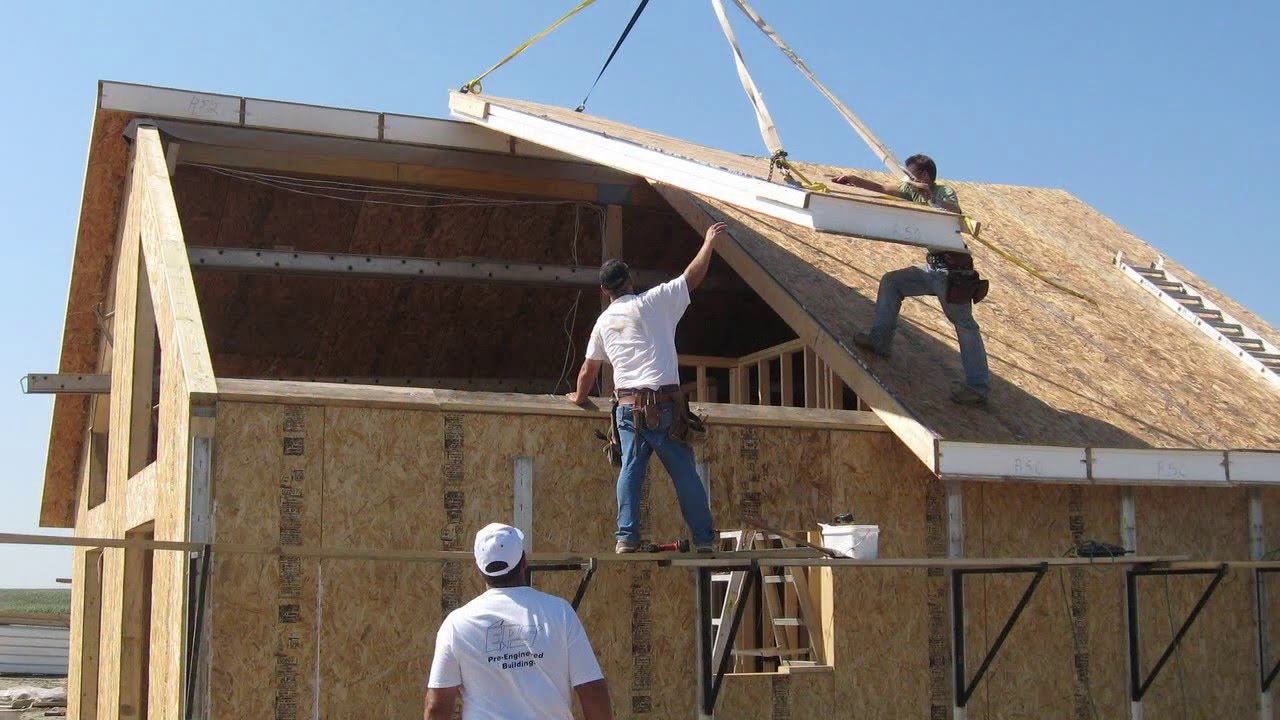


Chile Expands Use of SIP Panels in Construction, Technology That Reduces Building Time by Up to 50%, Improves Thermal Insulation and Accelerates Industrial Assembly.
Latin American construction has always been dominated by traditional masonry. Brick, mortar, cast-in-place concrete, and projects that take months are part of the sector’s historical standard. However, Chile has been consistently expanding the use of an industrialized system that breaks with this model: Structural Insulated Panels, internationally known as SIP.
The technology is not new on the global scene. Used for decades in North America and in European countries, it is gaining traction in Chile due to three decisive advantages: speed of execution, high thermal performance, and greater cost predictability.
SIP Panels Replace Brick and Integrate Structure and Insulation
SIP panels are prefabricated elements composed of two outer structural sheets, usually made of OSB (Oriented Strand Board), and an internal insulating core, typically made of EPS (expanded polystyrene) or rigid polyurethane. This combination transforms the panel into a complete structural component.
-
The lack of welders, electricians, and operators becomes a structural threat in 2025, with the construction industry and manufacturing already suffering from delays, cost pressures, and labor shortages in Brazil.

-
Brazil and Paraguay are just 46 meters away from a historic union on the bioceanic bridge that promises to revolutionize trade between the Atlantic and the Pacific.

-
With 55 km over the sea, a cost of US$ 20 billion, and enough steel to build 60 Eiffel Towers, China’s largest project has connected Hong Kong, Zhuhai, and Macau in a colossal bridge that defies the logic of engineering.

-
A trick with joint compound transforms a Styrofoam ceiling into a plaster-like ceiling: leveled panels, wires and mesh at the joints, sand, paint, and change the environment while spending little today.


Unlike conventional masonry, where the wall must be built up layer by layer and subsequently receive additional thermal treatment, the SIP already integrates structure and insulation in a single industrialized piece. This means fewer steps on-site and greater quality control.
In Chile, specialized manufacturers produce these panels custom-made according to the architectural design. They arrive at the site ready for assembly, with cutouts for doors, windows, and pre-planned technical installations.
Construction with SIP Panels Reduces Building Time by Up to 50%
One of the points most cited by Chilean builders is the significant reduction in the construction schedule. Since the panels are manufactured concurrently with the foundation preparation, the total project time decreases considerably.
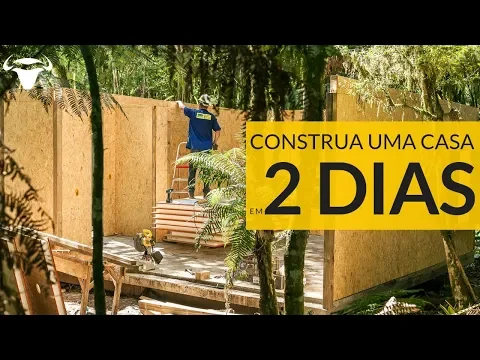

After the proper execution of the slab or foundation, the main structure can be erected in a few days. In many cases, the structural phase of the house is completed in less than a week.
Compared to the traditional method, which involves raising walls, curing, plastering, leveling, and multiple sequential steps, the SIP system can reduce the total construction time by up to 50%. This difference directly impacts indirect costs, such as equipment rental, team presence on-site, and prolonged administrative expenses.
In a country where the real estate sector demands agility, this advantage becomes decisive.
Superior Thermal Insulation Boosts Energy Efficiency
Chile has great climatic diversity. Southern regions face harsh winters, while central areas require energy efficiency to balance indoor temperatures.
The insulating core of SIP panels has low thermal conductivity, which significantly reduces heat transfer between the external and internal environments. This allows buildings to maintain a more stable temperature, with less need for artificial heating or cooling.
In practical terms, residents may observe a reduction in energy consumption over the building’s lifespan. In a global scenario of rising energy costs, this differential gains strategic weight.
Industrialized System Increases Precision and Reduces Waste
Unlike artisanal construction, where each wall depends on manual execution on-site, the SIP system is industrialized. Manufacturing occurs in a controlled environment, with precise cuts made by highly accurate machines.

This precision reduces structural errors, minimizes rework, and decreases waste generation on-site. Material waste, common in traditional masonry, is considerably lower.
In the Chilean context, where technical standards and energy efficiency requirements are becoming more stringent, the predictability of industrial production offers a competitive advantage to construction companies adopting the system.
Structural Behavior and Seismic Resistance in Chile
Chile is located in one of the most seismic regions on the planet. Any construction system adopted in the country must meet rigorous structural standards.
SIP panels, when properly designed and connected, form a lightweight and integrated structural set. The lower structural mass can reduce inertial forces during seismic events, which represents a technical advantage in certain situations.
Chilean structural engineers use specific calculations to ensure that the connections between panels, foundations, and roofing meet safety requirements. The system does not eliminate the use of concrete or steel but rationalizes its application.
Growth of SIP Panel Use in Chilean Construction
In recent years, Chile has expanded the use of prefabricated solutions, especially in residential and social housing projects. The industrialization of construction has become a strategy to reduce housing deficits and increase productive efficiency.
Local companies have begun investing in their own production lines, adapting SIP technology to the country’s climatic and regulatory conditions. The result is a system that maintains international standards but is adapted to local requirements.
This movement aligns with a global trend of modernization in the construction sector, traditionally seen as uninnovative.
Comparison Between Traditional Masonry and Construction with SIP
In conventional masonry, the process is sequential and dependent on multiple manual steps. Wall erection, mortar application, concrete curing, and finishing require time and complex coordination.
In the SIP system, much of the complexity is transferred to the design and manufacturing phase. When the panels arrive on-site, assembly occurs in a nearly modular manner, reducing uncertainties.
This paradigm shift brings construction closer to industrial logic, where planning and standardization replace improvisation and variability.
Sustainability and Lower Environmental Impact
Another factor driving the adoption of SIP panels in Chile is the quest for more sustainable constructions. The reduction of waste, energy efficiency, and optimized material use contribute to lower environmental impact throughout the building’s lifecycle.
Although the production of materials like OSB and EPS also involves industrial processes, superior thermal performance can offset some of the initial impact through ongoing energy savings.
In a global scenario of climate goals and environmental efficiency, construction technologies that reduce energy consumption gain strategic relevance.
Brick Still Dominates, but Industrialization Advances
Traditional masonry continues to prevail in Latin America. However, the advancement of SIP panels in Chile demonstrates that the sector is in transformation.
Pressures for cost reduction, increased productivity, and energy efficiency stimulate the adoption of industrialized systems. The Chilean model shows that it is possible to combine speed, structural performance, and technical quality. Brick has not disappeared from the market. But it is no longer the only answer.
In Chile, construction with SIP panels represents a concrete step towards the industrialization of housing. And, in light of modern demands for efficiency and sustainability, the trend is for solutions like this to move from alternatives to becoming standard in certain segments of the market.










Temos no Brasil uma empresa com muitos anos de experiência em contrução industrializada, que inclusive já construiu no Chile e hoje vem desenvolvendo um projeto incrível em Santos na urbanização de comunidades no Parque Palafitas, está empresa é TECVERDE, com fabrica no interior de São Paulo.
Esse sistema que está sendo adotado no Chile parece ser muito bom. Reduz desperdícios como aço tece nas construções tradicionais, reduzindo também o tempo para erguer uma casa, mas uma pergunta me parece óbvia: Essa construções resistem a fúria dos ventos e outras intempéries?