





 Portuguese
  English
  Spanish
  5 min of reading
  0 comments


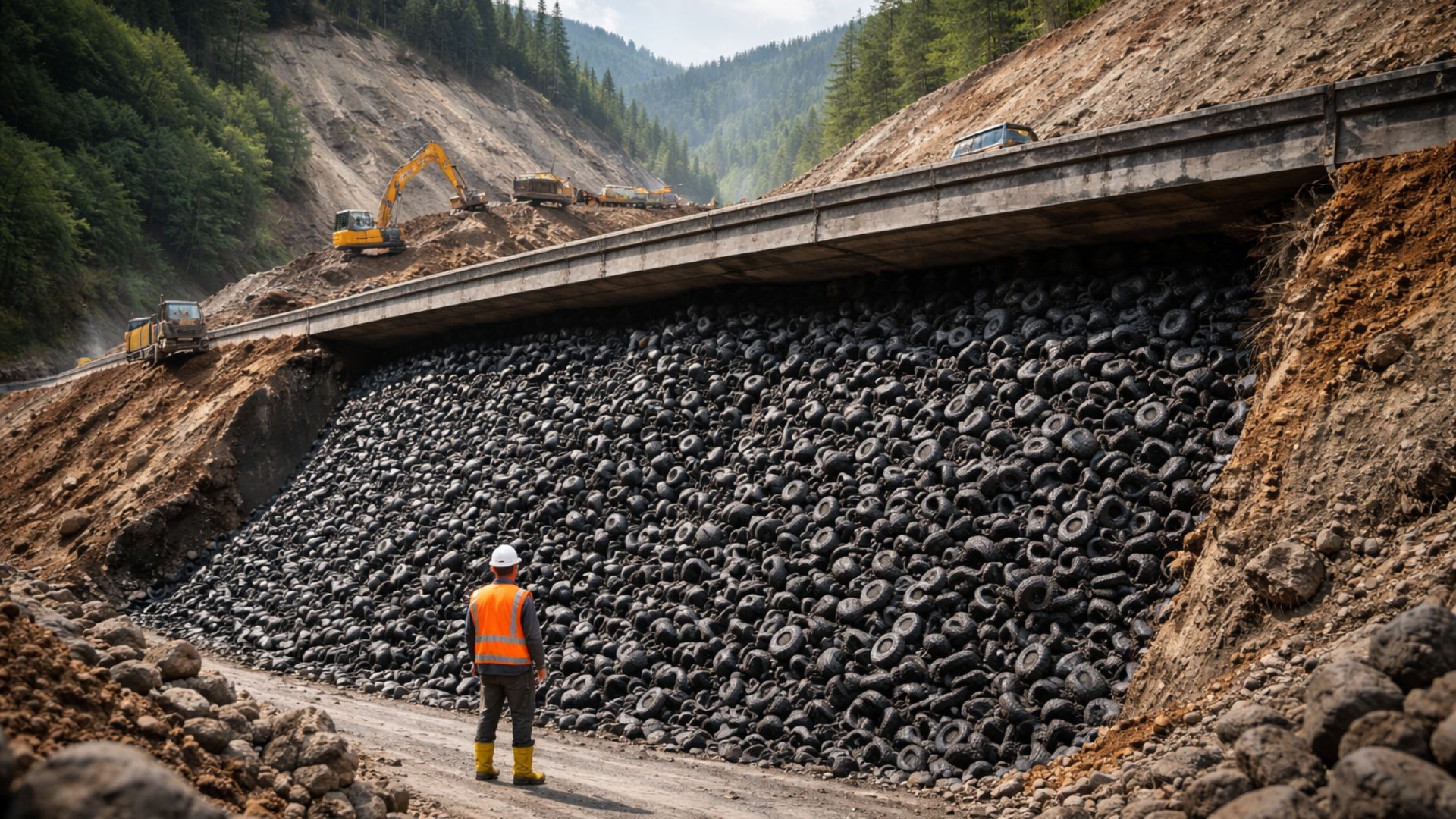
Engineering solution with recycled tires reduced costs, avoided structural demolition, and allowed reconstruction of an unstable section of Highway 101 in California, using light material beneath the pavement to preserve existing drainage and improve stability in an area historically affected by landslides.
Discarded tires began to fulfill a structural role beneath the Highway 101 in Northern California, in an intervention designed to bypass the area of Confusion Hill, where landslides and slope instability had affected the highway for years.
Instead of reinforcing the work with conventional fill, the engineering adopted tire-derived material to reduce the weight on an existing drainage structure and enable the reconstruction of the section.
The solution remained hidden beneath the pavement and did not change the appearance of the road for those passing through the region, but it was crucial for the project to move forward without a more aggressive underground intervention.
-
Italian researchers have detected what appears to be a second Sphinx buried under the sands of Egypt, and satellite scans reveal a gigantic underground megastructure hidden beneath the Giza Plateau for over 3,000 years.

-
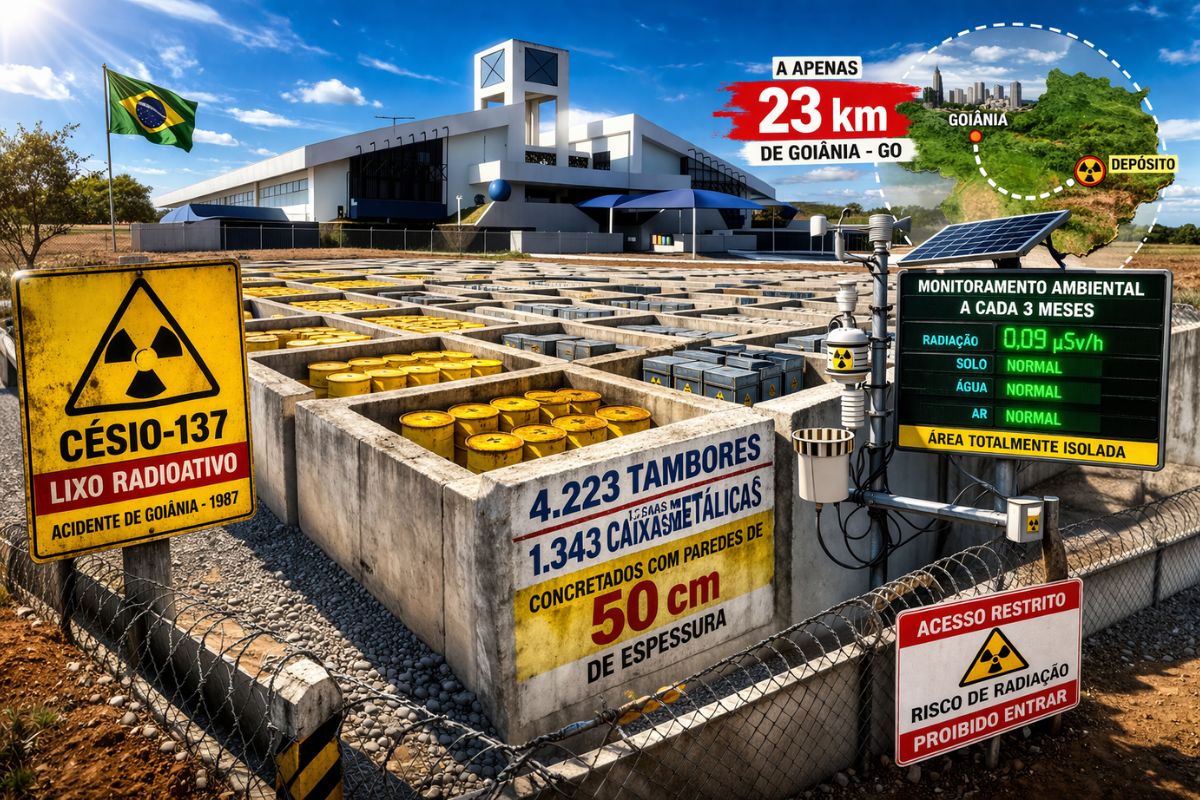
There are 4,223 drums and 1,343 metal boxes concreted with 50-centimeter walls that store the radioactive waste from Cesium-137 in the worst radiological accident in Brazil, just 23 kilometers from Goiânia, with environmental monitoring every three months.
-
Giant Roman treasure found at the bottom of Lake Neuchâtel in Switzerland reveals an advanced trade system, circulation of goods, and armed escort in the Roman Empire about two thousand years ago.

-
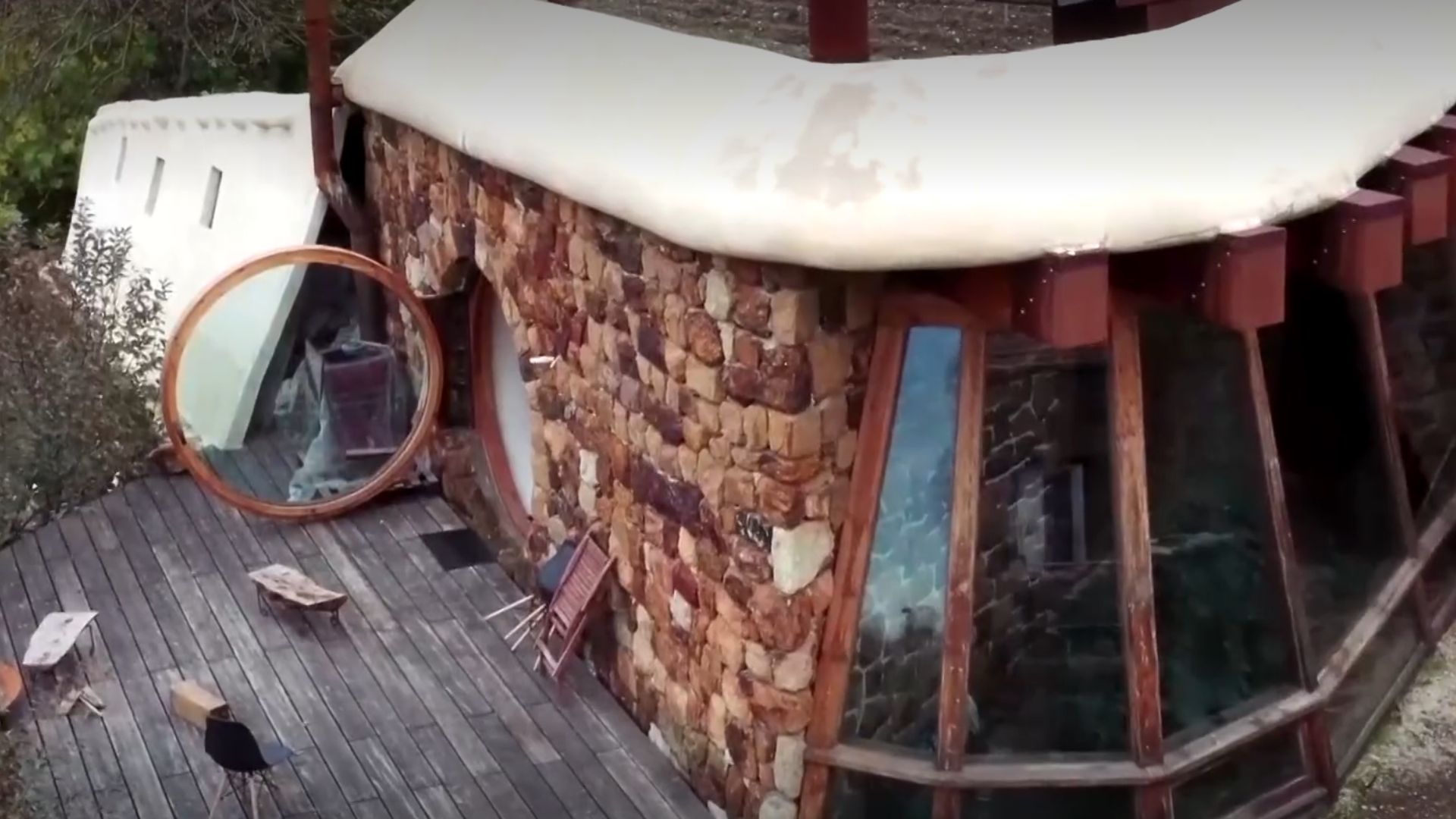
He buried 1,200 old tires in the walls to build his own self-sufficient house in the mountains with glass bottles, rainwater, and an integrated greenhouse.

Technical documents about the project show that the new alignment required the application of about seven feet of engineered fill over an existing drainage arch, which was unable to support the additional load.
What was beneath the pavement

At this point, the Tire-Derived Aggregate (TDA) came into play, a name given to the aggregate obtained from the shredding and processing of used tires for civil engineering applications.
The main advantage of the material is its low weight compared to soil and other conventional fills, in addition to its drainage capacity, a relevant characteristic in works subject to water and ground movement.
In the case of Confusion Hill, the technical gain was direct and objective, because the central problem was not in the pavement, but in what lay buried many meters below the future roadway platform.
Instead of increasing the load on the drainage device and forcing its removal, the TDA allowed for the redistribution of the weight of the work and kept the structure operational during the reconfiguration of the highway.
The choice did not occur in just any section of the California roadway system, but in an area known for a long history of landslides, debris falls, and traffic interruptions.
The mass movements on that slope had been affecting the highway for 17 years, while technical records indicate that the corridor needed to be realigned to escape an active landslide zone near the Eel River.
Advantages of using recycled tires in the project

Frequently, roadway works are perceived only by the visible layer of asphalt, lanes, and signage, but the critical decision at Confusion Hill was focused on the behavior of the fill and the structural base.
As the TDA weighs much less than common soil, the solution reduced the stress on the arch culvert and prevented the project from needing to demolish and reconstruct this element before raising the new fill.
This technical detour had financial and operational impacts, as the alternative with tire aggregate eliminated an expensive, time-consuming, and sensitive construction phase.
A technical reference guide on the use of TDA states that, compared to the option of demolishing the culvert, the adopted solution saved over $500,000 and also reduced the time needed to complete the service.
At the same time, institutional materials record the case with another metric of savings, mentioning an estimate of $320,000 for the project and the use of approximately 270,000 tires.
The difference between the numbers arises from the type of comparison adopted in each document, but both point to the same practical result: the recycled material reduced costs and facilitated the execution of a complex project.
Reconstruction of Highway 101 in landslide area
The broader intervention included the realignment of the highway, the construction of two bridges, and the recovery of a segment damaged by slope failures in a geologically unstable area of Mendocino County.

Official sources differ on how to mark the completion, but they converge on one essential point: the main phase was delivered between 2008 and 2009, with the new route bypassing the critical area and reducing frequent traffic interruptions.
Technical records also associate the site with significant logistical impacts before the change of alignment, with closures requiring long detours and causing delays for residents, freight, and regional tourism.
In this context, the use of processed tires ceased to be a curious detail and took on a functional role in a project designed to keep a strategic connection in Northern California open.
Although the immediate appeal of the story lies in the unusual idea of imagining old tires beneath a road, the case stands less on surprise and more on the logic of the engineering employed.
The material did not replace asphalt, did not appear on the surface, and did not serve as an abstract symbol of recycling, but as light fill in a spot where every additional ton could impose a much more costly underground reconstruction.
Therefore, the Confusion Hill section has become a recurring example in technical publications about the reuse of tires in infrastructure, especially in situations that require light fill, efficient drainage, and load control over buried structures.
Out of the driver’s field of vision, the solution remained invisible, but it was precisely there that the project found a way to preserve the existing drainage and support the new roadway corridor.









Seja o primeiro a reagir!