





 Portuguese
  English
  Spanish
  5 min of reading
  0 comments


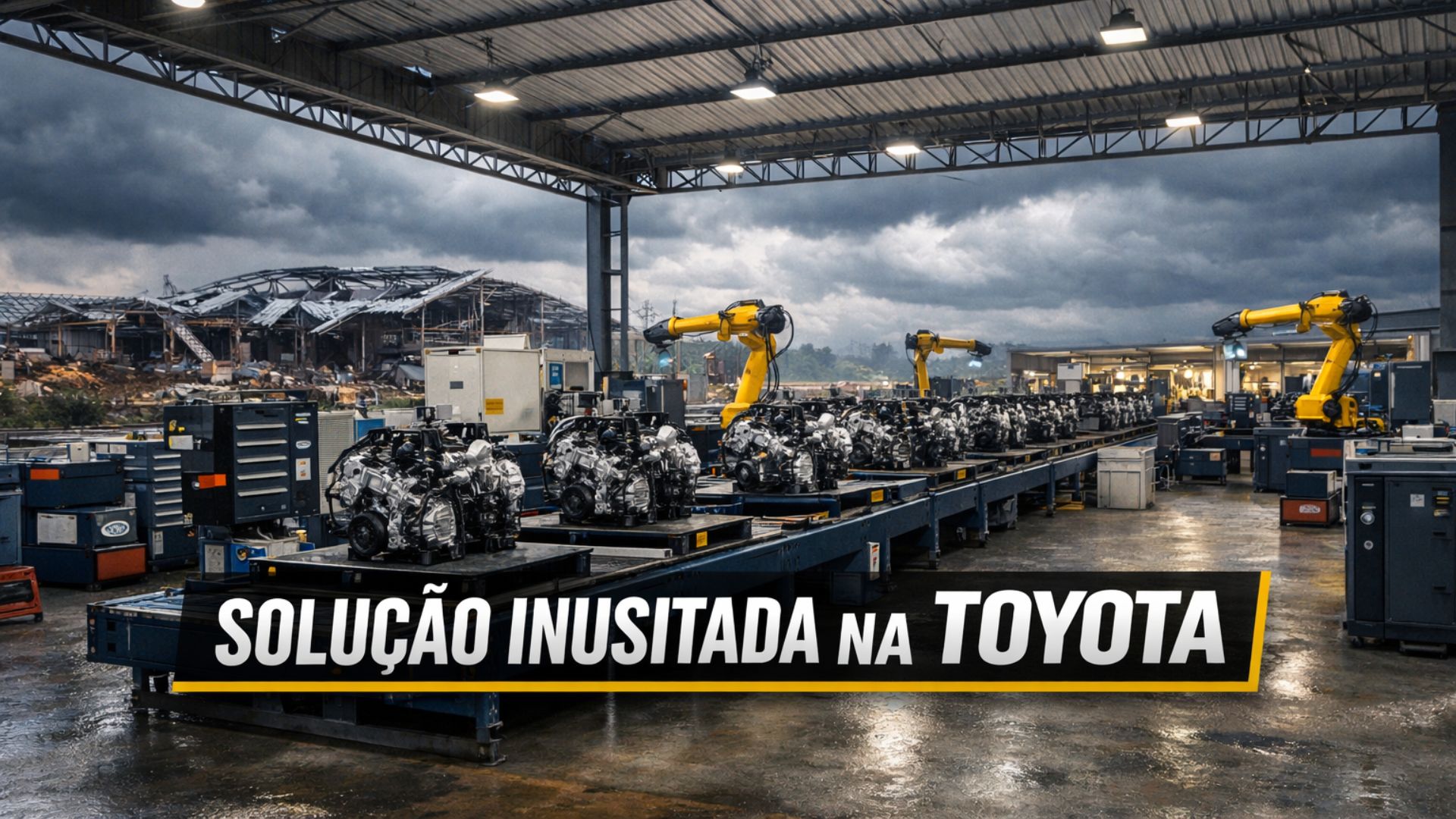
Storm Destroyed Strategic Toyota Plant in Porto Feliz and Forced the Manufacturer to Redesign the Entire Engine Production Chain in Brazil, with Emergency Solutions that Include Rented Warehouse, Shipment of Machines to Japan and Reorganization of Employees to Enable the Launch of the Yaris Cross.
After a storm hit the interior of São Paulo in September 2025, Toyota was forced to quickly reorganize its industrial operation in Brazil.
With the Porto Feliz engine plant severely damaged, the manufacturer began temporarily assembling the flex engines for the new Yaris Cross in a rented warehouse in the city.
The affected unit is considered strategic for supplying national lines, which amplified the impact of the climatic event on the entire operation.
-
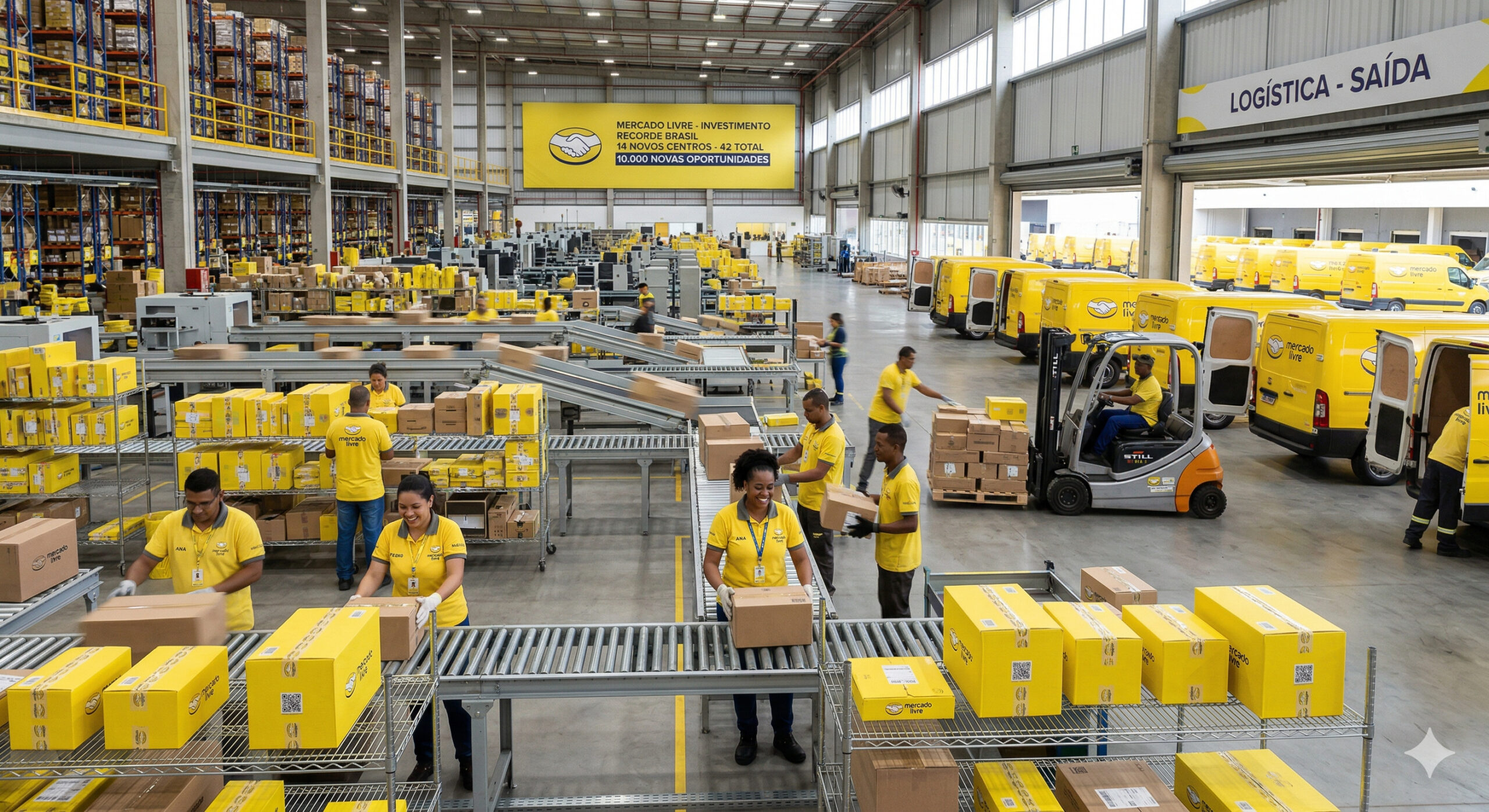
Mercado Livre “opens the vault” and announces a record investment of R$ 57 billion in Brazil in 2026, a value 50% higher than the previous year, with an expansion plan that includes 14 new logistics centers, totaling 42 units in the country and hiring an additional 10,000 employees.
-
How investment in technology can revolutionize the national economy and enhance industrial gains, according to a study that highlights the direct impact on productivity, innovation, and wealth retention within Brazil.

-
The largest food company on the planet, JBS, has just opened a 4,000 square meter laboratory in Florianópolis to develop customized proteins that modulate muscle mass gain, immune response, and metabolic performance.

-
After nearly 30 bids and competition among industry giants, a Spanish company purchases one of the largest airports in Brazil for almost R$ 3 billion and takes over the management of Galeão in a concession that will last until 2039.


Since then, the company has been working with the perspective of rebuilding the plant over a prolonged period, with construction expected to last until the end of 2027.
The full resumption of production, according to Toyota itself, is only expected to occur in 2028, which requires interim solutions to keep the factories operational.
In this context, the manufacturer redesigned its industrial chain to avoid shortages in its units in Brazil and other markets in the region.
This emergency plan gained even more relevance with the approach of the Yaris Cross launch, considered internally as one of the brand’s main volume products in the country.
Storm in Porto Feliz Halted Engine Production
The storm directly affected the unit responsible for supplying engines to Toyota’s operations in Brazil.
As an immediate consequence, the production interruption caused a chain reaction in other factories of the manufacturer.
Plants like Indaiatuba and Sorocaba began to suffer from a lack of engines, which led to adjustments and temporary suspensions of activities.
At that moment, the company even partially halted operations in the country while assessing the extent of the damage.
As the situation became clearer, Toyota began to seek alternatives outside Brazil to maintain part of the production.
One of the first responses was to prioritize hybrid models, which rely less on the local chain of combustion engines.
This strategy helped to alleviate initial pressure but made it clear that a more durable structural solution was needed.


Rented Warehouse Became Temporary Solution for Flex Engine
In light of this situation, the alternative found was to set up an emergency line in a rented warehouse in Porto Feliz.
The space, identified as DRV Galpão, was quickly adapted to accommodate the assembly of flex engines for the Yaris Cross.
In this location, Toyota began to conduct a temporary operation focused exclusively on meeting the Brazilian market.
The solution was designed to support flex technology, considered essential for the brand’s strategy in the country.
According to the president of Toyota Brazil, Evandro Maggio, the rental was agreed upon shortly after the storm.
“It was a space built to be rented, and we agreed to the lease right after the storm. We have already moved all our machines there and managed to set up a structure to produce the engines until the Porto Feliz plant is rebuilt, which is only expected to happen at the end of 2027.”
With this structure in operation, the manufacturer ensures the minimum necessary supply to keep the project ongoing.
The central objective is to sustain the demand for the new compact SUV until the original factory is operational again.
Shipment of Machines to Japan Enabled Launch
In addition to the rented warehouse, the contingency plan included a decision considered out of the ordinary.
To enable the launch of the Yaris Cross, Toyota transferred specific machinery from Brazil to Japan.
This movement allowed the production of the first engines for the model to start, supplying the initial vehicles.
The strategy proved necessary because the flex engine is exclusive to the Brazilian market and had no alternative production.
According to the company, there was no production “backup” available in other plants of the group at that moment.
This limitation contributed to the local production resumption taking longer than initially expected.
As a direct consequence, the original schedule for the Yaris Cross had to be revised.
The debut, initially planned for 2025, had to be adjusted due to the operational impact caused by the storm.
Operation Divided Between Brazil and Abroad

In practice, Toyota began to operate with two complementary fronts to sustain the project.
On one side, there was the initial production enabled abroad, especially to ensure the start of sales.
On the other, the assembly of flex engines destined for the domestic market was concentrated in the rented warehouse in Porto Feliz.
This hybrid structure supports production while the original factory is not rebuilt, according to the strategy defined by the company.
The division is also reflected in the destination of the vehicles. The models sold in Brazil use locally assembled flex engines.
In contrast, the units destined for export feature gasoline engines supplied by operations outside the country.
Employees Were Redistributed After Destruction of the Plant
The industrial restructuring directly impacted the workforce of the destroyed unit.
Before the storm, the Porto Feliz factory employed about 800 workers.
Part of this workforce was transferred to Sorocaba, where Toyota produces Corolla, Corolla Cross, and the Yaris Cross itself.
Another group began to work in the rented warehouse to sustain the emergency engine operation.
A smaller number of workers remained on layoff while the company reorganized its activities.
According to the manufacturer, this redistribution helped avoid mass layoffs.
Production Target for the Yaris Cross is Already Defined
Even in light of the limitations imposed by the storm, Toyota is working with defined production targets.
The forecast is to produce 52 thousand units of the Yaris Cross in 2026, considering the domestic market and exports.
Of this total, 30 thousand vehicles are intended for the Brazilian market, with locally assembled flex engines.
The other 22 thousand units are destined for export, equipped with gasoline engines.
These volumes depend on the stability of the emergency operation set up in Porto Feliz.
According to the manufacturer, production will be gradually resumed over the next months.
The expectation is to approach the pace recorded before the storm, even with structural limitations.
With the Yaris Cross coming online, Toyota’s contingency planning is being tested on a real scale.
It remains to be seen whether this temporary structure will be able to sustain volumes, deadlines, and exports until the Porto Feliz factory is definitively rebuilt.







-

-

-

-

-

-

42 pessoas reagiram a isso.