





 Portuguese
  English
  Spanish
  6 min of reading
  2 comments


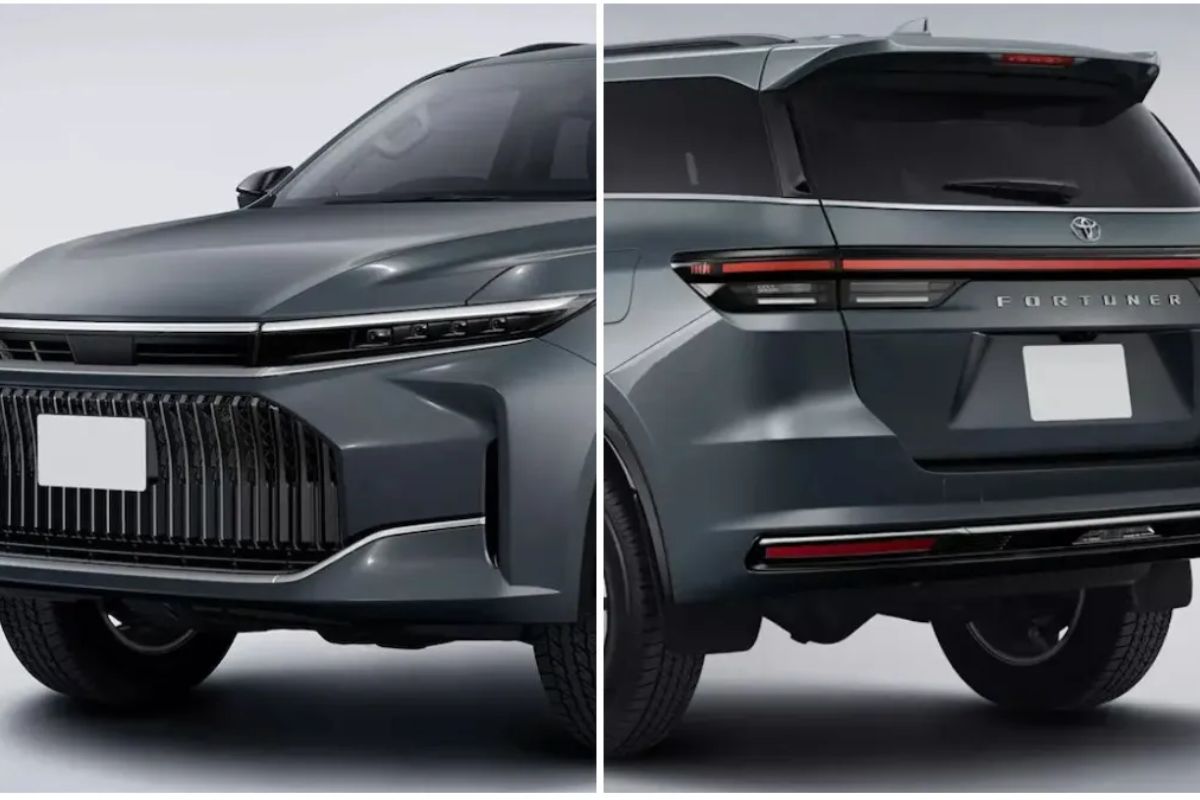


The SW4 2027 Is Treated as a Major Renewal of Toyota’s SUV, With a Look Similar to the New Hilux, a More Sophisticated Interior, Advancements in Embedded Technology, a Possible Mild Hybrid System, and an Estimated Price Around R$ 500,000, Which Would Elevate the Model to the Top of the National Category.
The SW4 2027 began gaining traction in market discussions due to rumors, images associated with the new generation, and the perception that Toyota is preparing a much broader update than just a simple facelift. What has emerged so far points to a SUV with a front inspired by the Hilux, a more modern interior, and a more ambitious technical package, particularly in areas where the model has faced increased scrutiny.
The movement makes sense because the SW4 still has a strong image, a reputation for robustness, and a well-established space in the segment. However, it has also accumulated criticism regarding technological shortcomings and visual repetition in the cabin. Therefore, the next generation is viewed as a direct response to this wear and tear, with the mission of keeping the sports utility vehicle relevant even in an increasingly high price range.
Hilux Look and More Updated Cabin

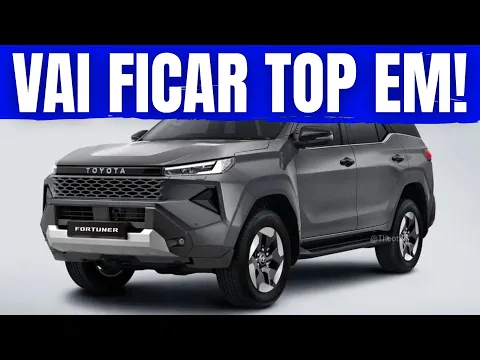
The indications cited so far suggest that the SW4 2027 is expected to closely resemble the new Hilux in its front design.
-
5 cheapest used cars than a Honda CG 160 Titan 0 km, with options starting at R$ 13,000 for those who want to trade their motorcycle for a car and escape the rain, sun, and risks of riding.

-
Around R$ 24,000: 4 used Ford SUVs with up to 253 hp, V6 engine, all-wheel drive, 7 airbags, panoramic sunroof, and a complete package that surprises with its price and performance in Brazil.
-
A brand new car starts at around R$ 75,000 in Brazil, but what stands out the most is seeing streets filled with SUVs and expensive sedans in a country where millions remain in debt.

-
For R$ 32,000, a brand new Hyundai car is a rival to the Kwid with a 1.2 engine producing 82 hp, 6 airbags as standard, multimedia with wireless Android Auto, up to 391 liters in the trunk, and a refreshed look for 2026 in India.

The mentioned images point to a more aggressive front end, prominent alloy wheels, and a visual presence aligned more closely with the pickup, reinforcing the lineage’s identity without breaking away from the foundation that made the model well-known.
This choice does not seem random. Toyota has a strong asset in the Hilux image, and bringing this design language to the SW4 is a way to modernize the SUV without distancing it from the perception of durability that has supported its fame for years.
Rather than completely reinventing the vehicle, the brand may be opting to update what already works, but with a more modern appearance.
Inside, the change is likely to be even more significant than the exterior.
The foundational material highlights that one of the main complaints concerned the instrument panel, the multimedia center, and the repetition of the internal design over excessively long cycles. If this reading is correct, the SW4 2027 should address the most sensitive point of the current generation.
This helps to understand why the promise of more embedded technology has gained so much weight. In a segment where finishing, connectivity, and visual sophistication have begun to directly influence the perception of value, merely being robust is no longer sufficient.
The new SW4 needs to appear more advanced inside to justify the price increase and remain competitive against rivals that focus precisely on cabin and equipment.
Hybrid Powertrain Enters the Center of the Discussion

In the mechanical setup, the highest expectations revolve around the possibility of electrification.
The 2.8 turbo diesel engine with 204 horsepower, already known from the current model, serves as the basis for the discussion, but the main bet mentioned in the material is the adoption of a 48 V mild hybrid system for the Brazilian market.
In this scenario, the main engine would be retained, aided by a small electric motor of 16 horsepower and a 0.2 kWh lithium battery.
If this path is confirmed, the SW4 2027 would not only change its appearance. It would incorporate a technical solution designed to update efficiency and response without abandoning the architecture that supports the SUV’s mechanical reputation.
This is a significant change because it modernizes the setup without breaking the “big tractor” image that has accompanied the model for years.
The possibility of a fully electric version with 144 kW, 196 horsepower, a motor on each axle, all-wheel drive, and a 59.2 kWh battery is also on the radar.
However, the material itself addresses this possibility with more caution, especially when the focus is on Brazil.
The evaluation there is that such a configuration may not be the most likely path in the national market at this initial moment.
This difference in interpretation matters because it shows that the discussion is not only technical. It is also commercial.
Toyota needs to determine how far it can advance in electrification without pushing the SW4 to an even more challenging price point, primarily in a segment where robustness, cost, and reputation still weigh heavily in the purchasing decision.
The Problem May Be Less About the Car and More About the Price

If the design is appealing and the technology promises to level up, the most delicate point remains the price.
The cited rumors mention a SW4 2027 in the range of R$ 500,000, or even higher, especially if it comes with a mild hybrid solution or an even more sophisticated proposition.
In this scenario, the SUV could solidify its place among the most expensive in its category in Brazil.
This value completely changes the debate. When a utility vehicle of this size approaches or exceeds half a million reais, it is not only evaluated for its robustness but also for refinement, technology, finishing, and the perception of exclusivity.
In other words, it is no longer sufficient to remain strong in name and tradition. The whole package must match the price.
This is where comparisons with the H9 come in, treated in the material as a rival capable of challenging the SW4 on cost-effectiveness.
The presented reading is clear: if Toyota raises the price too much, it may deliver a more sophisticated vehicle, but still open the door for competitors to capture buyers through financial arguments.
At the same time, the strength of the brand remains a difficult differential to ignore. The SW4 carries a reputation, an established market, and a history of desirability that still weighs heavily in the segment.
The risk, therefore, is not the lack of product appeal but the possibility that the price will turn the update into a barrier, especially if the perception of evolution is not proportional to the requested leap.
When It Arrives and What Toyota Seems to Be Seeking
The calendar still appears shrouded in uncertainty.
The material discusses the possibility of a launch at the end of 2026 as a 2027 model, although it also admits that Toyota may push this movement to 2027 or even extend it into 2028.
This suggests that the window of arrival exists, but the schedule does not seem completely set yet.
Even so, the projected sequence is clear. The new Hilux appears as the central piece of this movement, and the SW4 2027 emerges as a natural derivation of this renewal. This helps explain why so many rumors connect the two products.
If the pickup introduces a new visual and technical language, the SUV is likely to absorb much of this transformation shortly thereafter.
At its core, what Toyota seems to be seeking is simple to understand. The brand knows that the SW4 still has strength, but it also knows that the market has become more demanding regarding the items where the model has faced scrutiny.
Updating design, cabin, and powertrain is not only an aesthetic or technical choice; it is a decision to prevent the SUV from aging in the face of its rivals.
Therefore, the next generation is likely to be treated as a turning point. If it comes with a front similar to the Hilux, a truly more advanced interior, and some level of electrification, the SW4 can also reclaim its prominence in the technological discourse.
But if the price confirms the speculated level, the debate over delivered value will be inevitable from day one.
The SW4 2027 arrives surrounded by expectation because it promises to address precisely the areas that most needed updating: appearance, cabin, technology, and powertrain.
The lingering question is not whether Toyota will manage to attract attention, but whether it can balance modernization and price in a segment where tradition still weighs heavily, but no longer resolves everything on its own.
In your view, does the SW4 2027 have the stamina to remain a reference even above R$ 500,000, or could this new level open the door for rivals to grow in Brazil?







H9 por 320k e SW4 por 500k? Vai ser agora que a Toyota vai sair de linha. A Toyota é excelente, a Sw4 é muito boa, mas não vale o valor cobrado.
De não bater os 500k eu nem compro