





 Portuguese
  English
  Spanish
  5 min of reading
  0 comments


BNDES Credit Connects Industrial Reconstruction, Technology 4.0, and Advancement of Toyota’s Flex Hybrids in Brazil
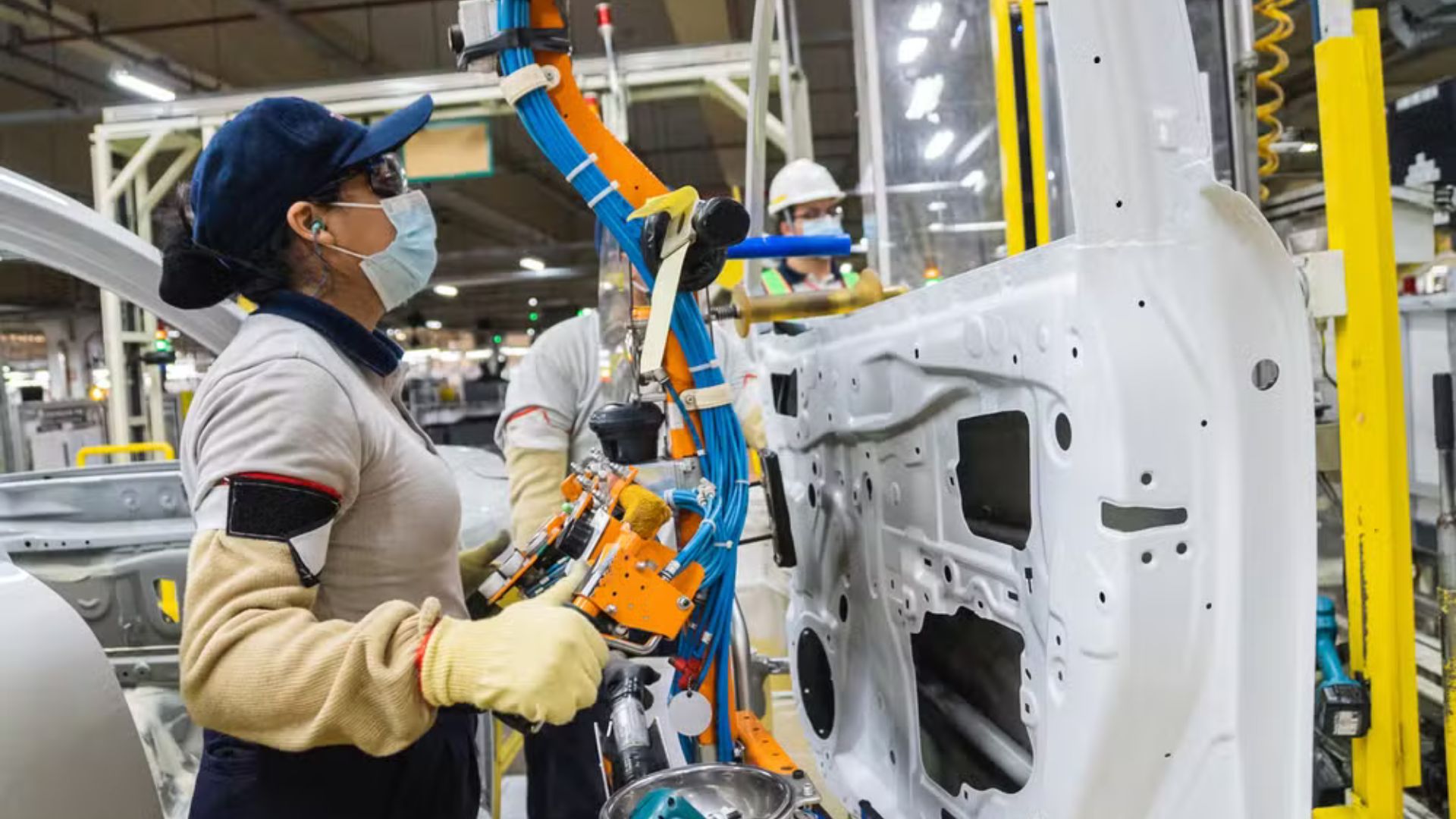
The National Bank for Economic and Social Development (BNDES) approved a credit limit of R$ 500 million to support investments by Toyota do Brasil in São Paulo, focusing on the purchase of machinery, equipment, and technological services related to the so-called Industry 4.0 and associated projects for flex hybrid vehicles.
The operation also provides support for the resumption of the Porto Feliz engine factory, located in the interior of São Paulo, which suffered damage after a storm with strong winds recorded in September.
According to the bank, the funds are part of the BNDES Mais Inovação program and can be used for the acquisition of innovative goods and services produced with advanced digital technologies, such as industrial automation, connected systems, and real-time data analysis.
-
Brazilian city bets on the business environment to generate jobs and attract investments in the energy sector — secretary reveals strategy at Macaé Energy 2026.

-
50 viaducts, 4 tunnels, 28 bridges, and 40 kilometers of bike paths: BR-262 in Espírito Santo will receive 8.6 billion reais for the largest engineering project in the state’s history, inspired by the Immigrant Highway in São Paulo.

-
Brazil produces too much clean energy and doesn’t know what to do with it: over 20% of solar and wind capacity was wasted in 2025 while investors flee and 509 renewable generation projects were abandoned in the last year.

-
Piauí will produce a new fuel that replaces diesel without needing to change anything in the truck’s engine and reduces pollutant gas emissions by half: truck drivers from all over the Northeast are already celebrating the news that will arrive later this decade.


The line also aims to expand the base of registered suppliers capable of delivering this type of solution, favoring the dissemination of national content in this segment.
“By supporting investments like Toyota’s, we are helping to enable the development of new projects and strengthen the national supplier base, expanding other companies’ access to innovative technologies and driving the modernization of the Brazilian industry with greater competitiveness, innovation, and national content,” stated Aloizio Mercadante, president of BNDES, in a note.
BNDES Financing Drives Toyota’s Industrial Modernization
The credit announcement connects two fronts that Toyota has been trying to manage simultaneously: the modernization of the industrial park for new projects and the rebuilding of production capacity after the gale that hit a strategic area of the complex in the interior of São Paulo.

On one hand, BNDES describes a purchase of high-value equipment and technological services associated with Industry 4.0.
On the other hand, the bank mentions the resumption of the Porto Feliz unit, affected by heavy rains and strong winds.
Toyota is headquartered in Sorocaba and maintains industrial operations in different locations throughout the state, including vehicle production and the manufacture of engines and components.
It is in this structure that the company intends to apply the financed solutions, arguing to accelerate the adoption of new technologies and support projects linked to flex hybrids, a category in which the automaker bets to increase its presence in the Brazilian market.
Yaris Cross Flex Hybrid Enters Pre-Sale and Attracts Attention for Pricing
In the same investment context, the automaker has focused attention on the Yaris Cross, a model that is already appearing in pre-sale in electrified versions.
The announced configurations have prices ranging from R$ 172,390 to R$ 189,990, a range that has placed the compact SUV at the center of sector discussions by bringing it closer to higher categories in retail prices.
In these versions, Toyota adopts a flex hybrid system with a 1.5 combustion engine and two electric motors.
One acts as a generator to recharge the battery, while the other assists with traction, helping to move the vehicle.
The architecture differs from the solution used in the Corolla and Corolla Cross hybrids, which combine a flex 1.8 engine with an electric component and have disclosed power of 122 hp in these configurations.
By positioning the Yaris Cross with a flex hybrid system in a more accessible segment than the brand’s traditional hybrids, Toyota aims to expand its electrification offering without solely relying on medium and higher-end models.
Still, the price level disclosed for the pre-sale has become a central element of the debate, as it repositions the compact SUV at a level above what some of the public expected for the model’s debut.
Gale in Porto Feliz Affected Strategic Engine Factory

The release of credit comes after a climate event that affected Toyota’s industrial capacity in the state.
On September 22, a storm with recorded gusts of wind at various points in the region damaged the Porto Feliz engine factory.
There were minor injuries among employees, who received assistance, and the company had to reorganize its operation to reduce risks and plan for recovery.
The force of the wind tore part of the roof and scattered structures outside the complex, according to reports published at the time.
The day after the storm, Toyota suspended engine production at the unit, considered strategic for supplying other plants of the automaker in the interior of São Paulo.
Porto Feliz is located between Indaiatuba and Sorocaba, making the flow of components and logistics more sensitive to any interruption.
Despite structural damage to the building, the equipment was preserved, according to the company.
“The machines only suffered superficial damage. We will transfer them to another location within the same area of the Porto Feliz factory to avoid new risks,” stated Evandro Maggio, president of Toyota in Brazil.
The halt occurred during a period of strong performance of the Corolla Cross in the national market, which increased attention to potential impacts on supply and production.
While the automaker indicated measures to protect the structure and maintain worker safety, the incident elevated the urgency to restore operational normalcy, a theme that now appears associated with the financing approved by BNDES.
Expansion in Sorocaba and Industrial Transition Expected by 2026
While dealing with the reconstruction of Porto Feliz, Toyota is also undergoing an industrial reorganization phase in the state.
The company maintains expansion plans in Sorocaba, with the construction of a new unit, called “Sorocaba 2”, aimed at absorbing part of the production currently concentrated in Indaiatuba.
The previously disclosed expectation is that the Indaiatuba factory will be deactivated by July 2026, with a gradual transfer of lines to Sorocaba.
At the already existing plant, known as Sorocaba 1, Toyota produces the Corolla Cross and the Yaris aimed at export.
It is in this same region that the Yaris Cross is also expected to be produced, aligning the new model with the investment efforts in technology and increasing industrial efficiency.
The combination of credit for acquiring Industry 4.0 solutions, recovering a unit affected by a gale, and advancing an electrification plan with flex hybrids places Toyota in a phase of multiple simultaneous fronts in Brazil.
Amid this scenario, how might the pricing and strategy of the Yaris Cross influence the pace of flex hybrid adoption in the Brazilian market in the coming months?







Seja o primeiro a reagir!