





 Português
  Inglês
  Espanhol
  4 min de leitura
  0 comentários


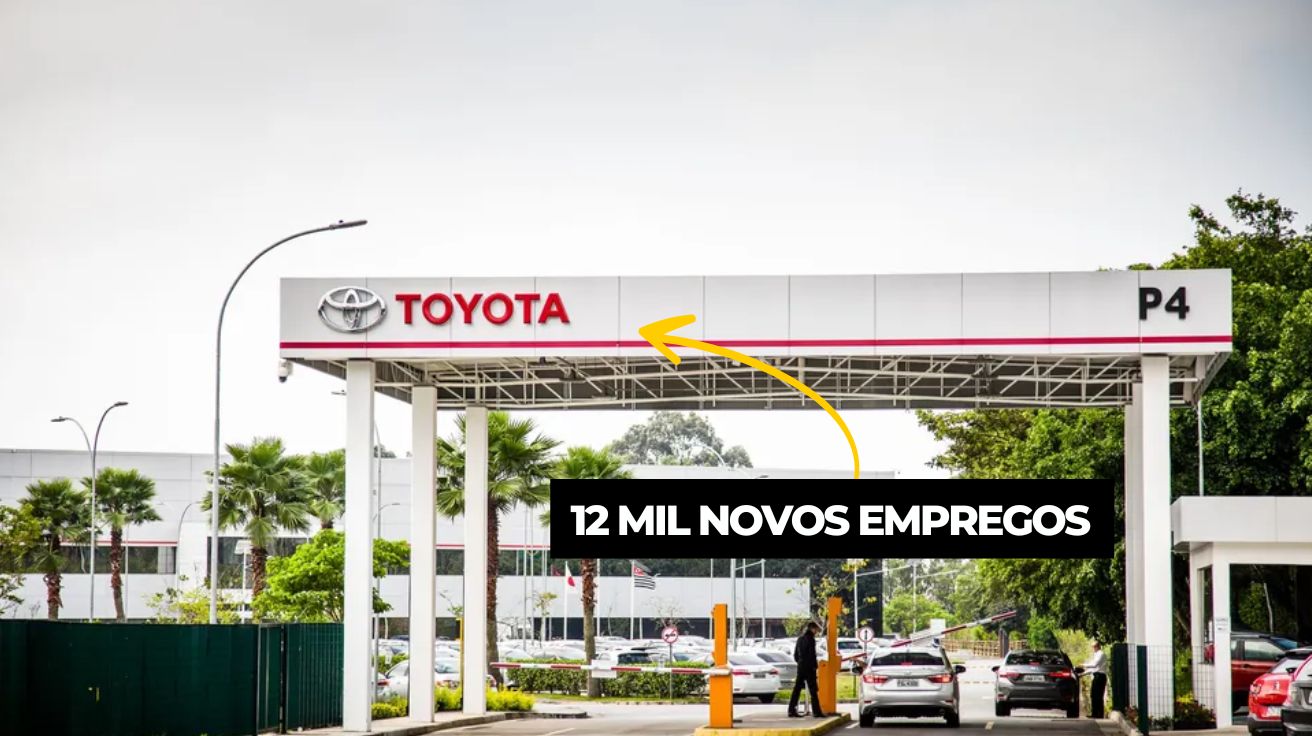
Toyota Is About to Transform Brazil! With a Massive Investment of R$ 11.5 Billion, the Japanese Giant Will Generate 12 Thousand Jobs and Expand Its Factory.
The Toyota announced a billion-dollar investment that promises to transform the Brazilian automotive industry.
During a visit to the company’s factory located in Sorocaba, President Luiz Inácio Lula da Silva and Vice President Geraldo Alckmin confirmed the injection of R$ 11.5 billion for the expansion of the unit by 2030.
With this amount, the expectation is to generate approximately 12 thousand jobs, with 2 thousand direct and 10 thousand indirect.
-
The world’s first octopus farm wants to open in the Canary Islands and is already provoking an international reaction: the plan aims to produce 3,000 tons per year.

-
Drought may be creating stronger superbugs in the soil and helping antibiotic resistance reach hospitals, warns a study highlighting a problem that could grow alongside extreme weather.

-
The biggest scam in history: Napoleon’s France deceived the United States by selling them a territory that was Spanish.

-
Why is the Danakil Desert so dangerous? It has unstable terrain and how extreme temperatures and toxic gases turn the region into one of the most hostile environments on Earth.


Record Investment and New Perspectives for the Job Market
The investment will be divided over the coming years, with R$ 5 billion expected by 2026.
In addition to boosting job creation, this expansion will strengthen the production of hybrid-flex vehicles, aligning with new global demands for more sustainable cars.
The expansion of the plant in Sorocaba will cover an area of 160,000 m² and will have a production capacity of 100,000 cars per year, representing a 50% increase compared to the current capacity.
Government Reinforces Commitment to the Green Industry
Geraldo Alckmin, Vice President and Minister of Development, Industry, Commerce and Services, highlighted the importance of the project for Brazil’s sustainability.
In his speech, Alckmin noted that Toyota’s investment is directly linked to the country’s commitment to decarbonizing the automotive fleet.
“Hybrid-flex vehicles are the ones that most contribute to reducing emissions. Brazil has much to gain from this technology, which is an eco-friendly and innovative solution”, stated the Vice President.
The Expansion Is Part of the New Industry Brazil and the Green Mobility Program
The investments at the Sorocaba plant are part of the federal government’s broader strategy to promote innovation and sustainability.
The NIB (New Industry Brazil) and the Green Mobility Program, Mover, aim to transform the national automotive industry, especially focusing on the production of more ecological and efficient vehicles.
By 2025, the Mover will have a financial credit of R$ 3.9 billion allocated to research, development, and decarbonization initiatives in the automotive sector.
Launched by the federal government in 2023, the Mover aims to increase sustainability requirements for the national automotive fleet and stimulate the production of new mobility and logistics technologies.
Thus, Brazil positions itself as a leader in developing solutions that meet new global demands for a greener automotive sector.
Lula Highlights the Importance of Industrial Growth for Brazil
In his speech during the event, President Lula recalled the positive impact of industrial growth in Brazil.
“When I left the presidency in 2011, Brazil was registering 3.6 million cars per year. When I returned in 2023, this number fell to 1.6 million. This setback caused unemployment, wage declines, and downturns in commerce. My desire is to make the industry grow again and improve the quality of life for the Brazilian people,” stated the president.
The Toyota and the Strengthening of the Local Economy
The event also featured the presence of Leandro Soares, president of the Metalworkers’ Union of Sorocaba and Region.
Soares recalled that, during Lula’s government, the number of jobs in the metalworking sector in the region increased significantly.
“In 2002, we were 19 thousand metalworkers. During Lula’s and Dilma’s first terms, we reached 45 thousand. Even with the ‘lava jato’ crisis, we managed to recover 3 thousand jobs in our region over the last two years,” highlighted the union leader.
Income Tax Exemption and More Jobs for Brazilians
In addition to Toyota’s investment announcements, Lula also took the opportunity to announce an important measure that will be sent to the National Congress.
The president announced that, if approved, a tax reform will benefit 10 million Brazilians with the exemption of Income Tax for those earning up to R$ 600 thousand per year.
According to the president, the proposal is “to take a little from those who have a lot to give to those who work hard and have almost nothing.”
The measure still needs to be approved by the Chamber of Deputies and the Senate, but if enacted, it will take effect on January 1, 2026.
Moisés Selerges, president of the Metalworkers’ Union of ABC, praised the proposal, stating that it will help increase the purchasing power of the working class.
“With the Income Tax exemption, workers will have more money in their pockets, and this will stimulate consumption, even of Toyota cars, which are produced here,” explained Selerges.
The Impact of Changes in the Automotive Sector and in Brazil
These investments from Toyota are seen as a major step towards strengthening the Brazilian automotive industry, especially at a time when the country is looking to recover its economic growth after periods of recession.
The establishment of a factory with the capacity for 100 thousand cars per year and the focus on hybrid vehicles represents a strategic alignment with global sustainability trends while creating a significant number of new jobs.
With the announced investments and the government’s commitment to fostering the national industry, Brazil can not only recover vehicle production but also consolidate itself as a hub of technological innovation and green mobility.
Expectations for the future are high, and the positive impact of this project could extend to the entire Brazilian economy, benefiting millions of people with more jobs and a more competitive job market.
For experts, the announcements made by Toyota and the Brazilian government represent a milestone for the automotive industry in Brazil.
The generation of 12 thousand jobs and the investment in sustainable technologies are clear signs that Brazil is moving toward a greener and industrially strong future.
For the Brazilian worker, this growth could mean more opportunities and an improvement in quality of life.








-

Uma pessoa reagiu a isso.